


Annapurna Base Camp Trek Cost 2026: Affordable ABC Trek Package
Updated [July 5th, 2026] · Written and reviewed by Suman Shrestha, licensed trekking guide (Nepal Government License No. 2212), founder of Excellent Himalaya Trek & Expedition (Reg. No. 175840/074/075) ·
Annapurna Base Camp trek is a very popular hiking journey in Nepal. Annapurna Base Camp, in short form, is called ABC. So, trekking to Annapurna Base Camp is also said ABC trek. Annapurna Base Camp Trek leads you to reach the base camp of Mt Annapurna. Annapurna Base Camp seems like a Sanctuary circled by lovely, snowy Himalayan peaks. Thus, this trek is also famous for the name Annapurna Sanctuary trek. The tallest peak you can view from the base camp is Mt Annapurna I. This is the 10th-highest mountain in the world, which rises to an elevation of 8,091 meters/ 26545 feet.
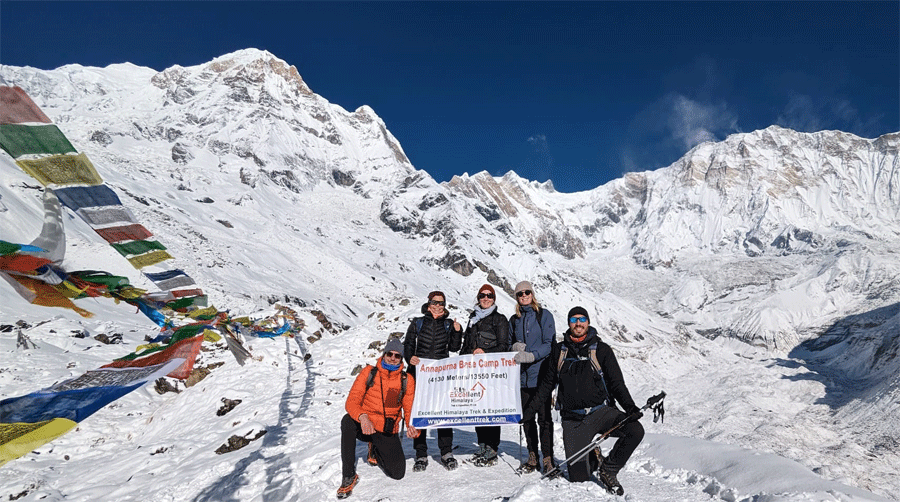
 The other striking peaks close to Annapurna Base Camp are Mt Fishtail (Machapuchare), Mt Annapurna South, Mt Annapurna Fang, Mt Annapurna III, Mt Hiunchuli, Mt Gangapurna, Mt Khangsar Kang, and Tent Peak. Most of the mountains in Annapurna Base Camp are over 7000 meters. The only entrance of the Annapurna base camp is a narrow valley between Mt Hiunchuli and Mt Machapuchare, where run-off from glaciers drains into the Modi Khola River. Because of the high mountains on all sides, the Annapurna Base Camp receives only 7 hours of sunlight a day.
There are a couple of places where you can start hiking to reach the Annapurna Base Camp. Every trekking trail of ABC passes through beautiful mountain villages, terraced farmlands, lush forests of oak and bamboo trees, sparkling streams, and glacial moraines. In spring, everybody becomes more excited while trekking on this trail. Because it’s a time of blossoming rhododendron flowers, and it makes the hills colorful.
Annapurna Base Camp trekking trail has some long, steep climbs and descents on stone steps; however, hiking is not difficult. Everybody above 12 years can join the Annapurna Base Camp Trek. Nepal is a Himalayan Country. Here are several mountains and several base camp hiking trails. Among all base camp trekking routes in Nepal, Annapurna Base Camp is the easiest and most quickly reachable base camp trek. It does not need any climbing or hiking experience.
On the route to Annapurna Base Camp, you pass many mountain villages. Those villages are especially the habitat of two ethnic groups of Nepal. They are Gurung and Magar. Actually, Gurung and Magars are the backbones of Gurkha soldiers. Their bravery is famous all over the world. You will find them as the most friendly individuals you’ll ever meet. The locals believe Annapurna Base Camp is home to several Gods and goddesses.
This guide replaces the vague, one-size-fits-all information you’ll find on most trekking sites with the specifics: real 2026 permit fees, an honest daily cost breakdown from a Kathmandu-registered operator, day-by-day itineraries, a full packing list, and the safety details that actually matter at altitude. Everything below reflects the current 2026 regulations, including Nepal’s mandatory guide rule.
Why Trek to Annapurna Base Camp? The Highlights
Every trekking region in Nepal has a personality. Everest is about scale and altitude bragging rights. Langtang is about solitude. Annapurna Base Camp is about intimacy with the mountains — you don’t view these peaks from a distance, you walk directly into their lap.
What makes ABC genuinely special:
- The 360° amphitheater at Base Camp itself. Very few treks in the world put you inside a bowl of 7,000–8,000m peaks. Annapurna I (8,091m), Annapurna South, Gangapurna, Hiunchuli, and Machhapuchhre surround you — a view that photographs and screens genuinely cannot capture.
- Machhapuchhre Base Camp (MBC), 3,700m. The overnight stop just before ABC, sitting at the foot of “Fishtail Mountain,” which remains unclimbed by law due to its sacred status to the Gurung people.
- Diverse ecological zones in a short distance. You pass through subtropical foothills, dense rhododendron and bamboo forest, and alpine terrain within a single week — a compressed version of what larger treks spread over weeks.
- Gurung and Magar villages. Ghandruk and Chhomrong are living cultural landmarks, not staged “cultural stops” — stone-paved lanes, traditional slate-roofed homes, and a way of life shaped by the mountains for centuries.
- Jhinu Danda’s natural hot springs. A genuinely earned reward after days of trekking, right beside the Modi Khola river.
- Shorter and lower than the EBC or Annapurna Circuit, which makes it realistic for trekkers with 9–12 days of vacation time and no prior high-altitude experience — provided you respect acclimatization.
- Rhododendron forests in bloom (March–April) turn entire hillsides red, pink, and white — among Nepal’s most photographed trekking sights.
How much does the cost of the Annapurna Base Camp Trek cost?: Deals from Excellent Himalaya
Excellent Himalaya Trek and Expedition, the authentic local operator for the ABC Trek, offers the Annapurna Base Camp Trek cost as below rates in the table. The following prices of ABC Trek are cheap, economical, and affordable for the quality. They also deliver substantial value. They include a hotel, 3-star standard, in Kathmandu and Pokhara, a Tea House during the trek, annapurna conservation permit (ACAP), breakfast, lunch, dinner during the trek, an experienced guide, and transport.
| Annapurna Base Camp Trek Cost 2026 & 2027 | ||
| Group Size | 9 Days ABC Trek | 12 Days ABC Trek |
| If you are 9 to 10 Pax | USD 470 Per Person | USD 530 Per Person |
| If you are 7 to 8 Pax | USD 500 Per Person | USD 560 Per Person |
| If you are 5 to 6 Pax | USD 530 Per Person | USD 590 Per Person |
| If you are 3 to 4 Pax | USD 560 Per Person | USD 620 Per Person |
| If you are 2 Pax | USD 590 Per Person | USD 650 Per Person |
Itinerary of ABC Trek- 9 Days
| Day 1: Arrival at Kathmandu International Airport. We welcome you at the airport and transfer you to the hotel by our car. Orientation of the trip. Preparation for the trek. Overnight at Hotel in Kathmandu. |
| Day 2: Drive from Kathmandu to Pokhara by Tourist Coach, 200 km west of Kathmandu. Driving 7/8 hours. Overnight at Hotel in Pokhara. |
| Day 3: Drive from Pokhara to Matque (3 to 3:30 hrs). Trek from Matque to Lower Sinuwa (2300 m). Walking around 5 hours. Overnight at Tea House. |
| Day 4: Trek from Lower Sinuwa to Himalaya (Altitude 2900 m). Walking around 5 hrs. Overnight at Tea House. |
| Day 5: Trek from the Himalaya to the Annapurna Base Camp (Altitude 4130 m). Walking around 6/6:30 hrs. Overnight at Tea House. |
| Day 6: Trekking back from Annapurna Base Camp to Bamboo (2310m/7507ft). Walking around 7 hours. Overnight at Tea House. |
| Day 7: Trekking from Bamboo to Matque. Walking around 6/6:30 hrs. Drive from Matque to Pokhara by jeep. Driving 2:30/3 hours. Overnight in Hotel Pokhara. |
| Day 8: Drive back from Pokhara to Kathmandu by Tourist Coach. Driving 7 hours. Overnight at Hotel in Kathmandu. |
| Day 9: We will drop you at Kathmandu International Airport in our car for your flight to your country. Final Departure from Nepal. |
Itinerary of ABC Trek- 12 Days
| Day 1: Arrival at Kathmandu International Airport. We welcome you at the airport and transfer you to the hotel by our car. Orientation of the trip. Preparation for the trek. Overnight at the hotel in Kathmandu. |
| Day 2: Drive from Kathmandu to Pokhara (Alt 800m/2,624ft.) by Tourist Coach, 200 km west of Kathmandu. Driving 7 hours. Evening walk around Phewa Lake. Overnight at the hotel in Pokhara. |
| Day 3: Drive from Pokhara to Nayapul. Driving 1 hour 30 min. Trek from Nayapul to Ghandruk (Alt. 1940 m/6,364 ft). Walking 5/6 hours. Overnight at Tea House. |
| Day 4: Trek from Ghandruk to Chhomrong (Alt. 2,170 m/7,118 ft). Walking 5/6 hours. Overnight at Tea House. |
| Day 5: Trek from Chhomrong to Dovan (Alt. 2600 m/ 8530 ft). Walking 6 hours. Overnight at Tea House. |
| Day 6: Trek from Dovan to Deurali (3230 m/10497 ft). Walking 4/5 hours. Overnight at Tea House. |
| Day 7: Trek from Deurali to Annapurna Base Camp (4130 m/13422 ft) via Machapuchchhre Base Camp (3700m/12025ft). Walking 5/6 hours. Overnight at Tea House. |
| Day 8: Trek back from Annapurna Base Camp to Bamboo (2310 m/7507 ft). Walking 7 hours. Overnight at Tea House. |
| Day 9: Trek from Bamboo to Jhinu Danda (Alt. 1760 m/5773 ft). Walking 5/6 hours. Overnight at Tea House. |
| Day 10: Trek from Jhinu Danda to Nayapul (1070 m/3510 ft). Drive from Nayapul to Pokhara (800m/2,624ft). Driving 1 hour 30 min. Walking 5/6 hours. Overnight at the hotel in Pokhara |
| Day 11: Drive back from Pokhara to Kathmandu by Tourist Coach. Driving 7 hours. Overnight at the hotel in Kathmandu |
| Day 12: We will drop you off at Kathmandu International Airport in our car for your flight to your country. Final Departure from Nepal. |
What’s included in our Annapurna Base Camp Trek Packages?
• On your arrival day, an airport pickup service by car.
• Two-night accommodation in Kathmandu at a tourist standard hotel with breakfast (3-star standard). (1 night before the trek & 1 night after the trek.
• Two-night accommodation in Pokhara at a tourist standard hotel with breakfast (3-star standard). (1 night before the trek & 1 night after the trek.
• Accommodation in a tea house during the trek.
• 3 meals (Breakfast, Lunch, Dinner) in a day during the trek.
• One experienced English-speaking guide for trekking.
• Drive from Kathmandu to Pokhara by Tourist Bus
• Drive from Pokhara to Kathmandu by Tourist Bus.
• Drive from Pokhara to the trek start point by Car/jeep.
• Drive from the Trek end point to Pokhara by Car/jeep.
• Expenses for food, accommodation, insurance, transport, and the wages of trekking staff.
• Annapurna Conservation Area Permit (ACAP) Fee.
• Altitude medicines (Acetazolamide, also called Diamox), an oximeter to check your oxygen level on the trek, first aid medicines, and water tabs (Aqua tabs).
• Seasonable fruits in trek.
• Crampons/ Micro spikes, if needed.
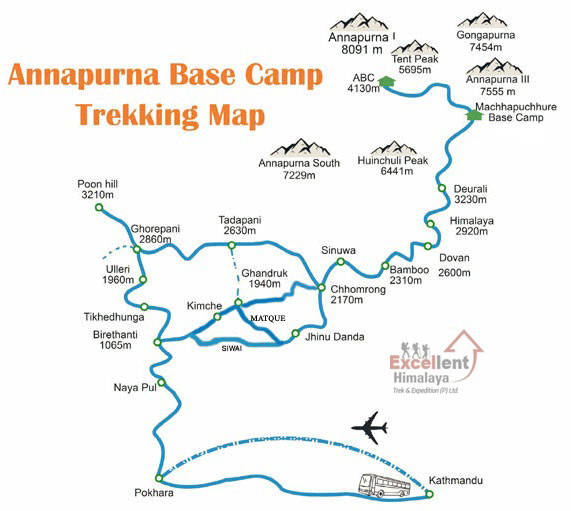
• Map of Annapurna Base Camp Trekking route.
• Trip Achievement Certificate.
• All government taxes, local taxes, and tourist service charges.
• On your departure day, airport drop service by car/ van.
What’s Not Included (Extra & Personal Expenses)?
• Airfare for your international flight.
• Nepal Visa Fee (You can easily get a Nepal visa upon arrival at the airport in Kathmandu).
• Your travel insurance, which includes Heli evacuation.
• Alcoholic beverages, any Hot and cold drinks, bottled water, boiled water, and dessert.
• All kinds of personal expenses like phone calls, internet use, laundry, battery charge, hot shower during trekking, etc.
• Lunch and dinner in Kathmandu and Pokhara
• Porter
• Tips for Trekking Staff.
• Any expenses arising due to unforeseen situations like personal sickness, natural calamities, political strikes, etc.
Notes:
I. The above Annapurna Base Camp Trek cost is on a per-person basis for a minimum group size of two persons.
I. If you are single and want to go solo trekking. We also organize the Annapurna Base Camp Trek for solo trekkers. For the solo trekker, we have a separate Annapurna Base Camp Trek price. Please contact us for the Solo ABC Trek price.
Note: Annapurna Base Camp Trek can also be customized to 10 days and 14 days. Please contact us if you want to customize the ABC trek on different days.

Quick Facts: Annapurna Base Camp Trek & Cost Snapshot
Before planning your budget, here are the essential numbers at a glance.
| Detail | Information |
| Max Altitude | 4,130 m / 13,549 ft (Annapurna Base Camp) |
| Trek Duration | 7–12 days (trekking days), 9–14 days total with Kathmandu/Pokhara |
| Difficulty | Moderate |
| Region | Annapurna Conservation Area, Gandaki Province |
| Starting Point | Pokhara (via Nayapul, Kimche, or Ghandruk) |
| Total Trekking Distance | Approx. 70–115 km round trip (depending on route/itinerary) |
| Best Seasons | March–May (Spring), September–November (Autumn) |
| Permits Required | ACAP (Annapurna Conservation Area Permit) + mandatory licensed guide |
| Accommodation | Teahouses/lodges throughout |
| ABC Trek Cost 9 days | USD 470–590 |
| ABC Trek Cost 12 days | USD 530–650 |
| Guide Requirement | Mandatory since April 2023 for all foreign nationals |
| Currency Needed on Trail | Nepali Rupees (cash) |
During peak seasons, expect costs to be roughly 15–25% higher than off-season rates due to demand for accommodation, transport, and flights. Key permits include the Annapurna Conservation Area Permit (ACAP) and the Trekkers Information Management System (TIMS) card. Since April 2023, all foreign trekkers must hire a licensed guide. On top of any prepaid package, plan for personal costs of roughly USD 10–30 per day for extras like hot showers, charging, wifi, and snacks.
Why Annapurna Base Camp Is Worth the Cost
The Annapurna Sanctuary delivers extraordinary value compared to many Himalayan treks. It is substantially cheaper than an Everest Base Camp trek – largely because there is no expensive domestic flight to Lukla – while offering equally dramatic scenery.
Here is what your money buys:
- A 360-degree amphitheatre of peaks, including Annapurna I (8,091 m), Annapurna South, Machhapuchhre (Fishtail), Hiunchuli, and Gangapurna, viewed from the south base camp
- Diverse landscapes inside the Annapurna Conservation Area: terraced rice paddies, dense rhododendron and bamboo forests, waterfalls, and a glacial basin
- Cultural immersion in Gurung and Magar villages like Ghandruk and Chhomrong, hot springs at Jhinu Danda, and genuine teahouse hospitality
- Accessible hiking trails that do not require technical climbing skills or specialized equipment
As a local operator, Excellent Himalaya Trek keeps the annapurna trek cost lower than large international brands while maintaining safety standards and experienced staff. More of your money stays in Nepal’s local economy.
Main Cost Factors of Annapurna Base Camp Trek in 2026
The total cost of an ABC trek is not a single number. It is the sum of several distinct categories, and understanding each one helps you budget accurately.
Major cost categories include:
- Permits: ACAP and TIMS fees
- Transport: Kathmandu to Pokhara and Pokhara to the trailhead
- Accommodation: Hotels in cities and tea houses on the trail
- Food and drinks: Three meals a day plus beverages
- Guide and porter fees: Mandatory licensed guide plus optional porter
- Gear and equipment cost: Buying or renting trekking equipment
- Travel insurance: Coverage for high altitude trekking and helicopter evacuation
- Personal costs: Wifi, hot showers, charging devices, tips, snacks, souvenirs
The two biggest variables in your total camp trek cost are your trekking style (budget, standard, or comfort) and trip length (5–7 days versus 10–14 days). The sections below break down each category with specific 2026 numbers.
Permit Costs for Annapurna Conservation Area in 2026
Permit Costs for Annapurna Conservation Area in 2026
Every trekker entering the Annapurna Conservation Area must carry a valid permit. These fees fund trail maintenance, conservation programs, waste management, and support for local communities.
One permit and one mandatory service are required for the ABC trek:
- Annapurna Conservation Area Permit (ACAP): The ACAP permit costs NPR 3,000 per person. Foreign trekkers pay approximately USD 20 to 25 for ACAP. SAARC nationals pay a reduced rate of around NPR 1,000. Children under 10 are exempt.
- Licensed Trekking Guide: Since April 2023, Nepal law requires all foreign trekkers in the Annapurna region to be accompanied by a licensed guide booked through a registered trekking agency. A separate independent TIMS card is no longer issued for this region — the ACAP permit combined with your guide’s documentation covers the requirement checked at trailhead checkpoints.
Total permit costs run approximately USD 20 to 25 per person for most trekkers, on top of your guide/porter fees, which are covered in your package or quoted separately depending on how you book.
You can obtain permits at the Nepal Tourism Board office in Kathmandu (Bhrikutimandap) or at the Tourist Service Center in Pokhara. Processing takes about 15–30 minutes. You will need your passport and two passport-sized photos. Most registered trekking agencies, including Excellent Himalaya Trek, handle permit procurement as part of their packages. The official e-permit portal for the Annapurna Conservation Area Project (ACAP) is managed by the National Trust for Nature Conservation (NTNC). You can apply online or download the details at the NTNC Online Permit
Carry your permits at all times on the trail. Checkpoints at Birethanti and other locations will verify them. Double fees apply for permits issued at check-posts, so it is far cheaper to arrange everything before the trek begins.
Guide and Porter Costs on the Annapurna Base Camp Trek
Since April 2023, foreign trekkers on routes like the Annapurna Base Camp trail must hire a licensed guide through a registered trekking agency. Independent trekkers can no longer legally trek this route solo.
Here are the realistic 2026 rates when booked through a reliable trekking agency like Excellent Himalaya Trek:
- Licensed guide: Guide fees range from $25 to $35 per day, including their food, accommodation, and insurance. Hiring a guide adds $250 to $490 for a 10-14-day trek.
- Porter: Porter fees range from $15 to $20 per day. Porter support costs approximately $150 to $280 for the full trek. Porters typically carry 18–22 kg for one or two trekkers.
A guide is recommended for safety and navigation on the trek. Beyond route-finding, your guide handles teahouse bookings during busy peak seasons, monitors your pace for proper acclimatization, provides cultural context in Gurung and Magar villages, and acts as your first responder for altitude sickness symptoms.
Porters significantly reduce fatigue and injury risk, especially on the steep stone staircases between Ulleri, Chhomrong, Bamboo, Deurali, and Machhapuchhre Base Camp. For more details on hiring guides and porters in Nepal, we have a dedicated guide.
In Excellent Himalaya Trek’s standard packages, guide and porter costs are included. Independent hiring in Pokhara may appear cheaper up-front, but often does not include proper staff insurance, emergency support, or permit processing.
A note on regulatory accuracy, since this trips up a lot of trekkers researching older blog posts: since Nepal’s April 2023 trekking regulation, the Annapurna region’s permit requirement is the ACAP permit combined with a mandatory licensed guide booked through a registered agency. This is what actually gets checked at Birethanti, Ghandruk, and Chhomrong checkpoints. Some older articles online still reference a separate independent TIMS card for Annapurna; if you book with a licensed agency like ours, this is all handled for you as part of the permit process, so you don’t need to track down conflicting information yourself.
Food Costs on the Annapurna Base Camp Trail
Food costs on the trek rise with altitude because everything is carried in by porters or mules, especially above Chhomrong toward Bamboo, Himalaya, Deurali, Machhapuchhre Base Camp, and Annapurna Base Camp. Meals become more expensive as altitude increases, and this is the single biggest variable in daily food spending.
Here are typical 2026 per-meal prices along the Annapurna Base Camp Trail:
| Meal | Lower Villages (Ghandruk, Chhomrong) | Upper Lodges (MBC, ABC) |
| Breakfast | USD 3–5 | USD 5–8 |
| Lunch / Dinner | USD 5–7 | USD 7–10 |
Food costs about $20 to $35 per day during the trek. Common menu items include dal bhat (with unlimited refills, making it the best value), momos, noodle soup, fried rice, pasta, Tibetan bread, porridge, and eggs. Menus are largely standardized by local lodge committees, so prices at a given altitude are similar across teahouses.
Dal bhat costs between USD 5 and 7 per meal and remains the most cost-effective choice. Eating local meals like dal bhat can help manage food costs significantly compared to ordering Western dishes.
Trekkers on full-board packages with Excellent Himalaya Trek have most meals already included, eliminating this variable. For those paying out of pocket, expect a daily food budget of USD 20–35.
Snacks are cheaper when bought in Pokhara before the trek. Stock up on nuts, chocolate bars, and energy bars because prices for these items can double or triple at higher elevations.
Drinking Water and Beverage Costs
Plastic bottled water is discouraged or banned in parts of the Annapurna Conservation Area above Chhomrong. Trekkers should rely on refills and purification instead.
- Bottled water: Costs NPR 25 to NPR 100 along the trail, increasing with altitude
- Boiled water: NPR 50–150 per liter
- Filtered water/refill stations: NPR 30–100 per liter
- Tea/coffee: USD 1–3 per cup, with hot drinks becoming a high daily cost at higher lodges like MBC and ABC
- Soft drinks: USD 2–4, varying by location
Using water purification tablets, portable filters, or UV purifiers saves money and reduces plastic waste. Excellent Himalaya Trek encourages responsible water use and can advise on the best purification methods for your itinerary.
Accommodation Costs on the ABC Trek
The typical teahouse experience along the Annapurna Sanctuary trek route consists of basic wooden rooms with twin beds, shared bathrooms, and a communal dining room heated by a wood or gas stove.
Accommodation in teahouses costs about $5 to $15 per night, depending on location and season. More specifically:
- Lower villages (Nayapul, Ghandruk, Chhomrong): Teahouse accommodation costs range from $2 to $5 per night. Accommodation in lower villages is cheaper due to more options and competition.
- Higher lodges (Bamboo, Himalaya, Deurali, MBC, ABC): Accommodation costs $5 to $10 per night on the trek.
Room prices increase as you ascend toward Annapurna Base Camp, reflecting the logistical challenges of running lodges at high altitude.
A few important details to factor into your accommodation cost planning:
- Teahouse owners keep room prices low, expecting trekkers to eat meals on-site. Some charge more if you bring your own food.
- Private rooms and attached bathrooms are rare above Chhomrong. Basic teahouse rooms may require sharing during peak season.
- Book accommodations in advance to avoid peak season price hikes, especially at Himalaya, Deurali, MBC, and ABC, where capacity is limited.
Excellent Himalaya Trek pre-books teahouses where possible, and most packages include the full accommodation cost on the trail.
Transportation Costs: Kathmandu, Pokhara, and the ABC Trailhead
Most ABC treks start and end in Pokhara, so you need to budget for Kathmandu–Pokhara transport and the Pokhara–trailhead transfer.
Kathmandu to Pokhara:
| Transport Option | Cost (2026) | Duration |
| Local bus | USD 10–15 | 7–8 hours |
| Tourist bus | USD 10–30 | 6–7 hours |
| Private vehicles | USD 100–200 | 5–6 hours |
| Domestic flight | USD 80–150 | 25–30 minutes |
Transportation from Kathmandu to Pokhara costs $10 to $150, depending on your choice. A tourist bus from Kathmandu to Pokhara costs $10 to $30 and is the most popular option. Transport from Kathmandu to Pokhara via bus ranges from $10 to $25 for the local bus option. Domestic flights from Kathmandu to Pokhara cost $80 to $150 and are the fastest but subject to weather cancellations, especially during the monsoon.
Pokhara to Trailhead:
- Shared jeeps from Pokhara to Nayapul cost $5 to $10
- Private jeeps from Pokhara to Nayapul cost $50 to $80
- A local bus to Nayapul runs about USD 3–5 but is slower and less comfortable
Group size dramatically affects per-person transportation cost when using a private jeep. Splitting a USD 70 private transport among four people costs just USD 17.50 each.
Excellent Himalaya Trek’s ABC packages from Kathmandu generally include all ground transport. Pokhara-only packages reduce the total budget for those who already plan to reach Pokhara independently via a short trek around Pokhara or other arrangements.
Gear and Equipment Cost for Annapurna Base Camp
The gear and equipment cost is typically a one-time investment, but it can significantly affect your total ABC budget, especially for first-time trekkers who need to purchase or rent everything.
Typical 2026 price ranges for buying trekking gear in Kathmandu (Thamel) or Pokhara (Lakeside):
| Item | Buy (USD) | Rent per Day (USD) |
| Trekking boots | 40–80 | Not commonly rented |
| Down jacket | 25–60 | 1–2 |
| Sleeping bags | 15–40 | 1–2 |
| Waterproof shell jacket | 20–50 | 1–2 |
| Backpack (40–50L) | 20–40 | 1–2 |
| Trekking poles (pair) | 10–20 | 1–2 |
| Full mid-range kit | 150–350 | 8–15/day |
Renting is more economical for items like sleeping bags and down jackets if you will not trek again soon. The trade-off is comfort and hygiene – rental gear varies in quality.
Excellent Himalaya Trek may provide some gear items, such as duffel bags, trekking poles, down jackets, and sleeping bags to clients as part of the trekking package or at subsidized rates, lowering your equipment cost.
Our recommendation: invest in quality boots, socks, and base layers (these items are personal and affect daily comfort), while renting bulkier items like sleeping bags if you are on a tight budget.
Personal Costs, Extras, and Hidden Expenses
This is the “often forgotten” part of the Annapurna Base Camp cost. Small daily spending adds up to USD 150–200 or more over a full 10–12 day itinerary.
Common extras with indicative 2026 prices:
- Hot showers in teahouses typically cost an additional $3 (higher at altitude)
- Device charging: USD 2–5 per charge
- Wifi access: USD 2–5 per session
- Laundry: charged per kg, typically USD 2–4
- Snacks, soft drinks, beer: USD 2–8 per item
- Souvenirs: variable
Plan for extra costs like charging and hot showers on the trek – they are small individually but significant cumulatively.
Tipping norms:
- Guide: USD 8–10 per day per trekker
- Porter: USD 4–6 per day per trekker
- Total guide and porter tips for a 10–12 day trek: approximately USD 120–190
Carry enough cash in Nepali rupees from Pokhara or Kathmandu. ATMs are unavailable on the trail, and card payments are not accepted at teahouses.
Budget trekkers should plan for an emergency fund of at least 10 to 15 percent of their anticipated budget for unforeseen personal expenses like extra nights due to weather delays or minor medical costs. We recommend carrying an additional contingency of USD 100–150 equivalent.

ABC Trek Cost Per Day and Per Person
Daily trekking expenses, including permits, guide fees, accommodation, and meals, can total approximately $25 to $40 per day when broken down across an organized package. Adding personal expenses (USD 10–20 per day) brings the realistic daily cost to USD 35–60 per person.
Here is how the per-person cost decreases in groups:
| Group Size | Guide Cost Per Person/Day | Jeep Cost Per Person (Nayapul) |
| Solo | USD 25–35 | USD 50–80 |
| 2 Trekkers | USD 13–18 | USD 25–40 |
| 4 Trekkers | USD 7–9 | USD 13–20 |
Daily costs also vary by trail section. Lower sections around Ghandruk and Chhomrong have cheaper food and lodging, while the stretch from Bamboo to Deurali, MBC, and ABC commands higher prices for everything from meals to charging.
Excellent Himalaya Trek’s group tours and seasonal promotions can significantly reduce the per-person rate compared with trekking alone. Check their solo ABC trek packages for competitive solo pricing.
Daily Cost Breakdown on the Trail (Independent Budget Reference)
Even if you book a package, it helps to understand what you’re actually paying for once you’re on the trail, especially for personal spending money.
| Item | Approx. Cost (USD) | Notes |
|---|---|---|
| Teahouse room (twin-share, basic) | $2 – $8/night | Often discounted or free if you eat meals at the same lodge |
| Breakfast (eggs, toast, porridge, tea) | $4 – $7 | Prices rise with altitude |
| Lunch (dal bhat, noodles, momo) | $5 – $9 | Dal bhat often includes free refills |
| Dinner | $6 – $10 | Similar to lunch pricing |
| Hot shower | $2 – $5 | Gas-heated; colder and pricier higher up |
| Device charging | $2 – $4 per charge | Solar-powered at higher altitudes |
| Wi-Fi | $2 – $4/day | Patchy above Chhomrong |
| Bottled/boiled water | $1 – $3 per liter | We recommend a filter or purification tablets instead |
| Guide daily wage (if hiring independently) | $25 – $35/day | Higher for peak-season senior guides |
| Porter’s daily wage | $20 – $25/day | Typically carries 15–18kg |
ABC Trek Cost from Pokhara vs from Kathmandu
Starting in Pokhara reduces overall trip cost compared with starting in Kathmandu because it eliminates 1–3 hotel nights and the Kathmandu–Pokhara transportation fee.
| Starting Point | Duration | Estimated Cost (2026) |
| Pokhara (5–7 days) | Trek only | USD 450–900 |
| Kathmandu (9–12 days) | Full experience | USD 700–1,200 |
Pokhara-start itineraries suit trekkers already in Nepal or on a tight time/budget, but may offer less acclimatization and fewer options for side trips like Poon Hill. The 7-day ABC trek via Ghandruk is a popular express option.
Excellent Himalaya Trek offers both Kathmandu- and Pokhara-based ABC trek options and can customize based on your arrival plans and preferred trek route.
Budget vs Standard vs Luxury Annapurna Base Camp Trek Options
| Feature | Budget | Standard | Comfort / Luxury |
| Price Range (2026) | USD 500–700 | USD 800–1,100 | USD 1,200–2,500+ |
| Transport | Local bus, shared jeep | Tourist bus or shared private jeep | Private vehicles, possible domestic flight |
| Accommodation | Basic tea houses, shared rooms | Good teahouses, pre-booked | Best available rooms, some private bathrooms |
| Meals | Self-ordered, basic menu | Full board, three meals/day | Full board with more variety |
| Guide/Porter | Guide only (mandatory) | Guide + shared porter | Private guide + dedicated porter |
| Extras | Minimal | Standard inclusions | Extra rest days, upgrades, heli option |
Excellent Himalaya Trek focuses on standard and value-focused comfort packages with clear cost breakdowns and no hidden fees. Custom budget or high-end itineraries are available on request.
ABC Trek Cost with Local Operators vs International Operators
Booking directly with local agencies in Nepal versus large international brands creates a meaningful price difference.
- Local operators (like Excellent Himalaya Trek): USD 600–1,200 for standard ABC packages
- International operators: USD 1,200–2,500+ for similar itineraries
The markup from foreign agencies covers their marketing, administration, and profit margins – costs that do not improve your on-the-ground experience. Advantages of local operators include better local knowledge, flexible itineraries, direct support during the trek, and more of the trek cost staying in Nepal’s economy.
When comparing, look beyond the headline price. Check what is included: meals, permits, transfers, porter service, gear, and staff insurance. A slightly higher-priced local package that covers everything often beats a seemingly cheap quote that excludes key items.
Helicopter Options and Their Impact on ABC Trek Cost
Some trekkers combine trekking up to Annapurna Base Camp with a helicopter return to Pokhara, either for time savings or as a scenic luxury.
- Shared helicopter charter: USD 300–600 per person (minimum passenger requirements apply)
- Private helicopter charter: USD 1,500+ per flight
For a detailed look at pricing and logistics, see our ABC helicopter tour cost guide.
Emergency helicopter evacuation is a separate matter. If medically required (severe altitude sickness, fractures, or serious illness), the cost can reach USD 5,000 or more. With proper travel insurance covering high altitude trekking, this cost is covered by your insurer. Without insurance, you pay out of pocket.
Excellent Himalaya Trek can organize both optional scenic heli returns and emergency evacuation coordination.
Seasonal Cost Differences: Peak vs Off-Season ABC Trekking
Trekking season directly impacts Annapurna Base Camp trek cost through demand on teahouses, flights, and transport.
Peak trekking seasons are more expensive than off-peak seasons in the Annapurna region. Specifically:
- Peak seasons (spring and autumn): Domestic flight fares to Pokhara rise, teahouses charge higher room prices and are less open to negotiation, gear rental demand increases, and guide and porter rates may be firmer. Expect costs to be 15–25% above baseline.
- Off-seasons (monsoon and winter): Prices drop across accommodation, transport, and sometimes guide rates. However, risks increase: monsoon brings heavy rain, leeches, and potential landslides, while winter means cold temperatures and possible snow above Deurali.
Shoulder months – late March, early April, late October, and November – offer the best balance of reasonable cost, good weather, and manageable crowds.
Best Time to Trek Annapurna Base Camp (Weather, Views, and Budget)
Choosing the best time is about balancing cost, safety, visibility, and comfort.
| Season | Months | Weather | Views | Crowds | Cost Impact |
| Spring | Mar–May | Warm, occasional afternoon rain | Good, rhododendron blooms | Moderate–High | +15–20% |
| Monsoon | Jun–Aug | Heavy rain, humid, leeches | Often obscured | Low | Lowest prices |
| Autumn | Sep–Nov | Clear, dry, stable | Best visibility | High | +20–25% |
| Winter | Dec–Feb | Cold, possible snow above 3,000 m | Clear when sunny | Low | −10–15% discount |
My honest take, season by season
Spring (March–May) is when Nepal’s famous rhododendron forests bloom. This is genuinely something photographs undersell. Late March through April, the forest between Tadapani and Ghorepani/Chhomrong turns into a wall of red and pink blossoms. Mornings are typically the clearest window for mountain views before afternoon cloud builds up, which is why experienced guides push for early starts.
Autumn (September–November) is the gold standard for this trek. Post-monsoon air is at its cleanest, and this is genuinely when you get the crispest, most reliable views of Annapurna South and Machhapuchhre. It coincides with Nepal’s biggest festivals, Dashain and Tihar, which is a bonus if you want cultural immersion, but it’s also the busiest window on the trail — teahouse rooms at Chhomrong, Dovan, and MBC fill up by early afternoon in peak weeks.
Winter (December–February) is underrated. Above 3,000m, it gets genuinely cold at night (teahouse rooms are unheated, and temperatures at ABC and MBC regularly drop below freezing after dark), but the trail is quiet, prices on everything from rooms to permits stay flat, and clear cold-front days can deliver some of the sharpest mountain photography of the year. Heavy snow can occasionally close the MBC–ABC stretch for a day or two. A flexible itinerary buffer day matters here more than any other season.
Monsoon (June–August) is the one season I’d steer most first-time trekkers away from. Below 3,000m, daily afternoon downpours, muddy trail sections, and leeches in the forest zones (Chhomrong to Bamboo, especially) make for an uncomfortable trek, and cloud cover frequently blocks the summit views that are the entire point of going. That said, it’s the least crowded and greenest the landscape ever looks, and with the right guide and gear, it’s still doable — just set expectations accordingly.

Typical temperatures by location and season:
- Chhomrong (2,170 m): Spring daytime 15–20°C, autumn similar, winter daytime 5–10°C, nighttime near freezing
- Machhapuchhre Base Camp (3,700 m): Spring/autumn daytime 5–10°C, nighttime −5 to 0°C; winter daytime 0–5°C, nighttime −10 to −15°C
- Annapurna Base Camp (4,130 m): Spring/autumn daytime 0–8°C, nighttime −10 to −5°C; winter can drop below −20°C at night
For those prioritizing budget, late November and February offer lower prices with tolerable conditions. For clear mountain views, October and early November are unbeatable.
Difficulty Level and Who Can Do the Annapurna Base Camp Trek
The base camp trek is rated moderate. It is suitable for reasonably fit first-time trekkers, but it demands more effort than a typical day hike.
- Daily hiking hours: 4–7 hours
- Challenging sections: Steep stone staircases to Ulleri (~3,300 steps), the climb into and out of Chhomrong, and the final push from Deurali to ABC via Machhapuchhre Base Camp
- Cumulative elevation gain: Approximately 2,500–3,000 m over the ascent days
Altitude-related risks emerge around MBC (3,700 m) and ABC (4,130 m). Altitude sickness symptoms such as headache, nausea, and shortness of breath should never be ignored.
Children over about 12 and fit older adults can complete the trek with proper preparation. Anyone with heart conditions, severe respiratory issues, or recent major surgery should consult a doctor before booking. For a thorough overview of what first-timers can expect, see our ABC trek for beginners guide.
Fitness Preparation and Training (to Protect Your Investment)
Physical preparation protects the money you spend on permits, flights, and the trekking package. Nothing is worse than reaching Chhomrong and realizing your body is not ready for the days ahead.
A practical 6–10 week training plan:
- Cardio: 3–4 sessions per week of hiking, running, cycling, or stair-climbing (30–60 minutes each)
- Strength: 1–2 sessions per week focusing on legs (squats, lunges, step-ups) and core stability
- Practice hikes: Weekend hikes with a loaded daypack (8–10 kg), including hill or stair sessions to simulate the ABC’s stone steps
- Progressive loading: Gradually increase duration and weight over the training period
Excellent Himalaya Trek can advise clients individually on fitness preparation based on their chosen itinerary length and any recent trekking history.
Acclimatization and Altitude Sickness on the ABC Trek
Altitude affects trekkers most significantly between Deurali (3,200 m), Machhapuchhre Base Camp (3,700 m), and Annapurna Base Camp (4,130 m). The rapid altitude gain on the final day makes proper pacing essential.
Common AMS symptoms to watch for:
- Persistent headache
- Nausea or vomiting
- Dizziness and fatigue
- Loss of appetite
- Difficulty sleeping
If any of these worsen or do not resolve with rest and hydration, alert your guide immediately. Ignoring symptoms can lead to dangerous conditions like HACE or HAPE, ruining both your health and your trip cost investment.
Altitude Sickness (AMS)- what you need to know, honestly:
Acute Mountain Sickness can occur above 2,500m and becomes a genuine risk from Deurali upward. Warning signs include headache, nausea, dizziness, and loss of appetite. The single most effective prevention is a properly paced itinerary with built-in acclimatization — this is precisely why we recommend the 12-day itinerary with its buffer day over rushing a 7-day version, especially for first-time high-altitude trekkers. Never ascend further if symptoms worsen; descend immediately if moderate-to-severe symptoms appear, and never leave a symptomatic trekker alone.
Standard acclimatization strategy on ABC itineraries:
- Gradual ascent with overnight stops at moderate elevations (Chhomrong at 2,170 m, Deurali at 3,200 m)
- Stay well hydrated (3–4 liters per day)
- Avoid alcohol and sleeping pills at altitude
- Built-in rest days if needed
Excellent Himalaya Trek’s guides are trained in altitude safety protocols. Descent or helicopter evacuation is initiated when symptoms indicate a serious altitude emergency.
Complete Packing List for Annapurna Base Camp Trek 2026
A clear gear list prevents last-minute, overpriced purchases and eliminates unnecessary weight. Here is what you need:
Clothing Layers:
- Moisture-wicking base layers (2 sets)
- Fleece or insulating mid-layer
- Down jacket (rent or buy: USD 25–60 to buy, USD 1–3/day to rent)
- Waterproof shell jacket and pants
- Trekking pants (2 pairs, one convertible)
- Warm hat, sun hat, buff/neck gaiter
- Gloves (liner + insulated pair)
Footwear:
- Broken-in trekking boots with ankle support
- Camp sandals or flip-flops
- Merino wool or synthetic trekking socks (3–4 pairs)
Sleeping Gear:
- Sleeping bag rated to at least −10°C (buy or rent)
Trekking Gear:
- Trekking poles (pair) – highly recommended for steep descents
- Daypack (25–30L) for daily carries
- Duffel bag for porter-carried luggage (usually max 10–12 kg)
- Headlamp with spare batteries
Essentials:
- Water bottles (1–2L total) plus purification tablets or filter
- Sunscreen (SPF 50+) and lip balm
- Sunglasses with UV protection
- Basic first-aid kit and personal medications (including Diamox if prescribed)
- Toiletries (biodegradable soap, wet wipes, hand sanitizer)
Documents and Cash:
- Passport and copies
- Travel insurance documents
- Nepali rupees in small denominations
- Power bank (10,000–20,000 mAh)
- Phone/camera with charger
Rent vs Buy summary: Rent sleeping bags and down jackets if trekking once. Buy boots and base layers – these are personal fit items. Porter-carried duffel bags should not exceed the weight limit agreed with your operator (usually 10–12 kg).
Route Overview: Standard Annapurna Base Camp & Annapurna Sanctuary Itinerary
The classic ABC trek route starts from Nayapul or Hile (accessed from Pokhara), ascending through Gurung and Magar villages into the heart of the Annapurna Sanctuary.
Key stages along the trek route:
- Nayapul / Hile → Ghandruk / Chhomrong: Through terraced farmland, subtropical forest, and traditional villages. Elevation: 1,000–2,170 m.
- Chhomrong → Bamboo → Himalaya → Deurali: Dense bamboo and rhododendron forests, narrowing valley. Elevation: 2,170–3,200 m.
- Deurali → Machhapuchhre Base Camp → Annapurna Base Camp: Above the tree line, into the glacial sanctuary. Elevation: 3,200–4,130 m.
- Descent via Jhinu Danda: Popular route down to natural hot springs before returning to the road.
For a detailed breakdown of the ABC trek distance in kilometers, see our dedicated distance guide.
Machhapuchhre Base Camp is the major mid-point and viewpoint before entering the Annapurna Sanctuary proper. Excellent Himalaya Trek offers standard, express, and extended variants of this core route.
Standard 12-Day Annapurna Base Camp Trek Itinerary (from Kathmandu)
This itinerary balances moderate daily walking with safe altitude gain and is the most popular option for first-time visitors.
| Day | Route | Walking Hours | Altitude (m) | Highlights |
| 1 | Arrive Kathmandu | – | 1,400 | Meet team, trip briefing |
| 2 | Drive Kathmandu → Pokhara | 6–7 hrs (bus) | 820 | Lakeside, gear check |
| 3 | Drive to Nayapul, trek to Ghandruk | 4–5 hrs | 1,940 | Gurung village, mountain views |
| 4 | Ghandruk → Chhomrong | 5–6 hrs | 2,170 | Annapurna South views, stone stairs |
| 5 | Chhomrong → Bamboo | 4–5 hrs | 2,310 | Enter Annapurna Sanctuary, forest trail |
| 6 | Bamboo → Deurali | 4–5 hrs | 3,200 | Bamboo and rhododendron forests |
| 7 | Deurali → ABC via MBC | 5–6 hrs | 4,130 | Machhapuchhre Base Camp, ABC arrival |
| 8 | ABC → Bamboo | 6–7 hrs | 2,310 | Sunrise at ABC, long descent |
| 9 | Bamboo → Jhinu Danda | 5–6 hrs | 1,780 | Hot springs, relaxation |
| 10 | Jhinu Danda → Nayapul, drive to Pokhara | 4–5 hrs trek + drive | 820 | Final trail walk, return to Pokhara |
| 11 | Pokhara → Kathmandu | 6–7 hrs (bus) or flight | 1,400 | Leisure or sightseeing |
| 12 | Departure from Kathmandu | – | – | Tribhuvan International Airport |
Permit checks occur at Birethanti and upon entering the Annapurna Conservation Area. The acclimatization logic builds altitude gradually: you sleep at 2,170 m (Chhomrong) on Day 4, then 3,200 m (Deurali) on Day 6, before pushing to 4,130 m on Day 7.
This is the most balanced itinerary we offer at Excellent Himalaya Trek for the standard base camp trek cost tier.
Shorter 7–9 Day ABC Itinerary Variants from Pokhara
For trekkers with limited vacation time but solid fitness, a faster 7-day ABC trek or even a 5-day express itinerary is possible.
Sample 7-Day Itinerary (Pokhara–Pokhara):
- Day 1: Drive to Nayapul, trek to Chhomrong
- Day 2: Chhomrong → Bamboo
- Day 3: Bamboo → Deurali
- Day 4: Deurali → ABC via MBC
- Day 5: ABC → Bamboo (long descent day)
- Day 6: Bamboo → Jhinu Danda
- Day 7: Jhinu Danda → Nayapul, drive to Pokhara
Shorter itineraries reduce total cost but feel more intense, with longer walking days (6–8 hours) and fewer rest opportunities. Acclimatization time is tighter, making prior fitness and hydration discipline more important.
Excellent Himalaya Trek customizes these shorter routes based on the client’s fitness, experience, and season. For a detailed comparison of 7-day versus 10-day itineraries, see our comparison guide.
ABC plus Poon Hill, Mardi Himal, or Other Side-Trip Extensions (Cost Impacts)
Many trekkers combine Annapurna Base Camp with side trips to add viewpoints and variety.
Popular extensions:
- Poon Hill (3,210 m): The classic sunrise viewpoint. Adding the Ghorepani–Poon Hill loop before entering the Sanctuary typically adds 2–3 days and USD 150–300 per person in guide, porter, food, and accommodation costs.
- Mardi Himal (4,500 m): A quieter ridge trek with spectacular Machhapuchhre views. Combining it with ABC adds 3–4 days. See our ABC + Mardi Himal combined trek for detailed itineraries.
- Jhinu Danda Hot Springs: Already included in many standard itineraries – see our ABC trek including Jhinu Danda hot springs.
Side trips add more nights, more meals, and additional guide and porter fees, raising the total estimated budget. But they significantly enrich the experience and offer far better value per additional dollar than repeating the same trail.
For trekkers with 2–3 weeks, Excellent Himalaya Trek can design custom multi-route packages that may include segments of the Annapurna Circuit trek as well.
Accommodation, Food, and Facilities on the Trail: What to Expect for the Price
Setting expectations correctly prevents disappointment.
Lower villages (Ghandruk, Chhomrong):
- Better-quality rooms, sometimes with private bathrooms
- More menu variety and fresher ingredients
- Reliable hot water and charging
Upper lodges (Bamboo, Deurali, MBC, ABC):
- Very basic rooms with thin mattresses and no heating
- Shared squat toilets
- Limited or intermittent charging and wifi
- Dining rooms are the warmest spaces, heated by a central stove
Bedrooms are unheated everywhere on the trail. This is why sleeping bags with appropriate temperature ratings are essential – not a luxury.
Fixed menus, standard portions, and food prices are set by local committees and are the same for locals and international trekkers at altitude. Wifi, charging, and hot showers may occasionally be unavailable at MBC and ABC during bad weather or power outages.
Travel Insurance and Emergency Evacuation Costs
Travel insurance covering trekking up to at least 4,500–5,000 m and helicopter evacuation is strongly recommended. It is usually mandatory for bookings with Excellent Himalaya Trek.
- Policy cost (2–3 week coverage, 2026): USD 80–150, depending on age and home country
- Emergency helicopter evacuation without insurance: USD 5,000+
- With insurance: Covered if medically necessary
Emergencies that may require evacuation include severe altitude sickness, fractures from falls on rugged trails, and serious illness. Excellent Himalaya Trek assists with on-the-ground coordination but does not sell insurance directly. Purchase your policy in your home country before departure.
Visa Costs and Entry Requirements for Nepal
All non-Indian foreign trekkers arriving via Tribhuvan International Airport or land borders need a Nepal tourist visa.
2026 visa fee ranges:
| Duration | Visa Cost (USD) |
| 15 days | USD 30 |
| 30 days | USD 50 |
| 90 days | USD 125 |
The 30-day visa is ideal for most Annapurna Base Camp itineraries and covers pre- and post-trek days in Kathmandu and Pokhara. Nepal visa fees are paid on arrival at immigration. Indian citizens do not need a visa but must carry a proper government-issued photo ID. SAARC nationals may pay reduced rates for both visas and permits.
Your passport must be valid for at least six months from the date of entry. Check official Nepal Immigration updates before travel, as visa costs and procedures can change.
Independent vs Guided ABC Trek Cost (Under New Regulations)
The April 2023 regulation requiring licensed guides on major routes, including ABC, changed the cost equation for independent trekkers.
What “independent” now means:
- Hiring a freelance guide in Pokhara: Possible but risky. You may pay a lower daily rate (USD 20–30) but lose insurance coverage, emergency backup, and pre-booked teahouse access.
- Booking through a registered trekking agency: Higher up-front cost but includes guide insurance, emergency support, permit processing, and accommodation reservations during peak times.
Hidden costs often missed in “bare minimum” estimates include guide insurance premiums, permit processing fees, emergency communication devices, and the cost of rebooking if weather delays extend your trek.
Excellent Himalaya Trek’s guided packages represent strong value when all true costs and support are factored in. The gap between a well-organized agency package and a “cheap” independent setup narrows considerably once you add every hidden expense.
Comparing ABC Trek Cost with Everest Base Camp and Annapurna Circuit
Trekkers often compare these three flagship Nepal routes. Here is a high-level 2026 comparison:
| Factor | ABC Trek | Everest Base Camp | Annapurna Circuit Trek |
| Duration | 7–12 days | 12–16 days | 14–21 days |
| Max Altitude | 4,130 m | 5,364 m | 5,416 m (Thorong La) |
| Standard Cost Range | USD 800–1,200 | USD 1,200–1,800 | USD 1,000–1,700 |
| Expensive Transport | No Lukla flight | Lukla flight required | Possible jeep to/from remote points |
| Difficulty | Moderate | Moderate–Hard | Moderate–Hard |
ABC is typically the most affordable of the three because it does not require expensive internal flights and involves fewer trekking days. For a deeper comparison, read Annapurna vs Everest Base Camp: Which Trek Should You Choose?
Excellent Himalaya Trek also runs EBC packages and Annapurna Circuit packages for those with more time and budget.
Recent Trail and Road Developments in the Annapurna Region (Cost and Experience Impact)
Road construction continues to extend closer to traditional trailheads around Nayapul, Hile, and Jhinu Danda. Recent improvements mean jeeps can now reach further up the valley, which can shorten walking sections on the first and last days.
These changes affect cost in two ways:
- Lower transport costs: Shorter jeep rides or the option to drive further reduces walking time and potentially saves a day of guide and porter fees
- Changed trail character: Some sections near roads experience dust and traffic, though the core Annapurna Sanctuary and ABC trail above Chhomrong remains a dedicated trekking route with strong natural appeal
Excellent Himalaya Trek updates its itineraries regularly to reflect current road and trail conditions, optimizing both cost and experience for every season.
Key Stops & Cultural Experience
Nayapul → Tikhedhunga/Ulleri: The trek typically begins with a drive from Pokhara to Nayapul, followed by riverside walking before the steep stone-step climb through Ulleri — a proper first-day gut check.
Ghorepani & Poon Hill (3,210m): If your itinerary includes it, this pre-dawn viewpoint delivers one of the widest Himalayan panoramas accessible without technical climbing — Dhaulagiri, Annapurna I, Annapurna South, and Machhapuchhre all visible in one sweep.
Ghandruk: One of the largest and most well-preserved Gurung villages in Nepal, with traditional stone architecture and a small but excellent Gurung heritage museum. An alternate starting or return route runs through here.
Chhomrong (2,170m): The last large permanent village before the trail turns properly alpine. This is effectively the “gateway” to the Annapurna Sanctuary and a natural stopping point to stock up, rest, and enjoy some of the better teahouse food on the route.
Bamboo, Dovan, Himalaya, Deurali: A string of smaller lodge settlements through dense forest that thins into alpine scrub as you climb — named, appropriately, for the vegetation and terrain at each stage.
Machhapuchhre Base Camp (MBC, 3,700m): The final overnight stop before ABC, sitting directly beneath the unclimbed, sacred Fishtail peak.
Annapurna Base Camp (4,130m): The amphitheater. Most trekkers arrive in the afternoon and stay for sunset and the following sunrise — the two best lighting windows for the surrounding peaks.
Jhinu Danda: On the return, most itineraries route through this village for its natural hot springs beside the Modi Khola — genuinely one of the best-earned rest stops in Nepal trekking.
Cultural & Sustainability Notes
The Annapurna Conservation Area is home primarily to Gurung and Magar communities, whose lodges, farming terraces, and traditions sustain the entire trekking economy along this route. Responsible trekking here means: staying in locally owned teahouses (which the ACAP permit system is specifically designed to support), minimizing plastic waste, asking permission before photographing people, and respecting that Machhapuchhre’s summit remains legally and culturally off-limits to climbers.
Part of your trek cost directly supports local livelihoods through lodge stays, meals, and employment of guides and porters by local operators like Excellent Himalaya Trek. Respectful tipping and purchasing local products contribute positively to these communities.
Sustainability, the Annapurna Conservation Area, and Responsible Trekking
The Annapurna Conservation Area is Nepal’s largest protected area, managed by the National Trust for Nature Conservation. Your ACAP permit fees directly fund trail maintenance, waste management, biodiversity protection, and community development programs.
Practical tips that save money and reduce impact:
- Refill water instead of buying plastic bottles – cheaper and cleaner
- Use rechargeable batteries and power banks to reduce disposable battery waste
- Choose dal bhat and local food over imported packaged snacks
- Carry your trash out or dispose of it at designated points
Excellent Himalaya Trek’s responsible tourism policies include fair wages for all staff, insurance for guides and porters, small group sizes to minimize trail impact, and support for local teahouse owners along the route.
Expenses Before and After Your ABC Trek
Several costs sit outside your main trek budget but affect the total estimated budget:
- International flights to Kathmandu: Variable by origin (USD 400–1,500+ return)
- Hotels in Kathmandu: USD 20–60/night mid-range
- Hotels in Pokhara: USD 15–50/night mid-range
- Airport transfers in Kathmandu: USD 10–25
- City meals: USD 5–15 per meal
- Sightseeing (Kathmandu Valley temples, Pokhara lakeside): USD 5–20 per attraction
- Buffer nights in Pokhara post-trek: USD 15–50/night
Weather delays – particularly flight cancellations between Kathmandu and Pokhara during monsoon – can force extra nights. Budget 1–2 contingency nights.
Excellent Himalaya Trek can arrange complete Nepal trip packages, including city tours and hotel bookings, to simplify budgeting and ensure competitive rates.
Money, ATMs, and Payment Methods on the Annapurna Base Camp Trek
Carry enough cash as ATMs are unavailable on the trail. Here is how to plan:
- Recommended cash for personal extras: NPR equivalent of USD 150–250 for a 10–12 day trek when main services are pre-paid
- Reliable ATM locations: Kathmandu (Thamel, Durbar Marg) and Pokhara (Lakeside) – withdraw before you leave town
- ATM limits: Most Nepali ATMs dispense NPR 10,000–35,000 per transaction with fees of NPR 400–500 per withdrawal
- Card payments on trial: Not available. Some Pokhara hotels accept cards but add a 3–4% surcharge.
Excellent Himalaya Trek generally accepts payment for trek packages by bank transfer or card before arrival, minimizing the need to carry large amounts of cash. Always carry a mix of small and large NPR notes for trail purchases.
How to Save Money on Your Annapurna Base Camp Trek without Compromising Safety
Here are practical, non-risky ways to save money:
- Trek in a small group: Sharing guide and private transport costs among 2–4 people dramatically cuts per-person spending
- Start from Pokhara: If you are already in Nepal, skip the Kathmandu add-on days
- Rent bulky gear: Sleeping bags and down jackets can be rented for USD 1–3/day instead of buying
- Choose standard teahouses: Clean, comfortable, and significantly cheaper than boutique lodges in cities
- Eat dal bhat: It is filling, nutritious, and the cheapest full meal on the trail
- Book early and travel off-peak: Late March, early April, and November offer good weather with lower prices rise pressure
Do not cut corners on these:
- Travel insurance covering helicopter evacuation
- A licensed, experienced guide
- Adequate food and hydration
- Proper acclimatization time
Excellent Himalaya Trek offers transparent pricing and occasional seasonal discounts for group tours and early reservations. Contact us for current promotions.
Booking with Excellent Himalaya Trek: What’s Included and Excluded
Excellent Himalaya Trek and Expedition Pvt. Ltd is a licensed, experienced local operator specializing in Annapurna Base Camp and other Nepal trekking packages.
Typical inclusions in our standard ABC 2026 packages:
- Annapurna Conservation Area Permit (ACAP) and TIMS card
- Licensed English-speaking trekking guide
- Porter service (shared between two trekkers or dedicated)
- All teahouse accommodation on the trek
- Three meals per day on the trail (breakfast, lunch, dinner)
- Ground transport (Kathmandu–Pokhara–trailhead–Pokhara–Kathmandu in full packages)
- Company service charges and government taxes
Common exclusions:
- International flights
- Nepal tourist visa
- Travel insurance
- Personal trekking equipment (boots, clothing, etc.)
- City meals in Kathmandu and Pokhara
- Beverages (tea, coffee, soft drinks, alcohol)
- Guide and porter tips
- Personal expenses (wifi, hot showers, charging, laundry)
- Extra nights beyond the itinerary
Contact Excellent Himalaya Trek directly for exact 2026 prices, customized itineraries, and up-to-date inclusions/exclusions tailored to your budget and trekking style.
Frequently Asked Questions
1. How much does the Annapurna Base Camp Trek cost in 2026?
Expect to budget between $470 and $650 per person, depending on group size, trip length, and service level, inclusive of guide, permits, teahouse lodging, and meals.
2. Do I need a guide for the ABC trek?
Yes. Since April 2023, Nepalese law requires all foreign trekkers to be accompanied by a licensed guide booked through a registered trekking agency for the Annapurna Conservation Area.
3. How many days does the Annapurna Base Camp trek take?
Most itineraries run 7–9 trekking days for a direct route, or up to 12 days with acclimatization buffers and the Poon Hill extension.
4. What is the best time of year to trek to Annapurna Base Camp?
Spring (March–May) and autumn (September–November) offer the clearest skies and most stable weather; autumn is generally considered the single best window for mountain visibility.
5. Is the Annapurna Base Camp trek difficult for beginners?
It’s rated moderate; no technical climbing is required, but the daily stone-step climbs and final altitude gain to 4,130m demand reasonable fitness and proper acclimatization pacing.
6. What permits do I need for the ABC trek?
The Annapurna Conservation Area Permit (ACAP), plus a licensed guide arranged through your trekking agency, which handles the associated documentation.
7. How cold does it get at Annapurna Base Camp?
Nighttime temperatures at ABC and MBC regularly drop below freezing, even in peak season (spring/autumn), and are considerably colder in winter — a good sleeping bag and layered clothing are essential.
8. Can I combine Poon Hill with the ABC trek?
Yes, this is one of the most popular variants, typically adding 1–2 days via Ghorepani for the Poon Hill sunrise viewpoint before continuing to Chhomrong and the Sanctuary.
9. Is altitude sickness a real risk on this trek?
Yes, particularly between Deurali and ABC. Proper pacing, hydration, and recognizing early symptoms are essential; we build acclimatization buffers into our itineraries specifically for this reason.
10. What is the difference between ABC and Everest Base Camp treks?
ABC is shorter, lower in altitude (4,130m vs. 5,364m), doesn’t require a mountain flight, and generally costs less; EBC offers greater altitude and the Everest name recognition, at greater time and cost.
11. Do I need travel insurance for the ABC trek?
Yes, and it must specifically cover high-altitude trekking and helicopter evacuation — this is non-negotiable and not included in any trekking package.
12. What kind of accommodation is available on the ABC trek?
Teahouse lodges throughout, typically twin-share rooms with shared bathrooms in most locations; rooms become more basic and colder above Chhomrong.
13. Is Wi-Fi available during the trek?
Yes, in most lower villages, for a small daily fee, but it becomes patchy and unreliable above Chhomrong and largely unavailable at MBC and ABC.
14. What should I pack for the ABC trek?
Layered clothing for temperature swings, broken-in waterproof boots, a warm sleeping bag, trekking poles, a headlamp, and altitude medication as advised by your doctor. See our full packing list above.
15. Why book with a local Kathmandu-based operator instead of an international agency?
A locally registered operator like Excellent Himalaya Trek (Reg. No. 175840/074/075, Tourism License No. 2432) generally offers significantly lower prices for the same guide quality and route knowledge, since you’re paying local rates rather than international agency mark-ups, while still meeting all licensing and safety requirements.
16. How much cash do I need to carry on the trail?
If your package covers accommodation, meals, guide, and porter, carry the NPR equivalent of USD 150–250 for a 10–12 day trek. This covers hot showers, charging, wifi, snacks, tips, and contingencies.
17. Can I do ABC on a very tight budget?
With the mandatory guide requirement, the absolute minimum for a 7-day Pokhara-based trek is roughly USD 400–500. This assumes a basic guide, minimal personal spending, and budget transport. We recommend at least USD 600–700 for a safe, comfortable experience.
18. Are guide and porter costs shared in groups?
Yes. One guide can lead 2–4 trekkers, and porters typically carry bags for 1–2 people. Group tours reduce the per-person guide and porter fees significantly.
19. How much should I tip my guide and porter?
Standard tipping is USD 8–10 per day for a guide and USD 4–6 per day for a porter, per trekker. For a 10-day trek, budget approximately USD 80–100 for guide tips and USD 40–60 for porter tips.
20. What are the main hidden costs?
Hot showers (USD 2–5), device charging (USD 2–5), wifi (USD 2–5), and inflated snack or drink prices at altitude. These can add USD 10–20 per day beyond your base package.
21. How does season affect price?
Peak seasons (March–May and September–November) are 15–25% more expensive across accommodation, flights, and transport. Off-season (monsoon, winter) is cheaper but carries weather risks.
22. Is it cheaper to book in Pokhara or in advance?
Booking in advance with a registered agency like Excellent Himalaya Trek usually secures better rates, guaranteed guide availability, and pre-booked teahouses – especially critical during peak seasons when last-minute walk-in prices rise.
23. What is the cheapest safe way to trek ABC?
Join a small group (2–4 people), choose a Pokhara-start itinerary, rent gear, eat dal bhat, and travel in a shoulder month. Book with a local operator to avoid international agency markups.
24. How much does gear rental add to the budget?
Renting a full kit (down jacket, sleeping bag, poles, backpack) costs approximately USD 8–15 per day, or USD 55–105 for a 7-day trek. Buying a basic set in Thamel or Lakeside runs USD 150–350.
25. Can I pay for the trek in installments or with a card?
Excellent Himalaya Trek accepts bank transfers and card payments before arrival. Installment plans may be available for bookings. Contact us to discuss options.
Final Thoughts and How to Plan Your ABC Budget with Excellent Himalaya Trek
The Annapurna Base Camp trek cost in 2026 is manageable for most travelers when planned properly. A realistic all-in budget for a standard 9–12 day guided trek sits between USD 800 and USD 1,200, with room to go lower on shorter routes or higher with premium upgrades. The biggest cost factors – guide and porter fees, food, accommodation, transport, and permits – are predictable and largely controlled when you book through a transparent local operator.
To build your personalized ABC budget, start by deciding your available days, preferred season, and comfort level. Then request a detailed, no-obligation quote from Excellent Himalaya Trek. We will provide an itemized breakdown covering every cost category discussed in this guide, with no surprises on the trail.
Ready to plan your Annapurna Base Camp trek?
Contact Excellent Himalaya Trek via email, WhatsApp, or our website contact form for up-to-date Annapurna Base Camp cost details, current seasonal offers, and tailored itineraries. With licensed guides, fair pricing, and years of experience organizing treks in the Annapurna Conservation Area, we are here to make your Himalayan journey safe, memorable, and worth every dollar.
Trip Reviews
 We have just completed an amazing Annapurna trekking with Poon Hill. We had a fantastic experience and highly recommend this trip to anyone. Our trip was organized by Excellent Himalaya Trek. It is a professional tour company with experienced trekking guides and porters.
We felt Poon Hill is not a difficult trek. The mountain views were absolutely incredible, the landscape varied a lot in every day of the trek and there were a couple of nice villages along the way. Although we were there in October (peak season), the trail was only busy in few places.
The lodges on the trail were comfortable. They offered us very good food. We had good guide support from Dawa. Our porters too were so much helpful and friendly. Overall, we had no complaints about the hotel, food, staffed, and other matters. Everything was perfect.
Thank you, Suman, for your excellent arrangement.
We have just completed an amazing Annapurna trekking with Poon Hill. We had a fantastic experience and highly recommend this trip to anyone. Our trip was organized by Excellent Himalaya Trek. It is a professional tour company with experienced trekking guides and porters.
We felt Poon Hill is not a difficult trek. The mountain views were absolutely incredible, the landscape varied a lot in every day of the trek and there were a couple of nice villages along the way. Although we were there in October (peak season), the trail was only busy in few places.
The lodges on the trail were comfortable. They offered us very good food. We had good guide support from Dawa. Our porters too were so much helpful and friendly. Overall, we had no complaints about the hotel, food, staffed, and other matters. Everything was perfect.
Thank you, Suman, for your excellent arrangement.
Sandeep Mehta
Annapurna Base Camp including Poon Hill is a lovely trek for beautiful Himalaya views and sunrise in a short time. We booked this trip with Excellent Himalaya Trek and Expedition by online. It is absolutely the best decision that we have made. From the start to the end of the trip, we always get excellent services. On our arrival in Kathmandu Airport, Suman, the Managing Director of this company, welcomed us and helped to transfer our hotel. Suman is very helpful and friendly. He gave us detail tour briefing and also introduced with our guide Hari before our trek. In Pokhara, we met our porters (Ghanashyam and Badri). When going trekking with Hari and our porters, we feel likes going on hiking with good friends. They are very helpful, funny, and friendly. Whenever we're having trouble to walk on steep hills, they are always ready to help us. They made this holiday to be one of the perfect ones that we ever had. We indeed enjoyed our Poon Hill Trek. We totally recommend Excellent Himalaya Trek to every people who are planning any trek in Nepal.
Thank you, Suman, for arranging such a wonderful trip for us. This is a memorable tour with very much happy experience!
Wendy & Renaud
Ask our experts (Inquiry)
Why Travel with us?
- Run by local experts, guide & Sherpa.
- Focus on your needs.
- Good value for money.
- Real cared services.
- Government recognized company.
- Best reasonable rate.