


Everest Base Camp Gokyo Lake Trek Cost 2026/ 2027: Affordable Package
Everest Base Camp and Gokyo trek route is also familiar by the name of Everest Circuit Trail. This trek is a bit adventurous as it crosses a high mountain pass called Cho La at 5330 m/17487ft. In the Everest region these days, two routes are the most popular than the others. They are the trails to Everest Base Camp and Gokyo Lake, respectively. By joining the trip to Everest Base Camp, Chola Pass Gokyo trek, you can have an opportunity to do trekking in both admired routes.
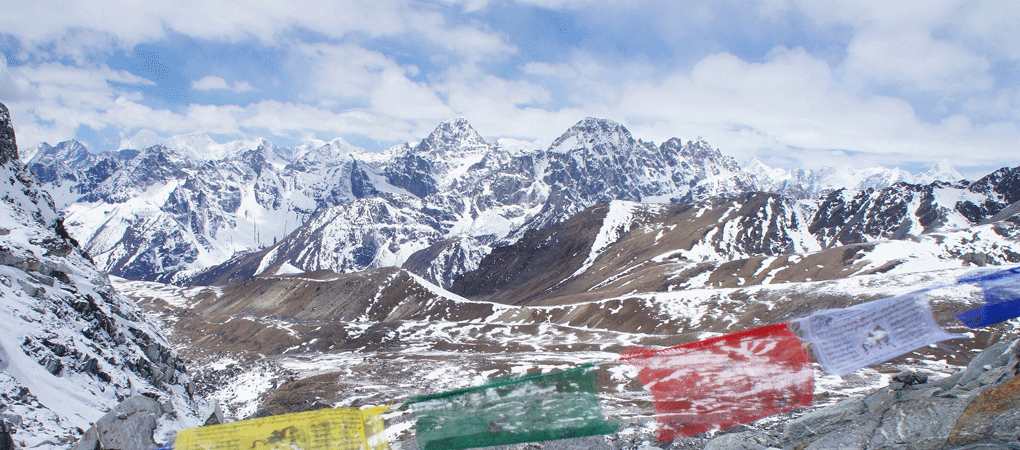
During the Everest Base Camp, Cho La Pass Gokyo trek, every trekker is rewarded with some of the most dramatic landscapes of the Everest zone. It offers the stunning vista of four of the world’s fourteen high peaks, which are above 8000 meters above sea level. They are Everest (8848m), Lhotse (8516 m), Makalu (8463m), and Cho Oyu (8201m). The awesome mountain views are complemented by the crossover Cho La Pass, a climb to Gokyo Ri, and a visit to pristine Gokyo Lake, Himalayan glaciers, Sherpa villages, and Buddhist monasteries.
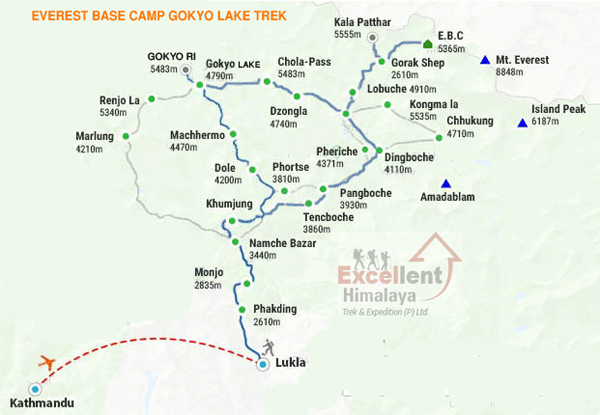
The exciting trek to Everest Base Camp, Cho la Pass Gokyo commences after a 35-minute flight to Lukla. Then you follow the Dudh Kosi valley passing the places of Phakding, Benkar, and Monjo to reach Namche Bazaar. In Namche Bazaar, also known as the capital of the Sherpas, you spend one more day acclimatization to minimize the risk of high altitude problems in further trekking days.
After leaving Namche Bazaar, the trail deviates from one trail that goes to Everest Base Camp and another to Gokyo Lake. If you visit Everest Base Camp first, follow the trail towards Everest Base Camp through Tengboche, Dingboche. In Dingboche at (Alt. 4,260 m/13,980ft), you get one more resting day for better acclimatization.
From Dingboche, after two days of hiking, you reach Everest Base Camp. After the visit to the south base camp of Mount Everest, the hike to the top of Kalapathar (Alt. 5555m/18225ft), the black rock nearby Gorakshep, provides a 360-degree awesome panorama of the world’s tallest mountains of Mount Everest, Mount Lhotse, Mount Pumori, Mount Lobuche, Mount Nuptse, and other surrounding peaks. From this elevation, the true height of Everest becomes clear. The entire south face of Everest is visible.
After the visit to EBC and Kalapatthar, you will retrace down to Lubuche and follow the trail to Cho La Pass. Cho La Pass is one of the high mountain passes in the Everest region at an altitude of 5330 m/17487ft. After the cross of Cho La pass, you descend to the Gokyo Lakes Valley.
The beautiful Gokyo Lake is at an altitude of 4750 m. It is situated on the Ngozumpa glacial moraine. Gokyo Lake is also the origin of the Dudh Koshi River. The next day of arrival at Gokyo Lake, the climb up to Gokyo Ri (5,483 m) also offers an outstanding sunrise with views of Cho Oyo, Ghyachung Kang, Everest, Lhotse, and Makalu over the glacier. After Gokyo, you go back to Namche Bazaar through Machhermo and Dole. From Namche Bazaar, in one day, you arrive at Lukla. You end your hiking trip in Lukla. Finally, from Lukla, you will back to Kathmandu.
In summary, the highlights of the Everest Base Camp Gokyo Lake Trek are as below:
- Reaching the iconic Everest Base Camp at the foot of the world’s highest mountain
- Sunrise at Kala Patthar with direct views of Mount Everest, Nuptse, Lhotse, and the Khumbu Glacier
- Summit of Gokyo Ri (5,357 m) overlooking the entire Gokyo Valley, Cho Oyu, and surrounding mountains
- Series of sacred Gokyo Lakes including the famous Third Lake (Dudh Pokhari)
- Views of Ngozumpa Glacier, the largest glacier in the Himalaya
- Glacier traverse across Cho La Pass with steep climbs
- Authentic Sherpa villages and Buddhist monasteries including historic Tengboche. The Gokyo Lake trek offers trekkers the opportunity to immerse themselves in Sherpa culture by passing through traditional villages and interacting with local communities. Trekkers can also experience local cultural celebrations such as Lhosar, Dumji, and Mani Rimdu if trekking during festival times.
- Full immersion in Sagarmatha National Park, a UNESCO World Heritage Site
- Panoramic vistas from Everest View Hotel, a renowned viewpoint for Everest and surrounding peaks
Outline Itinerary of Everest Base Camp with Gokyo Lake Trek
| Day 01: Arrival at Tribhuvan International Airport in Kathmandu. Overnight at the Hotel in Kathmandu. |
| Day 02: Morning flight to Lukla (2804m/9199ft). Trek from Lukla to Phakding (Alt. 2610m/8563ft). Walking 4 hours. Overnight at Tea House. |
| Day 03: Trek from Phakding to Namche Bazaar (Alt. 3441m/11289ft). Walking 6 hours. Overnight at Tea House. |
| Day 04: Day for Acclimatization in Namche Bazaar. Day trip to Shyangboche and Khumjung Village (Alt. 3780m/12402ft) and trek back to Namche Bazaar. Walking 5 hours. Overnight at Tea House. |
| Day 05: Trek from Namche Bazaar to Tengboche (Alt. 3860m/12664ft). Walking 6 hours. Overnight at Tea House. |
| Day 06: Trek from Tengboche to Dingboche (Alt. 4350m/14272ft). Walking 6 hours. Overnight at Tea House. |
| Day 07: Day for Acclimatization in Dingboche. Walk around Dingboche. Walking 3/4 hours. Overnight at Tea House. |
| Day 08: Trek from Dingboche to Lobuche (Alt. 4910m/4910ft). Walking 6 hours. Overnight at Tea House. |
| Day 09: Trek from Lobuche to Everest Base Camp (Alt. 5365m/17602ft) then back to Gorak Shep. Walking 7:30 to 8 hours. Overnight at Tea House. |
| Day 10: Early in the morning, hike up to Kalapatthar (Alt. 5555m/18225ft), then trek down to Dzongla (4830m/15850ft). Walking 7 hours. Overnight at Tea House. |
| Day 11: Trek from Dzongla to Thangnak (4850m/15912ft) crossing Cho La Pass (5330 m/17487ft). Walking 7 to 8 hours. Overnight at Tea House. |
| Day 12: Trek from Thangnak to Gokyo Lake (4750m/15584ft). Walking 4/5 hours. Overnight at Tea House. |
| Day 13: Hike up to Gokyo Ri (5357m/17575 ft) & rest day in Gokyo. Walking 3/4 hrs. Overnight at Tea House. |
| Day 14: Trek from Gokyo Lake to Dole (4110m/13484ft). Walking 6 hours. Overnight at Tea House. |
| Day 15: Trek from Dole to Namche Bazaar (3440m/11286ft). Walking 5/6 hours. Overnight at Tea House. |
| Day 16: Trekking from Namche Bazaar to Lukla (Alt. 2804m/9199ft). Walking 7/8 hours. Overnight at Tea House. |
| Day 17: Flight back from Lukla. The rest of the day at leisure in Kathmandu. Overnight at the Hotel in Kathmandu. |
| Day 18: Final departure from Nepal. |
Excellent Himalaya Trek specializes in tailor-made EBC Gokyo itineraries with strategically built-in acclimatization days in Namche Bazaar and either Dingboche or Machhermo. These acclimatization days are essential for altitude adjustment and safety, allowing trekkers to rest, explore local culture, and prepare mentally and physically for higher elevations, optimizing both safety and success rates on this demanding route. Along the forested and alpine sections, trekkers may also spot mountain goats as part of the region’s diverse wildlife. Staying in local tea houses run by Sherpas provides insights into the daily lives and traditions of the local communities, fostering a deeper understanding of their culture.
Everest Base Camp Gokyo Lake Trek Cost
If you are dreaming an adventure to reach Mount Everest Base Camp while exploring the stunning turquoise Gokyo Lakes, set against the backdrop of the surrounding snow-capped mountains and want to fulfill this dream, it needs to understand the full cost before you book helps you budget confidently and avoid surprises on the trail. This comprehensive page covers everything you need to know about the Everest Base Camp Gokyo Lake combined trek cost, from package pricing with Excellent Himalaya Trek and Expedition Pvt. Ltd to daily expenses, permits, and practical money-saving strategies.
Quick Answer: Total Cost for Everest Base Camp Gokyo Lake Combined Trek
If you want to experience both the iconic Everest Base Camp and the serene Gokyo Lakes in one journey through the Everest region, expect to pay between USD 1,330–1,450 per person as per your group size for 18 day package with Excellent Himalaya Trek and Expedition Pvt. Ltd in 2026/2027. This price covers the essential elements that make organizing your trek straightforward and stress-free.
| If you are 9 to 10 people | USD 1330 Per Person |
| If you are 7 to 8 people | USD 1360 Per Person |
| If you are 5 to 6 people | USD 1390 Per Person |
| If you are 3 to 4 people | USD 1420 Per Person |
| If you are 2 people | USD 1450 Per Person |
Note: If you are single, we also organize the Solo EBC Gokyo Lake Trek. For Solo Trek, the single supplement cost will be applied.
Our direct local operation eliminates middlemen markups, delivering rates approximately 30% lower than international operators while maintaining the same quality of service, safety standards, and ethical treatment of guides and porters.
No surprise costs await you on the trail. Every essential expense from the Sagarmatha National Park permit to your domestic flights, tea houses accommodation, and three meals daily is locked into your quoted price before your adventure begins.
What is typically included in the package price:
| • On your arrival day, an airport pickup service by car. |
| • 2-night accommodation in Kathmandu at 3 Star Standard Hotel with breakfast (1 night before the trek and 1 night after the trek). |
| • Air Tickets for Lukla Flights. |
| • Airport tax on Lukla flights. |
| • 15-night accommodation in Mountain Lodge/ Tea House during trekking. |
| • 3 Meals (breakfast, lunch, and dinner) in a day during the trek. |
| • During trekking, one experienced a friendly trekking Guide. |
| • Expenses for food, accommodation, insurance, transport, and the wages of trekking staff. |
| • Trekking Permit (TIMS Card)/ Khumbu Gaun Palika fee. |
| • Sagarmatha National Park fee. |
| • All ground transport types are as mentioned in the itinerary. |
| • Altitude medicines, Oximeter, and first aid medicines. |
| • Map of the Everest Base Camp Gokyo Lake Trekking route. |
| • Seasonable fruits and Water Purification Tabs (Aqua tabs). |
| • Micro spikes (crampons). |
| • Trip Achievement Certificate will be awarded after completion of the trip. |
| • All government taxes, local taxes, and tourist service charges. |
| • On your departure day, airport drop-off service by car. |
What is typically excluded from the package price:
| • Airfare for your international flight. |
| • Nepal Visa Fee (You can easily get a Nepal visa upon arrival at the airport in Kathmandu) |
| • Your travel insurance (As the EBC Gokyo Lake trek is a high altitude journey, it is advised to do travel insurance which covers medical & heli evacuation.) |
| • Alcoholic beverages, Hot and cold drinks, hot water, bottled water, and dessert. |
| • All kinds of personal expenses like phone calls, internet use, laundry, battery charge, hot shower during trekking, excess baggage charge, etc. |
| • Lunch and dinner in Kathmandu |
| • Porter |
| • In case of emergency helicopter rescue/ evacuation & its cost. |
| • Tips for Trekking Staff. |
| • Any expenses arising due to unforeseen situations like flight cancellation, personal sickness, natural calamities, political strikes, etc. |
| • Cost of any extra services, if you use those that are not mentioned in the above package, is included section. |
Note: If you are single and want to do a Solo Trek. We also organize the Solo EBC Gokyo Lake for solo trekkers. For the solo trekker, we have a separate price. Please contact us for the Everest Base Camp Gokyo Lake Trek cost for Solo Trekking.
Please contact us by email at [email protected] or WhatsApp at +977 9851203181 for any further information about the EBC Gokyo Lake Trek, or if any questions. Once we receive your message, we will get back to you within 24 hours.
Excellent Himalaya Trek offers fully private departures for families or friends traveling together. The per-person cost decreases when the more number of trekkers book together, as guide and accomodation costs are shared efficiently across the group.
When calculating your realistic all-in budget including extras and tips, most trekkers should plan around USD 1,700–2,100 depending on personal spending habits and travel style. This accounts for approximately USD 300–500 in additional expenses beyond the package price.
Why You’ll Love Our Trek Pricing
- 30% Lower Cost – Direct booking with a Nepal-based trekking company means no commission fees to foreign tour operators, keeping your Everest trek cost significantly below market averages
- Zero Hidden Fees – All permits, Lukla flights, meals, accommodation in trekking lodges, and guide services included upfront with complete transparency
- Flexible Payment Options – Secure your spot with only 10% deposit; pay the remaining balance before your trek starts at Tribhuvan International Airport
- Free Gear Storage – Complimentary equipment storage in Kathmandu during your Himalayan journey, so you can travel light before and after the trek
What Makes Our Pricing Different
Most trek package providers advertise low base costs, then add permit fees, insurance charges, and “local taxes” once you arrive in Nepal. This creates frustrating hidden costs that can inflate your final bill by 20-40%.
Excellent Himalaya Trek & Expedition operates differently:
- Direct Local Operation – As a recognized Trekking Agencies Association of Nepal (TAAN) member, we employ our own licensed guides and maintain direct relationships with tea houses throughout the Khumbu region, eliminating unnecessary markup layers
- Fixed 2026 Rates – Your quoted price remains locked regardless of fuel increases, permit fee adjustments, or currency fluctuations that occur after booking that gives you complete budget certainty
Cost Overview & Budget Planning for EBC Gokyo Lake Combined Trek
Your total cost for the Everest Base Camp Gokyo Lake combined trek depends on several key factors: trek duration, travel season, group size, accommodation standard in Kathmandu, and whether you choose a fully packaged arrangement or coordinate elements independently. You must also obtain Sagarmatha National Park permit and Khumbu Gaunpalika permt, which are essential for legal trekking in the Everest Region and cost between $50 and $60 USD. Understanding these variables helps you plan a realistic budget before you arrive in Nepal.
The typical duration for a trek to Everest Base Camp and Gokyo Lakes is 18 days. Here’s exactly what our package tier includes:
| Lukla Flights | Included ($506 value) |
| Permits (Sagarmatha NP + Municipality) | Included ($60 value) |
| Licensed Guide | Included ($25/day) |
| Porter Service | Shared (1:2 ratio) |
| Accommodation | Twin-share tea houses |
| Meals | 3 meals daily |
| Kathmandu Hotel | 2 nights B&B |
Typical price ranges for EBC Gokyo Lake combined trek packages:
| Package Type | Price Per Person (USD) | Best For |
| Standard small-group package with Excellent Himalaya Trek | 1,350–1,650 | Most trekkers seeking good value, safety, and reliable service |
| Private or upgraded comfort options | 1,650–1,950 | Solo travelers, couples wanting privacy, or those preferring better Kathmandu hotels and single rooms where available |
On top of your package cost, plan an additional USD 300–500 for personal expenses during the trek. This covers items like hot showers, device charging, Wi-Fi access, snacks and drinks beyond meals, tips for your guide and porter team, souvenirs, and any gear rentals in Kathmandu. Food and water costs typically rise with altitude, averaging $25–$50 per day.
Planning your budget in advance is essential because ATMs are unreliable or completely absent beyond Namche Bazaar. Running out of cash in the upper Khumbu means being unable to pay for extras or emergencies—a situation easily avoided with proper preparation.
Transportation costs for the Gokyo Lake Trek, including flights from Kathmandu to Lukla, typically range between $180 and $250 for a one-way ticket, with total transportation costs for most trekkers ranging from $320 to $380.
The total cost of the Gokyo Lake Trek can vary significantly based on trekking method, travel style, and additional expenses, with some trekkers spending over $1,200 for comfort and convenience, while others spend less than $700 on a simpler trek.
Excellent Himalaya Trek provides clients with a detailed cost breakdown before booking, showing exactly what is included and excluded. The company maintains a no-hidden-charges policy, ensuring you know precisely what you’re paying for and can budget accurately for your Everest trek adventure.
Detailed Cost Breakdown
This section breaks down all major cost components for the EBC Gokyo Lake combined trek with approximate 2024/2025 prices. Whether you’re booking a complete package or arranging some elements independently, understanding each expense category helps you make informed decisions and compare options effectively.
All prices are listed in USD and based on typical 18–20 day EBC Gokyo itineraries starting and finishing in Kathmandu. The following subsections cover: permits and entry fees, domestic flights, accommodation costs, meals and drinking water, guide and porter, transportation, gear and equipment, travel insurance, and miscellaneous daily expenses.
Permits and Entry Fees
Two mandatory permits are required for the Everest Base Camp Gokyo Lake combined trek, and both are strictly enforced at checkpoints along the route. Two permits are essential for legal trekking in the Everest Region, serving both environmental protection and legal compliance, and typically cost between $50 and $60 USD:
| Permit | Cost (NPR) | Cost (USD) | Where Checked |
| Sagarmatha National Park Entry Permit | NPR 3,000 | ~USD 23–25 | Monjo park gate |
| Khumbu Pasang Lhamu Rural Municipality Permit | NPR 3,000 | ~USD 23–25 | Lukla or Khumbu checkpoint |
| Total permit cost | NPR 6,000 | ~USD 46–50 | — |
The Sagarmatha National Park permit grants access to the protected area surrounding Mount Everest and the Gokyo Lakes, while the rural municipality permit supports local communities in the Khumbu region. Both permits are mandatory regardless of your trek route or duration.
Excellent Himalaya Trek includes both permits in the standard package price. The company handles all permit formalities using your passport scans before arrival, eliminating the need for you to queue at government offices in Kathmandu. This saves time and ensures all documentation is correctly prepared before the trek begins.
Trekking without valid permits risks significant fines at checkpoints or being turned back—a situation that would derail your entire journey.
Domestic Flights: Kathmandu / Manthali, Ramechhap – Lukla – Return
The Everest Base Camp Gokyo Lake combined trek begins with a dramatic 30–35 minute scenic flight to Tenzing-Hillary Airport in Lukla, often described as one of the most thrilling flight experiences in the world. Depending on aviation rules and seasonal conditions, flights depart from either Tribhuvan International Airport in Kathmandu or Manthali Airport in Ramechhap.
2026 flight price for foreign nationals as per the fare from 1st April 2026:
| Route | One-Way Price (USD) | Notes |
| Kathmandu to Lukla | 253 | Direct 30-minute flight |
| Manthali to Lukla | 207 | Requires 5–6 hour road transfer from Kathmandu (often leaves pre-dawn) |
| Round-trip Lukla flight | 414–506 | Standard for most trek packages |
When flying from Manthali, add approximately USD 20–30 per person for shared tourist vehicle transfer from Kathmandu, or USD 120–160 for a private jeep. This routing is sometimes mandated during peak season when Kathmandu airport restricts morning flights due to congestion.
Excellent Himalaya Trek includes round-trip Lukla flights and any necessary Manthali transfers in the package price, managing all bookings and logistics on your behalf.
Weather delays are common on the Lukla route due to the mountain airport’s challenging location. Approximately 40% of flights experience some delay during peak season. Always allow at least one buffer day in Kathmandu on each side of your trek when booking international flights. This flexibility prevents missed connections and unnecessary stress.
Helicopter options are available in cases of prolonged flight cancellations and can cost USD 400–600 per person when shared among passengers. Helicopter charter is not included in standard packages unless specifically requested.
Accommodation Costs
Accommodation during the EBC Gokyo combined trek splits between Kathmandu hotels and tea houses along the trekking route.
In Kathmandu: Most packages include 2–3 nights in a tourist-standard 2–3 star hotel in the Thamel area, with breakfast included. If booking independently, expect to pay USD 35–60 per room per night for mid-range accommodation suitable for pre- and post-trek stays.
On the trek: Accommodation is in traditional tea houses—local lodges offering basic but adequate facilities. Tea houses vary significantly by location:
| Location | Room Rate (Twin-Sharing) | Typical Facilities |
| Lower elevations (Lukla, Phakding, Namche) | USD 6–15 per night | Shared bathrooms, communal dining, sometimes attached bathrooms available for extra |
| Higher elevations (Dingboche, Gokyo Village, Gorakshep) | USD 8–20 per night | More basic, squat toilets, no heating, colder rooms |
Standard Excellent Himalaya Trek packages include:
- 2–3 nights hotel in Kathmandu with breakfast
- 15–16 nights standard twin-sharing tea house accommodation along the entire route
Extra services available at additional cost on the spot include attached bathrooms (where available in Lukla, Phakding, and Namche Bazaar), thicker mattresses, and room heaters. These upgrades typically cost USD 5–10 extra per night.
Solo trekkers should be aware that single-room supplements apply in Kathmandu and sometimes at higher-altitude tea houses during peak seasons. Budget an extra USD 10–20 per night if you prefer not to share a room with another trekker.
Meals and Drinking Water
Food costs represent a significant portion of daily expenses on the Everest Base Camp trail because everything—rice, vegetables, eggs, fuel—must be transported up from lower regions by porters, yaks, or mules. Prices increase progressively with altitude.
Typical standalone food costs when not in a package:
| Meal | Price Range (USD) |
| Breakfast (oatmeal, eggs, Tibetan bread, pancakes) | 5–8 |
| Lunch (dal bhat, fried rice, noodles, soup) | 7–10 |
| Dinner (dal bhat, pasta, momos, pizza in larger villages) | 8–12 |
| Average daily food cost | 25–35 |
Excellent Himalaya Trek’s standard package covers three meals per trekking day (breakfast, lunch, dinner) plus tea or coffee at breakfast. This arrangement makes your daily spending far more predictable and eliminates the hassle of negotiating food costs at every stop.
Common menu items across tea houses include dal bhat (the traditional Nepali staple of rice, lentils, vegetables, and pickle), fried rice, chow mein noodles, pasta, soups, Tibetan bread, omelets, and momos (dumplings). Larger villages like Namche Bazaar and Lukla offer limited Western dishes such as pizza, burgers, and bakery items—though prices are substantially higher than in Kathmandu.
Drinking water options and costs:
| Option | Cost | Notes |
| Boiled or filtered water at tea houses | USD 1–3 per liter | Price increases with altitude |
| Bottled water | USD 2–5 per liter | Expensive and environmentally damaging due to plastic waste |
| Water purification tablets or filter bottle | One-time purchase: USD 20–40 | Most economical long-term, eco-friendly |
We strongly recommend bringing water purification tablets or a filter bottle like LifeStraw or Grayl. This approach saves USD 50+ over a typical trek while reducing plastic pollution in Sagarmatha National Park, a growing environmental concern in the Everest region.
Guide, Porter, and Staff Costs
Hiring a professional licensed guide and porter is strongly recommended for the EBC Gokyo via Cho La Pass route. The combination of high altitude, challenging route-finding over the rocky and sometimes icy pass, and the risk of acute mountain sickness makes experienced support essential for most trekkers.
Independent hiring rates (if arranging separately):
| Staff Type | Daily Rate (USD) | Includes |
| English-speaking licensed trekking guide | 30–40 | Salary, food, accommodation, basic insurance |
| Porter (carries up to 18–20 kg shared load) | 22–28 | Salary, food, lodging, basic insurance |
Excellent Himalaya Trek packages include:
- Experienced, government-licensed guide familiar with EBC, Gokyo Valley, and Cho La Pass conditions
- One porter in optional on your request at additional cost. Porter is arranged for every two trekkers as standard
- Staff insurance, equipment, wages, food, and accommodation throughout the trek
- Ethical treatment following Trekking Agencies Association of Nepal (TAAN) standards
Tipping guidelines: The customary tip for guide and porter teams is approximately 10–15% of your trek package cost, divided appropriately with the guide receiving a larger share. For an 18–20 day EBC Gokyo trek, budget around USD 150–250 total for tips, given in Nepali rupees or USD at the end of the trek in Lukla or Kathmandu.
Excellent Himalaya Trek follows strict ethical porter treatment standards, providing proper gear, enforcing weight limits (no more than 20 kg per porter), and ensuring adequate food and shelter for all staff. This commitment supports local communities and ensures your trek operates responsibly.
Transportation in Kathmandu and to Manthali
Ground transportation forms a small but necessary part of your EBC Gokyo trek logistics, covering airport transfers in Kathmandu and potential road travel to Manthali for Lukla flights.
Standalone transportation costs if arranging independently:
| Service | Cost (USD) |
| Private airport-hotel transfer in Kathmandu | 10–20 per vehicle each way |
| Kathmandu to Manthali (shared tourist vehicle) | 20–30 per person each way |
| Kathmandu to Manthali (private jeep) | 120–160 per vehicle |
Excellent Himalaya Trek includes all necessary domestic transfers in the EBC Gokyo combined trek package. This means guests don’t need to negotiate taxis, find bus connections, or worry about predawn departures for Manthali. Everything is arranged and the driver will collect you from your hotel at the appropriate time.
This convenience factor is particularly valuable after a long international flight or immediately following a demanding 16-day trek when navigating Kathmandu’s chaotic traffic is the last thing you want to manage.
Gear and Equipment Costs
Many trekkers rent or purchase missing gear in Thamel, Kathmandu’s tourist district, before departure to Lukla. The quality of rental gear has improved significantly in recent years, making this a practical option for items you won’t use regularly at home.
Key personal gear items relevant to budgeting:
- Down jacket (essential for temperatures dropping to –15°C at high camps)
- Sleeping bag rated to at least –10°C (tea house blankets are often insufficient)
- Trekking poles (highly recommended for steep descents and Cho La Pass)
- Headlamp with spare batteries
- Warm base layers, fleece jacket, and windproof outer layer
- Insulated gloves and warm hat
- Quality sunglasses with UV protection
- Duffel bag for porter to carry and daypack for daily essentials
- Sturdy, broken-in trekking boots
Typical rental prices in Kathmandu:
| Item | Rental Price (USD) |
| Down jacket | 1–2 per day |
| Sleeping bag (–10°C rated) | 1–2 per day |
| Trekking poles | 1 per day or 10–15 to purchase basic set |
| Complete rental package (jacket, bag, poles, other items) | 80–150 for 18–20 days |
Buying versus renting depends on your future trekking plans and quality preferences. Budget between USD 80–250 for gear acquisition before your EBC Gokyo trek, depending on how much equipment you already own and the quality level you prefer.
Excellent Himalaya Trek assists clients with finding reliable rental shops in Thamel and may provide complimentary duffel bags for use during the trek.
Travel Insurance for High Altitude Trekking
Comprehensive travel insurance covering high altitude trekking and emergency helicopter evacuation is mandatory for the EBC Gokyo combined trek. No reputable trekking company will allow you to depart for Lukla without valid coverage, and you shouldn’t want to either. To trek safely, it is essential to have travel insurance that covers high-altitude risks, emergencies, and medical assistance.
Insurance requirements:
| Coverage Element | Minimum Requirement |
| Altitude coverage | Up to 5,500–6,000 meters |
| Emergency medical treatment | Full coverage in Nepal |
| Helicopter rescue and evacuation | Essential—rescues cost USD 4,000–5,000+ |
| Trip interruption and cancellation | Recommended |
| Repatriation to home country | Recommended |
Typical cost: USD 100–180 for a 2–3 week policy, varying by age, country of residence, and coverage level.
Popular insurers offering suitable high-altitude policies include World Nomads, Global Rescue, and IMG Global. Verify that your policy explicitly covers trekking to the elevations you’ll reach and includes helicopter evacuation in Nepal—standard travel insurance often excludes both.
Excellent Himalaya Trek requests that clients share their insurance details and emergency contact information before trek departure. This enables the company to facilitate fast assistance if medical evacuation or emergency support becomes necessary at altitude.
Other Daily and Miscellaneous Expenses
Beyond your package inclusions, several daily extras add up over a 16-day trek. Planning for these expenses prevents frustration and ensures you can enjoy small comforts without worry.
Typical extra costs not covered in standard packages:
| Item | Cost (USD) |
| Hot showers at tea houses | 3–6 per use |
| Battery/device charging | 2–4 per device per charge |
| Wi-Fi access (via Everest Link cards) | 2–5 per day or per login |
| Snacks and bakery items | 2–5 each |
| Soft drinks | 3–5 per bottle |
| Beer or alcohol | 5–8 per bottle/can (prices increase with altitude) |
| Souvenirs in Namche or Lukla | Variable |
Budget approximately USD 10–20 per day in personal spending if you enjoy hot showers, warm drinks beyond your included meals, occasional treats, and want reliable Wi-Fi to share photos or check messages.
Critical reminder about cash: ATMs are only reliably available in Kathmandu and sometimes in Namche Bazaar. Beyond Namche, no banking facilities exist. Carry all the Nepali rupees you’ll need for personal expenses from Kathmandu—approximately USD 200–400 equivalent in small denomination NPR notes works well for most trekkers on an 18–20 day journey.
EBC Gokyo Lake Combined Trek Cost by Group Size, Trek Style, and Season
Your per-person cost for the Everest Base Camp Gokyo combined trek varies significantly based on how many people share services, what level of comfort you choose, and when you travel. Understanding these factors helps you optimize value for your specific situation.
How Excellent Himalaya Trek pricing typically scales by group size:
| Group Size | Per-Person Cost Trend | Why |
| Solo private trekker | Highest per-person rate (+20–30% premium) | Private guide, dedicated porter, single room throughout |
| 2 trekkers together | Noticeable discount | Shared guide costs, one porter for both |
| 3–6 trekkers | Best value per person | Efficiently shared guide and porter team |
Seasonal pricing variations:
| Season | Months | Conditions | Pricing Impact |
| Peak spring | March–May | Clear mornings, rhododendron blooms, moderate temperatures | Standard to +10% (high demand) |
| Peak autumn | Late September–November | Most stable weather, clearest mountain views, busiest trails | Standard to +15% (highest demand) |
| Shoulder seasons | Early March, late November, early December | Transitional weather, fewer crowds | 5–10% discounts often available |
| Winter | December–February | Very cold above 4,000 m, snow on Cho La Pass, some lodges closed | 15–20% discounts, but Cho La may be blocked |
| Monsoon | June–early September | Rain, clouds, leeches, high flight disruption risk | Rarely recommended for Cho La crossing |
Upgrading your Kathmandu hotels from tourist-standard to 4-star, or requesting attached bathrooms and room heaters where available on trek, increases overall cost modestly—typically USD 100–300 for the entire trip depending on availability.
Excellent Himalaya Trek provides custom quotes on request with transparent inclusions for different budget levels: budget, standard, and comfortable. Simply share your dates, group size, and preferences for an accurate estimate.
Typical Day, Duration & Difficulty (and How That Affects Cost)
The combined EBC and Gokyo trek typically runs 18–20 days from Kathmandu arrival to departure, with 5–7 hours of trekking most days covering distances of 10–17 km. The itinerary includes strategic acclimatization day(s) in Namche Bazaar (3,440 m) and either Dingboche (4,410 m) or Machhermo (4,470 m) to help your body adjust to diminishing oxygen levels. These acclimatization days are crucial for both mental and physical preparation, reducing the risk of altitude sickness and allowing for cultural exploration or gentle hikes.
How itinerary length affects cost and safety:
Longer itineraries with extra acclimatization or contingency days increase costs due to additional nights in lodges, extra meals, and extended staff wages. An 18-day trek costs more than a 14-day version simply because of these added expenses.
However, adequate acclimatization significantly improves your success rate and safety, particularly for the challenging Cho La Pass crossing. Research by the Himalayan Rescue Association shows that rushed itineraries skipping rest days increase acute mountain sickness incidents by 20–30%.
The Gokyo Lake Trek is generally rated as moderate to challenging due to its high altitude, reaching 4,790 meters above sea level. Trekkers may experience mild altitude-related symptoms such as shortness of breath or headaches due to the high elevation. The trails are well-marked and mostly gradual, but there are some steep climbs and long hiking days that require good stamina and a reasonable level of fitness. Daily walking distances are manageable for most healthy travelers, making the trek accessible even for first-time trekkers with proper preparation and pacing.
The trek is graded challenging due to:
- Sustained high altitude above 4,000 m for 10+ consecutive days
- Cho La Pass crossing (5,420 m) over rocky, sometimes icy terrain requiring scrambling and steep climb sections that demand extra caution and skill
- Total distance of approximately 135–150 km over 15–16 trekking days
- Daily walking time of 5–7 hours, often on steep inclines and descents
No technical climbing equipment or mountaineering experience is required, but reasonable cardiovascular fitness (ability to hike 8 hours daily with 10–15% incline) and previous multi-day trekking experience are strongly recommended.
Some travelers attempt to reduce costs by choosing shorter itineraries that eliminate rest days. Excellent Himalaya Trek advises against cutting acclimatization days because the savings (perhaps USD 100–200) are far outweighed by increased health risks and lower summit success rates. Your safety matters more than marginal cost reduction.
Best Time to Do Everest Base Camp Gokyo Lake Combined Trek (Cost vs. Conditions)
The best trekking season balances stable weather, clear mountain views, moderate lodge availability, and reasonable pricing. Your chosen travel window directly influences both your experience quality and trek cost.
Season-by-season breakdown:
| Season | Conditions | Pros | Cons | Pricing |
| Spring (March–May) | Clear mornings, moderate temperatures (5–15°C at lower altitudes), rhododendron blooms | Beautiful scenery, reliable Cho La crossing, comfortable temperatures | Some afternoon clouds, moderate crowds | Standard pricing |
| Autumn (Late Sept–Nov) | Most stable weather, crystal-clear mountain views, excellent visibility | Best photography conditions, reliable flights, all lodges open | Most crowded period, accommodation may fill | Full-rate to +15% |
| Winter (Dec–Feb) | Very cold (–20°C at high camps), potential snow on Cho La Pass | Fewer trekkers, potential discounts, dramatic winter landscapes | Some lodges closed, Cho La may be blocked, challenging conditions | 15–20% discounts possible |
| Monsoon (June–early Sept) | Rain at lower altitudes, clouds obscuring views, leeches on trails | Lush greenery, very few other trekkers | High flight disruption, poor visibility, difficult Cho La | Not recommended for most trekkers |
Choosing off-peak months at the shoulders of main seasons—early March, late November, or early December—can secure slightly better pricing without sacrificing safety significantly. You’ll encounter fewer crowds while still enjoying relatively stable weather windows.
Excellent Himalaya Trek provides updated seasonal advice on both conditions and cost before confirming any booking, helping you choose dates that match your priorities whether that’s best weather, lowest cost, or smallest crowds.
Money-Saving Tips for Everest Base Camp Gokyo Lake Combined Trek
Trekking to Everest Base Camp and Gokyo Lakes doesn’t require unlimited funds. With smart planning, you can enjoy the full experience on a controlled budget without compromising safety or missing key highlights.
Practical tips to reduce your EBC Gokyo combined trek cost:
- Travel with a small group (3–6 people) to share guide, porter, and logistical costs—this alone can save 20–30% per person compared to solo trekking.
- Book international flights early and stay flexible with dates to capture lower airfares. Flying midweek and avoiding school holiday periods typically offers better prices.
- Rent big-ticket gear items in Kathmandu instead of buying expensive new equipment for a single trip. Down jackets and sleeping bags rent for just USD 1–2 per day.
- Choose standard tea houses throughout rather than seeking upgraded options. Focus your spending on safety elements like quality insurance and experienced guides, not luxury.
- Use water purification methods instead of buying bottled water at every stop. A USD 25 filter bottle pays for itself within three days and eliminates plastic waste.
- Limit expensive extras like alcohol, bottled soft drinks, and daily hot showers. These small expenses add up quickly at altitude where everything costs more.
- Avoid last-minute peak season bookings when prices are highest and negotiating leverage is lowest. Planning 3–6 months ahead typically yields better rates and flight availability.
- Book directly with a local operator like Excellent Himalaya Trek rather than through large overseas agencies. Direct booking cuts overhead costs, keeps more money in Nepal’s local communities, and typically reduces your total price by 20–30% compared to Western tour companies reselling the same services.
The Gokyo Lake trek offers exceptional value because it combines two separate journeys into one. Doing EBC and Gokyo as independent trips would cost approximately USD 1,900–3,200 total plus double the international flights and Nepal visa time—making the combined route significantly more economical.
Why Book Your EBC Gokyo Lake Combined Trek with Excellent Himalaya Trek
Excellent Himalaya Trek and Expedition Pvt. Ltd is a legally registered, Kathmandu-based trekking company specializing in Everest region adventures including EBC, Gokyo Lake, Three Passes, and Island Peak expeditions. With deep experience on the EBC Gokyo via Cho La Pass route specifically, the company combines local expertise with transparent operations. Excellent Himalaya Trek is a proud member of the Nepal Mountaineering Association and the Trekking Agency Association of Nepal (TAAN), ensuring credibility, official recognition, and adherence to industry standards.
Key reasons to choose Excellent Himalaya Trek:
- Competitive, transparent pricing with itemized inclusions and a no-hidden-charges policy—you know exactly what you’re paying for before booking
- Experienced, government-licensed local guides familiar with EBC–Gokyo–Cho La routes, weather patterns, altitude management, and emergency protocols
- Ethical porter policy following Trekking Agencies Association of Nepal (TAAN) standards, including proper insurance, quality equipment, and enforced weight limits
- Flexible itineraries that can be customized for extra acclimatization days, side trips to additional lakes or Renjo La Pass, different hotel levels in Kathmandu, or adjusted pacing for your group
- Responsive communication before and during the trek, including 24/7 support from the Kathmandu office when you’re on the mountain
- 95%+ success rate on EBC Gokyo combined treks, achieved through proper acclimatization scheduling and experienced route management
The company balances affordability with safety and comfort, never compromising on essential elements like permits, staff insurance, or adequate acclimatization days to artificially lower prices. This approach means you get genuine value rather than a budget package that cuts corners where it matters most.
Frequently Asked Questions about Everest Base Camp Gokyo Lake Trek Cost
This section answers the most common cost-related questions from trekkers planning their Everest adventure. Upon arrival at the hotel, trekkers receive a trek briefing, which covers important safety information, itinerary details, and necessary preparations to ensure everyone is well-informed before starting the trek.
How much does the Everest Base Camp Gokyo Lake combined trek cost in 2024/2025 with Excellent Himalaya Trek?
Standard small-group packages (3–6 trekkers) for an 18–20 day EBC Gokyo via Cho La Pass trek cost approximately USD 1,350–1,650 per person with Excellent Himalaya Trek. Budget options start around USD 1,150–1,350, while private or upgraded packages run USD 1,650–1,950. These prices include permits, Lukla flights, guide, porter, accommodation, meals on trek, and Kathmandu transfers.
What is the minimum budget I should plan including personal expenses and tips?
Plan a realistic all-in budget of USD 1,700–2,100 per person for the complete trip. This includes your trek package plus approximately USD 300–500 for extras: hot showers, device charging, Wi-Fi, snacks, drinks, tips for guide and porter, souvenirs, and any gear rentals in Kathmandu. Budget trekkers who minimize extras can sometimes manage with USD 1,500–1,700 total.
Is it cheaper to trek independently without a guide and porter on the EBC–Gokyo–Cho La route, and what are the risks?
Yes, independent trekking is theoretically cheaper at approximately USD 800–1,200 for food, accommodation, permits, and flights. However, the risks are substantial. The Himalayan Rescue Association reports significantly higher acute mountain sickness incidents among independent trekkers due to poor altitude awareness and pressure to push through symptoms. Route-finding on Cho La Pass is genuinely difficult in poor visibility, and getting lost on a glaciated pass above 5,400 m without support can be life-threatening. Independent trekkers also lack evacuation coordination if emergencies arise—organizing a helicopter rescue alone from Gorakshep is extremely challenging. For most people, the modest savings aren’t worth these risks.
How much cash should I carry on the trek, and in which currency?
Carry approximately USD 400–600 equivalent in Nepali rupees, obtained in Kathmandu before departure. Request small denomination notes (100s, 500s, 1000s) as change can be difficult to find at high-altitude tea houses. Beyond Namche Bazaar, no ATMs or currency exchange facilities exist. Running out of cash means being unable to pay for showers, charging, drinks, tips, or emergency expenses.
Are there any hidden costs I should be aware of on the trail?
With a reputable operator like Excellent Himalaya Trek, there shouldn’t be hidden costs beyond the standard exclusions listed during booking. However, be aware of these common additional expenses: hot showers (USD 3–6), device charging (USD 2–4), Wi-Fi (USD 2–5 per day), helicopter evacuation if required (USD 400–600 shared, covered by insurance), extra acclimatization nights if altitude sickness requires extended rest (approximately USD 50–80 per day for accommodation, food, and staff), and single-room supplements during peak season.
How much should I tip my guide and porter at the end of the trek?
The customary tip is approximately 10–15% of your trek package cost, divided among the team. For a USD 1,500 package, this means USD 150–225 total. A common distribution gives the guide roughly 60% and porters 40% of the tip pool. For an 18-day trek with one guide and one porter, tipping around USD 90–135 for the guide and USD 60–90 for the porter is standard and appreciated. Tips are usually given in Nepali rupees or USD at the end of the trek.
Can I use credit cards or ATMs during the trek, and where?
Credit cards are rarely accepted anywhere on the trek—tea houses operate on cash only. ATMs exist in Kathmandu (reliable) and Namche Bazaar (less reliable, sometimes out of cash or experiencing technical issues). Beyond Namche, no banking facilities exist until you return. Withdraw all necessary cash in Kathmandu before your flight to Lukla.
Does the cost change if I add or remove days from the itinerary?
Yes. Adding extra days (for additional acclimatization, side trips to the fifth lake, or including Renjo La Pass) typically costs USD 50–100 per day for accommodation, meals, and staff wages. Shortening the itinerary slightly reduces costs but is generally not recommended due to altitude safety concerns. Excellent Himalaya Trek can provide custom quotes for modified itineraries.
Are there discounts for groups, early booking, or off-season departures?
Yes to all three. Groups of 3–6 trekkers receive the best per-person rates, saving 20–30% compared to solo travelers. Early booking (3–6 months ahead) sometimes secures better flight prices and lodge availability. Off-season travel (December–February, excluding holiday periods) may offer 10–20% package discounts, though Cho La Pass conditions become more challenging. Contact Excellent Himalaya Trek directly to discuss available discounts for your specific dates and group.
Ready to plan your Everest Base Camp Gokyo Lake combined trek?
If you understand the full cost picture before you book means fewer surprises and more confidence on the trail. Whether you are a budget-conscious solo traveler or organizing a group adventure, Excellent Himalaya Trek provides transparent pricing, experienced local guidance, and flexible itineraries tailored to your needs.
Contact Excellent Himalaya Trek and Expedition Pvt. Ltd via email or WhatsApp today for a personalized cost quotation based on your travel dates, group size, and preferences. The team is ready to help you plan an unforgettable journey through the Khumbu region to the foot of the world’s highest mountain.
Packing List for the Everest Base Camp Gokyo Lake Trek
This is a basic checklist of the essential items that you should not forget to bring with you during your Everest Base Camp Trek:
• A sturdy pair of trekking boots with good ankle support
• Rucksack or daypack (50 to 65 liters) with waterproof cover
• Trekking pants and waterproof trousers
• T-shirts or shirts
• Down jacket*
• Wind/ waterproof light jacket
• Fleece jumper or jacket
• Inner Thermal (top and trousers)
• 4 to 6 pairs of Socks and underwear
• Sunglasses, sun hat, woolen cap, or balaclava
• Inner and outer gloves
• Headlamp, power bank, and extra batteries
• Sun protection cream, lip balm, wet wipes, and hand sanitizer
• Towel, flip-flop or rubber sandal, toiletries
• One-litre water bottle and water purification tablets
• 4 Season sleeping bag (good to -20 degrees C or 28 degrees F) *
• Hiking poles, if you need
• Your daily medicine, if you are taking any, please carry them.
• A small daypack/backpack for carrying your valuables
*Down jacket and sleeping bag you can rent/hire from Trekking gear shops in Kathmandu
Itinerary
You will be met by our Tour officer in Kathmandu International Airport. He will escort you to the hotel. Briefing of Everest Base Camp Cho La Pass Gokyo Trekking. Overnight at Hotel in Kathmandu.
Flight 35 minutes. Walking 4 hours. Overnight at Mountain Lodge in Phakding.
Walking 6 hours. Overnight at Mountain Lodge in Namche Bazaar.
Walking 5 hours. Overnight at Mountain Lodge in Namche Bazaar.
Walking 5 to 6 hours. Overnight at Mountain Lodge in Tengboche.
Walking 6 hours. Overnight at Mountain Lodge in Dingboche.
Walking 4 to 5 hours. Overnight at Mountain Lodge in Dingboche.
Walking 5 to 6 hours. Overnight at Mountain Lodge in Lobuche.
Walking 7 to 8 hours. Overnight at Mountain Lodge in Gorakshep.
Walking 7 hours. Overnight at Mountain Lodge in Dzongla.
Walking 7 to 8 hours. Overnight at Mountain Lodge in Thangnak.
Walking 3:45/4 hours. Overnight at Mountain Lodge in Gokyo Lake.
Walking 3/4 hours. Overnight at Mountain Lodge in Gokyo Lake.
Walking 6/7 hours. Overnight at Mountain Lodge in Dole.
Walking 6 hours. Overnight at Mountain Lodge in Namche Bazaar.
Walking 7/8 hours. Overnight at Mountain Lodge in Lukla.
Flight from Lukla and back to Kathmandu. Overnight at Hotel in Kathmandu.
Our tour officer will drop you at Kathmandu International airport and see you off. End of Service. Or You may take optional side tours.
Ask our experts (Inquiry)
Why Travel with us?
- Run by local experts, guide & Sherpa.
- Focus on your needs.
- Good value for money.
- Real cared services.
- Government recognized company.
- Best reasonable rate.