


Everest Base Camp Trek Distance: Daily KM & Mile Breakdown (2026)

Updated [July 13th, 2026]. Written and reviewed by Suman Shrestha, licensed guide (Nepal Government License No. 2212)
If you’re planning your trek to the base of the world’s highest mountain, the first practical question is simple: how far will I actually walk, and how many kilometers is the EBC trek per day? The numbers matter — but understanding what those kilometers feel like at high altitude matters just as much.
Quick Answer: EBC Trek Distance, Days & Walking Hours
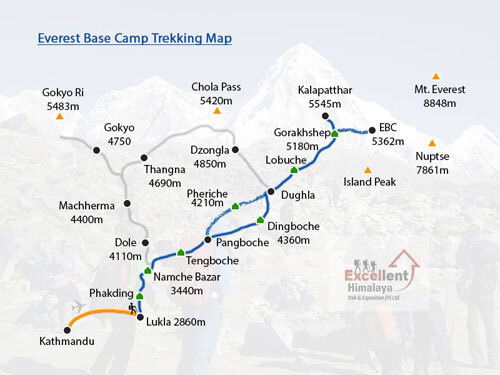
On the Everest Base Camp trek, trekkers cover an average daily walking distance of 10 to 15 kilometers (6 to 9 miles), depending on altitude, terrain, and acclimatization stops. The trek covers about 65 kilometers (40 miles) one way from Lukla to Everest Base Camp, for a total round-trip distance of 130 kilometers (80 miles). Daily walking time typically ranges from 5 to 8 hours, and the standard itinerary runs 12 trekking days plus built-in acclFimatization stops.
Featured Snippet Box: Everest Base Camp Distance in One Look
Total Lukla–EBC–Lukla distance: approximately 130 km (80 miles), about 65 km (40 miles) each way.
Typical duration: 12 trekking days plus 2 dedicated acclimatization days, averaging 5–8 walking hours per day.
Net elevation gain: about 2,500 m from Lukla (2,860 m / 9,383 ft) to Everest Base Camp (5,364 m / 17,598 ft) — which makes the same kilometers feel significantly harder than on flat ground.
Highest point reached: Kala Patthar at 5,545 m (18,192 ft), the trek’s best Everest viewpoint.
Everest Base Camp Daily Distance Table (Lukla to EBC & Back)
These distances come from Excellent Himalaya’s own standard acclimatization itinerary, walked by our guides dozens of times. Each day involves a multi-hour hike through varied terrain, ranging from a 3-hour warm-up day to an 8-hour high-altitude push.
| Day | Route | Distance (km) | Distance (mi) | Walking Time | Difficulty | Start Alt (m) | End Alt (m) |
| 1 | Lukla → Phakding | 8 | 5 | 3–4 hrs | Easy | 2,860 | 2,610 |
| 2 | Phakding → Namche Bazaar | 11–12 | 7 | 5–7 hrs | Moderate | 2,610 | 3,440 |
| 3 | Namche Acclimatization Hike | 5–7 | 3–4 | 3–5 hrs | Moderate | 3,440 | 3,880 (return to 3,440) |
| 4 | Namche → Tengboche | 10 | 6 | 5–6 hrs | Moderate | 3,440 | 3,867 |
| 5 | Tengboche → Dingboche | 10–11 | 6–7 | 5–6 hrs | Moderate | 3,867 | 4,410 |
| 6 | Dingboche Acclimatization Hike (Nangkartshang) | 5–6 | 3–3.7 | 4–5 hrs | Moderate–Hard | 4,410 | 5,000–5,083 (return to 4,410) |
| 7 | Dingboche → Lobuche | 8–9 | 5–5.5 | 5–6 hrs | Moderate | 4,410 | 4,940 |
| 8 | Lobuche → Gorak Shep → EBC → Gorak Shep | 11–12 | 7–7.5 | 7–8 hrs | Hard | 4,940 | 5,364 (sleep 5,164) |
| 9 | Gorak Shep → Kala Patthar → Pheriche | 13–15 | 8–9 | 7–8 hrs | Hard | 5,164 | 4,240 |
| 10 | Pheriche → Namche Bazaar | 18–20 | 11–12 | 7–8 hrs | Moderate | 4,240 | 3,440 |
| 11 | Namche Bazaar → Lukla | 18–20 | 11–12 | 7–8 hrs | Moderate | 3,440 | 2,860 |
| 12 | Buffer / Contingency Day | — | — | — | — | 2,860 | 2,860 |
Totals reconciled: ascent-phase distance (Days 1–9) plus descent-phase distance (Days 10–11) sum to approximately 130 km round trip. Figures are Excellent Himalaya’s own field measurements from repeated guided crossings and will vary ±10% by exact route, detours, and GPS device.
Key takeaways from the table
- Total trekking distance adds up to roughly 130 km, but side hikes, village detours, and acclimatization walks can add 5–10 extra kilometers.
- The ascent phase (Days 1–9) takes about 8 to 9 days; the descent phase (Days 10–11) takes only 3 to 4 days.
- Route variations like the Three Passes Trek or Gokyo Lakes extend the total distance to 160–180 km and the duration to 18–22 days.
The return trip covers the same 65 km but is noticeably faster — trekkers typically finish it in 3 to 4 days instead of 8, both because acclimatization is no longer needed and because descending at progressively lower altitudes means more oxygen with every step down.
Distance From Key Points: Segment-by-Segment Breakdown
Beyond the daily itinerary, many trekkers want to know the distance between specific landmarks — useful for comparing against a GPS watch, planning a custom pace, or understanding exactly how far the final push to Base Camp really is.
| Segment | Distance (km) | Distance (mi) | Typical Time |
| Lukla → Phakding | 8 | 5 | 3–4 hrs |
| Phakding → Monjo (park entry) | 5 | 3 | 2 hrs |
| Monjo → Namche Bazaar | 6–7 | 4 | 3–5 hrs |
| Namche → Tengboche | 10 | 6 | 5–6 hrs |
| Tengboche → Dingboche | 10–11 | 6–7 | 5–6 hrs |
| Dingboche → Thukla/Dughla | 4 | 2.5 | 2–3 hrs |
| Thukla → Lobuche | 4–5 | 2.5–3 | 2.5–3.5 hrs |
| Lobuche → Gorak Shep | 4.5–5 | 3 | 2.5–3 hrs |
| Gorak Shep → Everest Base Camp (one way) | 3.5–4 | 2–2.5 | 2–3 hrs |
| Gorak Shep → Kala Patthar (one way) | 1.5–2 | 1–1.2 | 2–3 hrs |
| Namche → EBC (cumulative, one way) | ~48 | ~30 | — |
These segment distances let you plan a custom pace or compare against your own GPS track. “Namche to EBC” is the figure most often asked about separately from the full Lukla start.

Distance vs Elevation: Why 10 KM in the Khumbu Feels So Long
Understanding EBC trek distance means looking beyond horizontal kilometers. The interplay between walking distance and altitude gain is what makes this journey both challenging and rewarding.
Key altitude markers along the route
- Lukla: 2,860 m (9,383 ft)
- Everest Base Camp: 5,364 m (17,598 ft)
- Kala Patthar: 5,545 m (18,192 ft)
Although the net elevation gain from Lukla to EBC is about 2,500 m, the actual cumulative ascent is far higher — closer to 10,000 m — because of repeated descents and re-ascents. You drop to Phunki Tenga before climbing to Tengboche. You descend from Thukla Pass before reaching Lobuche. This up-and-down trail pattern adds significant effort that a simple net-elevation number hides.
The altitude paradox, explained
- At 3,000–5,000 m, air holds far less oxygen, so each step uses more effort than the same step at sea level.
- Heart rate and breathing increase even on gentle slopes, making flat sections feel like a gradual uphill climb.
- Recovery between steps and after short climbs is slower, which forces a deliberately slow pace.
- As a result, 10 km at 5,000 m can easily take double or triple the time it would near sea level.
The Distance Reality Check: what 10 km actually feels like
Excellent Himalaya’s guides use a simple rule of thumb with clients: convert altitude kilometers into a sea-level equivalent based on the thinner air. It’s not a medical measurement, but it captures what every experienced trekker eventually feels on the trail.
| Altitude Band | Approx. Oxygen vs Sea Level | 10 km Feels Like (perceived effort) |
| Lukla / Phakding (2,600–2,900 m) | ~73–76% | 11–12 km at sea level |
| Namche / Tengboche (3,400–3,900 m) | ~64–68% | 14–16 km at sea level |
| Dingboche / Lobuche (4,400–4,900 m) | ~57–60% | 18–20 km at sea level |
| Gorak Shep / EBC / Kala Patthar (5,100–5,550 m) | ~50–53% | 22–25 km at sea level |
Oxygen percentages are approximate, based on standard barometric-pressure altitude tables, not a clinical measurement of any individual trekker. Actual perceived effort varies by acclimatization status, fitness, and pace.
In our own guiding experience, the last 600 m climb from Jorsale (2,740 m) up to Namche feels exponentially harder than the earlier flat 6–7 km along the Dudh Koshi River. Likewise, the short stretch from Thukla (4,620 m) to Thukla Pass (~4,830 m) — barely a kilometer — turns into a 45–60 minute ordeal on loose stone steps in thin air.
Day-by-Day Everest Base Camp Distance Breakdown
This is the realistic, ground-level breakdown our guides use, written for trekkers asking themselves: can I actually walk this far each day?
Day 1: Lukla to Phakding — Easing Into the Trek (8 km, Easy)
Approximately 8 km (5 miles) from Lukla (2,860 m) to Phakding (2,610 m), taking 3–4 hours along a gradual descent. After the scenic flight into Lukla, the route follows stone-paved village alleys, gentle downhill trails, and riverside walking beside the Dudh Koshi River, crossing 2–3 suspension bridges and passing mani walls and prayer wheels. Excellent Himalaya keeps Day 1 deliberately short so you have time to settle your nerves and begin acclimatizing gently.
Day 2: Phakding to Namche Bazaar — First Big Climb (11–12 km, Moderate)
5–7 hours through Toktok, Benkar, and Monjo, where you enter Sagarmatha National Park, followed by the iconic double-deck Hillary Suspension Bridge. The final 2–2.5 hours are a steady uphill climb on switchbacks known as “Namche hill.” Our guides set a deliberately slow pace here — rushing this section is one of the most common mistakes on the entire trek.
Day 3: Namche Acclimatization — Short Distance, Big Altitude Benefit (~5–7 km, Moderate)
A non-negotiable rest day. The 3–5 hour acclimatization walk follows zigzag paths above Namche toward the Syangboche airstrip and Hotel Everest View, with panoramic views toward Everest, Lhotse, and Ama Dablam. This “hike high, sleep low” pattern is standard mountain-medicine practice for reducing AMS risk.
Day 4: Namche to Tengboche — Rolling Path, Tough Final Climb (~10 km, Moderate)
5–6 hours on a balcony trail contouring the valley wall with constant Everest and Ama Dablam views, dropping through rhododendron forest to Phunki Tenga for lunch before a steady 2–3 hour climb to Tengboche Monastery, the largest in the Khumbu region.
Day 5: Tengboche to Dingboche — Entering the High Valley (10–11 km, Moderate)
5–6 hours descending through Deboche forest into the Imja Valley, crossing the Imja Khola, then a gradual ascent via Pangboche into open alpine terrain with yak pastures replacing forest. Oxygen is noticeably lower here; even small uphills feel stronger on the legs.
Day 6: Dingboche Acclimatization — Nangkartshang Hike (~5–6 km, Moderate–Hard)
The second dedicated rest day, a 4–5 hour climb up steep zigzags to the Nangkartshang ridge (5,000–5,083 m) with views of Makalu, Ama Dablam, and Lhotse. This training climb prepares the body for the altitude still ahead.
Day 7: Dingboche to Lobuche — Short Distance, Noticeable Altitude (8–9 km, Moderate)
5–6 hours to Dughla/Thukla (4,620 m) for lunch, then the steep 45–60 minute climb through Thukla Pass past the Everest memorial area. The distance isn’t long on paper, but at nearly 5,000 m it feels like a full day’s work.
Day 8: Lobuche to Gorak Shep to Everest Base Camp and Back (~11–12 km, Hard)
7–8 hours — the day you reach Base Camp. The Lobuche–Gorak Shep section (4.5–5 km) follows unstable lateral moraine beside the Khumbu Glacier. From Gorak Shep, the 7–8 km round trip to EBC crosses rocky glacial moraine with no technical climbing but constant uneven footing. Hydration matters as much as pace here; we recommend 3–4 liters of water a day and close AMS monitoring.
Day 9: Gorak Shep to Kala Patthar, Then Down to Pheriche (13–15 km, Hard)
7–8 hours. An early start climbs the steep, switchbacked scree to Kala Patthar (5,164 m → 5,545 m) for sunrise views of Everest’s face, then descends back through Gorak Shep and Lobuche toward Pheriche. Legs are tired even though breathing improves with the drop in altitude.
Days 10–11: The Long Return — Pheriche to Namche, Namche to Lukla (18–20 km each, Moderate)
Two 7–8 hour days covering nearly 40 km combined, retracing the route through Pangboche, Tengboche, and Kyangjuma back to Namche, then down the Dudh Koshi valley to Lukla. Altitude drops and breathing improves, but the distance can be tough on knees and hips after many days on the trail.
The Hardest Kilometers on the EBC Trek (Short but Brutal)
On this trail, the hardest kilometers aren’t always the longest ones. Altitude and terrain — not raw distance — determine difficulty.
- Thukla to Thukla Pass (~1 km): a short but very steep climb at 4,600–4,830 m. This single kilometer can take 45–60 minutes.
- Lobuche to Gorak Shep (~4.5–5 km): modest distance but exhausting due to rocky moraine, unstable footing, and thin air near 5,000 m.
- Kala Patthar ascent from Gorak Shep (~1.5–2 km one way): rises nearly 400 m on loose scree above 5,000 m; many trekkers take 2–3 hours for this short distance.
These segments can take 60–90 minutes per kilometer for some trekkers, compared with 10–15 minutes per kilometer at sea level. Take tiny steps, breathe rhythmically, and don’t race other trekkers — measuring only distance without accounting for elevation and surface conditions is misleading.
How Season Affects Daily Distance
The trail distance never changes, but how much of it you comfortably cover in a day often does.
- Monsoon (June–August): slippery stone steps, leeches below Namche, and shorter visibility windows can slow the ascent phase and push some daily distances toward the longer end of the range.
- Winter (mid-December–February): snow and ice above Dingboche can make the Thukla Pass and Kala Patthar segments significantly slower, even though the distances stay the same.
- Peak season (October–November, March–May): clear skies and firm trails make for the most predictable pacing, but Namche-hill and Gorak Shep sections can bottleneck with trekker traffic on the busiest days.
How a Porter Changes Your Personal Daily Distance
A porter doesn’t shorten the trail, but it changes how far the distance feels. With a porter carrying your main duffel (up to the standard 15 kg / 33 lb limit), you carry only a light daypack with water, layers, and valuables — which measurably reduces fatigue over an 18–20 km descent day compared with carrying a full pack. Guides also use porter and yak traffic on the trail as a natural pacing cue, since loaded animals and porters typically hold a steady, sustainable rhythm worth matching rather than overtaking.
Route Variations & How They Change the Distance
“130 km” describes the standard fly-in, fly-out EBC trek. Several common variations change that total meaningfully — worth knowing before you commit to an itinerary.
| Route Variation | Total Distance | Typical Duration | Difficulty vs Standard EBC |
| Standard EBC (fly Lukla both ways) | ~130 km / 80 mi | 12–14 days | Baseline |
| EBC + Gokyo Lakes | ~160–170 km / 100–105 mi | 16–18 days | Harder — adds Cho La Pass crossing |
| Everest Three Passes Trek | ~170–180 km / 105–112 mi | 18–22 days | Much harder — three passes over 5,000 m |
| EBC with helicopter return from Lukla or Gorak Shep | 65–95 km trekked (rest by air) | 9–11 days | Easier — cuts 1–4 descent days |
| EBC without flight to Lukla (Salleri/Jiri by road) | ~200+ km / 125+ mi | 17–20 days | Harder — adds 4–5 lower-altitude trekking days |
Can You Handle the EBC Distance? Practical Fitness Prep
“130 km sounds huge — can I really do this?” is the m ost common question we hear. With preparation, most active adults can complete the trek comfortably.
Recommended training (6–8 weeks before the trek)
- Walk 8–12 km (5–7 miles) at home, 3–4 times per week.
- Include one longer hike (15–18 km / 9–11 miles) on hilly terrain each week with a 5–10 kg backpack.
- Practice using trekking poles on uneven surfaces such as forest trails or stone steps.
Strength work (2–3 times per week)
- Bodyweight squats and lunges
- Step-ups on stairs or a box
- Core exercises (planks, bird-dogs)
In the Khumbu, distance is covered slowly — average pace at altitude can drop to 2–3 km per hour. Patience matters more than speed. If you can comfortably walk 10–15 km in a day at home, the EBC distance is within reach; our guides manage the daily pace, rest stops, and hydration on the trail itself.
Permits Required for the EBC Trek Route (2026)
Distance planning and permit planning go together, since permit checkpoints (Monjo, Lukla) also mark the segment boundaries most trekkers ask about.
| Permit | Cost (Foreigners) | Where to Obtain | Required? |
| Sagarmatha National Park Entry Permit | NPR 3,000 (~USD 22–25) | Nepal Tourism Board, Kathmandu, or the park gate at Monjo | Yes — mandatory |
| Khumbu Pasang Lhamu Rural Municipality Entry Permit | NPR 3,000 (~USD 22–25) | Lukla municipality office or Monjo checkpoint (not available in Kathmandu) | Yes — mandatory |
| TIMS Card | — | — | Not required for EBC as of 2026 — replaced in practice by the Khumbu Pasang Lhamu permit |
| Gaurishankar Conservation Area Permit | NPR 3,000 (~USD 22–25) | Nepal Tourism Board, Kathmandu | Only if trekking in via Jiri or Salleri instead of flying to Lukla |
Fees and offices are current as of 2026; permit prices are set by the Government of Nepal and Khumbu Pasang Lhamu Rural Municipality and are subject to periodic revision. Since April 2023, all trekkers in Nepal’s designated trekking regions, including the Khumbu, must be accompanied by a licensed guide — independent solo trekking without a guide is no longer permitted on this route.
Why Excellent Himalaya Paces the Distance Differently
At Excellent Himalaya Trek and Expedition, our guides have personally walked the Lukla–EBC route dozens of times. Our guiding philosophy prioritizes a safe, enjoyable outcome over impressive daily kilometer counts.
- Acclimatization-based distance planning: we cap sleeping-altitude gain at 500–600 m on most nights.
- Non-negotiable acclimatization hikes: Namche and Dingboche rest days are built into every standard itinerary.
- Comfort over speed: we pace for sustainability, supporting a strong summit and Kala Patthar success rate across our guided groups.
We adjust daily distance based on client fitness and past trekking experience, weather, and trail conditions, and early signs of AMS such as headaches, nausea, or unusual fatigue. In practice, that means we don’t push beyond Gorak Shep on the same day after reaching EBC if clients show exhaustion, we sometimes split the Pheriche–Namche descent into two easier days for older trekkers or families, and we monitor oxygen saturation throughout the trek, adjusting pace accordingly.
A Guide’s Story From the Trail: Sashi Adhikari, May 2026
From the Trail
Sashi Adhikari, one of Excellent Himalaya’s senior trekking guides, led a group to Everest Base Camp during the spring 2026 season. His account below reflects what the daily distances in this guide actually feel like on the ground, in a season that also happened to be one of the busiest in years for Everest expedition traffic.
“We left Lukla on a clear morning in early May, and the first thing my group noticed wasn’t the distance — it was the crowd. Spring 2026 was an unusually busy season on the mountain, with the Tibet side closed to foreign climbers, so almost every expedition team funneled through our side of the Khumbu. That meant more porters, more yak trains, and more energy on the trail than I’ve seen in some recent years, but it didn’t slow us down much if we kept our own pace and let loaded animals pass on the uphill sections, as we always teach clients to do.
The eight kilometers from Lukla to Phakding went the way it always does — easy, a little emotional for first-timers still processing the flight in, good for testing boots before the real climbing starts. It was Namche hill on Day 2 where I saw the season’s crowds firsthand: queues at the suspension bridges, groups resting in the same clearings, everyone catching their breath at the same switchbacks. We simply started early and kept a steady pace, and the crowd thinned out by the time we reached the top.
By Dingboche, the trail quiets down again, no matter the season, because slower acclimatization pacing naturally spreads groups out. Thukla Pass was, as always, the day that tests people the most, relative to its length — one kilometer, forty-five minutes, prayer flags snapping in the wind above the memorial cairns. I’ve walked that path more times than I can count, and it never gets easier; it just gets more familiar.
Reaching Base Camp itself in early May, with Khumbu Icefall route-fixing underway just above us and helicopter supply runs going in and out of Base Camp all day, gave my group a real sense of scale — that the 65 kilometers they’d just walked was only the beginning of what climbers on summit attempts still had ahead of them. Kala Patthar, the next morning, was cold and still, and every single client said the same thing at the top: it was worth every one of those hard, short kilometers to get there.” — Sashi Adhikari, Senior Trekking Guide, Excellent Himalaya Trek & Expedition

Recent Trail Updates for the 2026/2027 Season
Confirmed changes and current conditions worth knowing before you book, gathered from the 2026 season and verified against current regulations rather than carried forward from older articles.
- Licensed guide requirement continues into 2026/2027: independent solo trekking without a licensed guide remains restricted in the Khumbu region, a rule in effect since April 2023 and still enforced at permit checkpoints.
- Lukla flights during peak season still operate from Ramechhap, not Kathmandu: for mid-March to May and mid-September to November departures, flights continue to be shifted to Ramechhap Airport, roughly a 4-hour, 130 km drive from Kathmandu, because of air traffic congestion at Kathmandu’s domestic terminal.
- Khumbu Pasang Lhamu Rural Municipality Permit fee holds at the increased 2024 rate: the local permit rose from NPR 2,000 to NPR 3,000 in September 2024 and remains at that level for the 2026/2027 season, alongside the unchanged NPR 3,000 Sagarmatha National Park Entry Permit.
- Tibet’s north side of Everest stayed closed to foreign climbers for the 2026 spring season, concentrating global expedition demand onto the Nepal south-side route. Trekkers on the standard EBC itinerary during spring should expect a busier Base Camp and Khumbu Icefall area than in years with dual-side access.
- Continued trail and bridge infrastructure upgrades: suspension bridges and steep trail sections between Lukla and Namche have seen ongoing fortification work, and teahouse heating and room standards along the route continue to improve season over season.
- Helicopter rescue and supply flights remain a routine and expected part of the trail environment, particularly during the spring climbing season, when supply runs to Everest Base Camp and higher camps are frequent and visible to trekkers passing through Lobuche and Gorak Shep.
Frequently Asked Questions
What is the total Everest Base Camp trek distance round trip?
The round-trip distance from Lukla to Everest Base Camp and back to Lukla is approximately 130 km (80 miles), made up of about 65 km (40 miles) each way. This is the standard fly-in, fly-out route; distances change for variations like Gokyo, Three Passes, or the road approach via Salleri.
How many kilometers do you walk per day on the EBC trek?
Daily distances range from about 5 km on acclimatization days to 20 km on the longest descent days, averaging 10 to 15 km per day across the full itinerary. Walking time is a more reliable planning measure than distance alone, typically 5 to 8 hours a day.
What is the distance from Namche Bazaar to Everest Base Camp?
From Namche Bazaar to Everest Base Camp is approximately 48 km one way, normally covered over 6 to 7 trekking days with two further acclimatization stops at Dingboche.
Is the return trek from EBC to Lukla shorter or faster than the ascent?
The distance is identical, about 65 km either direction, but the return is usually faster. Most trekkers cover it in 3 to 4 days instead of the 8 to 9 days used on the way up, because acclimatization is no longer needed and downhill walking at a lower altitude is physically easier.
How does altitude affect how far the trek distance feels?
Reduced oxygen at altitude makes the same physical distance feel considerably longer. At Everest Base Camp elevation, a 10 km stretch can take as much effort and time as 20+ km would at sea level, because of thinner air, slower recovery between steps, and the cumulative elevation gain and loss built into the trail.
Do I need to be an experienced trekker to cover the EBC trek distance?
No prior high-altitude trekking experience is required, but a baseline of cardiovascular fitness matters. Most reasonably active adults who can comfortably walk 10 to 15 km on hilly terrain at home can complete the trek with proper pacing, acclimatization days, and an experienced guide.
What is the hardest section of the EBC trek by distance?
The shortest sections are often the hardest. The 1 km climb from Thukla to Thukla Pass, the rocky moraine between Lobuche and Gorak Shep, and the final ascent to Kala Patthar are all short distances that take disproportionately long because of altitude, terrain, and thin air.
How far is Everest Base Camp from Gorak Shep?
Gorak Shep to Everest Base Camp is roughly 3.5 to 4 km one way, typically taking 2 to 3 hours over rocky glacial moraine beside the Khumbu Glacier, with no technical climbing involved.
Does trekking distance change with the season?
The distance itself does not change, but the achievable daily distance often does. Monsoon-season mud and leeches, winter snow and ice, and peak-season trail crowding in October and November can all slow the pace and reduce how far a group comfortably covers in a day.
Can a helicopter shorten the EBC trek distance?
Yes. A common option is trekking the full distance and flying out by helicopter from Gorak Shep or Lukla, which removes 1 to 4 days of descent walking. Some clients also fly in and trek out, or use a helicopter for the entire round trip with short acclimatization stops.
How much longer is the EBC trek without a flight to Lukla?
Trekking in via Salleri or Jiri instead of flying adds roughly 70 to 90 km and 4 to 5 extra days at a lower altitude before reaching Lukla, bringing the total distance to 200 km or more. It also requires a Gaurishankar Conservation Area Permit in addition to the standard two.
Do porters reduce the distance I personally have to walk?
No, a porter does not shorten the trail, but it does reduce your physical load. Trekkers using a porter typically carry only a light daypack (valuables, water, layers) while the porter carries the main duffel, which makes the same daily distance noticeably less tiring.
What permits do I need for the EBC trek distance and route?
Two permits cover the standard route: the Sagarmatha National Park Entry Permit and the Khumbu Pasang Lhamu Rural Municipality Entry Permit. A TIMS card is not required for EBC as of 2026. Trekkers entering via Jiri or Salleri also need a Gaurishankar Conservation Area Permit, and a licensed guide is mandatory under regulations in effect since April 2023.
How far is Lukla to Phakding, and how long does it take?
Lukla to Phakding is about 8 km (5 miles) and takes 3 to 4 hours. The trail descends gently from Lukla (2,860 m) to Phakding (2,610 m) along stone-paved village paths and the Dudh Koshi River, making it the easiest day of the trek.
How far is Phakding to Namche Bazaar, and how long does it take?
Phakding to Namche Bazaar is about 11 to 12 km (7 miles) and takes 5 to 7 hours. The route follows the Dudh Koshi River through Sagarmatha National Park before a steep 2 to 2.5 hour climb up “Namche hill” to reach 3,440 m.
How far is Namche to Tengboche, and how long does it take?
Namche to Tengboche is about 10 km (6 miles) and takes 5 to 6 hours. The trail contours the valley on a scenic balcony path, drops to Phunki Tenga for lunch, then climbs steadily through rhododendron forest to Tengboche Monastery at 3,867 m.
How far is Tengboche to Dingboche, and how long does it take?
Tengboche to Dingboche is about 10 to 11 km (6 to 7 miles) and takes 5 to 6 hours. The trail descends through Deboche forest, crosses the Imja Khola, then climbs gradually via Pangboche into open alpine terrain at 4,410 m.
How far is Dingboche to Lobuche, and how long does it take?
Dingboche to Lobuche is about 8 to 9 km (5 to 5.5 miles) and takes 5 to 6 hours. It includes the steep 45 to 60 minute climb through Thukla Pass past the Everest memorial site before easing into Lobuche at 4,940 m.
How far is Lobuche to Gorak Shep, and how long does it take?
Lobuche to Gorak Shep is about 4.5 to 5 km (3 miles) and takes 2.5 to 3 hours. The trail follows unstable lateral moraine beside the Khumbu Glacier, making this short distance feel considerably longer than the kilometers suggest.
How far is Gorak Shep to Everest Base Camp, and how long does it take?
Gorak Shep to Everest Base Camp is about 3.5 to 4 km (2 to 2.5 miles) one way, roughly 7 to 8 km (4.5 miles) round trip, and takes 2 to 3 hours each way over rocky glacial moraine with no technical climbing.
How far is Gorak Shep to Kala Patthar, and how long does it take?
Gorak Shep to Kala Patthar is about 1.5 to 2 km (roughly 1 mile) one way but takes 2 to 3 hours because of a steep, switchbacked ascent on loose scree above 5,000 m. It is one of the shortest yet hardest distances on the entire trek.
How far is Pheriche to Namche on the return, and how long does it take?
Pheriche to Namche is about 18 to 20 km (11 to 12 miles) and takes 7 to 8 hours. This descent-phase day passes back through Pangboche, Tengboche, and Kyangjuma, covering roughly double the distance of most ascent days because acclimatization stops are no longer needed.
How far is Namche to Lukla on the return, and how long does it take?
Namche to Lukla is about 18 to 20 km (11 to 12 miles) and takes 7 to 8 hours, following the Dudh Koshi valley back through familiar villages and suspension bridges to complete the final trekking day before the return flight to Kathmandu.

Overview of the Everest Base Camp Trek
Everest base camp trek is a hiking trip to the base of the world’s highest mountain, Mount Everest. Mount Everest is so massive that the local people call it Sagarmatha, meaning Mother of the Universe. Kalapathar at an altitude of 5643 meters is near Everest Base Camp and is the best viewpoint for a 360-degree panoramic view of Mt. Everest, Mt. Lhotse, Mt. Cho Oyu, and other peaks.
Everest Base Camp Trek certainly provides every hiker with the best trekking experience of his/ her lifetime. The major highlight of this epic trek is the magnificent views of the world’s highest peaks, including Mt. Everest, Lhotse, Cho-Oyu, Nuptse, Pumori, Amadablam, Island Peak, Thamserku, and other mighty peaks.
Further, it grants an outstanding view of the mountain surroundings’ overdramatic landscape, spectacular panoramic views, and the biggest glaciers of Nepal. Similarly, in this trek, the trekkers also enjoy and experience traditional Sherpa lifestyles, culture, dresses, utensils, art and architecture, gears & equipment, and many others.
This comprehensive guide will provide you with essential information about the trek’s distance, duration, and planning tips to ensure a successful journey. The trek not only offers breathtaking views of the Himalayas but also presents challenges that require careful preparation. In this article, you will learn about the total distance of the trek, daily itineraries, the importance of acclimatization, and how to effectively plan your adventure with the help of local experts.
EBC Trek begins with a scenic flight to Lukla from Kathmandu, the capital city of Nepal. Lukla is the starting point and also the gateway of the EBC Trek. From Lukla, you trek to Phakding and continue ahead to reach Namche Bazaar. You will rest at the Namche Bazaar, which is the trade center in the Everest region.
From Namche, the trail goes through beautiful forests of pines and rhododendrons to take you to Tengboche. At Tengboche, the Tengboche Monastery, the largest Buddhist monastery in the Khumbu region, which is located on the lap of Mt. Ama Dablam, is another important, alluring site. The monastery reflects Tibetan Buddhist art and artifacts.
You will then trek towards Everest Base Camp and ascend to the famous Kala Pathar from where you get panoramic views of Mt. Everest (8,848 m) and other surrounding peaks. It’s a good hike to Kala Pathar to test your endurance level. When you reach the top of Kala Patthar, you will find yourself in the most spectacular place imaginable. You will be standing between the almighty mountains that rise above eight thousand meters and will be celebrating their splendor. The awe-inspiring views of the beautiful mountains swaddled in the glittering white snow take you to a place beyond your imagination.
After climbing Kalapathar, you retrace your journey towards Lukla, staying a night at Pheriche and Namche Bazaar. Then, with the flight, you will go back to Kathmandu.
Plan Your 2026/2027 Everest Base Camp Trek With Local Experts
The Everest Base Camp trek distance is about 130 km round trip — a long, slow journey by any standard. With proper pacing, built-in acclimatization days, and experienced local guidance, that distance becomes achievable for most trekkers, regardless of prior high-altitude experience.
Our full Everest Base Camp itinerary includes detailed daily distances and walking hours, built-in acclimatization hikes at Namche and Dingboche, flexible 2026 departure dates, and options for families, older trekkers, and first-time hikers who prefer shorter daily kilometers. Contact Excellent Himalaya Trek and Expedition directly for personalized trek duration and distance planning.
Ask our experts (Inquiry)
Why Travel with us?
- Run by local experts, guide & Sherpa.
- Focus on your needs.
- Good value for money.
- Real cared services.
- Government recognized company.
- Best reasonable rate.