


Everest Base Camp Trek Without Flight to Lukla (By Road): The Complete Salleri Route Guide

Updated [July 9th, 2026] · Written and reviewed by Suman Shrestha, licensed trekking guide (Nepal Government License No. 2212), founder of Excellent Himalaya Trek & Expedition (Reg. No. 175840/074/075) ·
If you have spent any time researching the Everest Base Camp trek, you already know the reputation of Lukla’s Tenzing-Hillary Airport. It is often called one of the most dangerous airports on Earth, and its short, sloped runway sits at 2,860 meters, wedged between a cliff and a mountainside. The weather in the Khumbu changes fast. Low cloud, wind shear, and sudden fog ground flights for hours, sometimes for days, and every October and April, hundreds of trekkers end up stranded in Kathmandu or Lukla waiting for a gap in the weather that never quite comes.
The good news? You do not need that flight at all. There is a second way to reach Everest Base Camp, and it does not involve an airstrip at all. The Everest Base Camp trek without a flight to Lukla takes you overland by road from Kathmandu to Salleri, the quiet administrative headquarters of the Everest region, and from there on foot through the same classic trail that Sir Edmund Hillary and Tenzing Norgay’s era of climbers once walked. You join the standard EBC route at Phakding and follow it all the way to Kala Patthar (5,555m) and Everest Base Camp itself, but you arrive there having earned every meter of altitude gradually, through Sherpa, Rai, Brahmin, and Chhetri villages instead of a 35-minute flight.
We have been running this EBC trek by road (also called the Salleri route, the Jiri-style approach, or EBC without a Lukla flight) for years at Excellent Himalaya Trek & Expedition, and we have watched it grow from a niche backup option into a trek that many of our clients now choose deliberately, not just as a fallback plan. It costs less than the flight-based package, it gives your body far more time to acclimatize before you reach serious altitude, and it shows you a side of the Khumbu that the fly-in trekkers never see: the lowland bazaars, the terraced hillsides, the rhododendron forests below 3,000 meters, and the everyday rhythm of villages that exist along the trail rather than around an airport.
This guide covers everything you need to know about the overland route to Everest base camp: a detailed 17 day itinerary, costs, packing essentials, altitude sickness prevention, and honest answers to the questions we hear most often.
Quick Answer: How to Do the Everest Base Camp Trek without a Flight
You can reach Everest Base Camp without flying to Lukla by driving from Kathmandu to Salleri (and onward to Thamdanda) by jeep, then trekking into the Khumbu region through Paiya, Surke, and Phakding before joining the classic EBC trail. On the return, you can trek back to the road or fly out from Lukla if you prefer.
Here is what the salleri route looks like at a glance:
- Start point: Kathmandu (1,400 m)
- Drive route: Kathmandu to Salleri to Thamdanda by jeep (the drive to Salleri covers approximately 265 km from Kathmandu)
- Trek duration: The Salleri route takes 18 to 20 days to reach Everest Base Camp and return, though our recommended itinerary is 17 days with a buffer
- Highest point: Kala Patthar at approximately 5,555 m
- Cost range: From around USD 1,150 (Silver) to USD 1,275 (Gold) per person with Excellent Himalaya Trek and Expedition
Everest Base Camp Trek without flight to Lukla by road via Salleri is the safest, most scenic alternative to the Lukla flight.
This route is ideal for trekkers who are nervous about flying into one of the world’s most dangerous airports, those worried about unpredictable weather-related cancellations at Tenzing Hillary Airport, people who want gradual acclimatization starting at a lower altitude, and travelers seeking less crowded trails with deeper cultural immersion in remote villages.

Why Choose the Everest Base Camp Trek by Road Instead of Flying to Lukla
You get far better acclimatization
This is the single biggest advantage of the Salleri route, and it is not marketing talk. Altitude sickness (Acute Mountain Sickness, or AMS) is caused by ascending faster than your body can adjust to falling oxygen levels. Trekkers who fly to Lukla land at 2,860 meters within 35 minutes of leaving Kathmandu at roughly 1,400 meters. That is a jump of nearly 1,500 vertical meters in half an hour, and many people feel the effects almost immediately. On the road route, you drive to Salleri at around 2,362 meters over the better part of a day, then spend the following days walking gradually up and down through mid-hill terrain before you even reach Phakding, the point where the Lukla trail joins in. By the time you reach Namche Bazaar, your body has already had four or five days of graded exposure to altitude instead of one. In our experience guiding both routes for years, trekkers coming from Salleri report noticeably fewer AMS symptoms through Namche and Tengboche.
No flight anxiety, no cancellation roulette
Lukla flights are notorious for delays, especially in the shoulder months and during the monsoon. When a flight gets cancelled, trekkers either lose days waiting in Kathmandu or Lukla or pay a premium for a helicopter transfer to keep their itinerary intact. Driving to Salleri eliminates dependence on unpredictable weather conditions at Lukla. The road may have its own weather-related delays in the monsoon, which we cover honestly below, but you are not gambling an entire trip on a single short weather window at a mountain airstrip.
A far more diverse and culturally rich trail
The classic Lukla-to-EBC trek is stunning, but it is almost entirely alpine and Sherpa-dominated from the first step. The Salleri route adds several days of lower-elevation trail through a genuinely mixed cultural landscape: Sherpa, Rai, Brahmin, Chhetri, Magar, and Tamang communities, terraced farmland, pine and rhododendron forest, and the kind of unhurried village life that has mostly disappeared from the heavily trafficked upper Khumbu. You pass through Thamdanda, Paiya, Surke, and Kharikhola, places most Lukla-flying trekkers have never even heard of.
It follows a historic approach
Before Lukla’s airstrip opened in 1964, every expedition to Everest, including Hillary and Tenzing’s, approached from the lowlands on foot. Walking in from Salleri connects you to that older, slower way of reaching the mountain, and for many trekkers, that historical resonance is part of the appeal, not just a logistical workaround.
Better value for the days you spend on the trail
Because the package includes the overland transport in both directions rather than costly domestic flights, the road route is typically less expensive than the standard fly-in, fly-out EBC package for a comparable level of service, while giving you three to four additional trekking days of scenery most other trekkers never see.
Alternative Overland Options: Salleri vs Jiri vs Lukla Flight
There are three main ways to begin an Everest trek: fly directly to Lukla, drive to Salleri/Thamdanda, or take the longer classic Jiri trek. Each has distinct advantages depending on your time, budget, and priorities.
There are effectively three ways to physically get yourself to the Khumbu trail before continuing on the standard EBC route through Phakding, Namche Bazaar, Tengboche, Dingboche, and Gorak Shep.
| Option | Start Point | Travel Mode | Duration | Pros | Cons | Best For |
|---|---|---|---|---|---|---|
| Lukla Flight | Kathmandu/Ramechhap | 30 min flight | 12–14 days | Fastest, time efficient | Weather cancellations, expensive, crowded trails | Limited vacation time, higher budget |
| Salleri Road | Kathmandu by jeep | 8-9 h drive | 15-17 days | No flight risk, gradual acclimatization, scenic route, diverse scenery | A bit longer, rough road sections | Most trekkers seek balance |
| Jiri Classic | Kathmandu by bus | 7–8 h drive + extra trekking | 20–22 days | Deepest immersion, historic, quietest | Very long, physically demanding | Experienced trekkers with ample time |
The Salleri route offers a less crowded trekking experience while keeping the total trip manageable. Excellent Himalaya mainly recommends this approach as the best balance of safety, length, and cost for most trekkers.
You can also mix modes. For example, drive in via Salleri and fly out from Lukla on the return journey, or vice versa. We customize this on request as a private trip for trekkers who want to save time on one end.
Route Overview: Kathmandu to Salleri and on to Everest Base Camp
The full Everest base camp trek by road via Salleri follows a clear sequence of overland driving and trekking segments. Driving to Salleri or Phaplu typically involves taking a shared or private jeep from Kathmandu along the NH03 highway and connecting roads. The overland trek adds 3 to 4 days to the standard EBC trek you would do via Lukla.
Here is the route in logical order:
- Kathmandu to Salleri by jeep (mostly paved, approximately 265 km, 8 to 10 hours)
- Salleri to Thamdanda by rough road (unpaved, 4 to 6 hours by 4WD)
- Trek: Thamdanda to Paiya to Surke to Phakding (entering the main Khumbu trail)
- Classic Khumbu route: Phakding, Namche Bazaar, Tengboche, Dingboche, Lobuche, Gorak Shep
- Summit goals: Everest Base Camp (5,364 m) and Kala Patthar (5,555 m)
- Return: Trek back along the same route to Thamdanda/Salleri, then jeep drive to Kathmandu
On trekking days, expect 5 to 7 hours of walking, with some longer days of 7 to 8 hours near EBC and Kala Patthar. The total trekking distance from Salleri to Everest Base Camp and back covers approximately 130 to 160 km, depending on your exact stops. The detailed day-by-day itinerary below expands each segment with elevations, highlights, and tips.
At a high level, this Salleri/Thamdanda entry sits between the faster Lukla flight route (12 to 14 days) and the longer Jiri route (20 to 24 days). We compare all three options in a dedicated section below.
The Complete 17-Day Everest Base Camp Trek by Road Itinerary
This itinerary is built around gradual acclimatization, with rest days placed at Namche Bazaar and Dingboche rather than compressed into the upper trail the way some flight-based itineraries do.
| Day | Route | Altitude | Time |
| 1 | Arrival in Kathmandu, hotel transfer, trip briefing | 1,400m | — |
| 2 | Drive Kathmandu to Salleri | 2,362m | 8-10 hrs drive |
| 3 | Drive Salleri to Thamdanda, trek to Paiya | 2,730m | 5-6 hrs drive, 2 hrs walk |
| 4 | Trek Paiya to Phakding | 2,657m | 6-7 hrs |
| 5 | Trek Phakding to Namche Bazaar | 3,441m | 5-6 hrs |
| 6 | Acclimatization day: Khumjung and Everest View Hotel | 3,780m | 4-5 hrs |
| 7 | Trek Namche Bazaar to Tengboche | 3,860m | 5-6 hrs |
| 8 | Trek Tengboche to Dingboche | 4,350m | 5-6 hrs |
| 9 | Acclimatization day: Nangkartshang viewpoint | 4,350m | 3 hrs |
| 10 | Trek Dingboche to Lobuche | 4,910m | 5-6 hrs |
| 11 | Trek Lobuche to Everest Base Camp, back to Gorak Shep | 5,364m | 7-8 hrs |
| 12 | Sunrise hike to Kala Patthar, descend to Pheriche | 5,555m / 4,200m | 6-7 hrs |
| 13 | Trek Pheriche to Namche Bazaar | 3,441m | 6-7 hrs |
| 14 | Trek Namche Bazaar to Surke | 2,290m | 6-7 hrs |
| 15 | Trek Surke to Thamdanda, drive to Salleri | 2,362m | 3-4 hrs walk, 5-6 hrs drive |
| 16 | Drive Salleri to Kathmandu, farewell dinner | 1,400m | 8-10 hrs drive |
| 17 | Departure from Kathmandu | — | — |
Day-by-Day Details
Day 1: Arrival in Kathmandu
Our airport team meets you with a traditional garland welcome and transfers you to your hotel. In the evening, we run a full trip briefing covering the route, your guide’s introduction, permit paperwork, and last-minute gear questions. Overnight in Kathmandu.
Day 2: Drive to Salleri
An early departure by jeep or bus takes you out of the Kathmandu Valley and along a winding but scenic mountain highway. Around Pattale village, at roughly 2,840 meters, you get your first distant views of Everest, Makalu, and other Himalayan giants on a clear day. Lunch is at a highway restaurant en route. Salleri is the administrative center of the Everest region and gives you your first taste of hill-town life before the trek begins. Overnight at a mountain lodge.
Day 3: Drive to Thamdanda, trek to Paiya
A shorter jeep transfer takes you to the trailhead at Thamdanda, where the walking finally begins. The trail winds through Sherpa and Rai settlements and farm terraces before climbing gently to Paiya, a small forest village with a handful of lodges. This short first walking day is a good, gentle warm-up. Overnight at a mountain lodge.
Day 4: Paiya to Phakding
A longer day through pine and rhododendron forest, passing Surke village and climbing to Chaurikharka, known locally as a breadbasket area for its fertile barley and vegetable terraces. From here, the trail becomes noticeably busier as you merge with trekkers coming from Lukla. You will likely pass porters and pack trains carrying supplies up toward Namche. Overnight at a mountain lodge in Phakding, beside the Dudh Koshi River.
Day 5: Phakding to Namche Bazaar
This is the day most flight-based trekkers start on, and here your route finally converges fully with theirs. The trail follows the Dudh Koshi River through Toktok and Benkar, crosses several suspension bridges, and passes the Sagarmatha National Park checkpoint at Monjo, where your permits are checked and your Sagarmatha National Park Entry Permit is officially registered. From here, the trail climbs steadily to Namche Bazaar, the unofficial capital of the Khumbu and your first proper acclimatization stop. Overnight at a mountain lodge.
Day 6: Acclimatization day in Namche Bazaar
Rest days do not mean staying still. We take you on a day hike up to Shyangboche and Khumjung village, past the Everest View Hotel, reputed to be the highest-altitude hotel in the world. Khumjung is the largest Sherpa village in the region and home to a monastery said to house a Yeti skull relic. Clear-day views here take in Everest, Ama Dablam, Thamserku, and Khumbila. Overnight back in Namche Bazaar.
Day 7: Namche Bazaar to Tengboche
The trail follows a high ridge with sweeping panoramas of Thamserku, Ama Dablam, Lhotse, and Everest, then descends through Sanasa and Phunki Thenga before a sustained rhododendron-forest climb to Tengboche. Tengboche Monastery, the largest and most significant Buddhist monastery in the Khumbu, is the highlight here, with elaborate murals, a large Buddha sculpture, and, if your timing is right, an evening prayer ceremony open to visitors. Overnight at a mountain lodge.
Day 8: Tengboche to Dingboche
The trail drops through Debuche’s rhododendron forest, crosses the Imja Khola on a suspension bridge near a striking chorten with Ama Dablam framed behind it, then climbs through Pangboche into the drier, more open alpine terrain typical of the upper Khumbu. Dingboche offers views of Island Peak and Lhotse. Overnight at a mountain lodge.
Day 9: Acclimatization day in Dingboche
A short, guided walk up to Nangkartshang viewpoint, roughly 400 meters above the village, rewards you with views of Makalu, the fifth-highest mountain on Earth, along with Lhotse and Cho Oyu. This is a critical rest day for altitude adjustment before pushing higher. Overnight in Dingboche.
Day 10: Dingboche to Lobuche
The trail climbs along a ridge with views of Taboche, Cholatse, Ama Dablam, and Kantega, then follows the gravelly moraine of the Khumbu Glacier past a somber stretch of memorial cairns for climbers and Sherpas who have died on Everest. Overnight at a mountain lodge in Lobuche.
Day 11: Lobuche to Everest Base Camp, return to Gorak Shep
This is the big day. The trail threads along the edge of the Khumbu Glacier moraine, past the Italian Pyramid research station, and eventually reaches Gorak Shep before continuing across the glacier itself to Everest Base Camp at approximately 5,364 meters, directly beneath the Khumbu Icefall. Standing at Base Camp, with the Icefall’s tumbled ice towers rising ahead, is the emotional high point of the trek for most people. You return to Gorak Shep for the night. Overnight at a mountain lodge.
Day 12: Kala Patthar sunrise, descend to Pheriche
A pre-dawn start gets you to the summit of Kala Patthar (5,555m) in time for sunrise over Everest, widely regarded as the single best mountain viewpoint on the entire trek, with a full panorama of Pumori, Nuptse, Lhotse, and Everest’s south face. After returning to Gorak Shep for breakfast, you descend to Pheriche for the night. Overnight at a mountain lodge.
Day 13: Pheriche to Namche Bazaar
A long descending day retracing your steps through Pangboche, Tengboche, and Phunki Thenga back to Namche Bazaar. Overnight at a mountain lodge.
Day 14: Namche Bazaar to Surke
Descending past Monjo and Phakding, the trail leaves the busiest section of the Khumbu behind as you continue down toward Surke. Overnight at a mountain lodge.
Day 15: Surke to Thamdanda, drive to Salleri
Your final walking day retraces the lower trail back to Thamdanda, where your jeep is waiting for the drive back to Salleri. Overnight at a mountain lodge.
Day 16: Drive to Kathmandu
The long overland return to Kathmandu. That evening, we host a complimentary farewell dinner at an authentic Nepalese restaurant with live cultural dance performances representing several of Nepal’s ethnic communities. Overnight in Kathmandu.
Day 17: Departure
Our team transfers you to Tribhuvan International Airport for your onward flight.
A note on flexibility: during the mid-June to late-September monsoon window, we recommend a slightly extended version of this itinerary with one or two additional buffer days built into the Salleri-Thamdanda transfers, since the dirt road section is more exposed to rain damage during those months.
The acclimatization days at Namche Bazaar (Day 6) and Dingboche (Day 9) are non-negotiable. Rest days at Namche Bazaar help acclimatization, and Dingboche is recommended for acclimatization rest days as well. Skipping them dramatically increases altitude sickness risk. Acclimatization reduces symptoms of acute mountain sickness and keeps your trekking journey on track.
Key landmarks trekkers follow along the way include the Dudh Koshi River valley, the Sagarmatha National Park entry checkpoint at Monjo, the famous Tenzing Hillary suspension bridge, Tengboche Monastery with its panoramic views of surrounding mountains, alpine meadows near Lobuche, and the unforgettable sunrise from Kala Patthar looking across to Everest, Lhotse, and Nuptse.

Cost and Packages: EBC Trek Without Flight to Lukla
We offer two package levels for this itinerary, both priced per person for a minimum group size of two.
| Package | Price (USD) | Best For |
| Silver | 1,150 | Trekkers comfortable carrying their own daypack, budget-conscious travelers |
| Gold | 1,275 | Trekkers who want a porter included for a more relaxed carry |
What is included
Both packages include airport pickup and drop-off, two nights in a tourist-standard Kathmandu hotel with breakfast, fourteen nights of mountain lodge accommodation during the trek with three meals a day (breakfast, lunch, and dinner), an experienced government-licensed trekking guide, round-trip jeep transport from Kathmandu to Salleri and Salleri to Thamdanda, all required trekking permits and the Sagarmatha National Park entry fee, a trip completion certificate, first aid supplies and a pulse oximeter, a group trekking map, staff insurance and wages, a farewell dinner with cultural performances in Kathmandu, and all applicable local and government taxes. The Gold package additionally includes a porter, provided at a ratio of one porter for every two trekkers, carrying up to 25 kilograms of combined luggage.
What is not included
Your Nepal visa fee (USD 30 for 15 days or USD 50 for 30 days, payable on arrival), international airfare, travel insurance including high-altitude evacuation coverage, alcoholic and bottled beverages, personal expenses such as WiFi, hot showers, and battery charging on the trail, lunch and dinner in Kathmandu outside the farewell dinner, emergency helicopter evacuation costs, staff tips, and any costs arising from unforeseen circumstances like personal illness, road closures, or political disruption.
Group size and solo trekkers
Pricing above reflects a minimum group of two. If you are traveling alone, we run dedicated solo EBC trek by road packages; contact us directly for current solo pricing, since costs per person naturally shift with group size on the shared jeep transfers.
Best Time, Weather, and Road Conditions for the EBC Trek by Road
September, October, and November (autumn)
Offer the most reliable weather of the year: clear skies, stable road conditions, excellent mountain visibility, and comfortable daytime temperatures on the lower trail sections. This is peak season, so lodges book up quickly, and the trail is busier, especially from Phakding upward.
March, April, and May (spring)
Equally strong, with the bonus of rhododendron forests in bloom along the lower Salleri-to-Phakding stretch, which is one of the most photogenic parts of this specific route. Afternoon cloud is more common than in autumn but usually clears by evening.
December, January, and February (winter)
Cold, crisp days with excellent visibility but genuinely cold nights, especially above Namche Bazaar, where temperatures regularly drop well below freezing after dark. The lower Salleri route sections stay relatively mild, which makes winter more comfortable on this itinerary than on a straight Lukla fly-in trek.
June, July, and August (monsoon)
Regular afternoon and overnight rainfall. This is the one season where the road route genuinely needs extra planning. The paved section to Salleri holds up fine, but the dirt track between Salleri and Thamdanda can become muddy, rutted, and occasionally impassable for hours after heavy rain, which can delay the jeep transfer by half a day or more. We build buffer time into our monsoon-season itinerary for exactly this reason, and we recommend that anyone booking for mid-June through the end of September plan for a slightly longer schedule with contingency days.
Altitude, Acclimatization Days, and Altitude Sickness on EBC Trek
Altitude sickness, formally called acute mountain sickness, is the single biggest health risk on any camp trek to Everest. It occurs when your body cannot adapt quickly enough to decreasing oxygen levels at high altitude.
Your altitude progression on the salleri route looks like this: Kathmandu (1,400 m) → Salleri (2,360 m) → Paiya/Surke (2,600 to 2,730 m) → Namche Bazaar (3,440 m) → Tengboche (3,860 m) → Dingboche (4,410 m) → Lobuche (4,940 m) → Gorak Shep (5,140 m) → Everest Base Camp (5,364 m) → Kala Patthar (5,555 m). Because you start lower and gain altitude over more days, gradual ascent reduces the risk of altitude sickness significantly compared to flying straight to Lukla at 2,840 m.
Standard acclimatization days include one full rest day at Namche Bazaar with an optional hike to Everest View Hotel at 3,880 m, and one acclimatization day at Dingboche with a side hike toward Nagarjun Hill. These follow the “go higher, sleep lower” principle.
Common altitude sickness symptoms include persistent headache, nausea, dizziness, poor sleep, loss of appetite, and unusual fatigue. Prevention comes down to slow pace, drinking at least 3 to 4 liters of water daily, avoiding alcohol, eating well (carbohydrates help), and never skipping scheduled acclimatization days. Proper acclimatization is the foundation of a safe EBC trek experience.
Our guides carry pulse oximeters and monitor every guest daily. If severe AMS occurs, we arrange immediate descent or helicopter evacuation through your travel insurance.
Difficulty Level and Daily Walking Demands
We rate this Everest Base Camp trek without the Lukla flight as moderate to challenging. It is physically demanding due to altitude and duration, but it requires no technical climbing, ropes, or mountaineering skills.
Average daily walking hours on trekking days run 5 to 7 hours, with some long hours of 7 to 8 on EBC and Kala Patthar days. The total approximate trekking distance from Salleri/Thamdanda to Everest Base Camp and back is around 145 to 160 km, depending on exact stops. Main physical challenges include steep ascents, rocky descents, thin air at higher elevations, and unpredictable weather.
Starting lower actually makes the pacing more forgiving. The extra trekking days give your body time to adapt naturally, which is why first-time trekkers with reasonable aerobic fitness can complete this route with proper preparation and a supportive guide and porter team. Navigation difficulties can arise in remote sections of the trek, so having a licensed trekking guide is important. No ice axes, crampons, or technical gear are required for the base camp trek.
Preparation and Fitness Guide for the Overland EBC Trek
Good preparation dramatically improves your comfort and success rate on this trekking journey. You do not need to be an elite athlete, but you do need a reasonable fitness base.
Begin training 8 to 12 weeks before departure with 3 to 4 sessions per week of hiking, stair climbing, or brisk walking. Add strength training for legs and core (squats, lunges, planks) 2 to 3 times per week. Practice hikes with a loaded daypack of 6 to 10 kg on uneven terrain to simulate actual trekking days. If you live near sea level, try weekend hikes above 2,000 m when possible to test how your body responds to altitude.
Mental preparation matters too. Expect simple tea houses with shared bathrooms, limited hot showers, and basic facilities at higher villages. The natural beauty of the Himalayas more than compensates, but adjusting expectations in advance prevents frustration on the trail.
Excellent Himalaya can give individualized fitness advice by email or WhatsApp based on your age, trekking history, and health conditions. Trekkers should carry a GPS and offline maps for navigation as a backup.
Packing List for Everest Base Camp Trek without Flight
Packing smart is essential because this route spans climates from subtropical Salleri to freezing nights at Gorak Shep. Here is what to bring, organized by category:
Clothing: Moisture-wicking base layers, thermal underwear, fleece mid layer, down jacket, waterproof shell jacket and pants, warm hat, buff or scarf, liner gloves plus insulated gloves, multiple trekking socks, and warm clothing for evenings above 4,000 m.
Footwear: Broken-in waterproof trekking boots with ankle support, plus camp shoes or sandals for lodge evenings.
Sleeping gear: A 4-season sleeping bag rated to at least minus 10°C (rental available in Kathmandu). A sleeping bag liner adds comfort and warmth.
Trekking equipment: Trekking poles (essential for knee protection on descents), daypack (20 to 30 liters) with rain cover, headlamp with spare batteries, UV sunglasses, sun hat, reusable water bottle, and water purification tablets or filter.
Personal items and safety: First aid kit, sunscreen, lip balm, moisturizer, wet wipes, and toilet paper. A small towel is helpful.
Electronics: Phone, camera, power bank, universal adapter. Charging at lodges often costs extra (USD 2 to 4 per device).
Documents: Passport (six months validity), Nepal visa, trekking permits, travel insurance documents, and emergency contact info.
Excellent Himalaya provides or arranges the rental of down jackets and sleeping bags in Kathmandu with a deposit. Ask us about rental prices and quality when you book.

Accommodation and Meals from Salleri to Everest Base Camp
The entire route follows the tea house trekking style: simple family-run lodges with twin rooms, shared dining areas, and home-cooked meals. In Kathmandu, you stay in a tourist-standard hotel (3-star level). On the trail, tea houses from Salleri to Gorak Shep range from comfortable (private rooms, attached bathrooms at lower elevations) to basic (shared toilets, thin walls at higher villages).
Typical meals include dal bhat (Nepal’s national dish), noodle soups, momos, eggs, porridge, and some continental options. Vegetarian choices are widely available. Limited vegan options exist at remote stops.
Hot showers cost extra (around USD 3 to 8, depending on altitude). Battery charging runs USD 2 to 4. Wi Fi is available in places like Namche Bazaar and Tengboche, but it gets slower and pricier the higher you go.
For drinking water, refilling reusable bottles and using purification tablets is cheaper and more eco-friendly than buying bottled water. Excellent Himalaya selects clean, reliable tea houses we know personally, prioritizing hygiene and safety.
Safety Standards, Guides, and Our On-the-Ground Experience
Excellent Himalaya Trek and Expedition is a Nepal government-licensed tour operator with deep specialization in the Everest region. We do not outsource to third parties; our team handles every detail directly.
Our founder and lead guide, Suman Shrestha, has been a licensed trekking guide since 2005 and holds a Master’s degree in Tourism Management. He personally oversees EBC operations, ensuring safety protocols and authentic experiences.
In April 2026, our lead trekking guide, Yogendra Baniya, completed the Everest Base Camp Trek without a flight to Lukla via the Salleri route. He shared: “Starting from the lower elevations gave me and the group incredible time to adapt naturally. We enjoyed warm village welcomes, blooming rhododendrons, and felt stronger as we reached Kala Patthar for that unforgettable Everest sunrise. It was one of the most rewarding trips, free from any flight worries.”
Our safety protocols include daily health checks using pulse oximeters, careful pacing decisions, and clear guidelines on when to rest, descend, or arrange evacuation. We require all clients to hold travel insurance covering helicopter rescue above 5,000 m. All guides are licensed, experienced in altitude medicine basics, and fluent in English. Many porters come from the local Solu Khumbu region.
We practice sustainability by minimizing single-use plastics, respecting local culture, and encouraging trekkers to bring reusable bottles and leave no litter behind. Altitude sickness is a significant risk without a guide’s help, and emergency assistance is limited for solo trekkers in remote areas, which is why we strongly recommend guided trekking.
Why Trek with Excellent Himalaya Trek and Expedition
We are a Nepal government-registered trekking company based in Thamel, Kathmandu, operating under Government Registration No. 175840/074/075 and Tourism License No. 2432. We are affiliated with TAAN (Trekking Agencies Association of Nepal), NMA (Nepal Mountaineering Association), NTB (Nepal Tourism Board), and HRA (Himalayan Rescue Association). We specialize in Everest region itineraries, particularly alternative routes like EBC by road via Salleri.
As a direct operator rather than a booking agent, we run this trek ourselves, using our own guides and long-standing local relationships, with no middlemen adding hidden markups to your package price. Our guiding team includes senior guide Laxman Bhandari and an experienced trekking crew who have collectively walked the Salleri route more times than almost any other operator in Kathmandu, which matters on a trail that is far less standardized and less frequently guided than the Lukla approach. We keep our packages transparent, we build in real acclimatization time rather than rushing clients through it, and we stay reachable throughout your trip by WhatsApp for anything you need.
What this means for you: fair pricing without extra commissions, up-to-date local knowledge of road and trail conditions, and the flexibility to customize itineraries (shorter, longer, side trips, fly out options). Past guests consistently appreciate the stress-free overland logistics and the way we adjust plans in real time when weather or conditions change.
Ready to learn more? Reach out via the contact details in our booking section below.
Frequently Asked Questions about the Everest Base Camp Trek without Flight
These FAQs address the most common questions we receive about doing the EBC trek by road instead of flying.
Is the Everest Base Camp trek possible without flying to Lukla?
Yes. You can drive from Kathmandu to Salleri or Thamdanda by jeep and trek into the Khumbu region, joining the classic EBC trail at Phakding. This overland route is well established and operated regularly by companies like Excellent Himalaya.
How many days do I need for the EBC trek by road via Salleri?
Most itineraries run 17 to 20 days, including drive-in and drive-out segments. Our recommended itinerary is 17 days with a buffer day in Kathmandu.
How long is the jeep drive from Kathmandu to Salleri and to Thamdanda?
The Kathmandu to Salleri drive takes about 8 to 9 hours by jeep, covering approximately 265 km. The Salleri to Thamdanda section adds another 4 to 6 hours by 4WD vehicle.
How much does the Everest Base Camp trek without a flight to Lukla cost?
Our packages start at USD 1,150 for the Silver package (no porter) and USD 1,275 for the Gold package (porter included), based on a minimum group of two people. Both packages cover transport, permits, guide, accommodation, and meals. Solo trekkers can arrange a private trip with a supplement.
Is the road route more reliable than flying to Lukla?
Generally, yes, since it avoids the weather-related flight cancellations common at Lukla’s airstrip. During the June-to-September monsoon, the dirt track between Salleri and Thamdanda can be affected by rain, so we build extra buffer days into monsoon-season itineraries.
How do I prevent altitude sickness on this trek?
Ascend gradually, drink at least three to four liters of water daily, eat enough calories even without much appetite, avoid alcohol, and descend immediately if symptoms like severe headache, nausea, or breathlessness worsen. The extra acclimatization days built into the Salleri route significantly reduce AMS risk compared to flying directly into Lukla.
What is the best time of year for the EBC trek by road?
Mid-September through November and March through May offer the most stable weather and the clearest mountain views. Spring also brings blooming rhododendrons along the lower Salleri-to-Phakding trail sections.
Do I need a licensed guide for this trek?
Yes. Since April 2023, Nepal’s government has required all foreign trekkers in restricted and national park areas, including the Everest region, to trek with a licensed guide. Legally, independent solo trekking without a guide is strongly discouraged on this route due to safety risks.
What permits do I need for the Everest Base Camp trek by road?
You need the Sagarmatha National Park Entry Permit and the Khumbu Pasang Lhamu Rural Municipality Permit. The TIMS card is no longer required for the Everest Base Camp trek; it was replaced by the Khumbu Pasang Lhamu Rural Municipality Permit for this specific region. If your route passes through the Gaurishankar Conservation Area near Jiri, an additional conservation permit applies. We arrange all required permits for you as part of your package.
How difficult is this trek compared to the standard Lukla route?
The trail difficulty above Phakding is identical, since you join the exact same route. The road version simply adds three to four extra days of moderate lower-altitude walking before that point, which most trekkers find manageable and genuinely enjoyable rather than an added burden.
Do I need a porter?
It is optional. Our Gold package includes a porter shared between two trekkers, carrying up to 25 kilograms combined. If you are comfortable carrying your own daypack with essentials while your main bag is transported by jeep on the road sections, the Silver package without a porter works well.
Can I do this trek solo?
Yes, we run dedicated solo departures. Since guides are mandatory, you will always be paired with a licensed guide, even as an individual trekker; contact us for current solo pricing.
How high is Kala Patthar, and why do people hike it instead of stopping at Base Camp?
Kala Patthar sits at 5,555 meters and offers a direct, unobstructed view of Mount Everest’s summit, which Base Camp itself does not, since Base Camp sits at the foot of the Khumbu Icefall with Everest’s summit largely hidden from that angle. Most itineraries, including ours, include both.
What happens if the Salleri-to-Thamdanda road is damaged during the monsoon season?
If heavy rain makes the dirt track impassable, we adjust the transfer with additional walking time or a short delay until conditions improve. This is why we recommend a slightly extended itinerary with buffer days for anyone trekking between mid-June and late September.
Is travel insurance required?
We strongly recommend travel insurance that covers high-altitude trekking, medical treatment, and helicopter evacuation up to at least 6,000 meters. This is not included in either package price, and emergency evacuation costs are the trekker’s responsibility if not covered by insurance.
Is this route suitable for first-time trekkers?
Yes, provided you have moderate fitness and respect acclimatization days. The gradual altitude gain from Salleri makes this route actually more forgiving for beginners than flying into Lukla.
Is it safe to trek during winter or monsoon on this Salleri route?
Winter is possible but cold, with some lodges closed above 4,000 m. Monsoon (June to mid-September) brings serious landslide risk on the dirt roads and muddy trails. We recommend avoiding the peak monsoon for this road route.
Can I charge my phone and get Wi Fi on the way to base camp?
Yes, most lodges from Namche onward offer charging and Wi Fi, though at extra cost. At higher elevations like Lobuche and Gorak Shep, charging is more expensive, and power is more limited. Bring a power bank.
Can I customize the itinerary to fly out from Lukla instead of driving back?
Absolutely. Many trekkers choose to drive in via Salleri and fly out from Lukla to save time on the return journey. We arrange this as a round trip or one-way option on request.
Can this itinerary be shortened or extended with side trips?
Yes. While 17 days is our standard, fully acclimatized itinerary, we can adjust the schedule, add side trips, or combine this route with extensions like Gokyo Lake or Island Peak. Contact us to discuss a customized version.

Booking, Dates, and How to Start Planning
For peak seasons (spring and autumn), we recommend booking 2 to 6 months in advance to secure permits, accommodation, and guide availability. Off-peak private trips can sometimes be arranged on shorter notice.
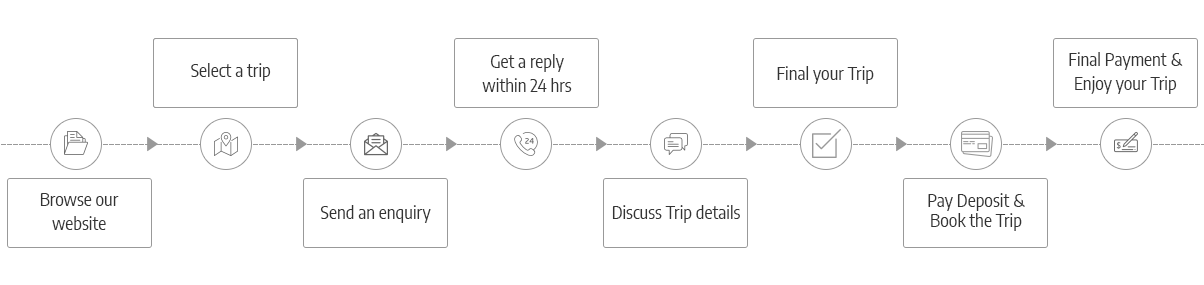
You can inquire and book through our website, email, or direct WhatsApp at +977 9851203181. A typical deposit of around 30% secures your spot, with the balance due 30 to 45 days before departure. We accept bank transfers and credit cards.
Share your preferred dates, group size, dietary needs, health concerns, and whether you want extra acclimatization days or a fly-out option. Departure dates are flexible for private groups, and all jeep arrangements between Kathmandu and Salleri are handled entirely by us.
Plan at least one buffer day in Kathmandu before your departure flight, especially outside peak seasons. If you want to combine EBC with other regions like Cho La Pass or the Three Passes, reach out for a customized quote.
Conclusion and Strong Call to Action
The Everest Base Camp trek without a flight to Lukla via Salleri is a safer, more gradual, and deeply authentic way to reach the foot of the world’s tallest mountain. You avoid the stress of Lukla’s notoriously risky airport, gain proper acclimatization through a natural, gradual ascent, and walk through Sherpa villages and diverse landscapes that most trekkers never see.
We invite you to contact Excellent Himalaya Trek and Expedition directly for up-to-date pricing, itinerary options, and personalized advice.
WhatsApp / Phone: +977 9851203181 Response time: Typically within 24 hours
Start planning your Everest Base Camp trek by road today. The mountain is waiting, and the journey to reach it is half the adventure.
Travel Tips
All foreign nationals except Indian Nationals are required to arrange a visa in order to enter Nepal. A Nepalese Visa can be obtained either prior to your arrival at a Nepalese embassy abroad or on arrival time in Kathmandu at the airport. But nationals from Afghanistan, Iraq, Cameroon, Ghana, Somalia, Swaziland, Palestine, Zimbabwe, Nigeria, Ethiopia, and Liberia cannot secure the Nepalese Visa upon arrival. The Visa can be also taken at entry points at Nepalese borders. For Nepalese Visa it requires your passport with at least six months of validity, a recent digital photo (size: 1.5″ x 1.5″), and the following fees either in USD dollars cash or the equivalent local currency:
| Visa Facility | Duration | Fee |
| Multiple entries | 15 days | US$ 30 or equivalent Nepalese currency |
| Multiple entries | 30 days | US$ 50 or equivalent Nepalese currency |
| Multiple entries | 90 days | US$ 125 or equivalent Nepalese currency |
We would offer you the meeting and greeting service in Kathmandu International Airport on your arrival time. For this, you need to pass us your International flight details at least 2 days before your arrival date in Kathmandu. After you get down from the aircraft you just pass on the Customs and come out of the Terminal building where you will see our tour officer standing with a playcard with your name written on it. He will greet and welcome you with auspicious garland and escort you to the hotel.
Trekking to Everest Base Camp does not require tremendous logistics in terms of accommodation as you will find plenty of clean and friendly lodges along the trail. Lodges typically offer a room with a wooden bed with a simple mattress or foam pad, a cotton pillow, and a blanket or quilt. They have electric lights and all have a spacious dining room-lounge. We will accommodate you and your group in a local lodge available each day. We send a porter ahead of us to book the required rooms for you (here rooms cannot be booked in advance).
In the case of Kathmandu, we offer you a tourist standard hotel unless it is mentioned otherwise or clients have a special choice.
In the trail of Everest Base Camp Trekking, it’s commonly available of Authentic Nepali meal: Dal Bhat (rice with lentils soup and seasonable vegetables), noodles, pasta, chapatis, eggs, French fries, porridge, and muesli. The restaurant of lodges also serves Tibetan foods like momo, thukpa, chowmein, along with pizza, spring rolls, pancake, and another continental as well as Indian foods.
Tea and hot lemon are traditionally the main drinks on the trail though coffee is found everywhere. Bottled soft drinks, bottled water, and even beer are common along the route but the price of each bottle rises each day when you move upward.
The trekking team who will go with you is the most significant thing that makes your Everest Base Camp trekking successful, enjoyable and memorable. We would provide you with skilled, experienced, courteous, knowledgeable and helpful trekking guide and porters. The trekking guide leads you in the trail and brief you all the about this route and porters carry your luggage. Our all trekking guides are carefully selected in terms of their appropriate experience, leadership skills and their knowledge about local culture, ecosystem, geography, flora and fauna, and history. With aim of sustaining local communities, we only employ local people as trekking guide and porter. Our all trekking guides are certified by Nepal Government, Ministry of Tourism. We manage trekking team such a way that one trekking guide in each group and porters like one porter for two trekkers.
During the trek, your main luggage will be carried by porters or pack animals (usually yaks or crossbreeds). You simply carry a day pack with water bottle, camera, sunscreen, spare jacket, etc. – a small load that allows full enjoyment of the trek. A trek bag is ideal for your main luggage, plus a small lockable bag for travel clothes or anything that you do not need during trek which you can leave at hotel’s locker room in Kathmandu for free of charge.
Every morning, first of all, packing your bags and then have a hearty breakfast at the lodge restaurant. Then set off on the day’s walk. After walking for 3-4 hours you all stop for lunch in a local restaurant. Then continue walking for your destination. After lunch, it’s the only a couple of hours walking. You usually arrive at your destination in the time of afternoon tea. Check in at the lodge. The rest of the day is at leisure. At the free time, you may explore the surrounding village, doing a bit of washing or simply relax by reading books and writing a diary. On some days you will arrive at your destination by lunchtime and the entire afternoon will be free. Most people also spend free time playing cards and other games reliving the day’s adventures. Then in the evening have dinner and you will be briefed by your trekking guide about your next day’s walking and then go to your bed for a well-earned sleep.
We believe casualty and a serious sickness will not happen in the trip. If it happens we will do everything to transfer you to the nearest hospital. Since all the expenses incurred in evacuation liable to you please make sure that it is covered by your insurance before assigning for it or be prepared to pay on your own after getting back to Kathmandu.
The itinerary for each trip should be taken as a guideline only. Depending on the situation, you can modify it to some extent after consulting with your guide. However, the date of the trip ending should always coincide with the original itinerary.
Kindly keep in mind that sometimes unforeseen events may contribute to the need for a change in itinerary. In such cases, we or your guide will suggest the best alternative similar to your original.
In Everest region as you climb through the hills mixed deciduous forests and scattered rice terraces give way to pine forests, then rhododendrons, then scrub junipers, before finally, the only vegetation is low alpine shrubs and grasses. As you walk, scan the skies and the undergrowth for golden eagles and the spectacular Himalayan Monal (danphe or impeyan pheasant) with its regal, shimmering green, blue and purple plumage. In forested areas around Namche Bazaar, Thame, Phortse and Tengboche, keep your eyes peeled for Himalayan Thar and musk deer often spotted beside trails early in the morning. You may also hear the strange hoarse call o the muntjak or barking deer. Everest is also home to both leopards and snow leopards and allegedly the fearsome yeti.
In addition to your Trekking trip, you can join in various side Trips in Nepal like a cultural tour of UNESCO World Heritage Sites, Jungle Safari in National Park, White Water Rafting in Himalayan Rivers, Golfing, Adventure activities like Bungee Jumping, Altra Light Flight, Paragliding, Jeep flyer etc. You also can extend your trip to neighboring Himalayan Countries: Bhutan, Tibet, Sikkim (India) which seems more appealing to you. On your request, we will give you the detail of the side trips.
Trip Reviews
 It’s my dream from my childhood to reach the base camp of Mount Everest. By reading several travel books I knew it needs one experienced trek organizer for the best trip experience. I talked with a couple of friends who already did it. They recommended me Excellent Himalaya Trek and Expedition. Rightly Excellent Himalaya Trek is very efficient since the first contact and very patient in designing my itinerary as there were many changes on my side. After I landed in Kathmandu they offered me family environment took care well. Suman, the owner, provided very experienced trekking guide and porter. I am sure that without their assistance I could not succeed this trip. Overall, I appreciate the fact that everything is well managed. Thank you Excellent Himalaya Trek for your perfect services.
Happynav
Australia
Ask our experts (Inquiry)
Why Travel with us?
- Run by local experts, guide & Sherpa.
- Focus on your needs.
- Good value for money.
- Real cared services.
- Government recognized company.
- Best reasonable rate.