



Muktinath Temple Secrets: How to Visit Nepal’s Sacred Place of Liberation
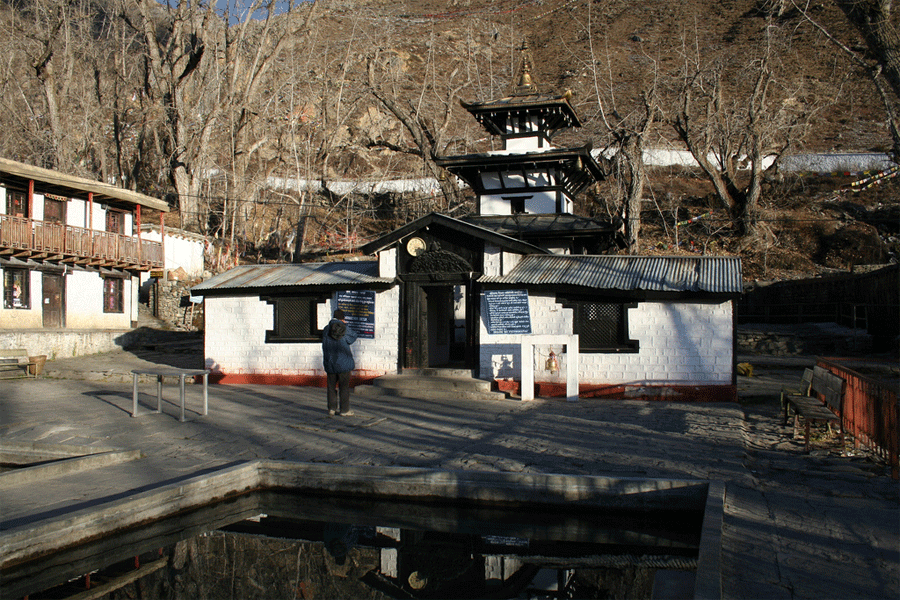
In the Himalayas Few places carry the weight of spiritual promise quite like Muktinath Temple. Located at 3,800 meters in Nepal’s Mustang district, Muktinath Temple located at the base of Thorong-La Pass is an ancient shrine that draws thousands of pilgrims seeking Moksha—liberation from the endless cycle of birth and death. For trekkers completing the Annapurna Circuit, Muktinath represents something equally profound: a spiritual climax after the grueling crossing of Thorong La Pass at 5,416 meters. Thorong La Pass, at 5,416m, is the highest point of the Annapurna Circuit and connects Muktinath to the Manang region.
The temple sits above the village of Ranipauwa, where barren, wind-sculpted hills meet snow-capped giants like Dhaulagiri. Both Hindus and Buddhists consider this ground sacred, making it one of the important places for pilgrimage where two great traditions worship side by side in harmony.
Muktinath also holds deep significance in the Tibetan Buddhist tradition, with strong connections to Tibet and Guru Rinpoche, making it a revered site for Tibetan practitioners as well.
At Excellent Himalaya Trek & Expedition, we arrange both spiritual Muktinath Yatra tour packages and trekking-based visits as part of our Annapurna Circuit itineraries. Whether you seek divine blessing or adventure among the world’s highest peaks, this guide will help you plan a trip to Muktinath that transforms.
About Muktinath Temple and the Meaning of “Mukti Nath”
The Nepal Muktinath Temple stands as one of the most important pilgrimage sites in the Himalayas, dedicated primarily to Lord Vishnu. The name itself reveals its purpose: “Mukti” means liberation or salvation, while “Nath” translates as Lord or Master. Together, they form “Lord of Liberation”—a deity who grants freedom from karma.
In Hindu Vaishnava tradition, the Muktinath Temple complex holds exceptional status:
- Counted among the 108 Divya Desams and recognized as the only Divya Desam located outside India
- Classified as a Mukti Kshetra—a sacred field where liberation becomes possible
- Designated as one of eight Svayam Vyakta Ksetras, places where the deity manifested without human installation
Devotees worship Lord Vishnu here in his Shaligram form—a natural black stone fossil containing ammonite shells found exclusively in the Gandaki River. This stone form is considered self-manifest, adding to the site’s spiritual power. Thousands of pilgrims from India, Nepal, and overseas visit annually to seek freedom from past karma and perform shraddha rituals for ancestors.
Muktinath Temple located in Muktinath Valley within Mustang District, Gandaki Province, Nepal, is situated at an altitude of 3,710 meters (12,172 feet) above sea level, making it one of the highest temples in the world. The temple sits above Ranipauwa village and is renowned for its spiritual significance and breathtaking setting.
Key geographic details:
- Situated 197 km northwest of Pokhara City in the Mustang District of Gandaki Province, Nepal
- Flights from Kathmandu to Pokhara take about an hour, and flights from Pokhara to Jomsom take about 20 minutes; helicopter tours from Kathmandu to Muktinath also take about an hour
- Northern side of the Annapurna Massif, close to the Tibetan plateau
- About an hour’s drive from Jomsom by jeep
The site is located along the ancient Kali Gandaki Trade Route, which served as a cultural link between India and Tibet.
The temple area serves as a key stop on the Annapurna Circuit Trek. Most trekkers reach Muktinath after descending from Thorong La Pass, arriving exhausted but spiritually charged. The landscape here is stark and dramatic—barren hills shaped by relentless wind, contrasting with distant snow peaks of Dhaulagiri (8,167 m), Nilgiri, and Tukuche. The Kali Gandaki Gorge, lying between the Dhaulagiri and Annapurna massifs, is known as one of the deepest gorges in the world.
The altitude demands respect. Even visitors arriving by jeep or flight must acclimatize properly, as the thin air at nearly 4,000 meters affects everyone differently.
Religious Significance: Harmony of Hinduism and Buddhism
What makes the Muktinath Temple complex truly remarkable is its dual reverence. Muktinath Temple is considered a significant pilgrimage site for both Hindus and Buddhists, symbolizing interreligious harmony. Hindus revere it as Mukti Kshetra (place of salvation), while Buddhists call it Chumig Gyatsa (Hundred Waters). Hindus and Buddhists have worshipped here together for centuries, a living example of religious harmony in the Himalayas.
Hindu Vaishnava Perspective: The temple stands as a Divya Desam where pilgrims come to worship Lord Vishnu in Shaligram form. Ancient Sri Vaishnava literature references this site as essential for those seeking Moksha. The Gandaki River, flowing through this region, carries the sacred Shaligram stones revered across India and Nepal.
Shaiva and Shakta Connections: The presence of Mukteshwar Mahadev (Lord Shiva) nearby and associations with Shakti Peetha traditions connect the site to broader Hindu worship. Some devotees come specifically to honor the goddess aspect through these related shrines.
Buddhist Tantric Tradition: Tibetan Buddhists know this place as Chumig Gyatsa, meaning “Hundred Waters.” The temple complex is recognized in Tibetan Buddhism as one of the 24 Tantric sites, associated with Padmasambhava, the founder of Tibetan Buddhism, who is believed to have meditated there. The sky dancers—Dakinis representing enlightened feminine wisdom—are said to have left their spiritual imprint on the surrounding rocks.
The same golden statue inside the main shrine is revered by Hindus as Lord Vishnu and by Tibetan Buddhists as Chenrezig (Avalokiteshvara), the deity of compassion. Muktinath Temple is worshipped by both Hindus and Buddhists, with Hindus referring to it as Mukti Kshetra and Buddhists as Chumig Gyatsa. Buddhist worship practices at the temple include offerings and prayers to Buddha and other Buddhist deities. There are two different priests at Muktinath Temple: a Hindu priest who performs the morning arati and a Buddhist priest who takes over for the rest of the day, accepting offerings from visitors. Hindu priests called Bhatta and Buddhist nuns known as Jhumas or Aani share responsibilities in the temple complex—a rare and beautiful sight.
Legends, Myths and the Story of Shaligram
The spiritual significance of Muktinath deepens through mythology. According to Hindu texts, Lord Vishnu once deceived his devoted follower Vrinda (Tulsi) while protecting cosmic order. Hurt by this betrayal, Tulsi cursed him to become a Shaligram stone in the Gandaki River.
Vishnu came to this very place to perform penance in stone form. According to some traditions, acts of penance such as standing on one foot symbolize the discipline and humility required for spiritual liberation. The abode where even the Preserver God sought liberation became Muktinath—the place where moksha becomes possible for all who visit. In Hinduism, Muktinath is one of the 108 Divya Desams, sacred abodes of Lord Vishnu, and is believed to be the place where Vishnu attained liberation from his stone form after intense penance. Today, Tulsi leaves and Shaligram are always worshipped together, honoring their eternal bond.
Buddhist tradition holds that Padmasambhava meditated at Chumig Gyatsa during his Himalayan journeys, receiving teachings from Dakinis. These idols of legend continue to shape how pilgrims approach the temple with prayers and offerings.
What to See at Muktinath Temple Complex
Walking through the Muktinath Dham complex reveals layer upon layer of sacred sites. Here’s what awaits when you visit Muktinath Temple.
The Main Vishnu Temple and Inner Shrine
The central temple follows traditional pagoda-style architecture with a golden pinnacle rising against the mountain sky. Inside the small inner sanctum, the dark Shaligram form of Vishnu sits adorned with garlands, cloth, and ritual ornaments.
The atmosphere inside is unmistakable—the smell of incense, ghee lamps, and cold stone mingles with soft chanting. Footwear must be removed, and photography is generally not permitted. Devotees bring flowers, rice, and Tulsi leaves as offerings.
From my experience guiding pilgrims here, arriving in early morning hours transforms the visit. Butter lamps flicker in the dim light while the priest softly recites mantras. The queue moves quietly, each person taking their moment of blessed darshan.
108 Water Spouts (Mukti Dhara) and Mukti Kunda
Behind the main temple, 108 bull- and cow-headed water spouts arrange in a semicircle. These are the Mukti Dhara—streams of salvation fed by natural springs connected to the Gandaki system.
The ritual is profound: pilgrims pass through all 108 spouts, believing the icy water washes away lifetimes of sin. Taking bath here is considered equivalent to visiting all 108 Divya Desams at once.
I remember the sharp sting of that freezing water on a cold October morning—breath turning to mist while devotees shouted “Jai Muktinath!” and rushed from one spout to the next. Two small ponds called Mukti Kunda nearby allow for brief immersion or simple ancestral offerings.
Travelers who are unused to extreme cold should know: bathing is optional. The water hovers near freezing year-round.
Jwala Mai Temple: The Eternal Flame
A short walk downhill leads to Jwala Mai Temple, where a blue-yellow flame burns continuously over a water spring. This natural phenomenon—sustained by methane gas seeping from the earth—has drawn worshippers for centuries.
The spiritual interpretation is powerful: fire, water, earth, and air unite in one place, a manifestation of divine presence. Inside, the faint hiss of escaping gas mixes with incense and mineral-rich water scent. The dim interior glows from the natural flame and a few butter lamps.
Both Hindus and Buddhists consider this spot highly auspicious. Many visitors sit quietly for meditation, absorbing the otherworldly atmosphere where elements merge.
Panoramic Views and Nearby Monasteries
From the temple grounds and surrounding hillocks, sweeping views reward every visitor. Dhaulagiri dominates the horizon while Nilgiri and Tukuche frame the rugged Mustang landscape. The contrast between snow peaks and ochre-brown valley creates stunning photography opportunities.
Nearby Buddhist sites include Samba Gompa and Narshing Gompa, while Hindu devotees also visit Vishnu Paduka (footprints of Vishnu) and Mukteshwar Mahadev. After morning darshan, these quieter spots offer reflection and solitude.
Climate, Best Time to Visit and Temple Timings
The best time to visit Muktinath falls during two windows: March through May (spring) and September through November (autumn). Both offer clearer skies and moderate temperatures for pilgrimage and trekking.
| Season | Conditions | Suitability |
| Spring (Mar-May) | Rhododendron blooms, comfortable days, cold nights | Good for both trekking and pilgrimage |
| Monsoon (Jun-Aug) | Rain on approach roads, Mustang relatively drier | Challenging; flights often disrupted |
| Autumn (Sep-Nov) | Most stable weather, crystal-clear mountain views | Peak season; ideal conditions |
| Winter months (Dec-Feb) | Very cold, snow and ice, roads variable | Only for well-prepared visitors |
Temperature ranges at Muktinath: summer daytime reaches 10-18°C, while winter nights often drop below -10°C.
Temple opening hours typically run from around 5-6 AM through late morning, then afternoon to evening. Planning darshan during early morning hours avoids the wind that picks up by midday.
A Licensed Guide’s Pro Tips: Altitude, Weather and Health
As a licensed trekking guide with years of experience crossing Thorong La Pass and leading pilgrims through Mustang, I’ve learned that respecting altitude matters more than fitness alone.
How to Avoid Altitude Sickness at Muktinath
Acute mountain sickness (AMS) affects many visitors above 2,500-3,000 meters. Symptoms include headache, nausea, dizziness, and shortness of breath.
For trekkers approaching via Manang and Thorong La, gradual ascent with rest days in Manang is standard practice. This acclimatization dramatically reduces AMS risk.
Pilgrims flying to Jomsom and driving up face rapid altitude gain. I recommend spending one night at Jomsom or Kagbeni before sleeping at Muktinath elevation.
Practical tips that work:
- Drink 3-4 liters of water daily
- Avoid alcohol completely
- Walk slowly, especially on uphill sections
- Keep warm—cold stress worsens symptoms
- Descend immediately if symptoms worsen
I’ve watched older pilgrims manage the final zigzags to the temple simply by pausing every few steps. Slowing down isn’t weakness—it’s wisdom at altitude.
What to Wear and Pack for Muktinath
Layer your clothing: thermal inner layer, fleece or light down jacket, and windproof outer shell. Essential items include:
- Warm hat covering ears and gloves
- Good trekking shoes with ankle support
- Sun hat, sunglasses, sunscreen (SPF 50+)
- Lip balm with UV protection
- Personal medicines and altitude medication if prescribed
If planning to bathe under the 108 water spouts, bring a lightweight towel and complete change of dry clothes. The water is extremely cold year-round—you’ll want warmth waiting.
Best Time of Day for Darshan and Photography
Early morning—around sunrise to mid-morning—offers the most peaceful darshan experience. Light is softer, wind is calmer, and the temple atmosphere feels more intimate.
I recall leading groups up the final steps at dawn, watching the first sunlight touch Dhaulagiri while bells rang from the temple. Those moments stay with pilgrims forever.
Afternoons bring stronger wind and dust, affecting both comfort and photography. During festivals and special puja days, expect larger crowds and allow extra time.
How to Reach Muktinath: Routes by Trek, Flight, Road and Helicopter
Multiple routes lead to Muktinath, each suited to different travelers. Excellent Himalaya Trek & Expedition arranges all transport options—from full Annapurna Circuit treks to helicopter darshan flights.
By Flight and Jeep: Kathmandu / Pokhara – Jomsom – Muktinath
The common pilgrimage route:
- Fly Kathmandu to Pokhara (~25-30 minutes)
- Fly Pokhara to Jomsom (~20 minutes, early morning)
- Drive by jeep from Jomsom to Ranipauwa (~1-1.5 hours)
- Walk or hire pony/doli for final 20-40 minutes uphill
This option suits those with limited time or elderly family members. Flights are weather-dependent, especially during monsoon season.
By Road: Overland Jeep Journey
Overland travel follows: Kathmandu → Pokhara (6-7 hours) → Jomsom (8-9 hours) → Muktinath (1-1.5 hours).
Roads mix blacktop and gravel with some bumpy sections. The trip rewards patient travelers with close-up views of villages, the Kali Gandaki gorge, and waterfalls like Rupse Falls.
Via Annapurna Circuit and Thorong La Pass (For Trekkers)
The classic route follows the Annapurna Circuit from Besisahar or Nayapul through Manang. Trekkers cross Thorong La Pass at 5,416 meters before descending to Muktinath.
Typical sequence: Kathmandu/Pokhara → Besisahar → Manang (acclimatization days) → Thorong Phedi/High Camp → Thorong La Pass → Muktinath/Ranipauwa
Duration: 10-16 days depending on starting point and side trips like Tilicho Lake.
This remains the most rewarding route for spiritual trekking Nepal experiences—physical challenge meeting sacred destination.
Helicopter Tours to Muktinath
Helicopter flights operate directly from Kathmandu (1-1.5 hours) or Pokhara (30-40 minutes) to the helipad near Ranipauwa. This fastest option suits tight schedules, senior pilgrims, or those seeking a unique aerial pilgrimage experience.
Excellent Himalaya Trek & Expedition arranges private charter helicopter Muktinath Darshan with flexible timing.
Permits, Entry Rules and Practical Information
Because Muktinath lies inside Annapurna Conservation Area, visitors need specific permits. Regulations can change, so confirm current requirements before travel.
Required Permits: ACAP and TIMS
Most foreign visitors need:
- ACAP (Annapurna Conservation Area Project) permit
- TIMS (Trekkers’ Information Management System) card for trekkers
Permits are issued at Tourism Board offices in Kathmandu and Pokhara. They’re checked at Besisahar, Jomsom, Kagbeni, and near Muktinath.
Our agency includes permit arrangements in all trekking and pilgrimage packages for hassle-free travel.
Temple Etiquette and Local Customs
- Dress modestly with shoulders and knees covered
- Remove shoes near the main temple and shrines
- Ask before photographing inside sacred spaces
- Keep voices low; don’t push in lines
- Carry small change for donations and local helpers
- Never litter—respect the fragile high-altitude environment
Festivals, Rituals and Spiritual Experiences
Visiting during festivals intensifies the experience. Chanting fills the air, conch shells sound at dawn, and lines of pilgrims create a river of devotion.
Key Hindu festivals at Muktinath include Ram Navami, Janai Purnima (Rishi Tarpani), and Dashain. Buddhist celebrations like Lhosar (Tibetan New Year) bring the regional Mustang community together, while Yartung features traditional horse racing.
Common rituals include offering arati, circumambulating the temple, bathing in the 108 water spouts, lighting butter lamps at Jwala Mai, and performing shraddha for ancestors. The sound of damaru drums echoing across the valley at dawn is something pilgrims never forget.
Why Visit Muktinath with Excellent Himalaya Trek & Expedition
Excellent Himalaya Trek & Expedition Pvt. Ltd. is a government-registered, fully licensed trekking and tour agency based in Kathmandu. Our 100% safety record on routes like the Annapurna Circuit reflects our commitment to every traveler’s wellbeing.
Many of our guides—including myself—are licensed trekking professionals with years of experience leading both trekkers and pilgrims over Thorong La Pass and into Mustang.
We offer:
- Customizable Muktinath Yatra packages by jeep, flight, or helicopter
- Combined Annapurna Circuit and Muktinath trekking itineraries
- Complete support with permits, domestic flights, guides, porters, and accommodation
We respect both Hindu and Buddhist traditions, arrange puja on request, and brief guests on local customs for meaningful participation.
Plan Your Muktinath Temple Journey
Muktinath Temple is more than a destination—it’s where mountains, cultures, and the human quest for liberation converge. Whether you arrive on foot over Thorong La or by helicopter, the blessing of Mukti awaits in these high Himalayas.
Contact Excellent Himalaya Trek & Expedition to design your personalized trip:
- A comfortable Muktinath Darshan tour from Kathmandu or Pokhara
- A challenging Annapurna Circuit with Muktinath trek
- A swift helicopter pilgrimage for those short on time
Reach out via email or WhatsApp for a tailored journey matching your schedule, fitness, and spiritual interests. The Lord of Liberation awaits at 3,800 meters—let us guide you there.The Lord of Liberation awaits at 3,800 meters—let us guide you there.
During my years as a licensed trekking guide leading groups through the Annapurna Circuit and over Thorong La Pass, I have had the privilege of witnessing countless profound moments at Muktinath Temple. Here are the experiences of five visitors I guided to this sacred site, each reflecting the transformative power of this place:
- Anjali, a spiritual pilgrim from India, described the moment she stood under the icy 108 water spouts as “life-changing.” She said the sharp coldness of the water seemed to wash away not only physical fatigue but also emotional burdens, leaving her with a deep sense of purification and renewal.
- Mark, an adventurous trekker from Australia, was struck by the temple’s unique harmony of Hindu and Buddhist traditions. He recalled the peaceful coexistence of priests performing rituals side by side and felt inspired by the unity amidst diversity.
- Sophie, a first-time visitor from France, shared how the smell of incense and flickering butter lamps inside the temple created an atmosphere of sacredness that touched her soul. She found herself sitting quietly in meditation, overwhelmed by the temple’s serene energy.
- Rajesh, a seasoned pilgrim from Nepal, expressed gratitude for the guidance on acclimatization and pacing. He noted that taking my advice to rest at Jomsom before ascending helped him avoid altitude sickness and fully enjoy the spiritual journey.
- Emily, a nature lover from Canada, was mesmerized by the panoramic views of Dhaulagiri and the barren Mustang landscape surrounding the temple. She described the combination of natural beauty and spiritual depth as an unforgettable highlight of her Nepal trek.
These stories reflect just a glimpse of the profound experiences awaiting you at Muktinath Temple. As your guide, I am committed to ensuring your journey is safe, meaningful, and deeply enriching. Let Excellent Himalaya Trek & Expedition lead you to the heart of liberation in the Himalayas.
Frequently Asked Questions About Travel to Muktinath Temple
Q1: What is the significance of the 108 water spouts at Muktinath Temple?
The 108 water spouts, known as the Mukti Dhara, are sacred streams believed to cleanse devotees’ sins and bad karma. Bathing under these icy spouts is a key purification ritual symbolizing spiritual renewal.
Q2: When is the best time to visit Muktinath Temple?
The ideal months are March to May and September to November, when weather is clear and temperatures comfortable. Avoid the monsoon season (June to August) due to heavy rains and potential travel disruptions.
Q3: How can I avoid altitude sickness while visiting Muktinath?
Acclimatization is crucial. Gradually ascend with rest days in Manang or Jomsom, stay well hydrated, avoid alcohol, and ascend slowly. If symptoms worsen, descend immediately.
Q4: What are the main ways to reach Muktinath Temple?
You can trek the Annapurna Circuit crossing Thorong La Pass, fly to Jomsom followed by a jeep ride, or take a helicopter charter from Kathmandu or Pokhara. Each option suits different time frames and fitness levels.
Q5: Is photography allowed inside Muktinath Temple?
Photography is generally restricted inside the main shrine to preserve sanctity. Visitors should ask permission and respect local customs when taking photos around the temple complex.
Q6: Are there any specific permits required to visit Muktinath?
Yes, visitors need the Annapurna Conservation Area Project (ACAP) permit and the Trekkers’ Information Management System (TIMS) card if trekking. These permits are checked en route.
Q7: What festivals are celebrated at Muktinath Temple?
Important Hindu festivals include Ram Navami, Shivaratri, Janai Purnima, and Dashain. Tibetan Buddhist festivals such as Lhosar and Yartung are also celebrated, reflecting the temple’s dual religious significance.
Q8: Can elderly or less fit pilgrims visit Muktinath?
Yes, with proper acclimatization and travel arrangements like flights and jeep rides, elderly pilgrims can visit comfortably. Slow pacing and rest days are recommended to avoid altitude issues.
Q9: What should I wear when visiting Muktinath Temple?
Dress modestly with covered shoulders and knees. Layered clothing is essential due to cold temperatures, especially early mornings and evenings. Warm hats, gloves, and sturdy shoes are recommended.
Q10: Is there accommodation available near Muktinath Temple?
Yes, Ranipauwa village near the temple offers basic lodges and teahouses for pilgrims and trekkers. Booking in advance during peak seasons is advisable.
These FAQs aim to prepare you for a safe, respectful, and spiritually fulfilling visit to Muktinath Temple. For personalized guidance and bookings, contact Excellent Himalaya Trek & Expedition.
Ask our experts (Inquiry)
Why Travel with us?
- Run by local experts, guide & Sherpa.
- Focus on your needs.
- Good value for money.
- Real cared services.
- Government recognized company.
- Best reasonable rate.