



Langtang Valley Trek in 2026/2027– Scenic Trails and Cultural Immersion
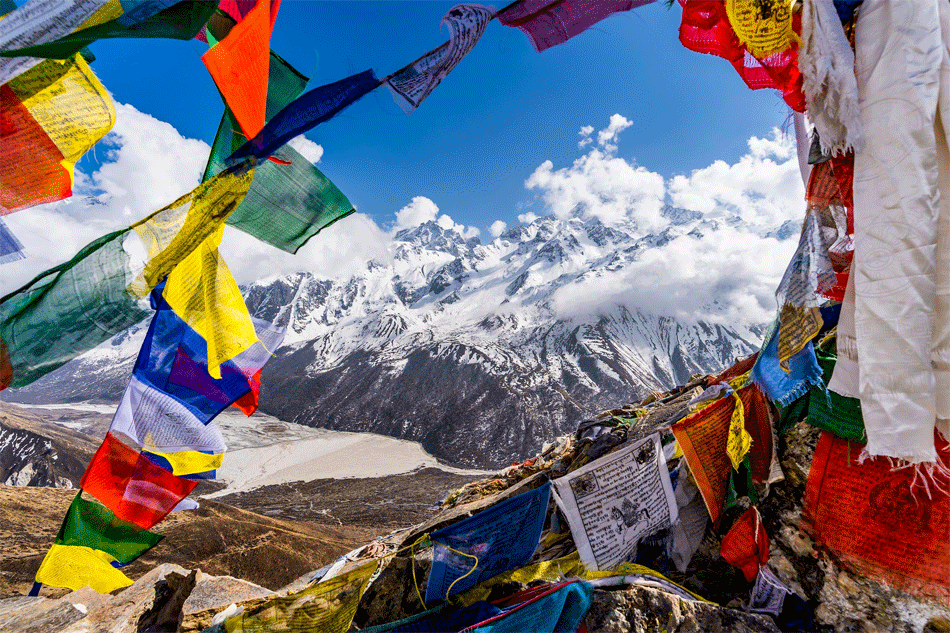
The Langtang Valley lies just 120 kilometers north of Kathmandu, yet it feels like a world away from the city’s noise and chaos. This is Nepal’s most accessible high-altitude trekking destination—a place where towering snow capped peaks rise directly above ancient Tamang villages, where glaciers carve through alpine meadows, and where the hospitality of mountain families remains genuine and unhurried.
For trekkers planning a Himalayan adventure in 2026 or 2027, Langtang Valley offers something increasingly rare: big-mountain scenery without the crowds, without domestic flight gambles, and with a direct connection to communities rebuilding after Nepal’s most devastating natural disaster, which in 2015 destroyed the entire village of Langtang.
Why Langtang Valley Should Be on Your Trekking List in 2026/2027
The Nepal Langtang Valley represents one of the Himalaya’s great trekking corridors. Located in Bagmati Province, the valley runs east-to-west along the Tibetan border, creating a natural passage through some of Nepal’s most dramatic mountain terrain. The Langtang Valley is home to stunning natural beauty characterized by its high-altitude landscapes, including the majestic Langtang Lirung (7,227 meters) and other towering peaks that form an amphitheater of ice and rock around the upper valley.
What makes Langtang particularly compelling for 2026/2027 planning is its accessibility. The Langtang Valley trek is accessible from Kathmandu via a 7 to 8-hour drive to the trailhead at Syabrubesi, eliminating the need for domestic flights. This single factor removes one of the most frustrating variables in Himalayan trekking—the weather-dependent flights to Lukla or Pokhara that can delay itineraries by days.
The Langtang Valley trek attracts trekkers worldwide, drawn by big-mountain scenery that rivals more famous routes. From viewpoints like Kyanjin Ri and Tserko Ri, trekkers stand face-to-face with Langtang Lirung (7,227 m), Gangchempo (7,205 m), Dorje Lakpa (6,966 m), and Yala Peak (5,520 m). On clear mornings, the Tibetan giant Shishapangma (8,027 m) appears on the northern horizon. This is serious Himalayan architecture without the serious Himalayan logistics.
The trek itself is moderately difficult, with maximum elevation around 4,800–5,033 meters on optional day hikes to Kyanjin Ri or Tserko Ri. The maximum altitude for overnight stays reaches approximately 3,870 meters at Kyanjin Gompa. This profile makes the route suitable for fit beginners, experienced trekkers seeking a shorter adventure, and families with older children who have some hiking background.
Beyond the mountains and trails, there’s a deeper reason to choose Langtang in 2026/2027. The 2015 earthquake, which struck Nepal on April 25, had a devastating impact on Langtang Valley, burying the village of Langtang under an avalanche and resulting in the deaths of approximately 300 people, including locals and tourists. The valley has rebuilt itself with remarkable resilience. Every rupee spent in local tea houses, every night in a reconstructed lodge, every meal of dal bhat prepared by a Tamang family—these transactions directly support communities that lost everything and chose to start again.
Excellent Himalaya Trek and Expedition Pvt. Ltd operates as a Nepal-based, licensed trekking company with deep roots in Langtang. Our founder and senior guides have walked these trails before the earthquake, during the recovery years, and through the present day. This isn’t destination marketing—it’s first-hand knowledge accumulated over seasons of leading trekkers through every section of the valley, in every weather condition, through the old routes and the new.
What Makes the Langtang Valley Trek Special
The beautiful Langtang Valley earns its reputation as a fascinating destination through a combination of natural grandeur, cultural authenticity, and practical advantages that distinguish it from other trekking routes in Nepal. Often referred to as the “Valley of Glaciers,” this region delivers Himalayan experiences that typically require longer, harder, or more expensive expeditions to access elsewhere, making it especially appealing to nature lovers and adventure seekers.
The landscape of Langtang Valley includes lush subtropical forests, bamboo, rhododendron forests, and high-altitude alpine terrain. This ecological diversity means trekkers experience multiple mountain environments within a single week—from humid forest trails echoing with birdsong to stark glacial moraines where nothing grows but lichen on ancient boulders.
Here’s what sets the Langtang region apart:
Signature Landscapes
- Deep gorges carved by the Langtang Khola, with suspension bridges crossing rushing whitewater
- Dense rhododendron forests that explode with red, pink, and white blooms during spring months
- Bamboo forests sheltering elusive wildlife in the lower valley sections
- The Langtang Valley trekking trail enters green meadows above Ghoda Tabela, where yaks graze against a backdrop of glaciated peaks
- Classic U-shaped glacial valley formation in the upper Langtang Valley
- The Langtang Glacier area accessible as a day hike from Kyanjin Gompa
Iconic Mountain Views
- Langtang Lirung (7,227 m): The dominant peak visible throughout the upper valley
- Gangchempo / Langtang Ri (7,205 m): Rising directly above Kyanjin Gompa
- Dorje Lakpa (6,966 m): Visible from multiple viewpoints along the trek
- Ganesh Himal range: First views appear during the drive from Kathmandu
- Shishapangma (8,027 m): Tibet’s highest peak, visible from Tserko Ri on clear mornings
- The Langtang Range mountain range creates a continuous wall of snowy peaks along the valley’s northern edge
Cultural Immersion
- Tamang villages with traditional stone architecture and carved wooden windows
- Mani walls inscribed with Buddhist prayers lining the trail
- Chortens (stupas) marking sacred sites and village boundaries
- The ancient Buddhist monastery at Kyanjin Gompa, located at an elevation of 3,870 meters
- Prayer flags strung across mountain passes and rooftops
- The Tamang Heritage Trail option for those seeking deeper cultural experiences
The Cheese Experience
Kyanjin Gompa is known for its local cheese factory, which produces yak cheese, a delicacy in the region that trekkers can taste during their visit. This small factory has operated since the 1950s–60s, originally established with Swiss technical support. Watching the production process and sampling fresh yak cheese while sitting at 3,870 meters with Langtang Lirung rising overhead creates one of those distinctly Himalayan moments that photographs cannot capture.
Advantages Over Other Trekking Routes
- Fewer crowds than Everest Base Camp and Annapurna Circuit routes
- No domestic flights required (avoiding weather-related cancellations)
- Shorter duration: standard itinerary completes in 7–10 days
- More intimate interaction with local families
- Lower overall cost compared to Everest region treks
- Genuine teahouse culture without the commercialization of busier routes
Langtang Valley Trek Itinerary (Classic 8 Days from Kathmandu)
The trek typically lasts around 6 to 8 days, with daily hiking hours ranging from 5 to 7 hours, depending on the itinerary chosen by trekkers. Excellent Himalaya Trek customizes itineraries ranging from compact 6-day versions to extended 10–12 day journeys that include Gosainkunda Lakes or additional acclimatization time. The trek leads through diverse landscapes, from lush forests and river valleys to high alpine meadows, guided by experienced trek leads who ensure safety and enrich the journey with local insights.
The following 8-day outline represents our most popular configuration, balancing adequate acclimatization with efficient use of time:
Day 1: Kathmandu (1,350 m) to Syabrubesi (1,460 m)
- Duration: 7–8 hours by road
- Route: Kathmandu → Trisuli Bazaar → Dhunche → Syabrubesi
- Highlights: Views of terraced rice paddies, the Trishuli River valley, and first glimpses of Ganesh Himal
- Logistics: Permit checkpoint at Dhunche; ensure all documents are accessible
- Overnight: Teahouse in Syabrubesi
The drive follows the Trisuli River through increasingly dramatic terrain. Rafters often navigate the rapids below the road. Beyond Dhunche, the landscape shifts from agricultural lowlands to forested mountain slopes.
Day 2: Syabrubesi to Lama Hotel (2,470 m)
- Duration: Approximately 6 hours
- Elevation gain: ~1,010 m
- Trail: Forest paths through Bamboo and Rimche settlements
- Highlights: Lush green forests, waterfalls, langur monkeys, Himalayan bird species
- Overnight: Teahouse at Lama Hotel
Lama Hotel is a tiny village consisting of a few tea houses clustered inside the forest. The sound of the Langtang Khola fills the night. This first full trekking day establishes the rhythm of mountain travel and provides an early sense of Himalayan remoteness.
Day 3: Lama Hotel to Langtang Village / Mundu (3,450–3,550 m)
- Duration: 6–7 hours (approximately 15 kilometers)
- Elevation gain: ~980–1,080 m
- Trail: Gradual climb through transitioning forest zones
- Lunch stop: Ghoda Tabela (former army post with wide valley views)
- Highlights: First close views of Langtang Lirung, trail enters green meadows, transition from forest to open valley
- Overnight: Teahouse in Mundu or New Langtang Village
This day represents the most significant elevation gain of the trek. The trail leaves behind dense forest and opens into the characteristic U-shaped glacial valley. By afternoon, surrounding peaks dominate the skyline.
Day 4: Langtang Village / Mundu to Kyanjin Gompa (3,870 m)
- Duration: 3–4 hours
- Elevation gain: ~320–420 m
- Trail: Gentle climb through yak pastures and alpine terrain
- Highlights: Sacred mani walls, prayer flags, arrival at monastery village, bakery, cheese factory
- Overnight: Teahouse at Kyanjin Gompa
The short walking day allows afternoon exploration of the monastery, visits to the local cheese factory, and initial altitude adjustment before the following day’s higher ascents.
Day 5: Kyanjin Gompa Acclimatization Day
- Options: Sunrise hike to Kyanjin Ri (~4,773 m) OR full-day hike to Tserko Ri (4,984–5,033 m)
- Kyanjin Ri: 2–3 hours round trip; excellent for sunrise/sunset
- Tserko Ri: 5–7 hours round trip; involves ~1,000 m ascent; 360-degree panorama including views into Tibet
- Alternative: Half-day walk to Langtang Glacier snout
- Overnight: Return to teahouse at Kyanjin Gompa
The maximum altitude on the standard Langtang Valley trek itinerary reaches Kyanjin Ri at around 4,800 meters, with an optional hike to Tserko Ri taking trekkers to approximately 5,033 meters. Both viewpoints reward the effort with extensive mountain panoramas, offering breathtaking views of the entire valley and surrounding glaciers.
Day 6: Kyanjin Gompa to Lama Hotel (2,470 m)
- Duration: 6–7 hours
- Elevation loss: ~1,400 m
- Trail: Retracing the ascent route, mostly downhill
- Advice: Use trekking poles; take care on steep descents
- Overnight: Teahouse at Lama Hotel
The rapid descent can be hard on knees. Vegetation density increases throughout the day—sparse alpine ground cover gives way to juniper, then rhododendron, then bamboo forests.
Day 7: Lama Hotel to Syabrubesi (1,460 m)
- Duration: 5–6 hours
- Elevation loss: ~1,010 m
- Highlights: Warmer climate, thicker forest, crossing multiple suspension bridges
- Evening: Final celebrations with guide and porter team
- Overnight: Teahouse in Syabrubesi
The return to lower elevation brings noticeably warmer temperatures. This evening traditionally includes a celebratory dinner with the trekking team.
Day 8: Syabrubesi to Kathmandu (1,350 m)
- Duration: 7–9 hours by road
- Advice: Do not book international flights departing the same evening
- Arrival: Kathmandu hotel
Road conditions and traffic can extend travel time unpredictably. Building in a buffer day before international departures is strongly recommended.
Flexible Add-Ons
- Extra night at Kyanjin Gompa for both Tserko Ri summit and glacier exploration
- Extended 10–12 day itinerary combining Langtang with Gosainkunda Lakes (sacred alpine lakes at 4,380 m)
- Integration with the Tamang Heritage Trail focuses on cultural experiences and traditional villages, often including homestays
Key Highlights Along the Route
The Langtang trail passes through distinct zones, each with its own character. Rather than simply walking point-to-point, understanding these landmarks enriches the journey:
Lama Hotel (2,470 m)
A small cluster of teahouses set within lush forests. The settlement exists primarily to serve trekkers—there’s no permanent village here in the traditional sense. At night, the sound of the Langtang River echoes through the trees. This is where the Himalayan remoteness first becomes tangible, despite being only one day’s walk from the road.
Ghoda Tabela (approximately 2,970 m)
A former Nepali Army post that now functions as a rest and lunch stop. The name translates to “horse stable,” reflecting its historical use as a staging point. This location marks the transition from lush forests to more open terrain, with first wide views up the valley toward snow peaks. National park checkpoints verify permits here.
New Langtang Village / Mundu (3,430–3,550 m)
The old Langtang village was destroyed in the 2015 earthquake avalanche. The new settlement sits approximately 100 meters further up the valley, built on safer ground. Staying here directly supports earthquake survivors and their families. Memorial sites mark the buried original village. Our guides can explain the history and point out significant locations for those interested in understanding what happened.
Kyanjin Gompa (3,870 m)
The spiritual and practical hub of the upper valley. The main monastery hosts morning and evening prayers. Surrounding stupas and mani walls create a sacred landscape. The settlement includes several teahouses, a bakery (fresh bread is a genuine luxury at this altitude), and the famous cheese factory. Our guides explain Buddhist and Tamang rituals for interested trekkers.
Cheese Factory at Kyanjin
Operating since the 1950s–60s with origins in Swiss technical assistance, this small facility produces yak cheese from milk supplied by local herders. Visitors can observe basic production, see cheese drying, and taste the finished product. Best visited in the afternoon after returning from an acclimatization hike when production activities are underway.
Kyanjin Ri (4,773 m) and Tserko Ri (4,984–5,033 m)
Two viewpoint summits accessible as day hikes from Kyanjin Gompa. Kyanjin Ri is shorter (2–3 hours round trip) and suitable for sunrise or sunset timing. Tserko Ri demands more effort (~1,000 m ascent, 5–7 hours round trip) but rewards with extensive views into Tibet and across glacier systems. The max altitude on Tserko Ri represents the highest point accessible on standard Langtang itineraries.
Langtang Glacier Area
North of Kyanjin, rocky moraine leads toward the glacier snout. This half-day exploration suits trekkers who prefer glacier walking over steep ascents to viewpoints. The terrain is rough but not technical—suitable for anyone comfortable with boulder-hopping.
Culture, People, and Festivals of Langtang
The Langtang Valley is predominantly inhabited by the Tamang people, an ethnic group believed to have Tibetan origins, who maintain customs, language, and religious practices similar to those of Tibet. The Tamang have lived in these high valleys for centuries, their ancestors having migrated south from the Tibetan Plateau and established communities along ancient trade routes.
The Langtang Valley has historical significance as it was part of an ancient trade route between Nepal and Tibet, facilitating cultural exchange and shaping the socio-economic fabric of the region. Salt, wool, and livestock moved south; grain and manufactured goods traveled north. These exchanges created the hybrid culture visible today—Tibetan Buddhist practices merged with local animist traditions, Nepali languages mixed with Tibetan dialects.
Understanding Tamang culture adds depth to the trekking experience. This isn’t a museum exhibit—it’s a living culture that welcomes visitors who approach with respect and genuine interest.
Traditional Architecture
- Stone houses with slate roofs designed to withstand heavy snowfall
- Carved wooden windows that ventilate interiors while blocking wind
- Courtyards where families dry grain, age yak cheese, and conduct daily work
- Buildings clustered together for mutual protection and social cohesion
Religious Life
Buddhism plays a significant role in the lives of the Tamang people, with numerous monasteries, prayer flags, and Mani walls present throughout the Langtang Valley, reflecting their deep-rooted spiritual beliefs. Tibetan Buddhism blends with older animist traditions, creating a spiritual landscape where:
- Prayer flags carry mantras on the wind
- Chortens mark sacred boundaries and protect travelers
- Local protective deities are honored alongside Buddhist figures
- Monastery rituals accompany agricultural cycles and life events
Key Festivals
Visitors can observe traditional yak herding and experience local festivals such as Losar (Tibetan New Year) and Dashain in the Langtang Valley:
- Sonam Lhosar (Tamang New Year): Usually late January–February; community gatherings, special foods, traditional dress
- Buddha Jayanti (April–May): Commemorates Buddha’s birth, enlightenment, and death; monastery ceremonies
- Special rituals at Kyanjin Gompa: Seasonal ceremonies that trekkers may witness depending on timing
Music and Dance
The Tamang culture is rich in traditions, including unique music and dance forms such as Tamang Selo, which is performed during festivals like Lhosar, marking the Tibetan New Year. This musical form features:
- The Damphu drum as primary instrument
- Call-and-response singing patterns
- Dance movements that tell stories of daily life, love, and spiritual themes
- Evening performances sometimes arranged for trekking groups at village lodges
Guidance for Respectful Trekking
- Walk clockwise around chortens and mani walls (keeping them on your right)
- Dress modestly when visiting monasteries or entering private homes
- Ask permission before photographing people or religious ceremonies
- Accept offered tea or food graciously—hospitality is central to Tamang culture
- Remove shoes before entering monastery interiors
Excellent Himalaya Trek’s guides have personal relationships with many families along the route. This enables authentic introductions, occasional homestay arrangements, and access to monastery visits that independent trekkers might not experience.
Nature, Wildlife, and Langtang National Park
Langtang National Park, established in 1976, covers an area of 1,710 square kilometers and is known for its rich biodiversity, including over 250 species of birds and several endangered mammals such as the red panda and snow leopard. As Nepal’s first Himalayan national park, Langtang holds historical significance in the country’s conservation movement. An additional buffer zone of 420 square kilometers extends protection to surrounding areas.
The entire Langtang Valley lies within the park boundaries, offering breathtaking views of snow capped mountains that dominate the landscape and attract trekkers from around the world. This designation shapes trekking regulations, supports conservation funding through permit fees, and maintains habitat protection for vulnerable species.
Vegetation Zones Along the Trek
The flora of Langtang Valley varies with altitude, featuring subtropical forests of oak and maple at lower elevations, transitioning to coniferous forests of pine and hemlock, and finally to alpine meadows and rocky terrain at higher altitudes:
- Subtropical Zone (1,400–2,000 m): Oak, alder, maple forests near Syabrubesi
- Temperate Zone (2,000–3,000 m): Dense bamboo forests, rhododendron forests (spectacular blooms March–May)
- Subalpine Zone (3,000–3,500 m): Fir, hemlock, and juniper forests thinning with altitude
- Alpine Zone (3,500–4,500 m): Meadows, shrubs, and seasonal wildflowers
- High Alpine/Nival Zone (above 4,500 m): Rocky terrain, lichens, sparse vegetation
Key Wildlife Species
The region is a habitat for a variety of wildlife, including the rare red panda, Himalayan Tahr, and over 250 bird species:
- Red Panda: Elusive and endangered; inhabits bamboo forest zone; sightings are rare but possible
- Himalayan Tahr: Wild goat species; often visible on steep rocky slopes
- Musk Deer: Small, solitary deer; most active at dawn and dusk
- Himalayan Black Bear: Present but rarely encountered; more active during berry season
- Langur Monkeys: Commonly seen in lower forest sections
Notable Bird Species
- Impeyan Pheasant (Danphe): Nepal’s national bird; colorful and occasionally visible
- Lammergeier (Bearded Vulture): Massive wingspan; often seen soaring on thermals
- Various vultures, eagles, and raptors: Alpine thermals support diverse raptor populations
Conservation and Park Fees
National park entry fees fund both conservation programs and community development projects in surrounding villages. The Langtang National Park entry permit (approximately NPR 3,000 for foreign trekkers) supports:
- Anti-poaching patrols
- Habitat restoration
- Community infrastructure
- Environmental education programs
Responsible Trekking Practices
- Stay on marked trails to minimize erosion and habitat disturbance
- Do not feed wildlife—human food disrupts natural behaviors
- Pack out all non-biodegradable waste
- Use refillable water bottles with boiled or filtered water to reduce plastic waste
- Avoid purchasing products made from endangered species
Our guides receive training in local flora and fauna interpretation and follow Leave No Trace principles throughout all treks. This commitment reflects Excellent Himalaya Trek’s broader approach to sustainable tourism in Nepal’s protected areas.
The 2015 Earthquake, Recovery, and Why Your Trek Matters
On April 25, 2015, the magnitude 7.8 Gorkha earthquake struck central Nepal. The seismic event triggered a catastrophic avalanche that destroyed the original Langtang Village. The earthquake caused significant destruction to homes, teahouses, monasteries, and infrastructure in Langtang Valley, severely impacting tourism, which is a major source of income for the local community.
The death toll exceeded 300 people—villagers, trekking guides, porters, and international visitors. Entire families were lost. The original settlement now lies beneath a massive boulder field that serves as both a memorial and a reminder of the mountain’s power.
The Destruction
- Old Langtang Village was completely buried
- Multiple teahouses and lodges throughout the valley sustained damage or destruction
- Trail sections collapsed; bridges were washed away
- The monastery at Kyanjin Gompa suffered structural damage
- Tourism—the primary income source—halted immediately
The Recovery
In the aftermath of the earthquake, the people of Langtang demonstrated immense resilience, working with support from government and non-government organizations to rebuild their homes, teahouses, and trails, thereby revitalizing tourism and restoring their livelihoods.
The rebuilding process in Langtang Valley has included the construction of new teahouses and the repair of trekking trails, which has encouraged tourists to return to the region, signaling a revival of tourism:
- New Langtang Village was constructed 100 meters upvalley from the original site
- Teahouses were rebuilt with improved structural standards
- Trail sections were re-routed away from avalanche zones
- Bridges were reconstructed
- A micro-hydroelectric plant now provides electricity to the new settlement
The Present Situation (2026)
The valley is fully operational for trekking. Safe, re-routed trails connect Syabrubesi to Kyanjin Gompa. Earthquake-resistant lodges welcome guests throughout the route. The monastery has been restored. The cheese factory operates again.
The earthquake highlighted the need for better disaster preparedness and management in Langtang Valley, leading to efforts aimed at improving early warning systems and building earthquake-resistant structures. These improvements benefit both residents and trekkers.
Why Your Trek Matters
Trekking in Langtang during 2026/2027 directly contributes to:
- Lodge income for families who rebuilt from nothing
- Employment for guides and porters, many of whom lost relatives in the disaster
- Yak dairy sales that support the pastoral economy
- School and monastery funding through community tourism contributions
- Continued economic recovery that allows families to remain in their ancestral valley
Excellent Himalaya Trek maintains direct relationships with lodge owners along the route—many are earthquake survivors who lost family members and rebuilt their livelihoods from the ground up. Our founder has walked both the old routes (before 2015) and the new routes (during and after recovery), providing first-hand knowledge of current conditions and historical context.
We encourage trekkers to approach memorial sites with respect, to listen when local families share their stories, and to understand Langtang as a living example of community resilience rather than a disaster tourism destination. The people here are not victims seeking pity—they are entrepreneurs, farmers, monks, and guides who chose to rebuild their lives in the shadow of the mountains they love.
Best Time to Trek Langtang Valley (Season-by-Season)
The best time to visit Langtang Valley for trekking is during the dry seasons of spring (March to May) and autumn (September to November). However, the valley remains accessible for most of the year, with each season offering distinct advantages and challenges.
Spring (March–May)
Spring (March-May) is considered the best time to visit for blooming rhododendrons, while autumn (September-November) offers the clearest mountain views. During spring, the weather is mild, and the trails are adorned with blooming rhododendrons, providing vibrant scenery and clear views of the mountains.
- Advantages: Warmer temperatures, longer daylight hours, spectacular rhododendron blooms (late March–April), good visibility
- Challenges: Occasional afternoon clouds, dust haze near Kathmandu, pre-monsoon humidity at lower elevations
- Temperatures: Days 10–15°C at higher elevations; nights near freezing at Kyanjin Gompa
- Crowds: Moderate; increasing through April–May
Autumn (September–November)
Autumn, from September to November, offers crisp, clear skies and stable weather conditions, making it another ideal time for trekking in Langtang Valley. This is often called the “Golden Season” for Himalayan trekking.
- Advantages: Clearest mountain views, stable weather, comfortable temperatures, excellent photography conditions
- Challenges: Peak season crowds; advance booking recommended
- Temperatures: Days 10–15°C; nights 0–5°C at Kyanjin Gompa
- Recommendation: Book with Excellent Himalaya Trek well in advance for autumn departures
Winter (December–February)
Trekking in the winter (December-February) offers solitude and stunning snow-covered landscapes, but temperatures can drop significantly at higher elevations.
- Advantages: Quiet trails, dramatic snow scenery, clear skies on stable weather days, significantly fewer trekkers
- Challenges: Very cold nights (well below freezing), potential snow on higher sections, shorter daylight
- Temperatures: Days 5–10°C; nights potentially –10°C or colder at Kyanjin Gompa
- Suitability: Experienced trekkers with proper gear and flexibility for weather delays
Monsoon (June–August)
- Advantages: Lush green valleys, dramatic cloud formations, cultural festivals, very few trekkers
- Challenges: Heavy rain (often daily), leeches in lower forests, landslide risk, reduced visibility
- Recommendation: Standard itineraries not advised; consider tailored lower-altitude options with comprehensive insurance
Climate Change Considerations
Weather patterns across the Himalaya are becoming less predictable. Off-season storms, unusual rainfall timing, and temperature fluctuations increasingly affect trekking conditions. Following updated weather advice from your local operator is essential. Our team monitors conditions throughout the season and adjusts itineraries when necessary.
| Season | Visibility | Temperature | Crowds | Recommended |
|---|---|---|---|---|
| Spring (Mar–May) | Good | Moderate | Medium | Yes |
| Autumn (Sep–Nov) | Excellent | Comfortable | High | Yes |
| Winter (Dec–Feb) | Good | Cold | Low | Experienced only |
| Monsoon (Jun–Aug) | Poor | Warm/Humid | Very Low | Not recommended |
Difficulty, Altitude, and Safety on the Langtang Trek
The Langtang Valley trek is known for its moderate difficulty, making it suitable for trekkers with decent physical fitness, involving daily ascents and descents over different landscapes including forested paths and rocky trails. As one of the best options for those looking to trek in Nepal, especially for a low-altitude and short trek, Langtang Valley offers accessible routes ideal for a wide range of hikers. This is not a technical climb—no ropes, crampons, or climbing experience required. However, it remains a serious mountain trek that demands preparation, respect for altitude, and bringing appropriate trekking gear to ensure safety and comfort.
Daily Demands
- Walking duration: 5–7 hours per day on most days
- Terrain: Forested paths, rocky trails, occasional steep sections, suspension bridges
- Altitude gain: Gradual with one significant elevation day (Lama Hotel to Langtang Village)
Altitude Profile
| Location | Elevation | Notes |
| Syabrubesi | 1,460 m | Trek start point |
| Lama Hotel | 2,470 m | First night in forest |
| Langtang Village/Mundu | 3,430–3,550 m | Major elevation gain day |
| Kyanjin Gompa | 3,870 m | Highest overnight stay |
| Kyanjin Ri | ~4,773 m | Day hike option |
| Tserko Ri | 4,984–5,033 m | Maximum altitude |
Understanding Altitude Sickness
Altitude sickness (Acute Mountain Sickness / AMS) can affect anyone regardless of fitness level. Common symptoms include:
- Headache
- Nausea
- Poor sleep
- Loss of appetite
- Fatigue beyond normal tiredness
- Dizziness
Critical rule: Do not ascend if symptoms worsen. Descent to a lower elevation is always the safest response to serious AMS symptoms.
Mr, Sashi, our Senior Trekking Guide, advice
Since I trekked to Langatang Valley several times as the trekking guide, to help trekkers plan effectively, I advise preparing physically by engaging in regular uphill walking with a loaded daypack for several weeks before the trek. Gradual ascent during the trek is crucial to prevent altitude sickness, so pacing yourself and staying well-hydrated are essential. I also request to bring proper trekking gear such as trekking poles and a sleeping bag rated for cold temperatures which will greatly enhance comfort and safety. It is also important to secure the necessary permits, including the Langtang National Park Entry Permit and the TIMS card. Trekkers should be ready for basic accommodation conditions in local tea houses and respect local customs and the environment to ensure a positive cultural experience. Understanding weather patterns and packing accordingly will help manage the variable climate of the region. These guidelines obvisoulsy will contribute to a safe, enjoyable, and culturally enriching Langtang Valley trekking experience.
How Our Itineraries Manage Altitude Risk
Excellent Himalaya Trek’s standard itineraries include:
- Gradual ascent profile rather than rapid elevation gain
- Minimum one acclimatization day at Kyanjin Gompa before optional high climbs
- “Climb high, sleep low” principle for viewpoint day hikes
- Flexible scheduling that allows extra rest days if needed
Safety Protocols
- Guides carry basic first-aid kits and pulse oximeters for monitoring oxygen levels
- Guides are trained in AMS recognition and evacuation procedures
- Mobile coverage exists in portions of the valley (spotty but available)
- Helicopter rescue can reach Kyanjin Gompa within hours if insurance coverage allows
Pre-Trip Fitness Preparation
We recommend 6–8 weeks of preparation before your trek:
- Regular walking or hiking: 45–60 minutes, 4–5 times per week
- Include some hill or stair training with a weighted backpack
- Gradually increase distance and elevation gain
- Consider day hikes of 4–6 hours in varied terrain if possible
The goal isn’t peak athletic performance—it’s building the endurance and leg strength to walk 5–7 hours daily for a week while enjoying the experience rather than suffering through it.
Accommodation and Food: What to Expect in Teahouses
The Langtang trek operates on the teahouse model—no need for carrying camping gear, no freeze-dried meals. From Syabrubesi to Kyanjin Gompa, family-run lodges provide accommodation and meals at regular intervals along the trail.
Room Standards
Teahouses along the Langtang Valley trek provide basic accommodation, typically in twin rooms or dormitories, with shared bathrooms and toilets.
- Bed configuration: Simple twin beds with mattress and pillow
- Bathrooms: Mostly shared facilities; occasional attached bathrooms at lower elevations
- Heating: Most teahouses do not have heating in the sleeping rooms, and trekkers are advised to bring sleeping bags rated for cold temperatures
- Recommendation: Bring a sleeping bag rated –5°C to –10°C comfort minimum
Communal Dining Areas
The dining areas in teahouses typically have wood-burning or yak dung stoves for warmth, where trekkers gather for meals and socializing. These spaces serve as the social hub of each lodge—the warmest room in the building where trekkers, guides, porters, and lodge families share meals and conversation.
At higher elevations, the yak dung stove becomes the evening’s centerpiece. The distinctive smell is part of the authentic experience.
Menu Options
Teahouses along the Langtang Valley trek usually offer a limited menu, including local dishes like dal bhat, noodles, and momos, catering primarily to vegetarian diets:
The local cuisine in Langtang Valley features traditional dishes such as dal bhat (rice with lentil soup and vegetable curry), momos (steamed dumplings), and gundruk (fermented leafy green vegetable).
Standard menu items include:
- Breakfast: Porridge, Tibetan bread, eggs, pancakes, toast with jam or honey
- Lunch/Dinner: Dal bhat (with unlimited refills at most lodges), fried rice, chow mein, fried noodles, Sherpa stew, momos, soups, pasta, potato dishes, chapati with curry
Teahouses along the Langtang Valley trek typically offer a menu that includes breakfast options like porridge, Tibetan bread, and eggs, as well as lunch and dinner options such as fried noodles, Sherpa stew, and chapati with curry.
Food Safety Notes
- Vegetarian options are abundant and generally safest at altitude (meat preservation is challenging)
- Dal bhat provides excellent nutrition and carbohydrate loading for trekking
- Excellent Himalaya guides help clients navigate menus, manage dietary needs, and choose hygienic preparation options
- Those with specific requirements (vegetarian, mild lactose intolerance, allergies) should communicate these in advance
Drinks
- Wide variety of teas (black, milk, lemon, ginger)
- Instant coffee (don’t expect espresso)
- Hot lemon, hot chocolate
- Bottled water and soft drinks available but expensive at altitude
- Recommendation: Refill water bottles using boiled or filtered water to reduce plastic waste and cost
Amenities
- Wi-Fi available in many lodges for an extra fee (connection quality varies)
- Battery charging typically available (fee charged, especially above Lama Hotel)
- Hot showers exist in most lodges (bucket-heated or solar; fee charged)
- Carry cash in Nepali rupees—no ATMs beyond Kathmandu/Dhunche
Permits, Costs, and Practical Logistics
The entire Langtang Valley lies within Langtang National Park boundaries, requiring official permits for entry. Excellent Himalaya Trek handles all permit arrangements for our clients, eliminating bureaucratic hassle.
Required Permits
To trek in Langtang Valley, a TIMS card and a Langtang National Park Entry Permit are required, obtainable in Kathmandu:
- Langtang National Park Entry Permit: Approximately NPR 3,000 per foreign trekker (subject to current government fee structures)
- TIMS Card (Trekkers Information Management System) or local equivalent: Based on latest regulations; requirements occasionally change
Permit Checkpoints
- Primary checkpoint at Dhunche (during the drive from Kathmandu)
- Additional checks at points inside the park
- Keep permits and passport copies accessible throughout the trek
Cost Structure
Realistic cost ranges for guided Langtang treks in 2026/2027 vary based on service level, group size, and customization:
Standard teahouse package typically includes:
- All necessary permits and park fees
- Transportation (Kathmandu–Syabrubesi–Kathmandu)
- Licensed English-speaking guide
- Porter service (1 porter per 2 trekkers typically)
- All meals during the trek
- Teahouse accommodation throughout
- Support and logistics management in Kathmandu
Not typically included:
- Drinks (beyond water/tea with meals)
- Hot showers
- Wi-Fi and battery charging
- Personal travel insurance
- Tips for guides and porters
- Kathmandu hotel accommodations (available on request)
- International flights
Transportation Options
| Option | Duration | Comfort | Cost |
| Private jeep | 7–8 hours | Most comfortable | Highest |
| Shared jeep | 8–9 hours | Moderate | Medium |
| Local bus | 9–10+ hours | Basic | Lowest |
We recommend private jeep transport for time efficiency and comfort. Early morning departure (5–6 AM) helps avoid Kathmandu Valley traffic.
Group Configurations
- Private departures: Maximum flexibility, customized pacing, personal attention
- Small group departures: Social experience, cost-efficient, scheduled dates
- Both options maintain small group sizes for safety, cultural interaction, and trail impact
As a fully licensed local operator, Excellent Himalaya Trek manages logistics end-to-end. We can arrange Kathmandu hotel bookings, airport transfers, and pre-trek orientation as part of comprehensive packages.
Packing List and Trek Preparation
Weather in Langtang shifts rapidly. Morning sunshine can give way to afternoon clouds, cold winds, or even snow at higher elevations during shoulder seasons. The layering system is not optional—it’s essential.
Clothing
- Base layers: Thermal tops and leggings (synthetic or merino wool)
- Insulating layers: Fleece jacket or pullover, light down jacket
- Outer layer: Waterproof, breathable shell jacket (rain/wind protection)
- Trekking trousers: Quick-dry material; avoid cotton
- Warm hat: Covers ears for cold mornings and high viewpoints
- Sun hat: Wide brim for afternoon sun
- Gloves: Lightweight for trekking; warmer pair for early mornings and viewpoints
- Trekking socks: 4–5 pairs of moisture-wicking, padded socks
Footwear
- Trekking boots: Broken-in, waterproof, good ankle support (essential)
- Camp shoes: Sandals or light sneakers for evenings in lodges
- Gaiters: Optional; useful in early spring or late autumn if snow expected
Gear
- Daypack: 30–40 liters; carry daily essentials while porter handles main bag
- Duffel bag: For porter to carry (max 10–12 kg per person)
- Trekking poles: Highly recommended, especially for steep ascents and steep descents
- Headlamp: With extra batteries (essential for early morning starts and power outages)
- Water bottles: 1–2 liters capacity; or hydration bladder
- Sunglasses: UV protection essential at altitude
- For those seeking additional adventure, Yala Peak climbing is a popular, non-technical extension to the Langtang trek. It is suitable for beginners and offers spectacular panoramic Himalayan views. If you plan to attempt Yala Peak climbing, consider bringing lightweight mountaineering boots and basic climbing gear as recommended.
Sleeping and Personal Items
- Sleeping bag: –5°C to –10°C comfort rating (teahouse blankets supplement but don’t replace)
- Travel towel: Quick-dry, lightweight
- Toiletries: Biodegradable soap, toothbrush, toothpaste, personal items
- Sunscreen: High SPF; altitude intensifies UV exposure
- Lip balm: With SPF protection
- Hand sanitizer: Essential for hygiene
- Wet wipes: Limited water availability makes these valuable
- Personal medications: Plus basic altitude/stomach remedies
Electronics
- Power bank: Essential; 10,000+ mAh recommended
- Charging cables: For all devices
- Plug adapter: Nepal uses Type C, D, and M sockets
- Camera: Optional but rewarding; smartphone cameras work well
Documents and Money
- Passport copy: Keep separate from original
- Travel insurance: Must cover high-altitude trekking and helicopter rescue
- Passport photos: 2–4 for permit applications
- Cash: Sufficient Nepali rupees for drinks, showers, Wi-Fi, tips; no ATMs on trail
Excellent Himalaya Trek provides a detailed packing checklist during pre-departure communication, customized based on your travel season and experience level.
Why Trek Langtang with Excellent Himalaya Trek and Expedition
Choosing a trekking operator shapes your entire Himalayan experience. As a Nepal-based company, Excellent Himalaya Trek and Expedition Pvt. Ltd combines licensed guiding, intimate local knowledge, and personal experience in Langtang to deliver treks that are safe, meaningful, and memorable.
Experience
Our founder and senior guides have repeatedly led Langtang Valley groups—before the 2015 earthquake, during the recovery years, and through the present day. This continuity provides:
- Knowledge of alternative routes when conditions change
- Relationships with the best lodge owners along the trail
- Understanding of weather patterns and optimal timing
- Proven acclimatization strategies refined over seasons of guiding
Expertise
- Licensed, English-speaking guides trained in first aid and altitude management
- Cultural interpretation that connects trekkers with Tamang traditions
- Porters who are properly equipped, insured, and fairly compensated
- Logistics management that anticipates problems before they occur
Authoritativeness
- Official government registration as a trekking operator
- Membership in relevant Nepali tourism and trekking bodies
- Consistent positive feedback from past guests across multiple seasons
- Transparent operations with verifiable credentials
Trustworthiness
- Clear pricing with detailed inclusions and exclusions
- Realistic itineraries that don’t overpromise on difficulty or conditions
- Ethical treatment of staff throughout the supply chain
- Honest communication about weather, trail conditions, and expectations
Customization Options
Not every trekker fits the standard itinerary. We design variations based on:
- Family-friendly versions: Slower pace, shorter daily distances, lower altitude ceiling
- Photography-focused itineraries: Extended time at key viewpoints, flexible schedules for lighting conditions
- Slow-acclimatization versions: Additional rest days for those with altitude concerns
- Extended routes: Combinations with Gosainkunda Lakes or the Tamang Heritage Trail
The Langtang Valley rewards those who approach it with preparation, respect, and openness to experience. Whether you’re seeking mountain grandeur, cultural immersion, or a meaningful way to support earthquake-resilient communities, this valley delivers.
The trail is open. The lodges are ready. The Tamang families—many of whom rebuilt their lives from nothing after 2015—are waiting to welcome you.
Ready to plan your Langtang Valley trek for 2026 or 2027?
Contact Excellent Himalaya Trek and Expedition for a tailored itinerary, honest answers to your questions, pre-departure gear advice, and support from a team that knows this valley like home.
Ask our experts (Inquiry)
Why Travel with us?
- Run by local experts, guide & Sherpa.
- Focus on your needs.
- Good value for money.
- Real cared services.
- Government recognized company.
- Best reasonable rate.