


Best & Recommended Local Company for Muktinath Tour
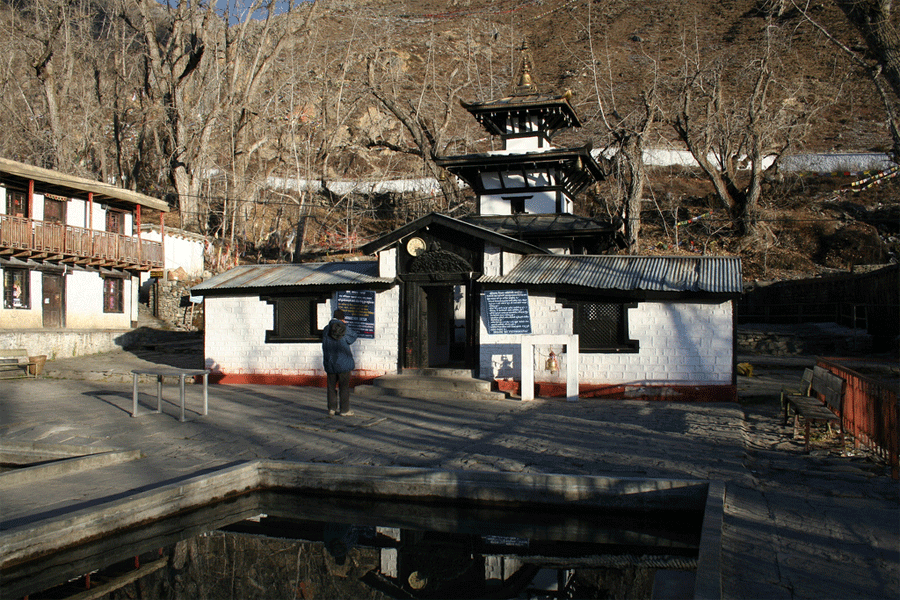
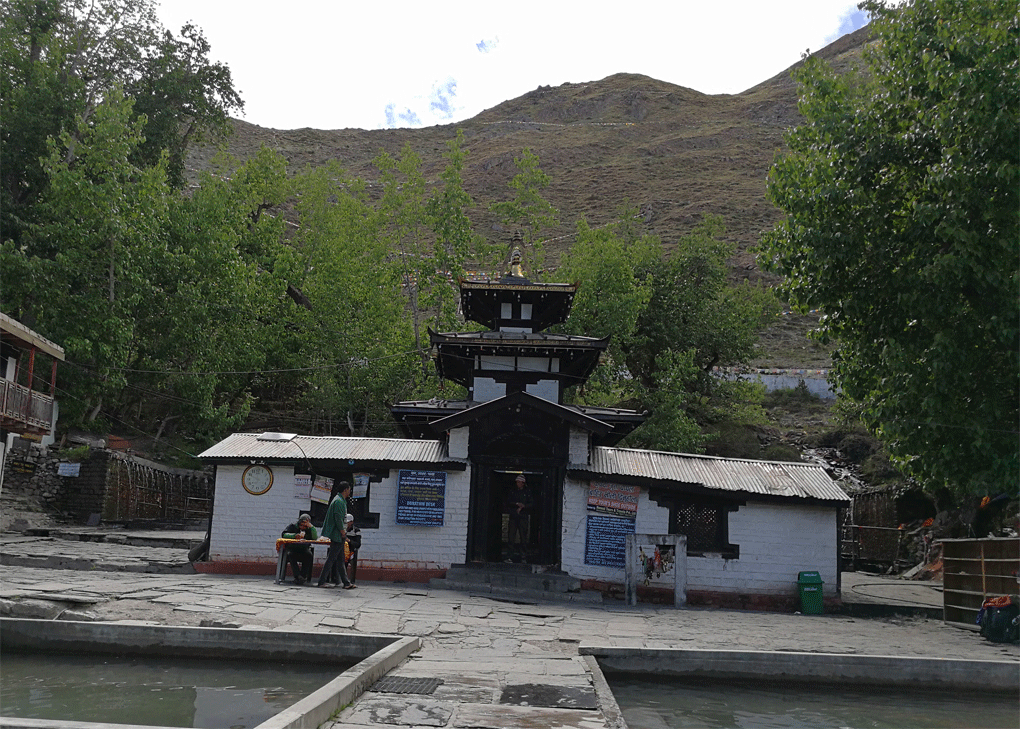
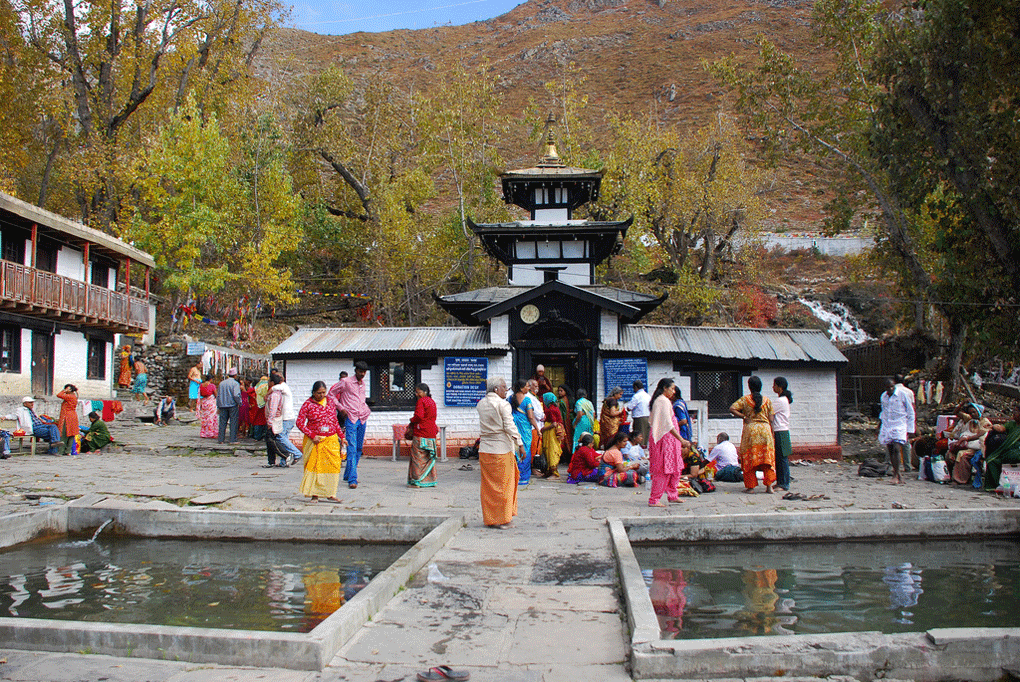
At an elevation of 3,710 metres (12,172 feet) above sea level, cradled within the rain shadow of the Annapurna and Dhaulagiri massifs, the temple of Muktinath —the God of liberation— known in Tibetan as Chumig Gyatsa, meaning “Hundred Waters” — is one of the most sacred sites on earth for both Hindu and Buddhist pilgrims. Here, 108 water spouts carved in the shape of cow heads release glacial meltwater that devotees believe washes away the sins of a lifetime. The site also houses an Eternal Flame — a natural gas vent burning beneath a Buddhist shrine — which Hindus revere as a manifestation of Lord Vishnu and Buddhists honour as a Dakini site of the Tantric tradition.
Every year, thousands of pilgrims converge on this high-altitude sanctuary across the Mustang District in north-central Nepal. They arrive by flight or by road through the spectacular Kali Gandaki Gorge — the world’s deepest river gorge — and by foot along ancient trade routes that once linked the Indian subcontinent to Tibet. Yet the journey is genuinely challenging.
This is precisely why choosing the right local operator is not a luxury — it is the single most important decision you will make. Excellent Himalaya Trek & Expedition, a government-registered trekking and tour company based in Kathmandu, has been guiding pilgrims and adventurers to Muktinath since 2004. This guide explains what makes a local company indispensable, details every route option available in 2026, and provides the comprehensive information you need to plan safely and spiritually.

Table of Contents
- Comprehensive Muktinath Tour Options
- Best Time to Visit Muktinath
- Preparation, Permits, and Logistics
- Local Knowledge vs. Global Booking Platforms: A Critical Distinction
- Service Spotlight: Why Excellent Himalaya Trek & Expedition
- Saligrams and Cultural Authenticity
- Frequently Asked Questions
- Planning Your Muktinath Tour: The First Step
Comprehensive Muktinath Tour Options
There is no single “correct” way to reach Muktinath. The right option depends on your time, budget, physical condition, and spiritual priorities. Below is an honest, detailed breakdown of all three primary routes.
Option A: Muktinath Tour by Flight (Pokhara to Jomsom)
The most popular choice for time-constrained pilgrims and those with limited mobility, this option involves a 20-minute scenic flight from Pokhara’s Prithvi Narayan Airport to Jomsom Airport (elevation: 2,720m). The approach is one of the most dramatic in commercial aviation — the aircraft threads through the Kali Gandaki Gorge between the Annapurna and Dhaulagiri ranges.
- Duration: 3 to 4 days (including Pokhara to Pokhara)
- Key stops: Jomsom → Kagbeni (the gateway to Upper Mustang) → Muktinath → return
- Flight note: Flights operate primarily in the early morning (6:00–9:00 AM) before katabatic winds develop. Morning departures are essential. Book IATA-licensed seats, not third-party resellers.
- Acclimatisation: Even on a 3-day itinerary, one night at Jomsom (2,720m) before ascending to Muktinath (3,710m) is mandatory for AMS prevention. The 990m altitude gain in a single day is the most common trigger for altitude sickness among pilgrims.
- Jeep transfer: From Jomsom to Muktinath, a 4WD Scorpio Jeep covers the 18km of rough mountain road in approximately 1.5 hours. These vehicles are purpose-built for the terrain.
- Sample cost range (2026): NPR 45,000–65,000 per person (group of 4), including flights, accommodation, meals, Jeep, guide, and permits
Option B: Muktinath Tour by Jeep (from Kathmandu or Pokhara)
The overland Jeep route has become dramatically more popular following the completion and upgrading of the Mustang Highway. This is the choice for those who want to experience the full geographic grandeur of the journey — passing through Beni, Tatopani (hot springs), Ghasa, Marpha (famous for apple orchards), and Jomsom before ascending to Muktinath.
- From Pokhara: Approximately 10–12 hours drive one way to Jomsom, covering 165km of mountain road
- From Kathmandu: 12–15 hours to Pokhara plus Pokhara to Jomsom, typically split over two days
- Vehicle: Licensed 4WD Scorpio or Bolero Jeeps with experienced mountain drivers. The stretch between Ghasa and Tukuche is particularly technical, with sections of loose scree and narrow ledge roads
- Duration: 5–7 days allows for a comfortable pace with cultural stops at Kagbeni, the medieval walled village at the entrance to Upper Mustang
- AMS consideration: The gradual ascent by road provides natural acclimatisation superior to flying directly to Jomsom
- Cost range (2026): NPR 35,000–55,000 per person (group of 4), including vehicle, guide, accommodation, meals, and permits
Option C: Muktinath Helicopter Tour
The fastest and most exclusive option. A direct helicopter flight from Pokhara to Muktinath takes approximately 45 minutes, bypassing all road and altitude transition challenges. This option is strongly recommended for senior pilgrims (65+), those with cardiovascular conditions, or pilgrims with very limited time windows.
- Duration: 1 full day (day trip from Pokhara) or 2 days with overnight at Muktinath/Jomsom
- Capacity: AS350 B3 helicopter (5 passenger seats); Airbus H125 for smaller groups
- Landing: The helicopter lands at a designated pad at Muktinath, allowing 1–2 hours for the temple circuit and 108-spout ritual
- AMS risk: The rapid ascent to 3,710m without acclimatisation is a genuine medical concern even on a helicopter tour. Supplemental oxygen should be pre-arranged. Excellent Himalaya Trek & Expedition provides this as standard
- Cost range (2026): USD 550–750 per person for a shared helicopter (group of 4–5); USD 2,500–3,200 for a private charter from Pokhara
- Important note: Helicopter bookings require minimum 72 hours advance notice for permit coordination with Nepal’s Civil Aviation Authority
Best Time to Visit Muktinath
The Mustang District sits in the Himalayan rain shadow, meaning it receives significantly less monsoon rainfall than the rest of Nepal. This unique geography makes Muktinath accessible during a broader window than most Himalayan destinations — but not without seasonal nuances.
Spring Season: March to May 2026
Spring is the premier season for Muktinath pilgrimages and is the most popular time for both Nepali devotees and international trekkers. Temperatures at Muktinath range from -2°C at night to 12°C during the day in April. The landscape transforms as rhododendrons bloom in the lower Mustang valleys and the skies carry that crystalline Himalayan clarity that makes the Dhaulagiri and Annapurna views unforgettable.
- March: Excellent weather; lower crowds before April surge; ideal for the overland Jeep route before road dust intensifies
- April: Peak season — all routes fully operational; Baisakh (Nepali New Year) in mid-April brings especially large pilgrim crowds; book accommodations minimum 6 weeks in advance
- May: Increasingly warm at lower elevations; pre-monsoon haze begins; still excellent at altitude; flight reliability decreases slightly in late May due to thermal activity
- 2026 key festival: Baisakh Purnima (full moon) falls on May 3rd, 2026 — the single busiest pilgrimage day of the year at Muktinath; plan accommodations well in advance
Autumn Season: September to November 2026
Post-monsoon autumn offers crystal-clear visibility, stable weather, and uncrowded trails. The landscape is washed clean by the monsoon, mountain views are at their absolute sharpest, and the Kali Gandaki Gorge road is typically in its best maintained state of the year.
- September: Monsoon retreats from Mustang early (typically by late August); warm days; occasional lingering rain in lower sections; excellent for acclimatisation trekking
- October: The gold standard month — perfect weather, maximum visibility, post-harvest Thakali culture vibrant in Marpha and Jomsom; Dashain festival brings increased domestic pilgrims in mid-October
- November: Increasingly cold; overnight temperatures at Muktinath can drop to -8°C by late November; daylight hours shorter; excellent for those preferring solitude; all routes still fully accessible
Winter (December–February) and Monsoon (June–August): What to Expect
Winter visits to Muktinath are possible but require significant preparation and acceptance of limitations. Jomsom’s altitude and the Mustang plateau experience heavy snowfall in January and February. The overland road from Tatopani to Jomsom frequently closes due to ice and rockfall. Helicopter tours remain viable on clear days, but the weather window narrows considerably.
The monsoon season (June–August) is the least recommended period for the southern approach via the Kali Gandaki Gorge due to landslide risk between Tatopani and Ghasa. However, because Mustang lies in the rain shadow, the region itself sees minimal monsoon rain — meaning that for those specifically interested in Upper Mustang cultural tours, the monsoon is counterintuitively manageable once you are through the gorge.
Preparation, Permits, and Logistics
Legal Requirements: Permits You Cannot Skip
All visitors to the Muktinath area require a minimum of two mandatory permits. Failure to carry these results in fines at checkpoints and possible denial of entry.
- TIMS Card (Trekkers’ Information Management System): Available through registered trekking agencies or the Nepal Tourism Board offices in Kathmandu (Pradarshani Marg) and Pokhara (Damside). As of 2025, individual trekkers pay NPR 2,000 (approx. USD 15); those booking through a registered agency pay NPR 1,000. TIMS cards are checked at multiple points along the route
- ACAP Permit (Annapurna Conservation Area Project): Issued by the National Trust for Nature Conservation (NTNC). Cost: NPR 3,000 for SAARC nationals, NPR 3,000 for international visitors (the fee was standardised in 2024). This permit must be carried and presented at all ACAP checkpoints, including Beni, Ghasa, and Jomsom
- Upper Mustang Restricted Area Permit: Only required if you plan to travel beyond Kagbeni into Lo Manthang. For Muktinath specifically, this permit is NOT required. A common misconception leads some travelers to overpay for unnecessary permits
Altitude Sickness (AMS) Prevention Protocol
Acute Mountain Sickness is the most significant medical risk on the Muktinath tour. The Lake Louise AMS Score is the standard assessment tool used by trained guides. Know the symptoms:
- Mild AMS: Headache, fatigue, loss of appetite, mild nausea — treatable with rest, hydration, and ibuprofen/aspirin
- Moderate AMS: Persistent headache, vomiting, severe fatigue, difficulty walking — immediate descent 500–1,000m required
- Severe AMS / HACE / HAPE: Ataxia, confusion, wet cough, pink frothy sputum — medical emergency requiring immediate helicopter evacuation and supplemental oxygen
Prevention protocols recommended by Excellent Himalaya Trek & Expedition guides:
- Ascend no more than 500m per day above 3,000m
- “Climb high, sleep low” — visit Muktinath during the day, return to Jomsom (2,720m) to sleep
- Maintain hydration: minimum 3–4 litres of water per day
- Diamox (Acetazolamide) 125mg twice daily starting 24 hours before ascent — consult your physician before departure
- Carry a personal pulse oximeter to monitor SpO2 levels (target: above 85% at 3,710m)
- All Excellent Himalaya guides carry portable oxygen cylinders and pulse oximeters as standard equipment
Essential Packing List
- Layering system: Thermal base layer, fleece mid-layer, waterproof/windproof outer shell — temperatures swing 15°C between morning and afternoon
- Footwear: Waterproof trekking shoes or boots with ankle support; sandals for temple areas
- Sun protection: SPF 50+ sunscreen, UV-protective sunglasses, wide-brim hat — UV radiation is significantly higher at 3,710m
- Medical kit: Personal medications, oral rehydration salts, Diamox (if prescribed), ibuprofen, blister treatment
- Documents: Passport (original), TIMS card, ACAP permit, travel insurance with high-altitude evacuation coverage (minimum USD 100,000)
- Cash: ATMs are available in Jomsom but are frequently out of service; carry NPR 10,000–15,000 in cash minimum
- Prayer items: For Hindu pilgrims: flowers, incense, coconut, sindoor; for Buddhist practitioners: prayer beads, kata (white scarf)
Local Knowledge vs. Global Booking Platforms: A Critical Distinction
Global Online Travel Agencies (OTAs) and international booking platforms have made travel more accessible than ever. Muktinath is a high-altitude pilgrimage site where conditions change within hours and where the logistical complexity goes far beyond issuing an e-ticket.
What Global Platforms Cannot Offer
- Real-time flight rebooking: Flights between Pokhara (PHW) and Jomsom Airport (JMO) are operated by small Twin Otter aircraft and are highly sensitive to mountain weather. Cancellation rates exceed 30–40% during transitional seasons. A local operator has direct lines to Tara Air and Summit Air ground staff, enabling immediate rebooking. An international platform processes your cancellation as a refund — a process that takes days while you are stranded in Pokhara.
- Jeep route intelligence: The road from Beni through Tatopani to Jomsom via the Kali Gandaki Gorge involves river crossings, landslide-prone sections between Ghasa and Lete, and seasonal road closures. Local operators receive WhatsApp updates from drivers and police checkpoints daily. No algorithm on a booking platform replicates this.
- Permit facilitation: The combination of TIMS (Trekkers’ Information Management System) cards and Annapurna Conservation Area Project (ACAP) permits requires in-person processing in Kathmandu or Pokhara. An experienced local company handles this efficiently, often on the same day.
- Medical response: At 3,710m, Acute Mountain Sickness (AMS) is a real risk. Local guides trained in Wilderness First Aid carry portable pulse oximeters and maintain contacts with the Jomsom Hospital and Kathmandu-based evacuation services. They know when to descend and when to administer supplemental oxygen.
- Cultural navigation: The correct protocol for circumambulating the Muktinath temple, the significance of the 108 spouts ritual, the timing of morning aarti — these are not details found in a PDF itinerary. They are passed down through years of guiding pilgrims from across South Asia.
The Excellent Himalaya Trek & Expedition Advantage
Excellent Himalaya Trek & Expedition operates exclusively as a ground-handling specialist with dedicated operations in the Mustang and Annapurna Circuit corridors. Unlike aggregator platforms, every booking is handled directly — no subcontracting, no commission chains, no communication delays through intermediaries. When a client calls at 5:30 AM because their Jomsom flight is cancelled, a team member answers.
Service Spotlight: Why Excellent Himalaya Trek & Expedition
When evaluating a local operator for the Muktinath tour, the distinction between a licensed, experienced specialist and a generic travel desk matters enormously at 3,710 metres.
Licensed Guides with Specialised Training
Every guide employed by Excellent Himalaya Trek & Expedition holds a Government of Nepal Trekking Guide License issued by the Department of Tourism. Additionally, all guides operating in the Annapurna/Mustang region carry certifications in Wilderness First Aid and have completed specialised training in high-altitude acclimatisation protocols. Unlike junior “assistants” used by budget operators, every client is assigned a senior guide with a minimum of 5 years experience in the Mustang corridor.
The guides are also deeply versed in both Hindu and Buddhist pilgrimage traditions. They can explain the significance of each of the 108 water spouts — their number symbolising the 108 volumes of the Kangyur (Tibetan Buddhist scripture) and the 108 beads of a Rudraksha mala. They know that standing beneath the icy torrent is not a tourist activity but a moksha ritual — an act of liberation. This contextual depth transforms a tourist visit into a genuine pilgrimage.
Customised Itineraries for Every Traveler Profile
Excellent Himalaya Trek & Expedition designs itineraries across four primary traveler profiles:
- Senior pilgrims (65+): Helicopter-based tours with supplemental oxygen pre-arranged, single-storey accommodation in Jomsom, no physical trekking required, guide remains at the client’s pace throughout the temple circuit
- Family groups with children: Flight-and-Jeep combination; kid-friendly accommodations in Jomsom; educational pre-tour briefings on the significance of Saligrams (ammonite fossils found in the Kali Gandaki river and considered sacred Vishnu icons)
- Serious trekkers: Full Annapurna Circuit integration, approaching Muktinath via the Thorong La Pass (5,416m) — one of the world’s highest motorable passes — with proper 12–18 day acclimatisation schedule
- Corporate and incentive groups: Charter flights, private dining arrangements in Marpha, curated cultural programs including traditional Thakali cuisine demonstrations and interaction with Buddhist monks at Muktinath Monastery
24/7 Support and Transparent Pricing
Every booking through Excellent Himalaya Trek & Expedition includes:
- Pre-departure consultation: A 30-minute briefing call with your assigned guide covering route conditions, weather forecast, packing review, and medical preparation
- 24/7 in-country emergency line: A dedicated Nepali phone number operational throughout your tour for any emergency, not a chatbot or international call centre
- Transparent cost breakdown: Full itemised quotation covering guide fees, porter fees, permits, accommodation, meals, transport, and emergency contingency — no hidden charges
- Cancellation flexibility: Weather-related cancellations (e.g. Jomsom flight cancellations) are handled with zero client penalty — rebooking or full refund at the client’s choice
- Post-tour support: Assistance with travel insurance claims for cancelled flights and medical evacuations if required
Saligrams and Cultural Authenticity
One of the lesser-known specialties of the company’s Muktinath tours is the guided Saligram hunting experience along the banks of the Kali Gandaki river near Kagbeni. These black ammonite fossils — up to 66 million years old — are found almost exclusively in this stretch of river and are revered in Hinduism as natural manifestations of Lord Vishnu. The guides can identify genuine Saligrams and explain their spiritual classification (Damodar, Madhusudhan, Chakra Saligram) — knowledge that most international operators simply do not possess.
Frequently Asked Questions
Is Muktinath difficult for senior citizens?
Muktinath is accessible to seniors with the right planning. The helicopter option eliminates all physical trekking, and the temple complex itself involves approximately 300 steps — manageable with regular rest breaks. Seniors with cardiovascular conditions should obtain a physician’s clearance before booking. The company’s helicopter packages include supplemental oxygen as a standard provision. Clients aged 70–80 have successfully completed the Muktinath circuit with proper support.
How do I obtain a TIMS card and ACAP permit?
When booking through Excellent Himalaya Trek & Expedition, both permits are processed and delivered to you on arrival in Kathmandu or Pokhara — no queuing required. For independent arrangements, TIMS cards are issued at the Nepal Tourism Board (NTB) offices at Pradarshani Marg, Kathmandu (open Sunday–Friday, 9 AM–5 PM) and at the Pokhara Trekking Information Centre near Lakeside. ACAP permits are issued at the same offices and at the NTNC office in Pokhara. Both require a passport photo and a photocopy of your passport bio page.
Can we visit Muktinath in winter?
A winter Muktinath tour (December–February) is feasible but carries higher risk. Temperatures at Muktinath drop to -15°C to -20°C at night in January. The overland road from Tatopani to Jomsom is often closed due to ice and snow. Helicopter tours remain the most viable option in winter but are subject to frequent weather delays. If planning a winter tour, allow 3–4 buffer days in your itinerary. The upside: Muktinath in winter is profoundly quiet and spiritually intense — a different experience entirely from the spring pilgrimage season.
What are the flights from Pokhara to Jomsom like?
The Pokhara–Jomsom route is operated by Tara Air and Summit Air using de Havilland Twin Otter aircraft. The 20-minute flight is one of the most scenic in Nepal — flying directly through the Kali Gandaki Gorge with Dhaulagiri and Nilgiri walls on either side. Flights depart exclusively in the early morning (typically 6:00–9:00 AM) because afternoon katabatic winds in the gorge make the route unsafe. The cancellation rate is 30–40% on marginal weather days, meaning a contingency Jeep plan is essential for every flight booking.
What is the significance of the 108 water spouts?
The 108 water spouts (Muktidhara) at Muktinath release ice-cold Himalayan glacial water from cow-head-shaped fountains arranged in a semi-circle. The number 108 is sacred in both Hinduism and Buddhism — representing the 108 names of Lord Vishnu, the 108 beads of a Rudraksha mala used in mantra recitation, and the 108 volumes of the Tibetan Kangyur. Standing beneath all 108 spouts in sequence is believed to cleanse the accumulated sins of multiple lifetimes and bring liberation (moksha). The water is cold enough to cause gasping — typically 4–6°C — and the ritual typically takes 45–60 minutes to complete properly.
Are trekking options available to reach Muktinath on foot?
Yes. The classic approach is via the Annapurna Circuit trek, crossing the Thorong La Pass at 5,416m — the world’s highest trekable pass that is part of a standard circuit. The trek from Besisahar to Muktinath via Thorong La takes 12–15 days with proper acclimatisation stops at Manang (3,519m) and High Camp (4,850m). This route offers the most comprehensive immersion in Annapurna culture and landscape but requires excellent physical fitness and a minimum of 2 weeks. A shorter trekking approach from Jomsom to Muktinath (18km) can be completed in 6–7 hours along a well-maintained trail with mountain views throughout.
What travel insurance is recommended?
Any travel insurance policy for Muktinath should explicitly cover high-altitude trekking above 3,500m and include emergency helicopter evacuation. Standard travel insurance policies frequently exclude altitudes above 3,000m. Reputable providers with Nepal-specific high-altitude coverage include World Nomads, AIG Travel Guard, and Allianz Global Assistance. It is advised not depart for Muktinath without confirmed evacuation coverage — helicopter evacuation from Jomsom to Kathmandu costs USD 2,500–5,000 without insurance.
Planning Your Muktinath Tour: The First Step
Muktinath is not a destination you visit once and forget. Pilgrims who have made the journey describe it as the kind of place that rewires something fundamental — where the Eternal Flame burning above the glacial river, the sky impossibly blue at 3,710 metres, and the silence between the chants of Buddhist monks creates an experience that simply cannot be manufactured.
What Excellent Himalaya Trek & Expedition offers is not just a logistics service. It is access to twenty years of Mustang-specific knowledge, a team of guides who have walked these trails in every season, and a genuine commitment to ensuring that every pilgrim — whether a 75-year-old grandmother from Varanasi or a seasoned trekker preparing for Thorong La — arrives safely, is treated with respect, and experiences the full depth of what Chumig Gyatsa has to offer.
For personalised itinerary planning, current flight availability, and transparent cost quotations, contact Excellent Himalaya Trek & Expedition directly. The journey to Muktinath begins with one conversation.
Email: [email protected] | Whatsapp +977-9851203181
We will respond you within 24 hours. Kathmandu operations team available 7 days a week.
About the Author

Suman Shrestha
I am Suman Shrestha. I have dedicated my life to mastering the rhythms of the Nepal Himalayas and its culture. I am also a fully government-licensed trekking and tour guide. I've personally led hundreds of adventure groups across our country's most diverse and demanding landscapes and guided countless tour groups across every special interest imaginable. I know the ground reality of every ridge, every sacred monument, and every remote teahouse along the way, because I've earned that knowledge step by step, not from a brochure. My deep technical knowledge of Nepal’s diverse geography is matched only by my uncompromising commitment to safety. Beyond the physical path, I take a pride in being a bridge for all people by sharing the knowledge of the Himalayas, rich traditions and spiritual heritage of Nepal ensuring every journey is an authentic Experience. Let’s explore the heart of the Himalayas together. You can connect with me via WhatsApp at +9779851203181.