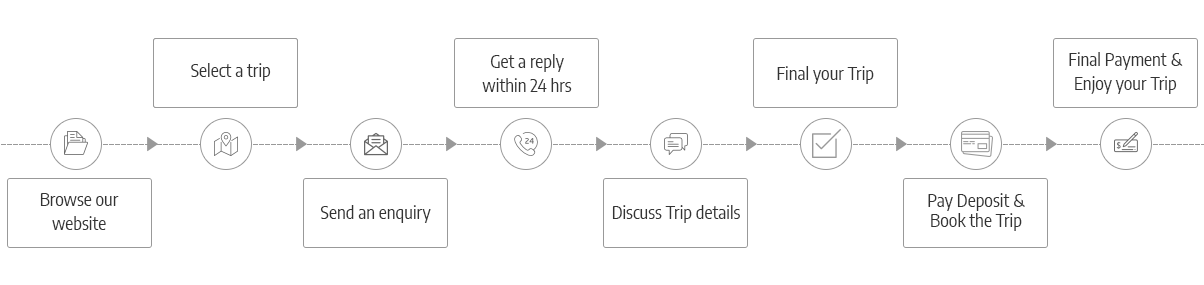



Best Operator for the Everest Base Camp Trek: Tips to Choose Right Everest Trek Operator
Standing at 5,364 metres above sea level, staring at the blue-and-white chaos of the Khumbu Icefall while prayer flags snap in the wind above Everest Base Camp that moment is one of the most profound experiences a human being can have without roping up for a summit attempt. We know, because our team has guided hundreds of trekkers to that exact spot, and we have watched grown adults weep with a kind of joy that is difficult to explain to anyone who has not felt the thin, crystalline air of the Khumbu at altitude.
But here is the truth that the glossy travel brochures rarely tell you: the Everest Base Camp (EBC) trek has a meaningful failure rate. Acute Mountain Sickness forces thousands of trekkers to turn back every season. Emergency helicopter evacuations from Dingboche and Lobuche cost between USD 3,000 and USD 7,000. And the difference between a trekker who summits Base Camp in triumph and one who is airlifted out of Pheriche is rarely fitness or willpower. It is almost always preparation, pacing, and the quality of the operator behind the journey.
This guide was written for the discerning international trekker, the person who has done their research, understands that the Himalayas demand respect, and who refuses to gamble their safety on the cheapest listing on a travel aggregator. Over the following pages, we will give you the exact criteria used by experienced mountaineers, wilderness medicine professionals, and veteran trekkers to evaluate and select an EBC operator. We will be transparent about costs, honest about risks, and specific about what separates a truly excellent operator from a merely adequate one.
By the end of this guide, you will be equipped to interview any operator in the world — including us — and know exactly what questions to ask.

Table of Contents
- The Anatomy of a Top-Tier Operator: Non-Negotiable Must-Haves
- Safety & Altitude Management: The Difference Between Success and a Medical Emergency
- Local vs. International Operators: An Honest Comparison
- Logistics & Sustainability: How Responsible Operators Protect People and Planet
- Itinerary Breakdown: Why 14 Days Beats 12 Days Every Time
- Cost Transparency: Where Your Money Actually Goes
- Why Excellent Himalaya Trek & Expedition?
- Comprehensive FAQs
- Final Thoughts: The Investment That Protects Your Investment
- Ready to Plan Your Everest Base Camp Trek?
The Anatomy of a Top-Tier Operator: Non-Negotiable Must-Haves
Before you discuss itineraries, group sizes, or teahouse upgrades, you need to verify a set of foundational credentials. These are not bureaucratic formalities. They are the legal and ethical infrastructure that protects you when things go wrong at 4,900 metres.
1.1 Legal Registration and Government Licensing
Nepal’s trekking industry is regulated through overlapping governmental and industry frameworks. A legitimate, top-tier operator must hold all of the following:
- Company Registration Certificate from the Office of the Company Registrar, Government of Nepal. This is the most basic proof that the operator is a legally constituted business entity within Nepal, not a shell operation fronting for informal fixers.
- Trekking Agency License issued by the Department of Tourism (DoT), Ministry of Culture, Tourism and Civil Aviation. This license must be renewed annually, which means it functions as a rolling quality indicator.
- VAT and Tax Registration under the Inland Revenue Department of Nepal. VAT-registered operators issue proper tax invoices, which means the money flowing through your booking is above-board, accountable, and traceable if a dispute arises.
- TAAN Membership: The Trekking Agencies Association of Nepal (TAAN) is the industry’s primary self-regulatory body. TAAN membership signals agreement to abide by professional standards around porter welfare, guide qualifications, and ethical business practices.
- NTB (Nepal Tourism Board) Registration: An additional layer of governmental oversight indicating a commitment to formal compliance.
1.2 The Operator’s Checklist Table
Use this table when interviewing any EBC operator. A trustworthy company will answer every single question with documented evidence, not verbal assurances.
| Criterion | What to Ask | What a Top Operator Provides |
| Company Registration | Can you share your company registration number? | Official certificate with registration number |
| DoT License | What is your current Department of Tourism license number? | Annual license, current year |
| VAT Registration | Are you VAT registered? Can I receive a VAT invoice? | VAT number and official invoice |
| TAAN Membership | What is your TAAN membership number? | Active TAAN membership certificate |
| Guide Certifications | Are your guides government-licensed? What level? | License cards from Nepal Mountaineering Association or DoT |
| Wilderness First Aid | Have your guides completed wilderness first aid training? | Certificates, dates, issuing institution |
| Insurance Coverage | Does your guide carry personal liability insurance? | Policy documents |
| Porter Welfare Policy | What clothing, weight limits, and insurance do you provide for porters? | Written policy statement |
| Heli-Rescue Coordination | Which rescue companies do you have direct communication with? | Contracts or MoU with Fishtail Air, Simrik Air, etc. |
| AMS Protocol | What is your written protocol if a client shows AMS symptoms? | Documented decision tree or protocol card |
| References | Can you provide verified reviews from trekkers in the past 12 months? | Google reviews, TripAdvisor, or direct contact references |
| Group Size | What is your maximum guide-to-trekker ratio? | A ratio no worse than 1:8 |
1.3 Guide Qualifications: Understanding the Certification Hierarchy
Nepal has a tiered system for trekking and expedition guides, and the difference between tiers is significant when you are at 5,000 metres with a headache that might be AMS.
- Trekking Guide License (Basic): Issued by the Department of Tourism. Covers lower-altitude trekking routes. Necessary but not sufficient for EBC.
- Senior Trekking Guide: Requires additional experience and government examination. More appropriate for technical high-altitude routes.
- High Altitude Trekking Guide: The appropriate minimum for Everest Base Camp. These guides have passed specific examinations on altitude medicine, emergency evacuation, and route navigation above 3,500m.
- Wilderness First Responder (WFR) Certification: An international standard. Very few guides hold this, but the ones who do represent the gold standard. At Excellent Himalaya, we prioritise WFR-certified guides for all EBC departures.
- UIAGM / IFMGA Mountain Guide: The international summit of guide certification, relevant for technical climbing but increasingly valued by sophisticated EBC trekkers.
Safety & Altitude Management: The Difference Between Success and a Medical Emergency
If there is one section of this guide you should read twice, it is this one. Altitude sickness is not a theoretical risk. It is a physiological reality that affects up to 40% of trekkers attempting EBC. Understanding how a top operator manages this risk is the single most important criterion in your evaluation.
2.1 Acute Mountain Sickness (AMS): What It Is and Why It Matters
Acute Mountain Sickness (AMS) occurs when the body ascends faster than it can acclimatise to reduced oxygen partial pressure. Above 2,500 metres, the available oxygen in each breath begins to decline significantly. By the time you reach Namche Bazaar at 3,440 metres — typically Day 3 of the trek — your body is already working to compensate through increased breathing rate, elevated heart rate, and complex haematological changes.
AMS presents initially as a persistent headache combined with at least one of the following: nausea or vomiting, fatigue, dizziness, or difficulty sleeping. Left unaddressed, it can progress to High Altitude Pulmonary Edema (HAPE) or High Altitude Cerebral Edema (HACE), both of which are life-threatening emergencies.
The Lake Louise Score is the clinical standard for AMS assessment. Every guide on an Excellent Himalaya EBC expedition carries a laminated Lake Louise Score card and is trained to administer it. A score of 3 or above triggers our mandatory rest protocol. A score of 5 or above triggers descent.
2.2 The Pulse Oximeter Standard
A pulse oximeter is a small, clip-on device that measures blood oxygen saturation (SpO2) and heart rate. It is, quite simply, the most important piece of diagnostic equipment on the trail above 3,000 metres.
What responsible operators do:
- Issue each client with a personal pulse oximeter OR carry a shared clinical-grade oximeter checked morning and evening for every trekker
- Establish baseline readings at low altitude (Lukla, 2,860m) before ascent
- Document daily SpO2 readings in a logbook
- Understand the relationship between altitude and expected SpO2 (a reading below 80% at EBC warrants immediate evaluation; below 75% typically warrants descent)
The red flags:
- An operator who dismisses the pulse oximeter as unnecessary
- Guides who cannot interpret SpO2 readings in the context of altitude
- No documented monitoring schedule
At Excellent Himalaya, we monitor every client twice daily from Namche onwards. Our guides are trained not only to read the number but to interpret it alongside symptoms. Oximetry is a data point, not a verdict. Experienced guide judgement contextualises it.
2.3 The “Climb High, Sleep Low” Acclimatisation Philosophy
This principle is the bedrock of altitude safety, and any EBC operator who does not build it explicitly into their itinerary is cutting corners. The human body acclimatises while sleeping — ascending to a higher altitude during the day and returning to a lower sleeping altitude accelerates acclimatisation more effectively than simply staying at the higher altitude.
In practice on the EBC trail, this looks like:
- Day 5 (Namche Bazaar): A mandatory rest day with an acclimatisation hike to the Everest View Hotel at 3,880 metres. The views of Ama Dablam, Thamserku, and the distant white pyramid of Everest are breathtaking, and the elevation gain stimulates acclimatisation before sleeping back down at 3,440m.
- Day 8 (Dingboche, 4,410m): Another rest day with an optional hike to the Nagarjun Hill viewpoint at approximately 5,100 metres. Trekkers ascend above their sleeping altitude, trigger the acclimatisation response, and descend to sleep.
2.4 Emergency Evacuation Protocols
Every operator must have a documented, rehearsed emergency evacuation protocol. Here is what a best-practice protocol looks like:
Step 1 — Symptom Identification and Documentation:
Guide administers Lake Louise Score, documents SpO2, and records symptoms in the client logbook.
Step 2 — Decision Tree Activation:
- Mild AMS (score 3-4): Halt ascent, rest, hydrate, administer Diamox if pre-authorised, monitor every 2 hours.
- Moderate AMS (score 5-6): Immediate descent to previous night’s sleeping elevation.
- Severe AMS / Suspected HAPE or HACE: Emergency descent while simultaneously initiating helicopter rescue.
Step 3 — Helicopter Rescue Coordination:
Helicopter rescues in the Khumbu are coordinated through dedicated high-altitude rescue operators including Fishtail Air, Simrik Air, and Air Dynasty. Our team maintains emergency satellite communication (Garmin inReach device on all expeditions) and has direct relationships with Himalayan Rescue Association (HRA) doctors stationed at Pheriche (4,371m) during peak season.
INSURANCE
We strongly require all clients to carry comprehensive travel insurance including helicopter rescue coverage to a minimum of USD 100,000. Heli-rescue from EBC costs between USD 3,000 and USD 7,000. A reputable operator will verify your insurance coverage during pre-trek briefing.

Local vs. International Operators: An Honest Comparison
International operators — those based in the US, UK, Australia, or Europe — serve an important function. They provide comfort and familiarity for trekkers who prefer to manage their booking in their home country. However, for sophisticated trekkers who prioritise value, cultural immersion, and operational depth, a locally based Kathmandu operator consistently outperforms international operators across nearly every meaningful dimension.
3.1 The Value Equation
An international operator based in London or Denver typically acts as a reseller. They market the trek, take the booking, collect the fee — and then outsource the actual operation to a local Nepali company. The markup in this arrangement is typically 30% to 60% above what the local operator charges directly.
This means that a trekker paying USD 4,500 to a UK-based operator may be funding a trip that a local operator in Kathmandu runs for USD 2,800. The USD 1,700 difference does not go to better guides, better food, or better emergency equipment.
Direct booking with a licensed local operator gives you:
- The same (or superior) guides, because the international operator was using them anyway
- Better value, allowing investment in optional upgrades like private teahouse rooms or emergency oxygen
- Direct, real-time communication with your actual expedition team
3.2 Cultural Depth and Local Knowledge
Our guides grew up in the Khumbu. They know which trails between Phakding and Namche are least affected by the post-monsoon landslides. They know the monastery monks at Tengboche (3,867m) by name and can arrange for trekking groups to witness the morning puja ceremony — an experience that rarely appears on any international operator’s itinerary because it requires the personal relationships that only locals maintain.
The route between Dingboche and Lobuche passes through the Thokla Pass memorial, a haunting field of cairns and prayer flags commemorating climbers killed on Everest. An international tour guide reading from notes cannot convey the weight of this place the way a Sherpa guide can.
3.3 Operational Response Time
When things go wrong at altitude, operational response time is critical. A local operator whose team is on the ground, with satellite communication with their guides and direct relationships with helicopter companies and the HRA clinic at Pheriche, can mobilise a rescue in 30-45 minutes. An international operator managing the situation from a different timezone must first reach their local subcontractor before any action can begin. In altitude emergencies, that lag is unacceptable.
Logistics & Sustainability: How Responsible Operators Protect People and Planet
The EBC trek passes through Sagarmatha National Park, a UNESCO World Heritage Site within the jurisdiction of Khumbu Pasang Lhamu Rural Municipality. The ecological fragility of this region demands that every operator commit to tangible sustainability practices, not just marketing language.
4.1 Porter Welfare: The Ethical Imperative
Porter welfare is where the ethics of an operator are most clearly revealed. Porters are the backbone of every EBC expedition. They carry loads that can exceed their body weight along some of the most demanding terrain on earth, often in inadequate clothing and footwear.
Non-negotiable porter welfare standards:
- Load limits: A porter should carry no more than 25 kg, excluding their personal gear. The Nepal Tourism Board and TAAN both specify this standard.
- Clothing and equipment: Operators must provide porters with proper high-altitude clothing, including insulated jackets, gloves, and appropriate footwear.
- Insurance: Porters must be covered by accident insurance under the Porter’s Insurance Scheme.
- Sleeping arrangements: Porters must sleep inside, in adequate conditions. They may not sleep outside while clients sleep inside warm teahouses.
- Daily wages: The Fair Wage standard as set by TAAN should be adhered to — approximately NPR 800-1,200 per day depending on altitude and load, with meals provided.
At Excellent Himalaya, we consider our porters colleagues, not contractors. Several of our current guides began their careers as porters with us. We publish our porter welfare policy on our website and welcome verification.
4.2 Environmental Responsibility on the Trail
Sagarmatha National Park entry requires a permit (USD 30 per person, as of 2026), and those fees fund conservation efforts — provided operators are operating legally and clients pay properly.
Leave No Trace principles on EBC:
- All solid waste must be packed out or deposited at designated yak-transport waste stations
- Single-use plastic must be minimised; we provide clients with reusable water bottles and access to water purification tablets or SteriPen devices
- Campfire restrictions in the national park must be observed; all cooking uses kerosene or gas
- Wildlife disturbance protocols must be communicated to clients (snow leopard, Himalayan tahr, and musk deer are all possible on the EBC trail)
Several operators, including Excellent Himalaya, now offer optional carbon offset programs in partnership with verified Nepali reforestation initiatives in the lower Khumbu.
Itinerary Breakdown: Why 14 Days Beats 12 Days Every Time
The single most commercially driven corner that operators cut on EBC packages is the itinerary length. A 12-day itinerary sounds efficient, but from an altitude medicine standpoint, it is a gamble with your health and a statistically significant predictor of failure.
5.1 The Acclimatisation Mathematics
The standard guideline from wilderness medicine authorities is to increase sleeping altitude by no more than 300-500 metres per day above 3,000 metres, with a rest day for every 1,000 metres of accumulated altitude gain. A 12-day itinerary typically allows for only one full acclimatisation day — usually at Namche Bazaar. A 14-day itinerary builds in two full acclimatisation days (Namche and Dingboche), conforming to wilderness medicine best practice and dramatically improving summit success rates.
5.2 Standard 14-Day Itinerary (Recommended)
| Day | Route | Sleeping Altitude | Notes |
| 1 | Arrival Kathmandu | 1,400m | Briefing, gear check |
| 2 | Kathmandu → Lukla → Phakding | 2,610m | Lukla flight 35 minutes |
| 3 | Phakding → Namche Bazaar | 3,440m | First significant altitude gain |
| 4 | Namche Rest Day | 3,440m | Acclimatisation hike to 3,880m |
| 5 | Namche → Tengboche | 3,867m | Visit Tengboche Monastery |
| 6 | Tengboche → Dingboche | 4,410m | Dramatic landscape change |
| 7 | Dingboche Rest Day | 4,410m | Hike to ~5,100m viewpoint |
| 8 | Dingboche → Lobuche | 4,940m | Thokla Pass Memorial |
| 9 | Lobuche → Gorak Shep → EBC | 5,140m | EBC visit in afternoon |
| 10 | Gorak Shep → Kala Patthar → Pheriche | 4,371m | Pre-dawn Kala Patthar summit (5,545m) |
| 11 | Pheriche → Namche Bazaar | 3,440m | Rapid descent |
| 12 | Namche → Lukla | 2,860m | Final trail day |
| 13 | Lukla → Kathmandu | 1,400m | Flight, celebration dinner |
| 14 | Departure or extension | — | Optional |
5.3 The Gorak Shep Reality
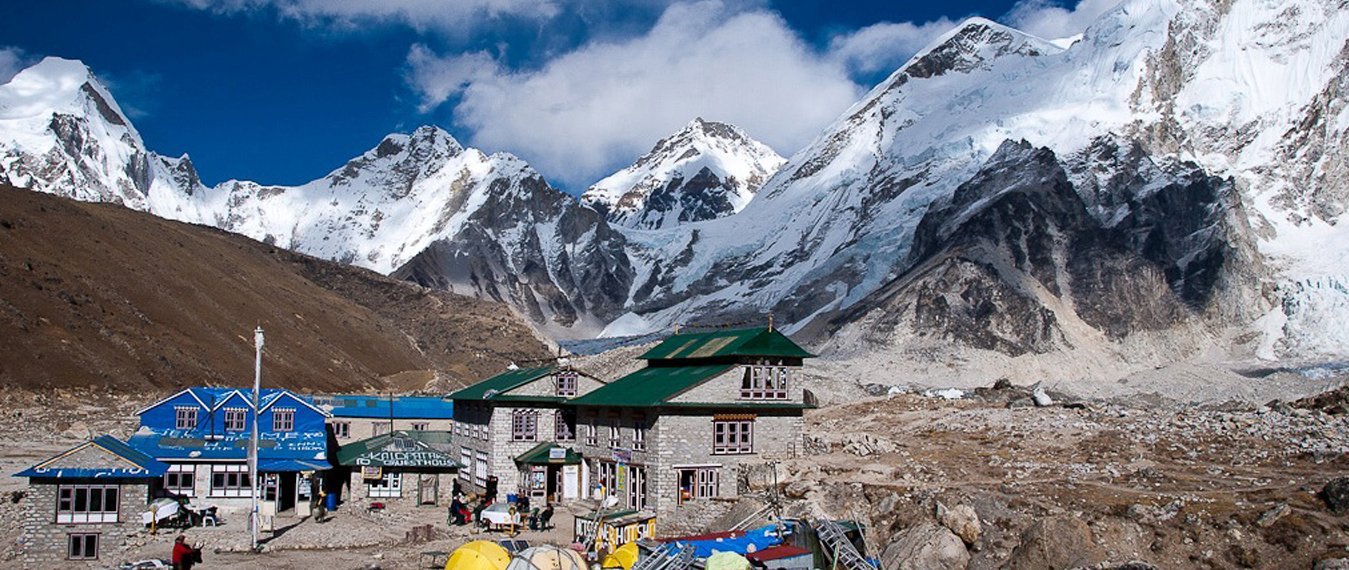
Gorak Shep (5,140m) is the last settlement before Everest Base Camp and the staging point for the Kala Patthar summit, which at 5,545m offers the most iconic Everest photograph in existence. The teahouses at Gorak Shep are basic by necessity — electricity is limited, food options are simpler, and sleep at this altitude is universally poor.
Our guides time the EBC visit for mid-afternoon, when the notorious Khumbu winds have typically died down, and begin the Kala Patthar ascent at 4:00 AM to catch sunrise over Everest — a sight that, in two decades of guiding, has never once grown ordinary.

Cost Transparency: Where Your Money Actually Goes
Transparent cost breakdown is one of the strongest signals of a trustworthy operator. Operators who provide vague ‘all-inclusive’ quotes without itemisation are either hiding margins or are not legally structured to issue proper invoices.
6.1 Permit Costs (Fixed Government Fees)
These are non-negotiable government-set fees. Any operator quoting below these numbers is either cutting corners or misrepresenting their package.
| Permit | Cost | Issuing Authority |
| Sagarmatha National Park Entry | USD 30 per person | Department of National Parks |
| Khumbu Pasang Lhamu Municipality Fee | NPR 2,000 (~USD 15) | Local Municipal Office |
| TIMS Card | USD 10 per person | TAAN / NTB |
| Restricted Area Permit (if applicable) | Varies | Department of Immigration |
6.2 Operational Costs
| Cost Category | Approx. Cost (Per Person, 14 Days) | Notes |
| Lukla Round-Trip Flight | USD 350–400 | Subject to season and availability |
| Licensed Guide (14 days) | USD 350–420 | Based on fair daily wage + accommodation |
| Porter (per porter, shared) | USD 200–280 | Weight-limited, insured |
| Teahouse Accommodation | USD 200–350 | Double occupancy; private rooms add cost |
| Meals on Trail | USD 280–350 | 3 meals per day, teahouse standard |
| Emergency Equipment | USD 30–50 | Oximeter, first aid supplies, O2 if carried |
| Rescue Insurance Contribution | Part of operator margin | Varies |
| Guide Insurance & Benefits | Part of operator margin | Ethical operators cover this fully |
6.3 Total Cost Benchmarks
- Budget operator (minimal compliance): USD 1,200-1,800. Warning: permits may be underpaid, guides may be uncertified, porter welfare likely unaddressed.
- Mid-range legitimate operator: USD 1,800-2,800. Full permits, licensed guides, basic equipment.
- Premium local operator (Excellent Himalaya standard): USD 2,500-3,500. Full compliance, WFR-trained guides, private teahouse rooms, emergency O2, full porter welfare policy.
- International reseller premium: USD 3,500-6,000+. Same local operation, higher markup.
Why Excellent Himalaya Trek & Expedition?
We have spent six sections giving you the tools to evaluate any operator in the world. Now we will tell you, without reservation, why we believe Excellent Himalaya Trek & Expedition meets every standard we have described — and why our clients consistently return that verdict in their post-trek reviews.
7.1 Our Team’s Pedigree
Our senior guides have led more than 500 successful EBC expeditions between them. Our lead guide, Pemba Dorji Sherpa, was born in Phortse, a village of approximately 60 households perched at 3,840 metres above the Khumbu Valley. He has walked the trail between Lukla and Base Camp more than 80 times. He can read weather over the Khumbu Glacier from subtle cloud formations that no app will tell you about.
Every guide on our EBC team holds a minimum of a High Altitude Trekking Guide license from the Department of Tourism. Our two senior guides carry Wilderness First Responder certification from accredited international wilderness medicine programs.
7.2 Our 2026 Safety Record
For the 2026 Spring and Autumn seasons, our EBC success rate — defined as the percentage of clients who reach Everest Base Camp or Kala Patthar as planned — stands at 96%. Our emergency evacuation rate is 2%. Our zero-serious-incident record has been maintained across all seasons of operation.
We attribute this record to:
- Mandatory twice-daily SpO2 monitoring from Namche onwards
- A non-negotiable descent protocol that our guides are empowered to implement without client override
- Itineraries that refuse to compromise on acclimatisation days regardless of client requests to accelerate
7.3 Our Ethical Commitments
- All porters receive a written employment agreement, full insurance coverage, and equipment conforming to IPPG (International Porter Protection Group) standards
- We are fully VAT-registered and issue tax invoices for all bookings
- We are members of TAAN and active participants in their porter welfare certification program
- We contribute a percentage of every booking to the Sagarmatha Pollution Control Committee (SPCC)
7.4 What Our Clients Say
“Our guide turned back two trekkers from our group at Lobuche because their SpO2 readings were dropping rapidly. At the time, they were frustrated. Looking back, that decision may have saved them from a serious medical emergency. The professionalism was extraordinary.”
— James T., Melbourne, Autumn 2025
“We paid slightly more than we were quoted elsewhere. Worth every penny. The attention to our oxygen levels, the quality of the briefings, the care for the porters — this felt like a company that genuinely believed in what they were doing.”
— Sarah and Michael K., Edinburgh, Spring 2025
Comprehensive FAQs
About the Trek Itself
Q1: How difficult is the Everest Base Camp trek?
The EBC trek is rated moderate to strenuous. It is not technically demanding — you do not need ropes, crampons, or climbing experience. However, altitude is the primary challenge. Trekkers who are physically active (regular hiking, running, gym work) and in good cardiovascular health are well-positioned for success.
Q2: What is the minimum fitness level required?
You should be capable of hiking 5-8 hours per day for multiple consecutive days with a daypack of 5-8 kg. Six to eight weeks of preparation — including long day hikes on weekends and cardiovascular training through the week — is the minimum we recommend.
Q3: Do I need prior trekking experience?
Not strictly. However, experience with multi-day trekking significantly reduces the acclimatisation stress on your body. If you have never done a multi-day hike, we recommend a trial trek (Annapurna Circuit base section or Langtang Valley) in the 12 months before EBC.
Q4: What is the best time of year for the EBC trek?
Spring (March-May): Most popular. Weather is generally stable, rhododendrons bloom in lower valleys. Autumn (September-November): Our preferred season for clarity and stability. October is considered the optimal single month for EBC. Post-monsoon air is crystal clear and views are exceptional.
Q5: Can the trek be done in winter (December-February)?
Technically yes, but we do not recommend it for most trekkers. Temperatures at Base Camp can drop to -20C at night. Teahouses reduce their services significantly and Lukla flight reliability drops. For first-timers, it is unnecessarily risky.
Q6: What about the monsoon season (June-August)?
We advise strongly against the EBC trek during monsoon. Leeches, extremely wet conditions, cloud cover blocking views, trail hazards from rain and landslides, and elevated risk of chest infections all combine to make this a poor trekking season for the Khumbu.
About Altitude and Health
Q7: What is AMS and how will I know if I have it?
Acute Mountain Sickness presents as a headache above 2,500m combined with at least one of: nausea or vomiting, fatigue or weakness, dizziness, or difficulty sleeping. If you have a headache that wakes you from sleep, or does not respond to two litres of water and two paracetamol, tell your guide immediately. Do not hide symptoms.
Q8: Should I take Diamox (acetazolamide) for altitude prevention?
Diamox is a prescription medication that has demonstrated efficacy in reducing AMS risk. We recommend all EBC trekkers consult their GP or a travel medicine specialist before the trek. We do not prescribe medications. If your doctor prescribes Diamox, understand its side effects (frequent urination, tingling in the extremities, a bitter taste to carbonated drinks) and carry it as a precaution.
Q9: What are my SpO2 readings likely to be at various points?
Kathmandu (1,400m): 95-99%. Namche Bazaar (3,440m): 88-94%. Dingboche (4,410m): 82-88%. Lobuche (4,940m): 78-84%. Everest Base Camp (5,364m): 72-82%. These ranges are typical for acclimatised trekkers. Lower readings warrant evaluation.
Q10: What happens if I cannot continue?
If you cannot continue safely, your guide will arrange your descent and, if necessary, your evacuation. This is not a failure — it is the right decision. A responsible operator will never pressure a client to continue against medical indicators.
About Logistics and Equipment
Q11: What gear do I need to bring?
Mandatory items include: down jacket (-15C rated or better), sleeping bag (-15C rated), layering system (moisture-wicking base layers, insulating mid-layer, waterproof shell), trekking poles, quality trekking boots (broken in, waterproof, ankle support), sun protection (SPF 50+ sunscreen, UV-protective sunglasses), headlamp with spare batteries, blister kit, water purification (SteriPen or tablets), and a reusable water bottle (minimum 1L).
Q12: Can I hire or buy gear in Kathmandu?
Yes. Thamel, Kathmandu’s trekking district, has an enormous market for both genuine and replica outdoor gear. Rental gear (sleeping bags, down jackets, trekking poles) is available at reasonable rates. We recommend renting a -15C sleeping bag rather than buying if you do not plan to trek at altitude again.
Q13: What are the teahouses like?
Teahouses are family-run guesthouses along the trekking route with a dining room and kitchen serving surprisingly varied menus. At lower altitudes (Phakding, Namche), teahouses can be quite comfortable with attached bathrooms, WiFi, and heating. At higher altitudes (Lobuche, Gorak Shep), facilities are more basic with shared squat toilets and limited electricity.
Q14: What is the food like on the trail?
Dal bhat (rice and lentil soup) is the nutritional staple — warming, high-calorie, and designed for altitude. Pasta, noodles, momos (Tibetan dumplings), pizza, and a variety of soups are all available. Aim for 3-4 litres of fluid per day. Avoid alcohol above Namche.
Q15: What is the internet and communication situation on the trail?
WiFi is available at most teahouses for a fee (typically NPR 200-500 per hour). Quality degrades rapidly above Namche. We recommend purchasing a local SIM card (Ncell or NTC offer coverage up to approximately Pheriche) and carrying a Garmin inReach or similar satellite communicator for reliability above that point.
Q16: Is solo trekking allowed on the EBC route?
As of 1 April 2023, the Government of Nepal mandates that all trekkers in Nepal be accompanied by a licensed guide. Solo, unguided trekking is no longer legally permitted. Any operator suggesting they can arrange guide-free trekking is operating outside the law.
About Costs and Booking
Q17: What is the total cost I should budget for an EBC trek?
A realistic total budget should include: international airfare (USD 700-1,400), Kathmandu accommodation (USD 60-200), operator package 14-day all-inclusive (USD 2,500-3,500), gear (USD 100-800), travel insurance with heli-rescue (USD 200-350), and personal spending tips, drinks, souvenirs (USD 300-500). Total realistic budget: USD 4,000-6,500.
Q18: What is the tipping culture for guides and porters?
Tipping is customary and forms a meaningful component of guide and porter income. For a 14-day EBC trek: Head Guide USD 100-200 per group, Assistant Guide USD 75-150 per group, Porter USD 50-100 per porter per group. Tips are best given in cash (Nepali rupees preferred) at the conclusion of the trek in a group ceremony acknowledging the team’s contribution.
Q19: What is the cancellation policy if a Lukla flight is cancelled?
Lukla weather cancellations are routine. Top operators build a one-day buffer into their Kathmandu pre-departure itinerary. If cancellations extend beyond the buffer, options include: waiting for the next available flight, chartering a helicopter to Lukla (approximately USD 350-400 per person), or flying to Ramechhap Airport (a 4-5 hour drive from Kathmandu), which serves as an alternative Lukla gateway during peak season congestion.
Q20: Should I book early?
For spring departures (March-May), we recommend booking 4-6 months in advance. October is the single most popular trekking month in Nepal, and quality operators’ departures fill months ahead. We offer confirmed booking with a deposit of 25%, with the balance due 30 days before departure.
Q21: Is the EBC trek worth it?
Every person who has reached Everest Base Camp under our care has answered this question the same way. Yes. Without qualification. The Khumbu is not simply a physical destination — it is a civilisational and geological encounter that recalibrates your sense of scale, resilience, and possibility. Standing at Base Camp, watching the Khumbu Icefall fracture and shift in the morning cold — it is worth every hour of training, every moment of discomfort, every penny of careful investment.
Q22: What questions should I ask every operator before booking?
Refer to the Checklist for Interviewing an Operator table in Section 1. Print it. Use it. The quality of an operator’s answers — the specificity, the transparency, the willingness to provide documentation rather than verbal assurances — will tell you everything you need to know.
Final Thoughts: The Investment That Protects Your Investment
The Everest Base Camp trek will likely be one of the most significant physical and spiritual undertakings of your life. It deserves to be planned with the same rigour you would apply to any major life decision — not bargain-hunted on a travel aggregator at midnight.
The difference between an operator who charges USD 1,200 and one who charges USD 3,000 is not marketing. It is licensed guides versus unlicensed fixers. It is pulse oximeters and documented protocols versus a wing and a prayer. It is porter welfare and ethical supply chains versus the systematic exploitation of mountain communities.
At Excellent Himalaya Trek & Expedition, we have spent years earning the trust of trekkers from across the world. We welcome your scrutiny. We will answer every question in the checklist above. We will provide documentation for every credential we claim. And when you stand at Everest Base Camp — oxygen-deprived, wind-burned, and more alive than you have ever felt — we will be standing there with you.
Ready to Plan Your Everest Base Camp Trek?
Contact Excellent Himalaya for a personalised consultation, detailed itinerary, and transparent pricing.
Chat with our guides at Excellent Himalaya for a personalized recommendation. With over 50 group expeditions led on both circuits, our team will match your fitness level, travel dates, budget, and trekker personality to the right trail with zero pressure and full transparency.
Email: [email protected] | Whatsapp +977-9851203181
We will respond you within 24 hours. Kathmandu operations team available 7 days a week.
About the Author

Suman Shrestha
I am Suman Shrestha. I have dedicated my life to mastering the rhythms of the Nepal Himalayas and its culture. I am also a fully government-licensed trekking and tour guide. I've personally led hundreds of adventure groups across our country's most diverse and demanding landscapes and guided countless tour groups across every special interest imaginable. I know the ground reality of every ridge, every sacred monument, and every remote teahouse along the way, because I've earned that knowledge step by step, not from a brochure. My deep technical knowledge of Nepal’s diverse geography is matched only by my uncompromising commitment to safety. Beyond the physical path, I take a pride in being a bridge for all people by sharing the knowledge of the Himalayas, rich traditions and spiritual heritage of Nepal ensuring every journey is an authentic Experience. Let’s explore the heart of the Himalayas together. You can connect with me via WhatsApp at +9779851203181.