


Best Company for Everest Base Camp Trek 2026/2027: Criteria, Verification & Real Operator Comparison
Updated 10 September 2026 · Written and reviewed by Suman Shrestha, licensed trekking guide (Nepal Government License No. 2212), founder of Excellent Himalaya Trek & Expedition (Reg. No. 175840/074/075, Tourism License No. 2432)
If you’re looking for the best company for the Everest Base Camp Trek you’ve probably already run into the same problem I see every single season. Every website says almost the exact same thing. Best price. Expert guides. 100% success rate. After eighteen years of actually walking people into the Khumbu I can tell you that marketing language almost never tells you what matters when you’re standing at five thousand meters and the weather turns or someone’s oxygen sat drops.
This is my attempt to cut through that. I’ll show you what actually separates a solid local operator from a reseller with a nice website, what the trek really costs once you strip out the middleman markup, what’s changed for 2026 and 2027, and why I still think Excellent Himalaya — the company I’ve been running since 2002 — is the strongest option if you care about safety, authenticity and honest value at the same time.
Quick Answer
The best company for the Everest Base Camp Trek is a Nepal government-registered, TAAN- and NTB-affiliated local operator that uses licensed Sherpa guides trained in Wilderness First Aid and altitude rescue, builds at least two real acclimatization days into every itinerary, treats porters under TAAN weight and insurance rules, and prices the trek without international reseller markups. Excellent Himalaya Trek & Expedition (Reg. No. 175840/074/075, Tourism License No. 2432) meets every one of those points and has done so since 2002.
Why the Operator Choice Matters More Than the Itinerary
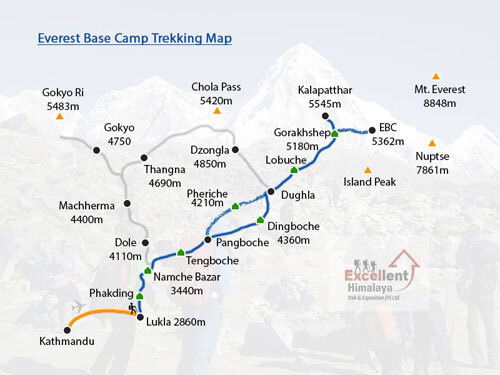
Every EBC itinerary online looks roughly the same. Fly into Lukla, walk to Namche Bazaar, rest a day, keep going through Tengboche and Dingboche to Lobuche and Gorak Shep, reach Base Camp, climb Kala Patthar for sunrise, walk out. The itinerary isn’t where companies differ. The difference shows up in the decisions nobody puts on the website — what happens when your Lukla flight gets cancelled three days running, what happens when a client’s oxygen saturation hits 78% at Lobuche, and whether a porter is carrying more than the contract allows.
From Lukla at 2,860 m to Kala Patthar at 5,545 m you’re gaining close to three thousand meters over 130–138 kilometers. At Base Camp the air has roughly half the oxygen you’re used to. AMS hits a real percentage of people who push too fast. The trek isn’t technical but it’s a proper high-altitude challenge, and the operator you choose is the biggest controllable factor in whether you handle it safely.
A few things that actually matter on the ground:
Lukla flights are completely weather-dependent. In peak spring and autumn you’ll see multi-hour delays on maybe 10–15% of days and full cancellations on 5–8%. The airport has no instrument landing system so pilots need visual conditions. Tara Air, Summit Air and Sita Air handle most of the fixed-wing flights. A company with direct relationships and someone actually at the terminal (or at Ramechhap/Manthali in peak season) can usually rebook you the same day. A reseller routing everything through an overseas call center can’t.
Acclimatization only works if it’s built into the itinerary from the start — not added later as an optional extra. “Climb high, sleep low” is still the best approach we have. The two standard rest days at Namche and Dingboche exist for a reason.
How a company treats its porters is one of the clearest signals of overall professionalism because tourists almost never see that part of the operation.
And when descent alone isn’t enough, the gap between an operator with a standing helicopter protocol and one improvising on the spot can be measured in hours that matter for HACE or HAPE.
Choosing the best EBC company isn’t about the flashiest website. It’s about finding the team that already has the systems in place before anything goes wrong.

How to Verify Any Trekking Company Yourself
Don’t take screenshots or verbal promises. Check it yourself.
Go to taan.org.np and search by name or membership number. If they’re not listed or the number doesn’t match, stop. Real operators give the number immediately.
Ask for the NTB or Department of Tourism registration number. Ours is Reg. No. 175840/074/075, Tourism License No. 2432. Cross-check it. Hesitation here is a red flag.
Search the Office of the Company Registrar at ocr.gov.np and confirm the legal entity is active.
Ask for the specific guide’s government trekking license number before you depart. Proper guides carry the physical card.
Request written confirmation of the 25 kg maximum load, insurance amounts, and gear provision for porters. TAAN guidelines are public. Any company following them will just state the numbers.
If they can’t produce any of that within 24 hours, walk away. That single filter will save you more trouble than almost anything else.
What to Look For (The Real Checklist)
Use this against every company you’re looking at, including us. A company worth booking will answer every point without hesitation.
Guides need Wilderness First Aid training and formal AMS recognition using the Lake Louise Score. Daily pulse oximetry above 3,000 m. At least two dedicated acclimatization days built into the standard itinerary (Namche and Dingboche). Supplemental oxygen carried and a clear helicopter evacuation protocol. Travel insurance that covers helicopter evacuation above 5,500 m.
Licensing: NTB registration, active TAAN membership, government-licensed guides, insurance that covers porters as well as clients. Affiliation with NMA and preferably HRA is a positive signal.
Porter practices should follow TAAN baselines — 20–25 kg maximum load, proper cold-weather gear supplied by the company, fair wages plus meals and lodging, life and accident insurance.
Track record: recent EBC-specific reviews on TripAdvisor and Google that actually name guides, photos from Base Camp and Kala Patthar that look real, and some transparency about how they handle the occasional negative review.
Group size preferably 4–12 with a guide-to-client ratio ideally 1:8 or tighter, and willingness to run private or small custom itineraries.
We built Excellent Himalaya around this checklist. It wasn’t added later for marketing.

2026 Price and Operator Comparison
These are approximate starting prices for standard 14–16 day guided packages (group of 2–6) based on publicly listed 2026 figures. Always get an itemized quote for your dates.
| Factor | Excellent Himalaya (Direct Local) | Nepal Hiking Team | Ace the Himalaya | Mosaic Adventure | Nepal Eco Adventure | International Brand (Intrepid / G Adventures type) |
|---|---|---|---|---|---|---|
| Typical price | USD 1,275–1,500 | USD 1,400–1,600 | USD 1,450–1,550 | USD 1,350–2,100 | USD 1,400–2,000 | USD 2,200–3,800+ |
| Who guides you | Our own licensed Sherpa guides | Local team | Local team | Local team | Local team | Usually a subcontracted local agency |
| Crisis communication | Direct WhatsApp to owner/ops | Local | Local | Local | Local | Often through an overseas call center |
| Lukla rebooking | Same-day capacity through direct airline contacts | Local | Local | Local | Local | Handed to the subcontractor |
| Porter standards | TAAN weight limits, insurance, gear provided | Follows standards | Follows standards | Follows standards | Follows standards | Depends on the partner |
| Registration | Yes — Reg. 175840/074/075, License 2432 | Yes | Yes | Yes | Yes | Local partner is usually registered |
Other local operators that show up regularly in comparisons include Highland Expeditions (more luxury-oriented) and Ian Taylor Trekking (known for certain specialist itineraries). International brands aren’t automatically unsafe. They have standards and work with vetted partners. But you’re paying for the brand name and the overseas support layer, not for a fundamentally different experience on the trail. If you want direct communication, clear pricing, and to know exactly who’s walking with you, a proper local operator still wins on almost every practical point except brand recognition.
Quick test I always suggest: ask any international sales team who the actual ground operator in Kathmandu is and whether you can speak to them before booking. The answer (or the hesitation) tells you a lot.
Current Permits for 2026
Two permits are required for the classic EBC route:
Sagarmatha National Park Entry Permit
Khumbu Pasang Lhamu Rural Municipality Entrance Permit
TIMS is no longer required in the Khumbu. A competent operator handles both before you start walking. The municipality permit can’t be obtained in Kathmandu, so route familiarity actually matters.
A Few 2026 Numbers from Our Own Operations
These come from our 2025–2026 seasons and continuous monitoring of conditions.
Lukla and Ramechhap delays: in peak spring and autumn, multi-hour delays hit about 10–15% of flights and full cancellations around 5–8% on poor-visibility days. Shoulder periods are higher. Ramechhap (Manthali) cuts the Kathmandu fog risk but means a 4–5 hour pre-dawn road transfer. We build buffer days into every itinerary and keep same-day rebooking capacity with the main carriers.
SpO2 protocol: guides check every trekker with a pulse oximeter morning and evening above Namche. Readings get logged. Sustained SpO2 under 80% at rest combined with Lake Louise symptoms starts a descent conversation. Supplemental oxygen is carried on every trip.
Porter standards: hard 25 kg maximum. Full insurance, proper cold-weather gear supplied by us, wages in line with current TAAN guidance. It’s written into the contracts.
These are internal logs plus CAAN and airline advisories. Bodies still react differently — no operator can guarantee zero AMS risk.

Red Flags That Should End the Conversation
Can’t produce a TAAN or NTB number within 24 hours → stop.
Quote under USD 1,000 for a full guided package with flights and permits → almost always means missing insurance, underpaid staff, or hidden extras.
Guide only confirmed once you’re already in Kathmandu → quality becomes a lottery.
No written AMS or evacuation protocol → stop.
Reviews are just star ratings with no named guides or specific trail details → weak evidence.
International brand won’t name the ground operator in Nepal → you’re buying the brand markup, not operational control.
Why Local Companies Usually Win on This Trek
People who live here monitor conditions daily. They know which teahouses have improved, when flights are likely to be delayed, and how the trail is actually behaving between Phakding, Namche, Tengboche, Dingboche, Lobuche and Gorak Shep. Direct relationships with lodge owners matter when rooms are scarce in peak season. Sherpa guides from the region share real local knowledge, not rehearsed scripts. And more of the money stays in Nepali wages, permits and communities instead of disappearing into overseas overhead.
Safety Features That Should Be Non-Negotiable
Wilderness First Aid certified guides with recent training. Daily pulse oximetry and Lake Louise scoring. Supplemental oxygen on the trail. Clear helicopter evacuation contacts. Travel insurance that actually covers helicopter rescue above 5,500 m. Porter standards that match TAAN guidelines. Affiliation with HRA is a useful additional signal because they run the volunteer health posts trekkers rely on in the region.
Meet the Team
Excellent Himalaya is founded and led by me, Suman Shrestha — government licensed trekking guide (License No. 2212) with a Master’s in Tourism Management. I’ve guided across Everest, Annapurna, Langtang, Manaslu and Mustang, and the operating procedures we use came directly from those seasons on the trail, not from a template.
We’re registered with the Nepal government (Reg. No. 175840/074/075, Tourism License No. 2432) and hold affiliations with TAAN, NMA, NTB and HRA.
One of our senior guides, Subindra Adhikari, has multiple seasons on the EBC route. He’s licensed, Wilderness First Aid trained, and regularly leads private and small-group trips. Clients name him in reviews for the way he manages pace and makes altitude decisions. Ask for his license number and recent trip dates when you request a quote — we give them.
We’ve been operating as a registered local company since 2002 under the same registration numbers and the same core standards.

Frequently Asked Questions
What is the best company for the Everest Base Camp Trek?
A Nepal government-registered, TAAN- and NTB-affiliated local operator with licensed altitude-trained guides, real acclimatization days, ethical porter practices and transparent pricing. Excellent Himalaya meets those criteria.
How much does the Everest Base Camp Trek cost in 2026?
Our standard 14-day package starts at USD 1,275 per person for a minimum of two people and includes flights, permits, guide, lodging and most meals. Legitimate local packages generally sit between USD 1,275 and 1,800. International brands start higher.
How do I verify a company’s license?
Check TAAN at taan.org.np and ask for the NTB/DoT number so you can confirm it independently. Real operators don’t mind.
How is a local company different from an international operator?
Local companies usually give deeper cultural experience, lower prices, and more of the money stays in Nepal. International brands give familiar processes and home-country support. The ground team is almost always a local subcontractor either way — verify who that is.
What happens if my Lukla flight is cancelled?
We rebook same-day or next-day through direct airline contacts (Tara Air, Summit Air, Sita Air and others) and keep buffer days in the itinerary. Peak season means Ramechhap transfers. Helicopters are available at extra cost if fixed-wing is grounded for multiple days.
Do I need travel insurance?
Yes. It has to cover helicopter evacuation above 5,000 m and high-altitude trekking. Operators that don’t require proof of this are cutting a critical layer.
How are porters treated?
TAAN sets a 25 kg maximum, insurance and proper gear. Ask for the written policy. Companies that can’t produce one aren’t following the standard.
Can I get a named guide before booking?
Yes if the company runs its own team. Ask. Vague answers usually mean freelancers.
Is it safe to book with a smaller local company?
Yes, as long as they’re properly registered with NTB and TAAN, have verifiable reviews, and use licensed altitude-trained guides. Size matters less than accreditation and systems.
What permits are required in 2026?
Sagarmatha National Park Entry Permit and the Khumbu Pasang Lhamu Rural Municipality Entrance Permit. TIMS is no longer needed in the Khumbu. A competent operator arranges both in advance.
What’s included in a standard Excellent Himalaya package?
Licensed guide, porter, domestic flights, both required permits, teahouse lodging, meals on the trek, and the safety protocols described above. Request a full itemized quote for your dates and group size.
Ready to Plan
We’ve been running EBC treks the same way since 2002— under the same registration numbers, with the same focus on licensed guides, proper acclimatization, and treating the people who carry the loads fairly. If you want to talk through a 2026 or 2027 trip the contact details are below.
WhatsApp: +977 9851203181
Website: excellenttrek.com
Tourism License No: 2432
Registration No: 175840/074/075
Peak April and October fill up months ahead on both flights and teahouse space, so early contact is usually the smarter move.
Travel Tips
It is theoretically possible to trek in the Everest Base Camp year around but flights are frequently canceled in winter and during the monsoon because of poor visibility at the Lukla airstrip. The best weather is in autumn and spring when the skies are clear and temperatures at higher are more bearable. The most serious obstacle to trekking in winter is cold. Days can be perfectly comfortable but the mercury plummets as soon as the sun sinks behind the mountains.
All foreign nationals except Indian Nationals are required to arrange a visa in order to enter Nepal. A Nepalese Visa can be obtained either prior to your arrival at a Nepalese embassy abroad or on arrival time in Kathmandu at the airport. But nationals from Afghanistan, Iraq, Cameroon, Ghana, Somalia, Swaziland, Palestine, Zimbabwe, Nigeria, Ethiopia, and Liberia cannot secure the Nepalese Visa upon arrival. The Visa can be also taken at entry points at Nepalese borders. For Nepalese Visa it requires your passport with at least six months validity, recent digital photo (size: 1.5″ x 1.5″) and the following fees either in USD dollars cash or the equivalent local currency:
| Visa Facility | Duration | Fee |
| Multiple entry | 15 days | US$ 30 or equivalent Nepalese currency |
| Multiple entry | 30 days | US$ 50 or equivalent Nepalese currency |
| Multiple entry | 90 days | US$ 125 or equivalent Nepalese currency |
We would offer you the meeting and greeting service in Kathmandu International Airport on your arrival time. For this, you need to pass us your International flight details at least 2 days before your arrival date in Kathmandu. After you get down from the aircraft you just pass on the Customs and come out of the Terminal building where you will see our tour officer standing with a playing card with your name written on it. He will greet and welcome you with auspicious garland and escort you to the hotel.
Trekking to Everest Base Camp does not require tremendous logistics in terms of accommodation as you will find plenty of clean and friendly lodges along the trail. Lodges typically offer a room with a wooden bed with a simple mattress or foam pad, a cotton pillow, and a blanket or quilt. They have electric lights and all have a spacious dining room-lounge. We will accommodate you and your group in local lodge available each day. We send a porter ahead of us to book the required rooms for you (here rooms cannot be booked in advance).
In the case of Kathmandu, we offer you tourist standard hotel under 3-star categories unless it is mentioned otherwise or clients have a special choice.
In the trail of Everest Base Camp Trekking, it’s commonly available for Authentic Nepali meal: Dal Bhat (rice with lentils soup and seasonable vegetables), noodles, pasta, chapatis, eggs, French fries, porridge, and muesli. The restaurant of lodges also serves Tibetan foods like momo, thukpa, chow mien, along with pizza, spring rolls, pancake and another continental as well as Indian foods.
Tea and hot lemon are traditionally the main drinks on the trail though coffee is found everywhere. Bottled soft drinks, bottled water, and even beer are common along the route but the price of each bottle rises each day when you move upward.
The trekking team who will go with you is the most significant thing that makes your Everest Base Camp trekking successful, enjoyable and memorable. We would provide you skilled, experienced, courteous, knowledgeable and helpful trekking guide and porters. The trekking guide leads you on the trail and brief you all the about this route and porters carry your luggage. Our all trekking guides are carefully selected in terms of their appropriate experience, leadership skills and their knowledge about local culture, ecosystem, geography, flora and fauna, and history. With aim of sustaining local communities, we only employ local people as trekking guide and porter. Our all trekking guides are certified by Nepal Government, Ministry of Tourism. We manage trekking team such a way that one trekking guide in each group and porters like one porter for two trekkers.
During trek, your main luggage will be carried by porters or pack animals (usually yaks or cross-breeds). You simply carry a day pack with water bottle, camera, sunscreen, spare jacket, etc. – a small load that allows full enjoyment of the trek. A trek bag is ideal for your main luggage, plus a small lockable bag for travel clothes or anything that you do not need during trek which you can leave at hotel’s locker room in Kathmandu for free of charge.
Every morning, first of all, packing your bags and then have a hearty breakfast at the lodge restaurant. Then set off on the day’s walk. After walking for 3-4 hours you all stop for lunch in local restaurant. Then continue walking to your destination. After lunch, it’s the only a couple of hours walking. You usually arrive at your destination in the time of afternoon tea. Check in at the lodge. The rest of the day is at leisure. At a free time you may explore surrounding village, do a bit of washing or simply relax by reading books and writing a diary. On some days you will arrive at your destination by lunch time and entire afternoon will be free. Most people also spend free time by playing cards and other games reliving the day’s adventures. Then in the evening have a dinner and you will be briefed by your trekking guide about your next day’s walking and then go to your bed for well-earned sleep.
Everest Base Camp Trekking is moderate trek suitable for any passionate walkers who able to walk at least 5-7 hours a day with a light day pack. Walking in higher altitudes is more physically demanding than walking in lower altitudes; however, if you are in excellent health with average physical fitness and have a positive attitude, self-confidence, and strong determination, you can do this trek successfully. Exercising and jogging regularly for some weeks prior to the trip is a good idea to enhance your strength and stability. Past hiking experience would be an asset but no compulsorily required for this trip. It is vital for participants with pre-existing medical conditions such as heart, lung, and blood diseases to consult their doctor before taking the trip.
At high elevations, the combination of reduced oxygen and lower atmospheric pressure can produce a variety of unpredictable effects on the body, known collectively as Acute mountain sickness (AMS) is also commonly known as Altitude Sickness. Everyone who treks over 3500 m experiences some mild symptoms of AMS like slowness, dizziness, headache, nausea, loss of appetite, shortness of breath, racing pulse, disturbed sleep and swelling of the hands and feet but serious cases are very rare. The golden rule of prevention from Altitude Sickness doesn’t walk too fast at altitude, drink plenty of liquids, eating well, getting plenty of sleep and avoiding alcohol. If in case you feel any mentioned symptoms the simple cure is to move down (descend) and you shouldn’t ascend further until you start feeling better. To treat AMS there is also available medication Acetazolamide (better known under the brand name Diamox). The dosage is 250 mg every twelve hours. Diamox improves respiration at altitude and can, therefore, accelerate acclimatization. Some doctors recommend a preventive dose (125 mg twice a day) for people trekking at high elevations. At the time of trekking our trekking team always guides you to prevent from Altitude Sickness and they always have Diamox along with first aid kit.
We believe casualty and a serious sickness will not happen on the trip. If it happens we will do everything to transfer you to the nearest hospital. Since all the expenses incurred in evacuation liable to you please make sure that it is covered by your insurance before assigning for it or be prepared to pay on your own after getting back to Kathmandu.
We strongly advise you to take travel insurance before joining a tour which should cover medical expenses, emergency repatriation and helicopter evacuation at high altitude places and loss of your luggage. We would request you to bring your insurance documents when you come to Nepal.
The following list is a guideline to help you pack for your trekking. The weight limit for your luggage is 15 kg or 33 pounds. Remember that your luggage will be carried by our porter. However, you are required to carry a small day- pack with your valuables or anything important. We advise you pack only what is necessary.
Important Items : Airline tickets; Valid passport; 2 extra passport size photos; Photocopy of your passport; Insurance paper; Dollars, Pounds or Euros in cash for purchasing Nepalese visa at Kathmandu airport, for paying at restaurants and hotels, for gratuities, snacks and to purchase your own drinks and gifts; Credit Card (Visa/ Mater Card) for withdrawing cash from cash machines if needs.
For Head: Sun Hat; Bandana or head scarf; Headlamp with extra batteries; Sun Glasses with UV protection.
For Upper Body: Shirts (1 half sleeve and 2 long sleeves); Lightweight thermal tops; Fleece Jacket or Wool Sweater; Wind Cheater jacket; Down Jacket
For Lower Body: 1 pair of lightweight thermal bottoms; 1 pair of fleece or woolen trousers; 1 pair of waterproof shell pants and 1 pair of hiking trousers.
For Hands: 1 pair of lightweight wool or fleece gloves and 1 pair of lightweight poly liner gloves.
For Feet: 2 pairs of thin inner socks; 2 pairs of poly or wool socks; 1 pair of Hiking boots (sturdy soles, water resistant, ankle support); 1 pair of running shoes and/or sandals.
Other Useful Items: 1 sleeping bag (good to -20 degrees C or 28 degrees F); Rucksack and Travel Bags; 1 large duffel bag *; A small daypack/backpack for carrying your valuables; Small padlocks for duffel- bags; 2 large waterproof rucksack covers (optional).
Medical: Your daily taking medicine if any; small personal first aid kit; Aspirin, plasters (band-aids); Sunscreen; lip balms; Anti-diarrhea pills; Anti-headache pills; A cough and/or cold medicine; Anti-altitude sickness pills: Diamox or Acetazolamide; Stomach antibiotic: Ciprofloxacin.
Digital camera; 2 water bottles (1 liter each); disposable rubbish sacks; Toiletries: 1 medium-sized quick drying towel; Toothbrush/paste; Multi-purpose soap; Deodorants; Nail clippers; Face and body moisturizer; Tissue /toilet roll; hiking poles, snack food (chocolate/ biscuits); umbrella; reading book or pack of cards (for leisure time during trekking).
Note: * mark item we will provide you in service. If any items are not available in your hometown you can buy in Trekking Store in Kathmandu before you embark for trekking.
The itinerary for each trip should be taken as a guideline only. Depending on the situation, you can modify it to some extent after consulting with your guide. However, the date of trip ending should always coincide with the original itinerary.
Kindly keep in mind that sometimes unforeseen events may contribute to the need for a change in itinerary. In such cases, we or your guide will suggest the best alternative similar to your original.
In Everest region as you climb through the hills mixed deciduous forests and scattered rice terraces give way to pine forests, then rhododendrons, then scrub junipers, before finally, the only vegetation is low alpine shrubs and grasses. As you walk, scan the skies and the undergrowth for golden eagles and the spectacular Himalayan monal (danphe or impeyan pheasant) with its regal, shimmering green, blue and purple plumage. In forested areas around Namche Bazaar, Thame, Phortse, and Tengboche keep your eyes peeled for Himalayan Thar and musk deer often spotted beside trails early in the morning. You may also hear the strange hoarse call of the muntjac or barking deer. Everest is also home to both leopards and snow leopards and allegedly the fearsome yeti.
In addition to your Trekking trip, you can join in various side Trips in Nepal like a cultural tour of UNESCO World Heritage Sites, Jungle Safari in National Park, White Water Rafting in Himalayan Rivers, Golfing, Adventure activities like Bungee Jumping, Altra Light Flight, Paragliding, Jeep flyer etc. You also can extend your trip to neighboring Himalayan Countries: Bhutan, Tibet, Sikkim (India) which seems more appealing to you. On your request, we will give you the detail of the side trips.
Ask our experts (Inquiry)
Why Travel with us?
- Run by local experts, guide & Sherpa.
- Focus on your needs.
- Good value for money.
- Real cared services.
- Government recognized company.
- Best reasonable rate.