


Annapurna Base Camp Trek: Travel Tips for Malaysian People
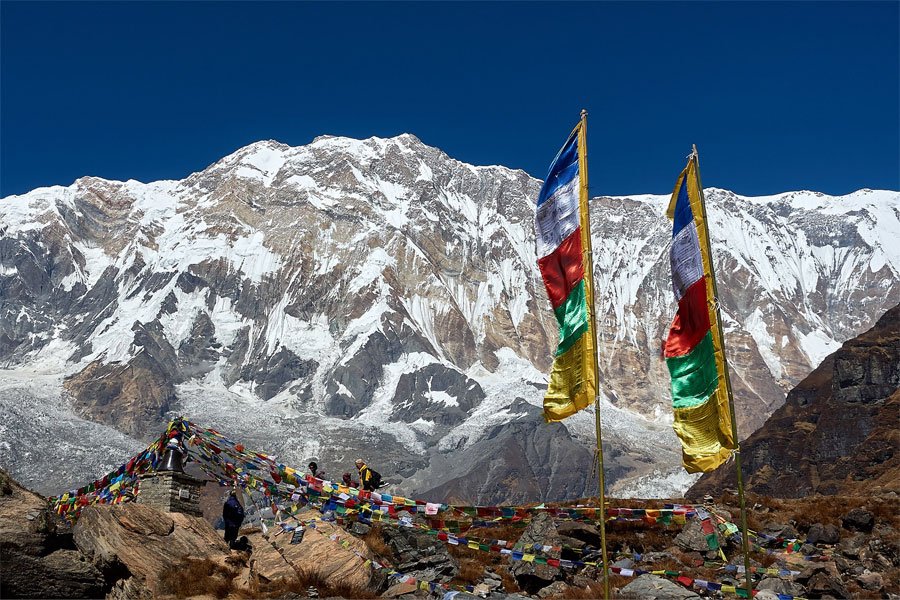
There is a moment on the Annapurna Base Camp (ABC) trek that every Malaysian trekker remembers for the rest of their life. You have just climbed out of the Modi Khola valley, the mist is still clinging to the rhododendron forests below you, and suddenly the clouds part to reveal a cathedral of snow and ice: Annapurna I (8,091m), Hiunchuli, Machhapuchhre (the sacred Fishtail Mountain), and Gangapurna, all standing in a perfect amphitheatre around the glacial sanctuary at 4,130 metres above sea level. Your eyes fill with tears. Your legs ache. And you think to yourself: “This was absolutely worth every step.”
For Malaysians, who grow up at sea level, surrounded by the lush lowlands of Kuala Lumpur, Penang, Johor Bahru, and Kota Kinabalu, the Himalayas represent the ultimate adventure dream. The Annapurna Base Camp Trek is, without a doubt, the single best entry point into that dream. Here is why:
- It is achievable. Unlike Everest Base Camp, which sits at 5,364m, ABC at 4,130m sits below the critical altitude danger zone for most healthy adults. With proper acclimatisation and preparation, trekkers from their late teens to their 60s have completed this trail.
- It is visually spectacular from Day 1. You will walk through terraced rice fields, traditional Gurung villages, dense bamboo forests, and alpine meadows — all within a single trek.
- It is logistically accessible. Direct and one-stop flights connect Kuala Lumpur International Airport (KLIA and KLIA2) to Tribhuvan International Airport (TIA) in Kathmandu with journey times of roughly 4 to 5 hours.
- It is culturally welcoming. Nepal’s Hindu-Buddhist culture shares a deep respect for hospitality, family, and community that resonates strongly with Malaysian values, regardless of your ethnicity.
- The food situation is manageable. This is critical for Malaysian Muslim trekkers. Halal and vegetarian options are widely available throughout the Annapurna Conservation Area, and with the right preparation (more on this below), you will eat well every single day.
The 2026 Travel Outlook for Malaysian Trekkers
The years following the COVID-19 pandemic have seen a remarkable resurgence in Himalayan trekking, and 2026 is shaping up to be one of the most exciting years yet. The Annapurna Conservation Area Project (ACAP) has continued its excellent trail maintenance work, new eco-friendly tea houses have been built along the route, and the Nepalese government has invested heavily in the Pokhara-Kaski region, including the much-anticipated Pokhara International Airport which improves connectivity options.
For Malaysians specifically, the 2026 trekking season (both the spring season from March to May and the autumn season from September to November) offers ideal conditions. The exchange rate between Malaysian Ringgit (MYR) and Nepalese Rupee (NPR) remains favourable — as of 2025-2026, approximately 1 MYR exchanges to roughly 28-30 NPR — making Nepal an exceptionally budget-friendly destination for Malaysians.
“Every year, we guide groups of Malaysians to Annapurna Base Camp, and every single year, without exception, they tell us it was the greatest experience of their lives. The mountain does not care about your background, your ethnicity, or your fitness level at the start. It only cares that you show up with an open heart and willing legs.” — Senior Guide, Excellent Himalaya Trek & Expedition

Table of Contents
- Physical Preparation for Malaysians: Training at Home Before the Himalayas
- Flight & Visa Logistics: Getting from Kuala Lumpur to Kathmandu
- Cultural & Dietary Nuances: Eating Well on the Annapurna Trail
- The Malaysian Edition Packing List: Decathlon vs Thamel
- Safety & Altitude Mountain Sickness (AMS): A Deep Dive for Sea-Level Malaysians
- Day-by-Day Itinerary with Insider Tips
- The Excellent Himalaya Difference: Why Local Expertise Matters
- Frequently Asked Questions: The Malaysian Trekker Edition
- Final Words from Your Guide
Physical Preparation for Malaysians: Training at Home Before the Himalayas
This is the section most Malaysians skip, and it is the section that determines whether your trek is a triumph or a miserable ordeal cut short by exhaustion. Let us be direct: the ABC trek involves 7 to 11 days of walking 5 to 7 hours per day, gaining and losing significant elevation, carrying a daypack weighing 8 to 12 kg. If you are currently sedentary, you need a minimum of 8 to 12 weeks of dedicated training before departure.
The great advantage of living in Malaysia is that you have access to world-class training grounds that are free, accessible, and surprisingly effective at mimicking the demands of Himalayan trekking. Here is your complete Malaysian trekking training plan:
The Batu Caves 272-Step Challenge (Selangor)
The iconic 272 rainbow-painted steps leading up to the Batu Caves Temple in Gombak, Selangor, are your primary staircase training tool. A single ascent takes approximately 5 to 8 minutes. To build real trekking endurance, you need to be able to comfortably complete 10 to 15 consecutive ascents with only brief rests in between, while wearing your loaded daypack.
Begin your training programme with 3 to 4 ascents per session (two sessions per week), and progressively increase the number of ascents over an 8-week period. By Week 8, you should be completing 12 to 15 ascents per session. The advantage of Batu Caves is that the steps are steep (mimicking uphill sections on the trek), the weather is hot and humid (building heat tolerance), and the crowds force you to manage your pace — all directly applicable to ABC conditions.
🏋 Insider Training Tip
Always wear your trekking boots during stair training sessions. This breaks in the boots, prevents blisters on the trek, and allows you to assess whether your footwear is suitable before you are deep in the Himalayas.
Bukit Gasing (Petaling Jaya, Selangor)
Bukit Gasing is arguably the best urban training ground in the Klang Valley for Himalayan preparation. The forested trail network offers genuine elevation change, uneven terrain, tree roots, and mud — all of which you will encounter on the ABC trail. The main trail loop takes 45 to 60 minutes to complete, and the terrain closely mimics the lower sections of the ABC route (particularly the trail between Chhomrong and Sinuwa).
Target three sessions per week at Bukit Gasing as part of your training, progressively increasing to back-to-back sessions over the weekends. This builds the muscular endurance required for consecutive trekking days without recovery time.
Penang Hill (Bukit Bendera) — For Northern Malaysians
For trekkers based in Penang, the Penang Hill heritage trail offers a 5.2km climb with 830m of elevation gain — making it one of the most demanding training grounds in Malaysia. Completing the trail from the Moon Gate to the summit in under 90 minutes with a loaded daypack is an excellent benchmark that indicates you are ready for the ABC trek’s daily demands.
Other Recommended Training Locations
- Broga Hill, Semenyih (Selangor) — A 45-minute climb to 425m; excellent for weekend group training.
- Gunung Nuang, Hulu Langat — A full-day summit trek (2,282m); the gold standard for West Malaysian trek preparation.
- Kota Kinabalu Park / Gunung Tambuyukon trails — For East Malaysian trekkers, a half-day trail in KK park provides excellent conditioning.
- Stadium staircase sessions — If access to hills is limited, stadium staircases in KL, JB, or Penang serve as effective alternatives.
The Complete 10-Week Training Plan
| Phase | Focus | Weekly Target |
| Weeks 1-2 | Foundation | 3x weekly walks (45-60 min flat), 2x Batu Caves (4 ascents each) |
| Weeks 3-4 | Build | 3x weekly hill hikes (60-90 min), 2x Batu Caves (7 ascents each) |
| Weeks 5-6 | Strengthen | 3x weekly hill hikes with loaded pack, 2x Batu Caves (10 ascents), 1x Broga Hill |
| Weeks 7-8 | Peak | Back-to-back weekend hikes (Bukit Gasing Sat + Broga Sun), 2x Batu Caves (14 ascents) |
| Weeks 9-10 | Taper | Reduce intensity by 40%, focus on stretching, finalise gear, rest |
Cross-Training and Strength Work
In addition to hiking, incorporate two gym sessions per week focusing on: leg press, step-ups with weight, glute bridges (critical for downhill knee protection), calf raises, and core strengthening (planks and dead bugs). Strong legs and a solid core are the twin pillars of trekking endurance. Cardio on an elliptical or stationary bike supplements your hiking without adding impact stress.
Do not neglect flexibility training. 10 to 15 minutes of daily stretching targeting hip flexors, hamstrings, calves, and lower back will dramatically reduce your risk of injury on the trail.
Flight & Visa Logistics: Getting from Kuala Lumpur to Kathmandu
Choosing Your Airline: Your Options from KLIA and KLIA2
Malaysian travellers have several excellent options for the Kuala Lumpur (KUL) to Kathmandu (KTM) route. Let us break down each option with the practical details you need:
| Airline / Terminal | Details & Notes |
| AirAsia X / AirAsia (KLIA2) | AirAsia does not currently operate a direct KUL-KTM route but offers excellent connections via Bangkok (BKK) or Delhi (DEL). Budget-friendly option; book baggage allowances in advance. Typical journey: 6 to 9 hours including connection. |
| Batik Air Malaysia (KLIA) | Formerly Malindo Air, Batik Air operates from KLIA. Check current schedules for KUL-KTM one-stop options. Often offers competitive fares with baggage included. |
| Nepal Airlines (KLIA) | The national carrier of Nepal has historically operated the Kathmandu-Kuala Lumpur route. A direct flight with Nepal Airlines takes approximately 4 to 5 hours and is often the most convenient option for Malaysians. |
| Malaysia Airlines (KLIA) | MH codeshare or partner routes via Delhi, Bangkok, or Colombo are available. Premium cabin options for those preferring added comfort. |
| Indigo / Air India via Delhi | A popular routing for budget-conscious travellers willing to overnight in Delhi. |
IMPORTANT NOTE: Airline routes and schedules change frequently. Always verify current routes and fares directly with airlines or a licensed travel agent. Book your KUL-KTM flights at least 3 to 4 months in advance for the peak spring (March-May) and autumn (September-November) seasons to secure the best fares.
Nepal Visa for Malaysian Passport Holders: The Complete Guide
Malaysian citizens (regardless of ethnicity — Malay, Chinese, or Indian) are eligible for a Visa on Arrival (VOA) at Tribhuvan International Airport in Kathmandu. This is one of the most straightforward visa processes in Asia. Here is exactly what you need to do:
- Complete the online Tourist Visa Application form at the official Department of Immigration Nepal website (https://touristvisa.immigration.gov.np) BEFORE departure. Print or save your confirmation. This significantly reduces queue time at the airport.
- Upon arrival at Kathmandu’s Tribhuvan International Airport (TIA), proceed to the Visa on Arrival counters. Do NOT join the regular immigration queue.
- At the counter, present your valid Malaysian passport (minimum 6 months validity), your completed visa form, and the applicable visa fee in USD or card payment.
- Have two recent passport-sized photos ready (white background). Some Malaysian trekkers forget this; photo booths are available at the airport but cause delays.
- Pay the visa fee: 15-day tourist visa (USD 30), 30-day tourist visa (USD 50), or 90-day tourist visa (USD 125). For most ABC trekkers, the 15-day or 30-day visa is sufficient.
- Collect your visa sticker, proceed through immigration, collect your luggage, and exit into the Kathmandu arrivals hall where your Excellent Himalaya guide will be waiting for you.
Malaysian Passport Advantage
Malaysian passport holders consistently rank among the easiest nationalities to process VOA in Nepal. There is no requirement for a letter of invitation, no complex documentation, and no pre-approval process. Your biometric Malaysian passport is all you need.
Currency Exchange: Ringgit to Nepalese Rupee (NPR)
The best practice for Malaysian travellers is to carry USD cash (clean, unmarked notes from 2006 onwards) and exchange to NPR upon arrival in Kathmandu. USD exchanges at consistently favourable rates throughout Nepal. While MYR is exchangeable in some Kathmandu money changers, the rate will be less favourable than USD.
Alternatively, exchange a small amount of MYR at KLIA’s money changers for your immediate arrival expenses, and exchange the bulk of your money at licensed money changers on Thamel’s main strip in Kathmandu, where rates are significantly better than the airport.
| Payment Method | Recommendation |
| Cash (USD) | Best overall option. Exchange to NPR in Thamel. |
| Debit card (Visa/Mastercard) | ATMs available in Kathmandu and Pokhara. Minimal ATMs on the trail. Withdraw NPR before leaving Pokhara. |
| Credit card | Accepted at some Kathmandu hotels and tour operators. Not accepted at tea houses on the trail. |
| MYR cash | Exchangeable in Kathmandu but at lower rates. Bring small amount for emergencies. |
Cultural & Dietary Nuances: Eating Well on the Annapurna Trail
The Halal Question: What Malaysian Muslim Trekkers Must Know
This is the single most frequently asked question from Malaysian Muslim clients, and we want to answer it with complete honesty and specificity so that there are no surprises on the trail.
The Annapurna Circuit trail passes through predominantly Hindu and Buddhist villages whose residents are Gurung, Magar, and Brahmin communities. Meat is commonly available in tea houses, but formal Halal certification (as recognised by JAKIM in Malaysia) does not exist on the trail. However, there are several important practical considerations that most Malaysian Muslim trekkers find acceptable:
- Vegetarian food is universally available and abundant. Dal Bhat (lentil soup with rice), vegetable noodle soup, vegetable fried rice, vegetable Thukpa (noodle soup), and vegetable Mo:Mo (dumplings) are all genuinely meat-free options prepared in kitchens that can be inspected.
- Egg dishes are widely available. Fried eggs, omelettes, and boiled eggs are served at every tea house and provide excellent protein for Muslim trekkers who consume eggs.
- Buffalo meat (not beef from sacred cows) and chicken are available at many tea houses. However, as these animals are not slaughtered by Halal methods, most Malaysian Muslim trekkers choose to avoid meat entirely on the trail and supplement with their own provisions.
- Fish is occasionally available (tinned fish) but rare on the high-altitude sections of the trail.
Brahim’s and Malaysian Provisions: The Smart Muslim Trekker’s Pack
At Excellent Himalaya, we strongly advise our Malaysian Muslim clients to carry a supply of Brahim’s ready-meal packets from home. These halal-certified Malaysian meal pouches — available in flavours like Rendang Daging, Ayam Masak Merah, and Dhal Lemak — are lightweight, compact, and shelf-stable. They require nothing more than hot water (freely available at every tea house) to prepare.
Carrying 7 to 10 Brahim’s packets allows Muslim trekkers to supplement their vegetarian trail meals with a comforting, familiar, halal protein source every single day. We cannot overstate how much this simple step improves the experience and peace of mind of our Muslim clients.
- Brahim’s Rendang Daging — A favourite. One pouch with white rice from the tea house is a complete, satisfying meal.
- Brahim’s Nasi Lemak — Comfort food at altitude; the sambal provides a welcome spice fix.
- Brahim’s Dhal Masala — Pairs perfectly with the local dal bhat bread (chapati).
- Serunding (shredded meat floss, Halal-certified) — Lightweight, high-protein, and delicious on any bread or rice.
- Dates and nuts — Excellent high-calorie snacks for the trail; dates are also culturally significant for many Malaysian Muslim trekkers.
Dal Bhat Power: 24-Hour Fuelling for the Trail
Even for non-Muslim trekkers, the smartest dietary strategy on the ABC trail is to embrace Dal Bhat as your primary meal. This traditional Nepali meal — consisting of steamed rice, a bowl of seasoned lentil soup (dal), sauteed vegetables (tarkari), spiced pickles (achar), and sometimes a small portion of meat — is, without exaggeration, one of the most perfectly engineered endurance foods in human culinary history.
The magic of Dal Bhat is twofold. First, the combination of complex carbohydrates (rice), plant protein (lentils), fibre (vegetables), and probiotics (achar) provides sustained energy release that keeps you fuelled for 5 to 6 hours of trekking without the energy crash associated with processed snacks. Second, and uniquely, most tea houses on the ABC trail offer unlimited refills on Dal Bhat for a fixed price. As trekking guides, we tell every client the same thing: Dal Bhat Power, 24 Hour. It is not just a saying — it is a nutritional strategy.
“Dal Bhat Power, 24 Hour” — The unofficial motto of Himalayan trekkers worldwide. Embrace it fully. A proper Dal Bhat meal at lunch and dinner provides approximately 800 to 1,000 calories per serving — exactly what your body needs after 5 hours of uphill walking at altitude.
The Milo Culture on the Trail: A Malaysian’s Secret Weapon
Here is a delightful cultural surprise awaiting Malaysian trekkers: Milo — yes, the same beloved chocolate malt drink your parents gave you as a child — is readily available at tea houses throughout the Annapurna Circuit, often listed as ‘Hot Milo’ on the menu. Its prevalence reflects the significant number of Malaysian, Singaporean, and Australian trekkers who frequent this trail, and it has become something of a cultural landmark for Malaysian trekkers.
From a practical perspective, a hot Milo at altitude provides a significant psychological comfort boost, simple carbohydrates for energy, and hydration — all of which are valuable on the trail. Many of our Malaysian clients make it a tradition to order a hot Milo immediately upon arriving at each tea house, which also prompts the essential habit of drinking fluids regularly to prevent dehydration and AMS.
Additionally, we recommend Malaysian trekkers carry their own 3-in-1 Milo sachets from home. Nepali Milo (where available) is often prepared with powdered milk and may be less concentrated than the Malaysian version. Your own sachets guarantee the exact taste of home when you need it most.
Other Food Culture Notes
- Tea houses in the Annapurna Sanctuary serve a remarkably diverse menu despite their remote location. Expect: porridge, pancakes, toast, eggs, and hot drinks for breakfast; soups, noodles, fried rice, and dal bhat for lunch and dinner.
- Prices increase with altitude. A bowl of Dal Bhat costs NPR 350-450 in lower villages and NPR 550-700 at Annapurna Base Camp itself. Budget accordingly.
- Garlic soup is your best friend at altitude. Available at most tea houses, garlic has proven blood-thinning properties that aid acclimatisation. Order it every evening.
- Avoid alcohol at high altitude. Alcohol significantly worsens AMS symptoms and dehydration. We advise all clients — regardless of religious background — to avoid alcohol above Chhomrong (2,170m).
- Carry electrolyte sachets (available at pharmacies in Malaysia or Kathmandu). Mix with your water to maintain electrolyte balance during heavy trekking days.
The Malaysian Edition Packing List: Decathlon vs Thamel
One of the most common questions from first-time Malaysian trekkers is: do I need to buy all my gear at home, or can I rent/buy in Kathmandu? The answer is nuanced and depends on your personal preferences and budget. Here is our definitive guidance:
Buy in Malaysia Before You Go
These are items where fit, quality, and familiarity are critical. Do not compromise on these by renting inferior equipment in Thamel:
- Trekking boots: This is your single most important purchase. Buy proper waterproof mid-cut or high-cut trekking boots (Salomon, Merrell, Keen, or equivalent) at Decathlon Malaysia, The North Face outlet, or REI-equivalent stores. Break them in with a minimum of 8 to 10 hikes before your trek. NEVER use new boots on the trail — blisters at altitude are a serious problem.
- Wool or synthetic trekking socks: Merino wool socks are ideal. Buy 4 to 5 pairs. Decathlon Malaysia stocks excellent options at reasonable prices. Avoid cotton socks entirely — cotton retains moisture and causes blisters.
- Trekking poles: A pair of collapsible trekking poles reduces knee stress by up to 25% on descents. Buy or borrow before departure. Leki, Black Diamond, or Decathlon’s own-brand poles are all excellent.
- Daypack (30-35 litres): Your porter will carry your main bag; you carry the daypack with water, snacks, rain gear, and camera. Ensure it has a hip belt and fits your torso correctly.
- Base layers: 2 to 3 moisture-wicking synthetic or merino wool base layer tops and one pair of trekking trousers. Decathlon’s Forclaz range is excellent value.
- Personal medication and first-aid supplies: Bring your own supply of Panadol (paracetamol), imodium, blister plasters (Compeed), antihistamines, and any prescription medications. Diamox (Acetazolamide) for AMS prevention should be discussed with your doctor before departure.
- Sunscreen SPF50+ and UV-protection sunglasses: Altitude magnifies UV radiation dramatically. At 4,130m, UV exposure is approximately double that at sea level. This is critical for South Asian skin tones that may not be accustomed to this level of UV.
- Personal hygiene items: Wet wipes (very useful as showers are limited at high altitude), hand sanitiser, toilet paper (biodegradable preferred), and lip balm with SPF.
Rent or Buy Cheaply in Thamel, Kathmandu
Thamel, the tourist district of Kathmandu, is arguably the best trekking gear marketplace in Asia. Every major brand — both genuine and high-quality replica — is available at a fraction of Malaysian retail prices. For items that do not require a precise fit, Thamel is your best friend:
- Down sleeping bag (-10°C to -15°C rated): Renting a sleeping bag in Thamel costs NPR 100-150 per day. Buying a replica North Face or Mountain Hardwear bag costs NPR 2,000-4,000 (approximately MYR 70-140). Tea houses provide blankets, but your own sleeping bag is strongly recommended above Chhomrong for hygiene and warmth.
- Down jacket: Thamel replica down jackets (700-fill equivalent) cost NPR 2,500-4,500 and are genuinely warm enough for ABC. No need to spend MYR 500+ on a branded one unless you plan to trek frequently.
- Trekking trousers: Lightweight zip-off trekking trousers in Thamel cost NPR 800-1,500. Good value and perfectly functional.
- Waterproof rain jacket / poncho: Available cheaply in Thamel. However, if you own a quality Malaysian-bought rain jacket, bring it.
- Woollen hat, gloves, and buff/neck gaiter: Thamel’s woollen shops are exceptional. Hand-knitted Nepalese wool hats cost NPR 200-400 and make beautiful souvenirs.
- Trekking map of the Annapurna region: Available at MAP (Maps of Nepal) shops in Thamel for NPR 200-400. Essential even if using a digital GPS app.
Complete Packing Checklist Summary
| Item | Source |
| Trekking boots (broken in) | Buy in Malaysia (Decathlon, outdoor stores) |
| Trekking socks x5 pairs (wool/synthetic) | Buy in Malaysia |
| Trekking poles | Buy/borrow in Malaysia or rent in Thamel |
| Daypack (30-35L with hip belt) | Buy in Malaysia |
| Moisture-wicking base layers (x3) | Buy in Malaysia (Decathlon Forclaz) |
| Down jacket | Buy cheaply in Thamel (NPR 2,500-4,500) |
| Down sleeping bag (-10°C rated) | Rent in Thamel (NPR 100-150/day) |
| Waterproof rain jacket | Buy in Malaysia or Thamel |
| Trekking trousers (x2) | Malaysia or Thamel |
| Thermal underwear / base set | Malaysia or Thamel |
| Woollen hat, gloves, buff | Buy in Thamel (excellent quality) |
| Sunscreen SPF50+ (x2 bottles) | Bring from Malaysia |
| UV sunglasses (category 3 or 4) | Buy in Malaysia |
| Personal first-aid kit + medications | Bring from Malaysia |
| Brahim’s meal packets (x8-10) | BRING FROM MALAYSIA (not available in Nepal) |
| 3-in-1 Milo sachets (x15-20) | Bring from Malaysia |
| Electrolyte sachets (x20) | Malaysia or Kathmandu pharmacy |
| Headlamp + spare batteries | Malaysia or Thamel |
| Power bank (10,000mAh+) | Bring from Malaysia (charging at tea houses costs extra) |
| Passport photos (x4, white bg) | For TIMS card and ACAP permit |
Safety & Altitude Mountain Sickness (AMS): A Deep Dive for Sea-Level Malaysians
This section demands your complete and serious attention. Every year, trekkers on the Annapurna trail — including experienced ones — are evacuated by helicopter due to altitude sickness. In severe cases, altitude sickness kills. As a Malaysian trekker coming from sea level, your body has no pre-existing altitude adaptation, which means you need to understand AMS thoroughly before your first step on the trail.
Understanding Altitude and the Malaysian Body
At sea level (where Kuala Lumpur, Penang, and most of Malaysia sits), your body is accustomed to breathing air with approximately 21% oxygen at full atmospheric pressure. At 4,130m (Annapurna Base Camp), the atmospheric pressure drops to roughly 60% of sea-level pressure, meaning each breath delivers significantly less oxygen to your blood. Your body’s response to this — increasing red blood cell production, adjusting breathing rate, and other physiological adaptations — takes time. Altitude Mountain Sickness (AMS) occurs when you ascend faster than your body can adapt.
The Three Stages of Altitude Sickness
| Condition | Symptoms & Management |
| Acute Mountain Sickness (AMS) | Headache (main symptom), fatigue, nausea, dizziness, loss of appetite, insomnia. Onset typically 6-12 hours after rapid ascent. Manageable with rest, hydration, and ibuprofen/paracetamol. |
| High Altitude Pulmonary Edema (HAPE) | Fluid buildup in the lungs. Symptoms: severe breathlessness, persistent cough (sometimes with pink frothy sputum), inability to walk without stopping. MEDICAL EMERGENCY. Immediate descent required. |
| High Altitude Cerebral Edema (HACE) | Fluid buildup in the brain. Symptoms: severe headache, loss of coordination (ataxia), confusion, altered consciousness. LIFE-THREATENING EMERGENCY. Immediate descent required. |
The Golden Rules of Altitude Safety
At Excellent Himalaya, we implement these rules without exception for all our Malaysian client groups:
- Never ascend with a headache. If you wake up with a headache, take a rest day at your current altitude.
- Ascend slowly. Follow the standard mountaineering guideline: above 3,000m, do not ascend more than 300-500m of sleeping altitude per day.
- Drink 3 to 4 litres of water daily. Dehydration mimics and worsens AMS symptoms.
- Never ignore symptoms. AMS is not weakness — it is physiology. Tell your guide immediately if you feel unwell.
- The only cure for severe AMS is descent. Do not delay. Descend immediately at any sign of HAPE or HACE.
- No sleeping pills. They suppress breathing at altitude and increase AMS risk. Use only if prescribed and discussed with your doctor.
Diamox (Acetazolamide): Should Malaysian Trekkers Take It?
Diamox (acetazolamide, 125mg to 250mg twice daily) is a prescription medication that aids acclimatisation by stimulating faster breathing. It is effective at reducing AMS risk. However, it is a prescription medication in Malaysia and should ONLY be taken after consultation with a doctor. Important considerations for Malaysian trekkers:
- Diamox contains sulphur. Individuals with sulfa drug allergies should NOT take it.
- It causes increased urination (stay hydrated) and tingling in fingers and toes (normal side effect).
- It can cause sun sensitivity — extra critical in the high-altitude UV environment.
- Malaysian doctors at travel clinics (such as those at KLIA or major hospitals) can prescribe Diamox for trekking. Book a pre-travel consultation at least 4 weeks before departure.
Emergency Evacuation and Travel Insurance
This point is non-negotiable: you MUST have travel insurance that explicitly covers high-altitude trekking and helicopter evacuation from Nepal. A helicopter evacuation from Annapurna Base Camp to Pokhara or Kathmandu can cost USD 3,000 to USD 6,000. Without insurance, this comes out of your pocket.
Recommended insurance providers with verified Nepal trekking coverage include World Nomads, AIG Travel Guard, and Allianz Travel. Ensure your policy covers: altitude trekking above 4,000m (some policies cap at 3,500m — read the fine print), helicopter evacuation, trip cancellation, and emergency medical expenses. Excellent Himalaya will require proof of adequate insurance before confirming your booking.
📋 ACAP Permit and TIMS Card
Every trekker on the Annapurna Circuit must carry two permits. (1) ACAP Permit (Annapurna Conservation Area Project): NPR 3,000 per person. Purchased at the TAAN office in Kathmandu or the ACAP permit counter in Pokhara. (2) TIMS Card (Trekkers’ Information Management System): NPR 2,000 per person for trekkers with a registered agency. Required to enter the conservation area. Both permits require 2 passport photos and a copy of your passport. Your Excellent Himalaya guide will assist you in obtaining both permits.
Day-by-Day Itinerary with Insider Tips
The following is Excellent Himalaya’s standard 10-day ABC Trek itinerary, optimised for Malaysian trekkers with appropriate acclimatisation days. Note that this itinerary begins and ends in Pokhara, and does not include travel days from Kathmandu to Pokhara (typically 1 day by tourist bus or 30 minutes by domestic flight).
Day 1: Pokhara to Nayapul to Tikhedhunga
Altitude: 1,540m | Distance: 13km | Walking Time: 4-5 hours
Your trek begins with a 1.5-hour drive from Pokhara’s lakeside to Nayapul (1,070m), where you officially register your permits and begin walking. The trail follows the Modi Khola river through terraced rice paddies and Gurung villages, climbing steadily to your first night’s stop at Tikhedhunga.
Insider Tip: The first day is deceivingly demanding — the climb from Birethanti to Tikhedhunga involves a long stone-stepped ascent. Pace yourself consciously. Many Malaysian trekkers push too hard on Day 1 with fresh energy and pay for it with sore knees on Day 2. Your guide will set a sustainable pace; follow it without protest.
Day 2: Tikhedhunga to Ghorepani
Altitude: 2,860m | Distance: 11km | Walking Time: 5-6 hours
The most significant climbing day of the lower section. The trail ascends steeply from Tikhedhunga through Ulleri (1,960m) — whose famous stone staircase of roughly 3,500 steps is legendary among trekkers — through rhododendron forests to the bustling village of Ghorepani. In spring (March-April), the rhododendrons are in full spectacular bloom. This is when many Malaysian trekkers take their first truly breathtaking photographs of the Annapurna and Dhaulagiri ranges.
Insider Tip: The Ulleri stone staircase is your Batu Caves moment magnified by 10. If you have trained on stairs as recommended, you will find it challenging but manageable. If you have not trained… you will find it character-building.
Day 3: Poon Hill Sunrise & Trek to Tadapani
Poon Hill Altitude: 3,210m | Tadapani Altitude: 2,630m | Walking Time: 6-7 hours total
Wake at 4:30am for the 45-minute predawn hike to Poon Hill, the most famous viewpoint in the entire Annapurna region. At sunrise, the entire Annapurna and Dhaulagiri massifs ignite in shades of gold and pink in a panorama that defies description. After breakfast back at Ghorepani, the trail descends through magnificent rhododendron and oak forests to Tadapani.
Insider Tip: The Poon Hill sunrise is the single most photographed moment of the ABC trek. Bring your best camera or phone camera setting. The temperature at 3,210m at 5:30am can be -5°C to -10°C in the shoulder seasons, so ensure your down jacket and gloves are in your daypack, not in your porter’s main bag.
Day 4: Tadapani to Chhomrong
Altitude: 2,170m | Walking Time: 4-5 hours
A beautiful day of walking through rhododendron forests with continuous views of Annapurna South and Hiunchuli. Chhomrong is the last significant village before the Annapurna Sanctuary and the last place with reliable mobile phone signal (NTC and Ncell networks). It is also the gateway checkpoint where your permits are thoroughly checked.
Insider Tip: Use your time in Chhomrong to call family back in Malaysia, download offline maps, charge all your devices (power banks and camera batteries), and purchase any last-minute snacks. Above Chhomrong, shops become scarce and expensive.
Day 5: Chhomrong to Dovan via Sinuwa
Altitude: 2,600m | Walking Time: 5-6 hours
The trail descends steeply from Chhomrong to the Chhomrong Khola river before climbing equally steeply through bamboo and rhododendron forests to Sinuwa, then continuing to Dovan. This day involves significant elevation change and tests your knee strength on the descents. The bamboo forest section between Sinuwa and Bamboo tea house is one of the most atmospheric on the entire trek.
Insider Tip: Trekking poles are non-negotiable from this day forward. The descent from Chhomrong to the river crossing is steep with uneven stone steps. Your knees will thank you for the poles. This is also where altitude starts to become a consideration — drink extra water and eat a garlic soup dinner.
Day 6: Dovan to Deurali
Altitude: 3,230m | Walking Time: 4-5 hours
A shorter but increasingly high-altitude day. The trail passes through Himalaya Hotel and Hinku Cave before arriving at Deurali, which sits at the entrance to the Annapurna Sanctuary’s upper section. Weather can change dramatically above Dovan — snow is possible even in October. The views begin to open up dramatically, with Hiunchuli and Annapurna South towering overhead.
Insider Tip: Deurali and Machhapuchhre Base Camp (MBC) are the most weather-sensitive sections of the trek. Afternoon avalanches are not uncommon in the gullies above the trail. Your guide will assess conditions carefully and may adjust timing. Always depart for MBC before noon if possible.
Day 7: Deurali to Machhapuchhre Base Camp to Annapurna Base Camp
MBC Altitude: 3,700m | ABC Altitude: 4,130m | Walking Time: 5-6 hours
This is the day you have been training and dreaming about. From Deurali, the trail emerges above the treeline into the glacial Annapurna Sanctuary, a vast arena surrounded by eight peaks above 6,000m and three above 8,000m. Machhapuchhre Base Camp (also called MBC) at 3,700m is your lunch stop, and the views here are already extraordinary — the sacred Fishtail Mountain (Machhapuchhre, 6,993m) looms directly overhead.
The final 2.5km to Annapurna Base Camp is a gentle glacier walk across moraines and snowfields (crampons may be needed in winter) that ends at the most magnificent mountain amphitheatre in the world. The 360-degree panorama includes Annapurna I (8,091m), Annapurna III (7,555m), Gangapurna (7,455m), and the overwhelming presence of Machhapuchhre. Every Malaysian trekker we have brought to this spot has been reduced to tears. Every single one.
Insider Tip: At 4,130m, the air is noticeably thin. Move slowly, breathe deeply, and drink water consistently. The headache that many trekkers experience here is normal mild AMS — rest, hydrate, and take ibuprofen if needed. If the headache is severe, does not respond to medication, or is accompanied by ataxia or breathlessness, inform your guide immediately. Celebrate your achievement — but do so with garlic soup, not beer.
Day 8: ABC to Bamboo (Descent)
Altitude: 2,310m | Walking Time: 7-8 hours
The descent from ABC is long but deeply satisfying. Most trekkers are surprised by how quickly the altitude decreases — you descend nearly 1,800m in a single day. The views on the descent, now seen from a different angle, are equally spectacular. Stop at MBC for lunch and take final photographs. By evening you are back in the warm bamboo forest zone.
Insider Tip: The descent is significantly harder on your knees than the ascent. Your poles are critical. Take the descents slowly, especially the stone staircase sections. This is when most trek injuries occur — blistered, tired feet on steep rocky descents. Step methodically, not quickly.
Day 9: Bamboo to Jhinu Danda (Hot Springs)
Altitude: 1,780m | Walking Time: 4-5 hours
The great reward of the descent: the famous Jhinu Danda natural hot springs, located a 20-minute walk below the village of Jhinu, directly on the bank of the Modi Khola river. These geothermal hot springs, at approximately 38°C to 42°C, are one of the most glorious post-trek experiences in Nepal. Soak your tired muscles for 30 to 60 minutes in the steaming river-side pools while the sound of the Modi Khola roars below you. This is pure Himalayan bliss.
Insider Tip: The Jhinu Danda hot springs charge a small entry fee (NPR 200-300). Bring your swimming kit (essential for modesty, especially for Malaysian trekkers). The springs are mixed-gender and attract international trekkers. An evening soak after a long day of descent is one of the defining highlights of the entire ABC experience.
Day 10: Jhinu Danda to Nayapul to Pokhara
Walking Time: 3-4 hours + 1.5-hour drive to Pokhara
The final morning’s walk through the lower Modi Khola valley back to Nayapul is gentle and nostalgic. The familiar terraced fields, the sounds of village life, and the distant final views of the Annapurna range provide a perfect emotional bookend to your journey. From Nayapul, a vehicle meets you for the return drive to Pokhara, where a hot shower, a restaurant meal (celebrate with whatever food your heart desires), and a comfortable bed await you.
Insider Tip: Book your celebration dinner at one of Pokhara’s many lakeside restaurants. After 10 days of tea house food, even simple pasta or pizza tastes transcendent. Malaysian-friendly restaurants with rice and spiced dishes are also available on Lakeside Road. Treat yourself — you have earned it.
The Excellent Himalaya Difference: Why Local Expertise Matters
Every year, a small number of Malaysian trekkers book their Annapurna trip through middle-man agencies based in Malaysia — travel agencies that essentially sub-contract your trek to Nepalese operators, taking a commission and adding a layer of communication delay between you and the actual experts on the ground. We want to explain, with complete transparency, why booking directly with a Nepal-based local agency like Excellent Himalaya Trek & Expedition is both safer and more cost-effective.
Twenty Years of On-Ground Experience
Excellent Himalaya Trek & Expedition has been operating in Nepal since 2004. Our senior guides have led thousands of trekkers — many of them Malaysian — to Annapurna Base Camp across every season and every weather condition imaginable. This depth of experience translates into practical advantages that a remote booking agent cannot replicate:
- We know when the Deurali-MBC trail is blocked by fresh snowfall and can redirect our groups through alternative timing or routes.
- We have relationships with specific tea house owners along the trail who prioritise our groups’ room allocations during peak season.
- We understand the specific altitude acclimatisation challenges that sea-level Malaysian trekkers face, and build this understanding into every itinerary we design.
- Our guides are all trained in Wilderness First Responder (WFR) protocols and carry portable pulse oximeters, supplemental oxygen, and Gamow bags on high-altitude itineraries.
The Real Cost Comparison
A common perception is that booking through a Malaysian agency is more convenient or offers better value. In practice, the opposite is true. When you book through a Malaysian middle-man agency, you typically pay a 25 to 40% premium above the actual cost of the trek in Nepal, without any corresponding increase in service quality. That premium goes to the Malaysian agency, not to your Nepalese guide or the local economy.
Booking directly with Excellent Himalaya gives you: better value (no intermediary markup), direct communication with your actual guide team, the ability to customise your itinerary, and the knowledge that your money directly supports local Nepalese guides, porters, and communities.
Our Malaysian-Specific Services
- Malaysian cultural briefing before departure: We brief you on Nepalese customs, temple etiquette, and cultural sensitivities relevant to Malaysian (Malay, Chinese, and Indian) trekkers.
- Halal dietary planning: We coordinate with tea house owners along the route to ensure vegetarian meal options are clearly available for Muslim Malaysian clients.
- Permit processing: We handle all ACAP and TIMS card applications on your behalf.
- Airport transfers: Our team receives you at Tribhuvan International Airport with your name on a sign and escorts you directly to your hotel in Thamel.
- 24/7 emergency support: We maintain constant satellite communication with our guides on the trail. In an emergency, we coordinate helicopter evacuations, hospital admissions, and family notifications.
- Post-trek Pokhara programme: We can arrange Pokhara sightseeing, paragliding, or other activities for your rest days after the trek.
Book directly with Excellent Himalaya Trek & Expedition at www.excellenttrek.com or email [email protected] or whatsapp +9770851203181. Our team typically responds within 24 hours. We offer free pre-trek consultations via WhatsApp or Zoom for Malaysian clients.
Frequently Asked Questions: The Malaysian Trekker Edition
Q1: How difficult is the ABC trek for a typical Malaysian with no trekking experience?
The ABC trek is classified as a moderate-to-challenging trek. The primary difficulties are the daily 5 to 7 hours of walking with elevation gain, the altitude at ABC (4,130m), and the cumulative physical fatigue over 10 consecutive days. For a healthy Malaysian in their 20s to 50s who completes 8 to 10 weeks of dedicated training, it is very much achievable. We have successfully guided Malaysian clients in their 60s to ABC, as well as university student groups. The key variable is preparation, not age or ethnicity.
Q2: What is the best time of year for Malaysians to do the ABC trek?
The two ideal trekking seasons align conveniently with Malaysian school and public holiday schedules. The Autumn season (September to November) offers stable weather, clear views, and moderate temperatures — this is peak season and widely considered the best overall. The Spring season (March to May) offers blooming rhododendrons and also excellent conditions. December to February can see snowfall and cold temperatures above Chhomrong but is possible with appropriate winter gear. Avoid June to August — the monsoon season brings heavy rainfall and leeches on lower trails.
Q3: How much does the ABC trek cost? What is the budget in Malaysian Ringgit?
A complete, well-organised ABC trek (10 days trekking + 2 days Pokhara + Kathmandu) typically costs USD 700 to USD 1,200 per person for ground arrangements (guide, porter, tea house accommodation, meals on trek, all permits). Add your KLIA to Kathmandu return airfare (MYR 1,500 to MYR 3,500 depending on airline and booking timing), Kathmandu hotel (NPR 2,000-6,000/night), gear (MYR 500-1,500 if buying new from Decathlon), visa fee (USD 30-50), and personal expenses. Total budget: approximately MYR 7,000 to MYR 12,000 per person for a complete well-organised trip.
Q4: Do I need a guide? Can I do the ABC trek independently?
As of our latest information, the Nepalese government has made it a requirement for foreign trekkers in the Annapurna region to be accompanied by a licensed guide. Independent trekking without a guide is no longer permitted. Beyond the legal requirement, a licensed guide provides invaluable altitude safety monitoring, route knowledge, cultural translation, and emergency support. At Excellent Himalaya, your guide is also your cultural ambassador, medical safety officer, and trusted companion. Do not cut this corner.
Q5: I am Malaysian Muslim. Will I be able to find Halal food throughout the trek?
Pure Halal-certified food (JAKIM-standard) is not available on the ABC trail. However, vegetarian food is universally available and excellent — dal bhat, vegetable noodle soup, vegetable fried rice, eggs, bread, and porridge are all Halal by ingredient. We strongly recommend supplementing with Brahim’s halal meal pouches from Malaysia (carry 8 to 10 packets) for protein variety. Most of our Malaysian Muslim clients find this approach completely satisfying. Not a single Muslim Malaysian client has gone hungry on our treks.
Q6: What about altitude sickness? Am I at higher risk because I am Malaysian and live at sea level?
Yes, Malaysians living at sea level begin with zero altitude adaptation, unlike trekkers from Bogota (2,600m) or Quito (2,850m) who already have some adaptation. This means proper acclimatisation planning is essential. Our itinerary is specifically designed with appropriate ascent profiles for sea-level trekkers. The risk of AMS is manageable with proper pacing, hydration, and the guidance of an experienced team. We carry pulse oximeters for all our groups and monitor blood oxygen saturation at each major altitude gain.
Q7: Is the ABC trek suitable for Malaysian senior citizens?
We have successfully guided healthy Malaysians in their 60s to Annapurna Base Camp. The key prerequisites for senior trekkers are: a thorough medical check-up including cardiac evaluation before the trip, a pre-consultation with your doctor regarding Diamox usage, a training programme adapted to your fitness level (6+ months is recommended for seniors), willingness to turn back if altitude sickness symptoms present, and a longer itinerary (12-13 days) to allow more acclimatisation time. We customise itineraries specifically for senior Malaysian groups on request.
Q8: Can I get a SIM card that works in Nepal? Is there mobile signal on the trail?
Yes. Upon arrival in Kathmandu, purchase a Nepal Telecom (NTC) or Ncell SIM card at the airport or in Thamel. Data packages are cheap (NPR 500-1,000 for generous data). Mobile signal (NTC is generally more reliable) is available at most villages along the lower sections of the trail up to Chhomrong. Above Chhomrong, signal becomes patchy and disappears entirely in the Annapurna Sanctuary. Inform your family in Malaysia of this before you depart. Your guide carries a communication device for emergencies above the signal zone.
Q9: How should I handle the ACAP permit and TIMS card?
Both permits are handled by your Excellent Himalaya guide. The ACAP permit (NPR 3,000) and TIMS card (NPR 2,000 with a registered agency) are obtained in Pokhara before the trek begins. You need to provide: 2 passport-sized photos (white background), a copy of your passport photo page, and payment. Your guide will carry the permits and present them at the multiple checkpoints along the trail. Keep your passport accessible in your daypack at all times for checkpoint verification.
Q10: What are the most common mistakes Malaysian first-time trekkers make?
- Insufficient physical preparation — starting training too late or not training at all.
- Buying new, unbroken-in boots — the single most common cause of serious blisters.
- Ascending too fast on the first days due to excitement and energy.
- Not drinking enough water — aiming for 3 litres minimum per day above 2,500m.
- Ignoring early AMS symptoms due to peer pressure or not wanting to inconvenience the group.
- Packing too heavy — your daypack should be 8kg maximum. If you are uncertain, leave it behind.
- Not purchasing adequate travel insurance with helicopter evacuation coverage.
- Booking through a Malaysian middle-man agency without verifying the actual Nepalese operator.
Final Words from Your Guide
In more than 20 years of leading groups to Annapurna Base Camp, the one thing that never changes is the look on a Malaysian trekker’s face when they first stand in the sanctuary at 4,130 metres, surrounded by mountains that were ancient long before human civilisation began, and realise that they did it. That they trained in the heat of Kuala Lumpur and climbed stone stairs at Batu Caves and packed their Brahim’s packets and bought their trekking boots and got on the plane and put one foot in front of the other for ten days — and they made it.
The Annapurna Base Camp trek is not just a physical journey. It is a journey of self-discovery, cultural immersion, and personal transformation. For Malaysian trekkers — whether Malay, Chinese, or Indian; whether student or retiree; whether from Klang Valley or Penang or Sarawak — the ABC trek has a particular gift: it shows you that the limits you believed you had are far further away than you thought.
Excellent Himalaya Trek & Expedition has been privileged to serve Malaysian trekkers for over two decades. We understand your dietary needs, your cultural sensitivities, your sea-level starting point, and your deep capacity for resilience and spirit. We are not just your trekking company — we are your guides, your safety team, and your local family in Nepal.
Ready to begin your Annapurna Base Camp journey? Contact Excellent Himalaya Trek & Expedition today. Website: www.excellenttrek.com | Email: [email protected] | WhatsApp:+9779851203181. Tell us you are Malaysian — we will take special care of you.
About the Author

Suman Shrestha
I am Suman Shrestha. I have dedicated my life to mastering the rhythms of the Nepal Himalayas and its culture. I am also a fully government-licensed trekking and tour guide. I've personally led hundreds of adventure groups across our country's most diverse and demanding landscapes and guided countless tour groups across every special interest imaginable. I know the ground reality of every ridge, every sacred monument, and every remote teahouse along the way, because I've earned that knowledge step by step, not from a brochure. My deep technical knowledge of Nepal’s diverse geography is matched only by my uncompromising commitment to safety. Beyond the physical path, I take a pride in being a bridge for all people by sharing the knowledge of the Himalayas, rich traditions and spiritual heritage of Nepal ensuring every journey is an authentic Experience. Let’s explore the heart of the Himalayas together. You can connect with me via WhatsApp at +9779851203181.