


Best Company for Annapurna Base Camp Trek 2026/2027

Updated [July 11th, 2026] · Written and reviewed by Suman Shrestha, licensed guide (Nepal Government License No. 2212)
QUICK ANSWER
The best company for the Annapurna Base Camp trek is government registered with Nepal’s Department of Tourism, holds active TAAN membership, employs individually licensed guides with documented Annapurna experience, limits porter loads to 20 to 25kg with full insurance, gives a written cost breakdown with no hidden fees, and has reviews on TripAdvisor and Google that name real guides and specific trail details rather than generic praise. Price should be the last thing you compare, not the first.
If you are a trekker from any country planning your first or second Annapurna Base Camp trek, you have likely spent hours researching routes, seasons, and gear. But one decision shapes your entire experience more than any other: choosing the right company for the Annapurna Base Camp trek.
The trekking company you select affects your safety on high-altitude trails, your comfort in teahouses, your success in acclimatizing, and how deeply you connect with the Gurung and Magar communities along the way. A poorly chosen operator can turn a dream journey into a stressful ordeal. The right one turns it into something you talk about for years.
I am Suman Shrestha, founder of Excellent Himalaya Trek and Expedition, a Kathmandu-based, government-registered trekking company (Reg. No. 175840/074/075, Tourism License No. 2432). I began this work as a guide in 2004 on the same Annapurna trails I now send guides out on every season. Everything in this guide reflects that field experience, not a marketing brief. By the end, you will know exactly what to verify before booking any Annapurna Base Camp trek company, including us.

What Makes the Best Company for the Annapurna Base Camp Trek
Defining “best” requires looking past the cheapest price tag. The factors that actually determine a safe, rewarding ABC trek are legal compliance, safety protocol, guide quality, porter ethics, and genuine value for what you pay. Here is what to check, in order.
- Government licenses and professional memberships: A licensed operator is registered with the Nepal Tourism Board and the Trekking Agencies’ Association of Nepal (TAAN). This isn’t a bureaucratic formality; it’s your recourse if something goes wrong.
- Safety standards: Guides should be licensed, first aid trained, and carry pulse oximeters to monitor oxygen saturation at altitude (normal range 90 to 98 percent, dropping levels signal a need to descend). A reputable company has a written evacuation protocol, not a vague promise.
- Experienced local guides and porters: Look for guides with real years on the Annapurna trail specifically. Small group sizes, typically 4 to 10 trekkers, allow a guide to actually monitor each person’s pace and condition.
- Fair porter welfare: IPPG guidelines recommend a maximum load of 20 to 25kg, including the porter’s own gear, plus insulated jackets, boots, and meals equal to what clients receive. This is the clearest signal of whether an agency runs an honest operation.
- Transparent pricing: A written quote should state exactly what’s included and excluded. A vague or missing “price excludes” section is a warning sign.
- Responsive, specific communication: How an agency answers your questions before you’ve paid a deposit predicts how they’ll treat you on the trail.
- Verifiable reviews: Look for reviews naming a specific guide, a specific date, or how a specific problem got resolved, not generic praise.
2026 Regulatory Update: What Actually Applies to the Annapurna Base Camp Trek
Trekking rules in Nepal have changed meaningfully since 2023, and permit information online has not kept pace. Here is what’s actually enforced on the ABC trail as of 2026, corrected against outdated advice still repeated across the industry.
| Rule | Current 2026 status | What it means for you |
| Licensed guide requirement | Mandatory for all foreign trekkers in the Annapurna Conservation Area since April 2023, actively enforced at checkpoints | You cannot legally trek ABC without a licensed guide from a registered agency |
| ACAP permit | Mandatory, single entry, checked at Birethanti, Ghorepani, and Chhomrong | This is the only permit actually verified on the ABC trail |
| TIMS card | Discontinued for the Annapurna region in 2023. Checkpoints now verify ACAP only | If a quoted price still lists a mandatory TIMS fee for ABC, ask why |
| Guide to trekker ratio | The 1:7 maximum applies to restricted areas (Upper Mustang, Manaslu, Dolpo), not ABC, which sits in the non-restricted Annapurna Conservation Area | Don’t assume every 2026 restricted-area rule applies to ABC group sizes |
| Evacuation insurance | Comprehensive travel insurance covering high altitude helicopter evacuation is required before permits can be finalized | Confirm your policy covers rescue up to at least 5,000 meters |
We arrange the ACAP permit for every client in advance. We do not charge a TIMS fee for ABC treks because it is not required for this route, and we would rather correct our own older pricing sheets than keep charging for permit checkpoints no longer checked.
Local vs International Trekking Agency for Annapurna Base Camp
| Factor | Local Nepal-based agency | International operator |
| Pricing | Lower, no overseas overhead or marketing layer | Higher, includes overseas admin and marketing costs |
| Logistics control | Direct, in-house guides and porters | Often outsourced to a local partner, you never directly vet |
| Flexibility on trial | Real-time route and pace adjustments made on the spot | Itineraries are usually fixed well in advance |
| Local economic impact | Wages and spending stay largely within Nepal | A portion of your payment goes to overseas operations |
| Communication before booking | Often direct contact with the guide or owner | Usually filtered through a customer service layer |
Neither model is automatically wrong. For most travelers prioritizing value, flexibility, and guides who genuinely grew up on these trails, a vetted local agency is the stronger choice, and it’s the model we’ve built our business on for two decades.

Why Excellent Himalaya for Annapurna Base Camp
We hold full Department of Tourism registration, Nepal Tourism Board certification, and active TAAN membership. Here’s what that means in practice, not just on paper.
Our Guide Team: From Porter to Guide
Two of our senior Annapurna guides, Sashi Adhikari and Laxman Bhandari, started exactly where I did, as porters. Sashi began carrying loads on the Annapurna trail in his early twenties, learning the route one load at a time before working toward his guide license through years of documented field hours and formal training. Laxman followed a similar path, moving from porter to assistant guide to fully licensed lead guide over roughly a decade on this same trail system.
This matters beyond biography. A guide who has physically carried a 25kg load up the Ulleri stone steps understands porter fatigue in a way a guide who only ever walked with a daypack does not. It shapes how they pace a day, how they read a porter’s condition, and how seriously they take load limits when a client isn’t watching.
Both guides hold NATHM adjacent first aid training, altitude sickness management certification, and 8 to 20 years of combined mountain experience across winter and monsoon conditions.
Safety on the Trail
Our safety protocol starts in Kathmandu with a gear check and altitude briefing, not on day three when someone already has a headache. On the trail, we run daily oxygen and pulse checks above 2,500 meters, and we build acclimatization stops into every itinerary. Our guides carry first aid kits, pulse oximeters, and maintain direct radio contact with our Kathmandu office. When symptoms warrant descent, we descend.
One example from last October: a client on our 12-day ABC trek showed early signs of fatigue on the steep descent after Deurali. Our guide reorganized the day on the spot, extended the lunch stop, redistributed gear to the porter, and broke the remaining distance into shorter segments. The client reached base camp safely and later described that flexibility as the difference between a trek that worked and one that didn’t.
Porter Welfare, Without Exception
We hold to a 20 to 25kg maximum load, provide full insurance coverage up to NPR 10, 00,000, and ensure porters receive meals equal to what clients receive. This costs more than the alternative. We think that’s the only defensible way to run the operation.
What You Actually Pay: Direct Booking vs Reseller Markup
| Booking direct with a local agency | Booking through an international reseller | |
| Typical 12-day ABC package cost (2026/2027) | USD 650 to 950 per person | USD 1,200 to 1,500 per person |
| Where the difference goes | Guide fees, porter wages, permits, teahouse costs, and direct operating margin | Same ground costs, plus a markup for overseas marketing, admin, and often a subcontracted local partner |
| Guide assignment | Direct relationship, you can ask who your guide is before booking | Often unclear until closer to departure |
| On-trial service difference | None documented | None documented, resellers typically subcontract to the same local agency pool |
The several hundred-dollar gap between direct pricing and reseller pricing doesn’t buy you a better guide or a better teahouse. It buys the reseller’s marketing budget. Our pricing includes ACAP permit, licensed guide fees, one porter per two trekkers, teahouse accommodation, and 14 to 18 meals as standard, with international flights, personal insurance, tips, and optional upgrades stated clearly as excluded.
Real Trekker Insights
“Our guide Sashi navigated the Ulleri steps patiently, adjusting our pace when jetlag still had us struggling on day two. When one of us showed early signs of headache at Deurali, he immediately organized an extra rest stop and monitored oxygen levels.”
— A couple from the UK, 12-day ABC trek, October 2025
“Booking directly saved me over USD 300 compared to the quote I received through a popular travel agent platform, and the service was better, not worse. My porter was insured, my guide was experienced, and the hot spring finale at Jhinu was bliss after those descent days.”
— A solo traveler from the USA
“What really stood out was how our guide handled weather changes. Fog rolled in on our planned ABC morning, so he suggested waiting an extra hour for clear skies rather than rushing us back down. That patience gave us the mountain views we came for.”
— An Australian group of four friends
Search “Excellent Himalaya Trek and Expedition Annapurna Base Camp” on TripAdvisor to read the full set of reviews these are drawn from.
Why Returning Himalaya Trekkers Choose Us for ABC
A large share of our Annapurna Base Camp clients aren’t first-time bookers. They’re trekkers who did Everest Base Camp or the Annapurna Circuit with us first and came back specifically for ABC. If that’s you, you already know what to look for in a local operator, and you don’t need the licensing primer above repeated to you.
What you probably want to know instead: does the same guide team that got you safely to Everest Base Camp also run Annapurna routes, and does booking again get you anything beyond a discount? The honest answer is that repeat clients get priority scheduling during peak season, a guide who already knows your pace and preferences if you request them again, and a straightforward conversation instead of a sales pitch, because we already know you’ve done this before. If you trekked with us to EBC or the Circuit and are now considering ABC, tell us that when you reach out. It changes the conversation.
Red Flags to Avoid When Choosing an ABC Trek Company
- A price significantly below the standard USD 650 to 950 range for a 10 to 14 day direct booking, with no clear explanation of what’s cut
- No TAAN membership number offered without you having to ask twice
- A guide described only as “one of our experienced guides” rather than named, with specific ABC route experience stated
- No discussion of porter insurance or weight limits unless you push for it
- Only WhatsApp contact, no landline, no office you could actually visit
- No written itinerary or cost breakdown before you’re asked to pay a deposit
- Clusters of near-identical, generic five-star reviews with no guide names or trail specifics
Questions to Ask Before You Book
- What is your Department of Tourism and TAAN registration number, and can I verify it myself?
- Who specifically will be my guide, and how many times have they completed the ABC route?
- What is your written protocol if a trekker shows signs of altitude sickness above Deurali?
- Is porter support included, and what is the enforced weight limit?
- Are guides and porters covered by their own insurance, separate from mine?
- What exactly does the price include and exclude, in writing?
- Can the itinerary adjust for weather or pace without penalty?
- Do you charge a TIMS fee for ABC, and if so, why, given it isn’t currently enforced on this route?
- How is helicopter evacuation coordinated, and what does my travel insurance need to cover?
- Can I speak with a past trekker who completed this same route?
A trustworthy agency answers all ten without hesitation. Vague answers to two or three of these are worth walking away over.
How to Verify Us, and Any Agency You’re Considering
Don’t take any operator’s word for its own licensing, including ours. Here’s where to check directly:
- TAAN membership registry: org.np lists registered member agencies.
- ACAP permit and conservation area information: ntnc.org.np is the official portal for Annapurna Conservation Area permit information, run by the National Trust for Nature Conservation.
- Nepal Tourism Board: gov.np and welcomenepal.com carry official government registration and travel guidance.
Our Department of Tourism registration number (175840/074/075) and Tourism License number (2432) are stated at the top of this site and in our company documents. Ask to see the originals when you visit our Thamel office; we’d rather you check than assume.
ABC Trek Overview: What Makes Annapurna Base Camp Special
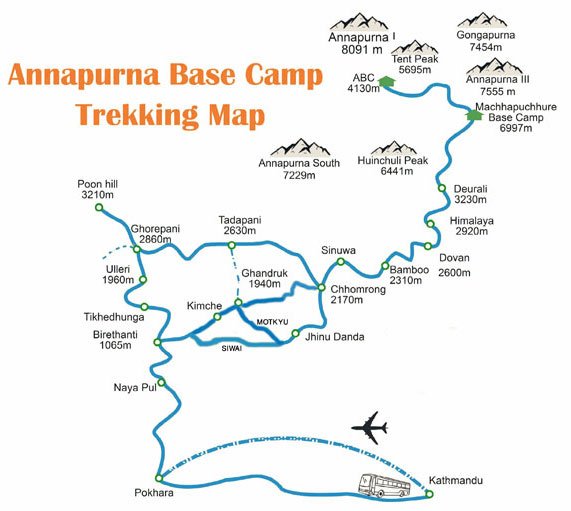 The Annapurna Base Camp trek, often called the Annapurna Sanctuary trek, is a 9 to 14-day journey that climbs from subtropical rice terraces at around 1,000 meters to 4,130 meters (13,550 feet), inside a natural amphitheater ringed by some of the highest mountains on earth. It is, in my honest opinion as someone who has walked nearly every trail in this country, the single best short trek in Nepal for the amount of scenery you get per day of walking.
Here’s what you’re actually walking through, geographically and culturally:
- Terraced farmland and Gurung/Magar villages near Nayapul, Ghandruk, and Landruk, where daily life still runs on subsistence farming, livestock, and seasonal migration to high pastures.
- Rhododendron and oak forests between Tikhedhunga and Ghorepani are spectacular in bloom from March through April.
- The Modi Khola gorge, a narrowing river valley that squeezes the trail between cliff walls as you approach Chhomrong and beyond, dramatically signals your entrance into the Sanctuary itself.
- Bamboo and rhododendron forest between Sinuwa and Bamboo village, cool, shaded, and often misty, feels entirely different from the open ridgelines lower down.
- The alpine Sanctuary floor, a stark, wind-scoured bowl at Machhapuchhre Base Camp (3,700m) and Annapurna Base Camp (4,130m), is surrounded by giants.
The Peaks You’ll See From the Annapurna Base Camp (Annapurna Sanctuary)
Standing at Annapurna Base Camp puts you inside a 360-degree ring of Himalayan giants, which is what makes this trek visually unmatched for its distance and difficulty:
| Peak | Elevation | Notes |
| Annapurna I | 8,091m / 26,545ft | World’s 10th highest mountain, first 8,000m peak ever summited (1950) |
| Annapurna South | 7,219m / 23,684ft | Dominant southern wall of the Sanctuary |
| Machhapuchhre (Fishtail) | 6,993m / 22,943ft | Sacred, unclimbed peak with a distinctive twin-pronged summit |
| Gangapurna | 7,455m / 24,457ft | Visible glacier face above the Manang side |
| Hiunchuli | 6,441m / 21,132ft | Steep rock and ice pyramid guarding the Sanctuary entrance |
| Annapurna III | 7,555m / 24,787ft | Visible from higher sections near ABC |
Machhapuchhre, meaning “fish tail” in Nepali, holds deep spiritual significance to local Gurung people and has never been officially summited out of respect for that status. I always point this out to clients standing at MBC, because knowing the story behind the mountain changes how you see it.
How ABC Compares Other Treks
ABC vs. Annapurna Circuit vs. Everest Base Camp
| Factor | Annapurna Base Camp | Annapurna Circuit | Everest Base Camp |
| Typical duration | 9-14 days | 12-18 days | 12-14 days |
| Max altitude | 4,130m | 5,416m (Thorong La) | 5,364m |
| Difficulty | Moderate | Moderate-strenuous | Moderate-strenuous |
| Flight required | No (road access) | No (road access) | Usually yes (Lukla) |
| Signature feature | Enclosed mountain amphitheater | High pass crossing, diverse landscapes | World’s highest mountain, Sherpa culture |
| Best for | First-time Himalayan trekkers, shorter trips | Trekkers wanting variety and a high pass | Bucket-list Everest views |
Annapurna Base Camp Trek Itinerary Options
9-Day Annapurna Base Camp Trek
| Day | Route | Walking Time |
| 1 | Arrival at Kathmandu, airport transfer | — |
| 2 | Drive from Kathmandu to Pokhara | 6-7 hrs |
| 3 | Drive Pokhara to Siwai, trek to Chhomrong (2,360m) | 3 hrs drive, 7 hrs walk |
| 4 | Chhomrong to Himalaya (2,840m) | 7 hrs |
| 5 | Himalaya to ABC (4,130m) via MBC | 7 hrs |
| 6 | ABC to Sinuwa (2,340m) | 7 hrs |
| 7 | Sinuwa to Siwai, drive to Pokhara | 6 hrs walk, 3 hrs drive |
| 8 | Drive Pokhara to Kathmandu, farewell dinner | 6-7 hrs |
| 9 | Final departure | — |
12-Day Annapurna Base Camp Trek via Poon Hill (Most Popular)
| Day | Route | Walking Time |
| 1 | Arrival Kathmandu | — |
| 2 | Drive from Kathmandu to Pokhara | 6-7 hrs |
| 3 | Drive to Ulleri, trek to Ghorepani (2,860m) | 3 hrs drive, 4 hrs walk |
| 4 | Poon Hill sunrise, on to Tadapani (2,630m) | 6 hrs |
| 5 | Tadapani to Chhomrong (2,170m) | 5 hrs |
| 6 | Chhomrong to Dobhan (2,600m) | 5 hrs |
| 7 | Dobhan to Deurali (3,230m) | 5 hrs |
| 8 | Deurali to ABC (4,130m) via MBC | 5 hrs |
| 9 | ABC back to Sinuwa (2,340m) | 7 hrs |
| 10 | Sinuwa to Siwai, drive to Pokhara | 6 hrs walk, 3 hrs drive |
| 11 | Drive Pokhara to Kathmandu, farewell dinner | 6-7 hrs |
| 12 | Final departure | — |
Full 10, 11, 13, and 14-day itinerary variants are available on request, including routes via Ghandruk and extended descents through Jhinu Danda.
How Difficult Is the Annapurna Base Camp Trek?
ABC is graded moderate. You don’t need mountaineering skills or prior high-altitude experience, but you do need reasonable cardiovascular fitness and mental readiness for long uphill and downhill days. Expect:
- 5 to 7 hours of daily walking on most days
- Roughly 70 to 80km of actual trekking distance (115km including road transfers)
- A maximum altitude of 4,130m, well below the altitudes where AMS becomes statistically more dangerous, but still high enough to require sensible acclimatization
- The infamous Ulleri stone staircase, over 3,000 steps gaining roughly 800m in a single push, which I consider the single toughest hour of the entire trek
- Significant daily elevation loss as well as gain, since the trail dips into and climbs out of river valleys repeatedly, which surprises first-timers who expect only uphill effort
If you can comfortably hike 5 to 6 hours with a daypack on hilly terrain at home, you can do this trek. Age is rarely the limiting factor. We’ve guided trekkers from their teens through their 70s successfully.
Best Time to Trek Annapurna Base Camp
| Season | Months | Conditions |
| Spring | March to May | Rhododendrons in bloom, warm days (10-20°C), cold nights (0-5°C), good visibility |
| Autumn | September to November | Clearest skies, stable weather, warm days, cold nights, busiest season |
| Winter | December to February | Quiet trails, crisp mountain views, sub-zero nights, occasional snow above Deurali |
| Monsoon | June to August | Lush greenery, leeches, slippery trail, limited visibility, not recommended for most trekkers |
Autumn and spring remain the gold standard, and I still recommend them to most first-time trekkers. But don’t write off winter if you want the trail to yourself. I’ve taken small groups to ABC in late December under crystal-clear skies with barely another trekker in sight, just extra layers required.
Recent Trail Updates for the 2026/2027 Season
Trail conditions change year to year, and this is exactly the kind of detail that separates an operator who runs treks remotely from one who is actually on the ground. Here’s what our guide team has observed on recent 2026 departures:
- Trail infrastructure: The stone staircase sections between Tikhedhunga, Ulleri, and Ghorepani received maintenance work in late 2025, with several eroded sections re-laid. The suspension bridges over the Modi Khola near Jhinu and New Bridge remain in solid condition following routine inspection.
- Rhododendron bloom: Spring 2026 bloom peaked slightly earlier than average, roughly the last week of March through mid-April at lower elevations (Ghorepani to Tadapani belt), and into early May at higher elevations near Chhomrong. If bloom timing matters to your trip, we recommend booking a late March to mid-April departure.
- Hot springs access at Jhinu Danda: The natural hot springs remain open and well-maintained, with a modest entry fee collected locally that supports facility upkeep. Post-monsoon 2025 saw minor rebuilding of the stone pools after river-level fluctuation, now fully restored.
- Weather patterns: Our guides noted a slightly longer stable autumn window in 2025, with clear conditions persisting into early December before winter systems arrived. Spring 2026 saw a couple of short-lived afternoon snow showers above Deurali in early April, a reminder that even in “safe” season, the Sanctuary can turn quickly.
- Teahouse capacity: Chhomrong, Sinuwa, and the MBC/ABC lodges have seen modest capacity upgrades since 2024, easing the peak-season squeeze during October and November. Booking through a local operator who calls ahead still matters enormously during the first two weeks of October.
- Permit checkpoints: ACAP and TIMS checks remain active at Nayapul/Kimche, Ghandruk, Chhomrong, and Deurali. Carry printed or digital copies of both documents at all times.
- Best current viewpoints: Beyond the standard Poon Hill sunrise, our guides have been recommending the ridge just above Tadapani for uncrowded Annapurna South and Fishtail views, and the short rise behind MBC lodge for an alternative sunrise angle away from the ABC crowd in peak season.
We update this section after every season’s field reports from our guide team, so if you’re reading this close to your travel date, feel free to ask us directly for the very latest conditions before you book.
Side Trip Options From the Annapurna Base Camp Trail
If you have extra days, consider adding one of these well-established extensions:
- Khopra Danda: A quieter ridge trek with sweeping Dhaulagiri and Annapurna views, addable before or after the main ABC loop.
- Mardi Himal Trek: A shorter, less crowded alternative or combinable extension reaching Mardi Himal Base Camp.
- Ghandruk village extension: An extra night in this well-preserved Gurung village for deeper cultural immersion and museum visits.
- Jhinu Danda hot springs extension: An extra relaxed night at Jhinu rather than a rushed pass-through, ideal for tired legs.
- Pokhara lakeside days: Paragliding, boating on Phewa Lake, or simply resting before or after the trek.

Categorized Packing List for Annapurna Base Camp Trek
Pack for a trek that moves from subtropical warmth to near-freezing alpine nights within a matter of days. The luggage weight limit carried by porters is generally 15kg (33lbs), so pack thoughtfully.
Clothing
- 1-2 short-sleeve shirts, 2 long-sleeve moisture-wicking shirts
- Lightweight thermal base layer (top and bottom)
- Fleece jacket or wool sweater
- Insulated down jacket rated to at least -10°C
- Waterproof, windproof shell jacket
- 1 pair fleece or trekking trousers, 1 pair waterproof shell pants
- Wool or fleece gloves plus a thin liner pair
- Sun hat, warm beanie, and a buff or bandana
- 4-5 pairs hiking socks, 2 pairs liner socks
- Broken-in waterproof hiking boots with ankle support
- Lightweight camp shoes or sandals
Gear
- 50-65L duffel bag for porter-carried luggage
- 25-35L daypack for personal items
- Sleeping bag rated to at least -15°C to -20°C (available for rental in Thamel)
- Trekking poles (reduce knee strain on descents by an estimated 40%)
- Headlamp with spare batteries
- Sunglasses with UV/glacier-level protection
- Small padlocks for duffel security
- Waterproof rucksack cover
Medical and Health
- Personal first-aid kit (blister plasters, antiseptic, pain relievers)
- Diamox (Acetazolamide) for AMS, per your doctor’s guidance
- Anti-diarrheal medication and a general antibiotic such as Ciprofloxacin (prescribed)
- Rehydration salts
- Sunscreen (SPF 50+) and lip balm with UV protection
- Personal prescription medications in original packaging
- Water purification tablets or a filtering water bottle
Electronics and Documents
- Phone/camera with extra batteries or a portable power bank
- Universal adapter (Nepal uses Type C/D/M sockets)
- Passport, 2 extra passport photos, printed insurance documents
- Printed or digital copies of the ACAP and TIMS permits
- Cash in USD or NPR for on-trail purchases (cards are not accepted at teahouses)
Fitness and Training Preparation Plan
You don’t need mountaineering experience for ABC, but showing up undertrained makes every day harder than it needs to be. Here’s the preparation timeline we recommend to clients.
8-10 weeks before departure: Build a baseline of 3-4 cardio sessions per week (brisk walking, jogging, cycling, or swimming), 30-45 minutes each.
6-8 weeks before: Add stair climbing or hill repeats twice weekly to build the specific leg and lung capacity the Ulleri steps demand. Begin one weekly hike of 2-3 hours with a loaded daypack (6-8kg).
4-6 weeks before: Increase weekly hike length to 4-5 hours with a loaded pack, ideally on varied, hilly terrain. Add basic strength training (squats, lunges, step-ups) twice weekly for descent-day knee resilience.
2-4 weeks before: Aim for at least one 5-6-hour hike with a loaded pack to simulate a full trekking day. Begin tapering intensity in the final week before travel while maintaining light activity.
Final week: Rest, hydrate well, and avoid new gear you haven’t tested. Break in boots fully before you fly; blisters on day one ruin more treks than altitude does.
Safety, Permits, and Responsible Tourism
Required Permits
The Annapurna Base Camp trek requires two permits, both included in our package pricing:
- Annapurna Conservation Area Permit (ACAP): Funds conservation and community development throughout the Annapurna Conservation Area. Requires a passport photo and a passport copy.
- TIMS Card (Trekkers’ Information Management System): A safety and tracking registration required for the Annapurna region.
Both are checked at multiple points along the trail, including Nayapul/Kimche, Ghandruk, and Chhomrong, so carry copies at all times.
AMS Prevention and Response
Every trekker moving above roughly 2,500-3,000m can experience mild AMS symptoms: headache, dizziness, nausea, disturbed sleep, or shortness of breath. Serious cases are rare on ABC, given the moderate maximum altitude, but prevention still matters:
- Ascend gradually and avoid overexertion at altitude
- Drink plenty of fluids and eat well, even with reduced appetite
- Avoid alcohol at altitude
- Descend immediately if symptoms worsen, don’t push through
- Diamox (Acetazolamide) can support acclimatization under medical guidance; our guides carry it as part of standard first-aid kits
Porter Welfare
We strictly enforce IPPG-aligned weight limits of 20-25kg per porter, provide insulated clothing and proper footwear, ensure warm sleeping accommodation, and carry full insurance coverage for every porter on every trek. Porters receive meals equivalent to client standards. This is not optional at Excellent Himalaya.
Sustainability and Community Impact
- We prioritize hiring guides and porters from villages directly along the Annapurna trail
- ACAP fees from every trekker directly fund regional conservation and community projects
- We promote refillable water bottles and boiled/filtered water over single-use plastic
- We contribute seasonal support to village schools and porter families’ gear needs when possible
 Why Booking With a Local Trekking Agency Matters
I want to be direct about something: the “book local” advice you read everywhere isn’t just a nice sentiment, it’s a measurable difference in three areas: money, knowledge, and flexibility.
Money. Research from TAAN indicates that direct bookings with local Nepal-based operators keep roughly 70 to 80 percent of your trip fee circulating within Annapurna communities, through porter wages, teahouse payments, and permit fees. Foreign resellers and global booking platforms typically add 20 to 40 percent in markup while subcontracting the actual trek to a local company like ours anyway, often squeezing that local partner’s margins in the process. You end up paying more for the same guide, the same teahouses, and the same trail.
Knowledge. Our guides were raised in these hills. They know which teahouse serves the best dal bhat in Chhomrong, when bamboo shoots come into season near Bamboo village, and how cloud behavior over Machhapuchhre predicts weather six hours out. That kind of pattern recognition takes years, and it cannot be replicated by an office managing your trip from another continent.
Flexibility. When a client shows early AMS symptoms, our guide decides on the spot whether to add an acclimatization night; no phone call to an overseas office is required. When the weather threatens the final push to base camp, we can shift the itinerary by a day without penalty. That authority to adapt in real time, on the trail, is the local advantage in its purest form.
Meet the Team: Real Experience
Suman Shrestha, Founder and Lead Guide
I started as a guiding porter in 2004, carrying loads on the Annapurna and Everest trails before working my way up through years of guiding, licensing, and eventually founding Excellent Himalaya Trek & Expedition here in Thamel, Kathmandu. I hold a Nepal Government Trekking Guide License (No. 2212) and a Master’s degree in Tourism Management, but honestly, the degree taught me frameworks. The trail taught me everything that actually matters: how to read a client’s fatigue before they admit it, how to talk a nervous first-timer across a swaying suspension bridge, and how to make the call to turn back when a summit isn’t worth the risk.
Sashi Adhikari’s Story: Lessons From the Trail That Shape Every ABC Departure
Sashi Adhikari is a versatile and one of our senior guides with deep roots in the Annapurna region, and on one trip he led in May 2026 taught our whole team something worth sharing here.
Sashi was leading a small group on the Annapurna Circuit that month, a route that shares much of its early trail logic and high-altitude challenges with ABC, when unseasonal cloud buildup rolled in over the Manang side in the afternoon, far earlier than the typical late-day pattern he’d tracked for years. Rather than pushing the group toward the next scheduled stop to keep pace with the itinerary, he read the sky, consulted with a fellow guide by radio, and made the call to hold the group at the previous teahouse for an extra two hours, timing their departure around a break in the weather instead of the clock.
What made the day memorable wasn’t just the decision itself; it was what happened while they waited. The teahouse family invited the group into the kitchen, and over steaming cups of butter tea, Sashi translated stories from the lodge owner about her grandfather’s trading trips across the old salt routes into Tibet, the kind of oral history that rarely makes it into guidebooks. By the time the group set off again, the weather had cleared into one of the sharpest, most photogenic afternoons of their entire trek.
The lesson Sashi brought back to our guide briefings was simple but important: the itinerary is a plan, not a promise, and the best guides treat unexpected delays as opportunities rather than obstacles. That same philosophy shapes how our guides handle every ABC departure now, whether it’s an unplanned rest at Chhomrong waiting out afternoon mist, or an extra hour at a teahouse in Sinuwa letting a client’s legs recover before the final push to base camp. Flexibility, patience, and cultural curiosity aren’t extras we offer. They’re built into how we train every member of our guide team.

Frequently Asked Questions
Q: Is it safe to trek to Annapurna Base Camp with a local agency?
A: Yes, provided the agency is properly licensed. Licensed local agencies are subject to TAAN audits, carry insurance requirements, and employ trained guides, which generally makes them safer than unlicensed budget operators, not less safe. Verify current Nepal Tourism Board registration and TAAN membership before booking.
Q: What is the best company for the Annapurna Base Camp trek?
A: The best company is government-registered, TAAN-affiliated, employs individually licensed guides with documented ABC-specific experience, enforces porter weight limits with insurance, and provides a written, itemized cost breakdown before you pay a deposit. No single company is objectively “best” for every trekker, but every trustworthy one meets these same baseline criteria.
Q: Do I need a TIMS card for the Annapurna Base Camp trek in 2026?
A: No. TIMS was discontinued for the Annapurna region in 2023. Checkpoints along the ABC route, including Birethanti, Ghorepani, and Chhomrong, currently verify the ACAP permit only. If a quote includes a mandatory TIMS fee for ABC specifically, ask the agency to confirm why.
Q: Is a licensed guide mandatory for the Annapurna Base Camp trek?
A: Yes. Since April 2023, all foreign trekkers in the Annapurna Conservation Area must be accompanied by a licensed guide from a TAAN registered agency, actively enforced at trail checkpoints through 2026. Independent, unguided trekking is not currently a legal option on this route.
Q: How much does an Annapurna Base Camp trek cost in 2026/2027?
A: Booking directly with a licensed local agency, a standard 10 to 14-day ABC package typically runs USD 650 to 950 per person. The same trip booked through an international reseller commonly runs USD 1,200 to 1,500, reflecting overseas marketing and admin costs rather than better on-trial service.
Q: Are local or international trekking companies better for Annapurna Base Camp?
A: Local Nepal-based agencies generally offer lower prices, faster real-time itinerary adjustments, and direct control over guides and porters. International operators offer brand familiarity but frequently outsource ground logistics to a local partner you never directly vet, at a higher price.
Q: What is included in a typical Annapurna Base Camp trek package?
A: Most complete packages include the ACAP permit, licensed guide fees, porter support, teahouse accommodation, most meals, and ground transport between Pokhara and the trailhead. Personal expenses, tips, travel insurance, and international flights are typically excluded.
Q: What is the standard porter weight limit on the Annapurna Base Camp trek?
A: The ethical standard, following International Porter Protection Group guidelines, is 20 to 25kg maximum, including the porter’s own gear. Agencies allowing 35kg or more, or sharing one porter’s load across multiple clients without disclosure, are not following responsible practice.
Q: How do I verify a trekking agency’s license in Nepal?
A: Ask directly for the Department of Tourism registration number and TAAN membership number, then cross-check them through the TAAN registry at taan.org.np. A legitimate agency provides these details without hesitation.
Q: What group size is best for the Annapurna Base Camp trek?
A: Smaller groups of 4 to 8 trekkers are generally ideal, allowing better pacing and more individual attention. Private treks offer the most flexibility for specific timing or comfort needs.
Q: Which route is best for a first-time Annapurna Base Camp trekker?
A: The 12 to 14 day route via Ghorepani and Poon Hill generally suits first-time or beginner trekkers best, since it builds in the most gradual acclimatization and includes the Poon Hill sunrise viewpoint most first timers want to see.
Q: What happens if I show signs of altitude sickness during the trek?
A: A trustworthy agency’s guide will halt or reverse ascent immediately, monitor pulse oxygen levels, and coordinate descent or helicopter evacuation if symptoms don’t resolve. Confirm this protocol directly with any agency before booking, and ensure your travel insurance covers high altitude evacuation up to at least 5,000 meters.
Q: Can I customize my Annapurna Base Camp itinerary?
A: Yes, most experienced local agencies, including ours, will adjust route, pacing, and duration based on your fitness level, available time, and interests rather than locking you into a single fixed schedule.
Q: Is the Annapurna Base Camp trek safe for beginners?
A: Yes, with the right agency and pacing. ABC is a moderately difficult trek suitable for reasonably fit first-time high altitude trekkers, provided the itinerary includes adequate acclimatization days and the guide is experienced in managing beginner pace and altitude response.
Q: How far in advance should I book a trekking agency for Annapurna Base Camp?
A: Booking 2 to 3 months ahead of peak season (March to May, September to November) is recommended to secure experienced guides and reliable teahouse availability, though shorter notice bookings are often still possible outside peak weeks.
We invite you to contact us by email or WhatsApp for a customized ABC trek proposal with a quotation. Share your preferred travel month, number of days available, group size, and fitness level. We’ll respond with a detailed itinerary suggestion and current 2026/2027 pricing within 24 hours.
Travel Tips
All foreign nationals except Indian Nationals are required to arrange a visa in order to enter Nepal. A Nepalese Visa can be obtained either prior to your arrival at a Nepalese embassy abroad or on arrival time in Kathmandu at the airport. But nationals from Afghanistan, Iraq, Cameroon, Ghana, Somalia, Swaziland, Palestine, Zimbabwe, Nigeria, Ethiopia, and Liberia cannot secure the Nepalese Visa upon arrival. The Visa can be also taken at entry points at Nepalese borders. For Nepalese Visa it requires your passport with at least six months validity, recent digital photo (size: 1.5″ x 1.5″) and the following fees either in USD dollars cash or the equivalent local currency:
| Visa Facility | Duration | Fee |
| Multiple entries | 15 days | US$ 30 or equivalent Nepalese currency |
| Multiple entries | 30 days | US$ 50 or equivalent Nepalese currency |
| Multiple entries | 90 days | US$ 125 or equivalent Nepalese currency |
We would offer you the meeting and greeting service in Kathmandu International Airport on your arrival time. For this, you need to pass us your International flight details at least 2 days before your arrival date in Kathmandu. After you get down from the aircraft you just pass on the Customs and come out of the Terminal building where you will see our tour officer standing with a playcard with your name written on it. He will greet and welcome you with auspicious garland and escort you to the hotel.
Trekking to Annapurna Base Camp does not require tremendous logistics in terms of accommodation as you will find plenty of clean and friendly lodges along the trail. Lodges typically offer a room with a wooden bed with a simple mattress or foam pad, a cotton pillow, and a blanket or quilt. A few have electric lights and all have a spacious dining room-lounge. We will accommodate you and your group in a local lodge available each day. We send a porter ahead of us to book the required rooms for you (here rooms cannot be booked in advance).
In the case of Kathmandu and Pokhara, we offer you a tourist standard hotel unless it is mentioned otherwise or clients have a special choice.
The trekking team who will go with you is the most significant thing that makes your Annapurna Base Camp trekking successful, enjoyable and memorable. We would provide you with skilled, experienced, courteous, knowledgeable and helpful trekking guide and porters. The trekking guide leads you in the trail and brief you all the about this route and porters carry your luggage. Our all trekking guides are carefully selected in terms of their appropriate experience, leadership skills and their knowledge about local culture, ecosystem, geography, flora and fauna, and history. With aim of sustaining local communities, we only employ local people as trekking guide and porter. Our all trekking guides are certified by Nepal Government, Ministry of Tourism. We manage trekking team such a way that one trekking guide in each group and porters like one porter for two trekkers.
During the trek, your main luggage will be carried by porters or pack animals (usually yaks or crossbreeds). You simply carry a day pack with water bottle, camera, sunscreen, spare jacket, etc. – a small load that allows full enjoyment of the trek. A trek bag is ideal for your main luggage, plus a small lockable bag for travel clothes or anything that you do not need during trek which you can leave at hotel’s locker room in Kathmandu for free of charge.
Every morning, first of all, packing your bags and then have a hearty breakfast at the lodge restaurant. Then set off on the day’s walk. After walking for 3-4 hours you all stop for lunch in a local restaurant. Then continue walking for your destination. After lunch, it’s the only a couple of hours walking. You usually arrive at your destination in the time of afternoon tea. Check in at the lodge. The rest of the day is at leisure. At the free time, you may explore the surrounding village, doing a bit of washing or simply relax by reading books and writing a diary. On some days you will arrive at your destination by lunchtime and the entire afternoon will be free. Most people also spend free time playing cards and other games reliving the day’s adventures. Then in the evening have a dinner and you will be briefed by your trekking guide about your next day’s walking and then go to your bed for a well-earned sleep.
At high elevations, the combination of reduced oxygen and lower atmospheric pressure can produce a variety of unpredictable effects on the body, known collectively as Acute mountain sickness (AMS) is also commonly known as Altitude Sickness. Everyone who treks over 3500 m experiences some mild symptoms of AMS like slowness, dizziness, headache, nausea, loss of appetite, shortness of breath, racing pulse, disturbed sleep and swelling of the hands and feet but serious cases are very rare. The golden rule of prevention from Altitude Sickness is don’t walk too fast at altitude, drink plenty of liquids, eating well, getting plenty of sleep and avoiding alcohol. If in case you feel any mentioned symptoms the simple cure is to move down (descend) and you shouldn’t ascend further until you start feeling better. To treat AMS there is also available medication Acetazolamide (better known under the brand name Diamox). The dosage is 250 mg every twelve hours. Diamox improves respiration at altitude and can, therefore, accelerate acclimatization. Some doctors recommend a preventive dose (125 mg twice a day) for people trekking at high elevations. At the time of trekking our trekking team always guides you to prevent from Altitude Sickness and they always have Diamox along with first aid kit.
We believe casualty and a serious sickness will not happen in the trip. If it happens we will do everything to transfer you to the nearest hospital. Since all the expenses incurred in evacuation liable to you please make sure that it is covered by your insurance before assigning for it or be prepared to pay on your own after getting back to Kathmandu.
We strongly advise you to take travel insurance before joining a tour which should cover medical expenses, emergency repatriation and helicopter evacuation at high altitude places and loss of your luggage. We would request you to bring your insurance documents when you come to Nepal.
The itinerary for each trip should be taken as a guideline only. Depending on the situation, you can modify it to some extent after consulting with your guide. However, the date of the trip ending should always coincide with the original itinerary.
Kindly keep in mind that sometimes unforeseen events may contribute to the need for a change in itinerary. In such cases, we or your guide will suggest the best alternative similar to your original.
In addition to your Trekking trip, you can join in various side Trips in Nepal like a cultural tour of UNESCO World Heritage Sites, Jungle Safari in National Park, White Water Rafting in Himalayan Rivers, Golfing, Adventure activities like Bungee Jumping, Ultralight Flight, Hot Air Ballooning, Paragliding, Jeep flyer etc. You also can extend your trip to neighboring Himalayan Countries: Bhutan, Tibet, Sikkim (India) which seems more appealing to you. On your request, we will give you the detail of the side trips.
Ask our experts (Inquiry)
Why Travel with us?
- Run by local experts, guide & Sherpa.
- Focus on your needs.
- Good value for money.
- Real cared services.
- Government recognized company.
- Best reasonable rate.