


Manaslu Circuit Trek Cost 2026/2027: A Complete, Honest Budget Guide
Updated [July 7th, 2026] · Written and reviewed by Suman Shrestha, licensed trekking guide (Nepal Government License No. 2212), founder of Excellent Himalaya Trek & Expedition (Reg. No. 175840/074/075) ·
If you are planning to trek the Manaslu Circuit in 2026 or 2027, the single biggest question on your mind is probably: how much will it actually cost? I have spent years guiding trekkers through this spectacular route, and I know that getting a clear, honest answer on the Manaslu Circuit trek cost can be surprisingly difficult. This guide breaks everything down for you, from permits and packages to daily expenses, gear, and smart ways to save money, all based on real, current numbers from our team at Excellent Himalaya Trek and Expedition Pvt. Ltd.
Quick Answer: How Much Does the Manaslu Circuit Trek Cost?
The Manaslu Circuit Trek costs from USD 895 to USD 995 per person with Excellent Himalaya’s 15-day package for 2026/2027, depending on your group size. This is a fully supported circuit trek in Nepal covering permits, meals, accommodation, guide, and ground transport from Kathmandu.
Here are the exact group size-based prices:
- USD 895 per person for groups of 9 to 10
- USD 920 per person for groups of 7 to 8
- USD 945 per person for groups of 5 to 6
- USD 970 per person for groups of 3 to 4
- USD 995 per person for 2 people
This price covers all trek permits, a licensed trekking guide, tea house accommodation, three meals a day on trek, ground transport to and from the trailheads, and the full logistical support of a registered trekking company based in Kathmandu.
Introduction: Manaslu Circuit Trek, Route & Budget Overview
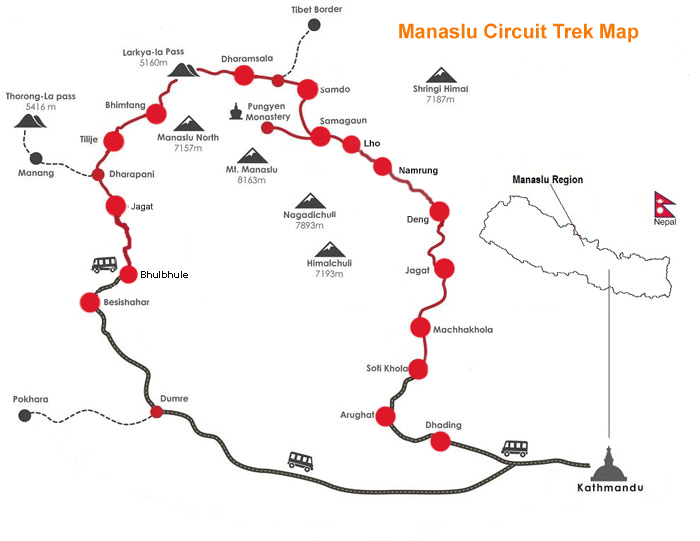
I am writing this as someone who has walked the Manaslu circuit trek route dozens of times. The Manaslu Circuit is a 14 to 15-day loop around Mount Manaslu (8,163 m), Nepal’s eighth-highest peak, following the Budhi Gandaki valley northward and crossing the dramatic Larkya La Pass at roughly 5,160 to 5,167 m before descending into the Annapurna region.
The trek starts with a road journey from Kathmandu to Machha Khola or Soti Khola and finishes near Dharapani or Besisahar. Along the way, you pass through remote villages like Jagat, Deng, Namrung, Lho, Sama Gaon, Samdo, Dharmasala, Bimtang, Tilije, and Dharapani, each with its own character, from subtropical forests to Trans-Himalayan landscapes near the Tibetan border.
Compared to the Everest Base Camp trek or the Annapurna Circuit, the Manaslu Trail sees far fewer trekkers and offers a stronger Tibetan cultural immersion. This article focuses on the Manaslu trek cost and practical budgeting for 2026 and 2027, while also covering difficulty, best time, packing, permits, and safety.
Planning your Manaslu circuit trek budget early helps you decide between joining a group departure, booking a private trek, or customizing the route with extensions like the Tsum Valley.
Why Choose the Manaslu Circuit Trek?
The Manaslu Circuit is one of Nepal’s best-kept secrets for trekkers who want authentic culture, fewer crowds, stunning mountain scenery, and solid value for money. Here is why so many trekkers choose the Manaslu Circuit Trek over more famous routes:
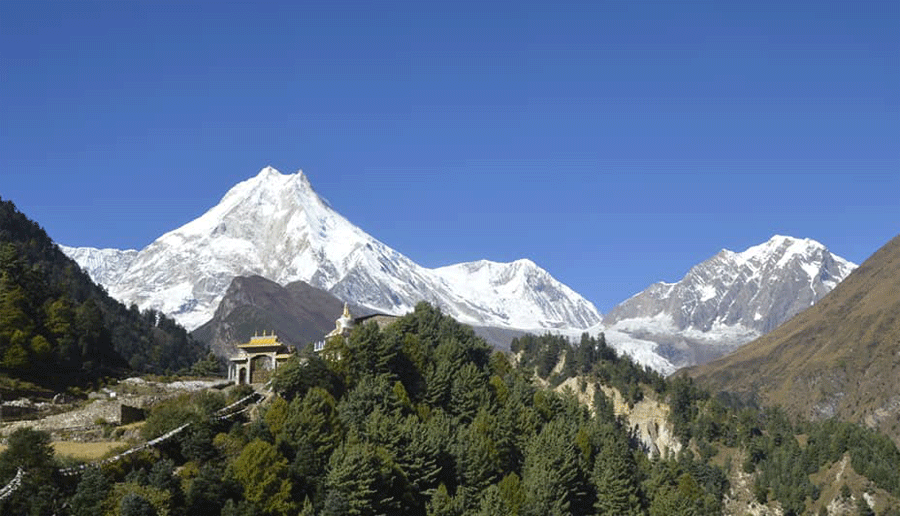
- Scenery: The Budhi Gandaki gorge with its narrow suspension bridges, terraced fields, rhododendron forests, glacial moraines near Larkya La, and panoramic views of Manaslu, Himlung Himal, and Cheo Himal make this one of Nepal’s most visually diverse trekking regions.
- Culture: Gurung, Lama, and Bhote/Nuri communities live in Tibetan Buddhist villages with ancient monasteries at Lho and Sama Gaon, mani walls, chortens, and prayer flags lining the Manaslu trail.
- Wildlife: The Manaslu Conservation Area shelters blue sheep, Himalayan tahr, Himalayan marmots, and is part of the snow leopard’s habitat. Birdwatchers may spot the Himalayan monal.
- Remoteness with comfort: Although more remote than Annapurna, the route has had teahouse infrastructure since around 2009, meaning you sleep in lodges every night.
- Value: Manaslu circuit cost is competitive with other major treks, and the experience of walking through a restricted area with crowded trails compared to almost none is exceptional.
Manaslu Circuit Trek Highlights & Unique Experiences
The name Manaslu means “Mountain of the Spirit,” and the Manaslu region only opened to foreign trekkers in 1991. That late opening kept the area relatively wild and uncommercialised.
Scenic highlights include narrow suspension bridges swaying over the turquoise Budhi Gandaki River, terraced rice fields in lower Gorkha district, dense rhododendron forests that bloom brilliant red and pink in spring, vast glaciers and moraine fields approaching Larkya La, and some of the most dramatic sunrise panoramas in the Himalayas.
Cultural highlights are equally powerful: Pungyen Gompa perched on a ridge near Sama Gaon, Ribung Monastery in Lho village, centuries-old mani walls carved in Tibetan script, and Samdo village sitting just a few kilometres from the Tibet border, where yak caravans still cross in summer.
Top 5 Highlights:
- Crossing Larkya La Pass (5,160 m) with 360-degree mountain views
- Acclimatization day exploring Sama Gaon, Birendra Lake, and Pungyen Gompa
- Walking through the deep Budhi Gandaki gorge between Jagat and Deng
- Visiting Tibetan Buddhist monasteries in Lho and Sama Gaon
- Optional side trip to Manaslu Base Camp for close-up glacier views
Manaslu Circuit Trek Itinerary
This itinerary reflects the full board package: three meals a day, tea house accommodation, and a licensed guide throughout. Distances and elevations are approximate, drawn from our own guiding notes on the trail.
| Day | Route | Altitude | Walking Time |
| 1 | Arrival in Kathmandu, transfer to the hotel, trip briefing | 1,400 m | – |
| 2 | Drive Kathmandu to Machha Khola via Arughat | 930 m | 8-9 hrs drive |
| 3 | Trek Machha Khola to Jagat | 1,410 m | 6-7 hrs |
| 4 | Trek Jagat to Deng | 1,860 m | 6-7 hrs |
| 5 | Trek Deng to Namrung | 2,660 m | 6 hrs |
| 6 | Trek Namrung to Lho | 3,180 m | 4 hrs |
| 7 | Trek Lho to Sama Gaon | 3,520 m | 4-5 hrs |
| 8 | Acclimatization day in Sama Gaon | 3,520 m | Optional side hike |
| 9 | Trek Sama Gaon to Samdo | 3,690 m | 4 hrs |
| 10 | Trek Samdo to Dharmashala (Larke Phedi) | 4,470 m | 4-5 hrs |
| 11 | Cross Larkya La Pass to Bimtang | 5,160 m / 3,720 m | 8 hrs |
| 12 | Trek Bimtang to Tilije | 2,560 m | 5-6 hrs |
| 13 | Trek Tilije to Dharapani, drive to Besisahar | 1,860 m | 4-5 hrs |
| 14 | Drive Besisahar to Kathmandu, farewell dinner | 1,400 m | 6-7 hrs drive |
| 15 | Final departure from Kathmandu | – | – |
We are flexible to customize this itinerary as per your request.
Itinerary Highlights, Day by Day
 Days 2 to 4, Machha Khola to Deng
The trail follows the Budhi Gandaki gorge through Khorlabesi, a small trailside hot spring at Tatopani, and the Gurung village of Philim, entering visibly Tibetan-influenced territory as mani walls begin to appear near Deng.
Days 5 to 7, Namrung to Sama Gaon
This stretch is the cultural heart of the trek. You pass through Lihi, Sho, and Lho, with Kani gateways, prayer wheels, and your first open views of Manaslu itself, before reaching the wide pastures of Sama Gaon.
Day 8, Sama Gaon acclimatization
Rather than a rest day, this is a chance to hike toward Manaslu Base Camp, visit Birendra Lake, or explore Pungyen Monastery, all while your body adjusts to the altitude.
Days 9 to 10, Samdo to Dharmashala
The valley opens into high alpine terrain near the Tibet border. You pass the Larkya Glacier and a large Kani before the final staging point below the pass.
Day 11, Larkya La crossing
An early start, often before dawn, takes you over frozen lakes and moraine to the 5,160 metre pass, with panoramic views of Himlung Himal, Cheo Himal, Kang Guru, and Annapurna II before a long descent to Bimtang.
Days 12 to 14, Bimtang to Kathmandu
The trail drops through rhododendron and pine forest into the Marsyangdi valley, entering the Annapurna Conservation Area near Dharapani before the drive back to Kathmandu.
Manaslu Circuit Trek Cost 2026/2027: Complete Budget Guide
Excellent Himalaya Trek and Expedition offers the complete 14/15-day Manaslu Circuit Trek package from USD 895 to USD 995 per person, depending on group size, for the 2026 and 2027 seasons. International agencies selling comparable itineraries typically charge USD 1,200 to USD 2,500. Total realistic cost, once you add personal spending, tips, and travel insurance, comes to roughly USD 1,100 to USD 1,500 through a local operator like ours, versus USD 1,800 to USD 3,500 through an international agency.
Excellent Himalaya Manaslu Circuit Trek Package Price, 2026/2027
| Group Size | Price per Person (USD) |
| 9 to 10 people | 895 |
| 7 to 8 people | 920 |
| 5 to 6 people | 945 |
| 3 to 4 people | 970 |
| 2 people | 995 |
Pricing is quoted on a per-person basis for a minimum group of two, since the Restricted Area Permit legally requires at least two trekkers travelling together. Larger groups reduce your per-person cost because fixed expenses like guide fees, transportation, and permit administration are shared across more people.
What Is Included and What Is Not
Included in Your Package Price
- Airport pickup on arrival and drop-off on departure
- Two nights in a tourist-standard Kathmandu hotel with breakfast
- Tea house accommodation throughout the trek
- Three full meals a day (breakfast, lunch, dinner) on the trail
- Ground transportation: Kathmandu to Machha Khola, and Dharapani/Besisahar back to Kathmandu
- One experienced, English-speaking, government-licensed trekking guide
- Manaslu Restricted Area Permit (RAP), Manaslu Conservation Area Permit (MCAP), and Annapurna Conservation Area Permit (ACAP)
- Rural Municipality fee
- Altitude medicine, oximeter, first aid kit, and water purification tablets
- Seasonal fruit on the trek and a trekking route map
- Trip completion certificate
- All government and local taxes
Not Included
- International airfare and Nepal visa fee (available on arrival for most nationalities)
- Travel insurance, including high-altitude and helicopter evacuation coverage
- Alcoholic drinks, any hot and cold drinks, bottled water, and desserts
- Personal expenses: phone, internet, laundry, battery charging, hot showers
- Meals in Kathmandu outside breakfast
- Emergency evacuation costs, if required
- Porter service (available on request; ask us for current rates)
- Tips for your guide and porter
Local Operator vs International Agency: A Real Comparison
| Cost Component | Excellent Himalaya (Local) | International Operator |
| Base package, 14/15 days | $895 – $995 | $1,200 – $2,500 |
| Permits (RAP, MCAP, ACAP) | Included | Included |
| Tea house accommodation | Included | Included, sometimes upgraded |
| All trekking meals | Included | Included |
| Ground transport | Included | Included, sometimes a private vehicle |
| Licensed guide | Included | Included |
| Kathmandu hotel, 2 nights | Included | Varies |
| Tips, insurance, personal spend | Not included | Not included |
| Realistic total cost | $1,100 – $1,500 | $1,800 – $3,500 |
Best Time to Trek Manaslu & Seasonal Cost Differences
The best time for the Manaslu circuit trek is spring (March to May) and autumn (September to November). Both seasons offer stable weather and clear views, but they differ in permit cost, crowds, and scenery. Travel during peak season may lead to higher permit costs and service demand across the entire trek.
| Factor | Spring (Mar to May) | Autumn (Sep to Nov) | Winter (Dec to Feb) | Monsoon (Jun to Aug) |
|---|---|---|---|---|
| Weather | Warm mornings, afternoon clouds | Crisp, stable, clear | Very cold, snow risk | Heavy rain, poor visibility |
| Views | Good mornings, hazy afternoons | Excellent throughout | Clear when open | Rare clear days |
| Crowds | Moderate | Highest | Very low | Almost none |
| Rhododendrons | Yes (lower sections) | No | No | Past bloom |
| RAP Cost (7 days) | USD 75 (off-peak rate) | USD 100 (peak rate) | USD 75 | USD 75 |
| Teahouse Prices | Standard | Slightly higher | Some lodges closed | Limited availability |
| Overall Cost Impact | Lower permits | Higher permits + demand | Savings offset by risks | Not recommended |
Spring (March to May): Rhododendrons & Clear Mornings
Daytime temperatures at lower villages like Jagat range from 15 to 25°C, while higher settlements like Sama Gaon and Dharmasala hover around 5 to 10°C during the day and drop below freezing at night. Spring brings spectacular rhododendron blooms in lower forests, mixed snow conditions near Larkya La, and moderate crowds at tea houses.
The restricted area permit in spring uses the cheaper December to August rate: USD 75 for the first 7 days plus USD 10 per additional day. This can reduce your total Manaslu circuit cost by USD 40 to 60 compared to autumn, making spring an excellent trekking season for budget-conscious trekkers.
Autumn (September to November): Peak Season & Peak RAP Fee
Autumn is the most popular trekking season, with the most stable weather, crisp air, and the clearest mountain views after the monsoon. It is also peak season for permit costs: the RAP climbs to USD 100 for the first 7 days plus USD 15 for each extra day.
You may encounter festivals like Dashain and Tihar in Kathmandu or lower villages, adding cultural richness to your trip. Teahouse rooms fill faster, and some lodges charge slightly more. Despite higher demand, Excellent Himalaya keeps the package rate fixed at USD 895 to 995 per person for 2026/2027, even in autumn.
Winter & Monsoon: Off-Season Challenges
Winter (December to February) brings very cold temperatures above 3,500 m, possible closure of Larkya La due to heavy snow, and partial closure of some lodges. Crowds are minimal, and lodge extras are cheaper, but the risks often outweigh savings.
Monsoon (June to August) means heavy rain, landslide risk on roads, leeches in lower sections, and poor mountain views. While RAP fees are at off-peak rates, extra days due to weather delays and transport disruptions can erase any savings. First-time trekkers should stick to spring or autumn and trek early in the season when possible.
Manaslu Circuit Trek Difficulty, Altitude & Fitness
The Manaslu Circuit Trek is graded moderate to strenuous. You will walk five to eight hours a day on variable terrain, including steep river gorges, suspension bridges, and one demanding high pass crossing near the end of the trip. You do not need to be an athlete, but a reasonable baseline of cardiovascular fitness makes a real difference to how much you enjoy the trek rather than simply endure it.
Daily Walking & Elevation Profile
Most days involve four to seven hours of walking, with the notable exception of pass day, when you will be on the trail for around eight hours from Dharmashala over the Larkya La to Bimtang. The trek gains elevation gradually from roughly 930 metres at Machha Khola to 5,160 metres at the pass, which is exactly the kind of slow, staged ascent that supports healthy acclimatization, helped further by the built-in acclimatization day at Sama Gaon.
Training Recommendations
- Begin a structured fitness routine eight to twelve weeks before departure if you don’t already hike or run regularly.
- Prioritize hill walking, stair climbing, and long walks with a loaded daypack over pure gym cardio.
- Add two strength sessions a week focused on legs, core, and back to protect your knees on long descents.
- Do at least one multi-day hike with a similar daily duration before you fly to Nepal, if possible.
- If you have a pre-existing heart, lung, or blood condition, get medical clearance before booking.
Altitude Sickness: Recognition and Prevention
Above roughly 3,500 metres, mild symptoms of Acute Mountain Sickness are common and not automatically dangerous: headache, fatigue, loss of appetite, mild nausea, and disturbed sleep. What matters is how you respond to them.
AMS Golden Rules
- Never ascend faster than your body can adjust; use the built-in acclimatization day at Sama Gaon fully.
- Drink three to four litres of water daily and eat enough calories, even without much appetite.
- Avoid alcohol and sleeping pills above 3,000 metres.
- If symptoms worsen, stop ascending and consider descending; symptoms that improve with rest and hydration are usually mild.
- Diamox (Acetazolamide), typically 125 mg twice daily as a preventive dose, can support acclimatization; discuss this with your doctor before travel.
- Any confusion, loss of coordination, or breathlessness at rest are serious warning signs that require immediate descent and medical attention.
Our guides carry a pulse oximeter, a basic first aid kit, and altitude medication on every departure, and they are trained to recognize early warning signs and adjust the day’s plan when needed. A licensed guide is legally required for trekking in the restricted area, which supports safety, navigation, and decision-making.
Manaslu Circuit Trek Cost 2026/2027: Full Breakdown
The Manaslu Circuit Trek package with Excellent Himalaya costs USD 895 to 995 per person for 15 days in 2026 and 2027. The overall cost for a typical 12 to 14-day guided package with other operators ranges from $1,000 to $1,600 per person, while group treks can cost between $1,100 and $1,400 per person with mid-range agencies.
International agencies often charge USD 1,200 to 2,500+ for similar itineraries. Local operators like us are cheaper because we have no foreign overhead, employ direct local staff, and operate on rupee-based costs. Longer itineraries typically result in higher costs due to accommodation and food expenses.
Here is an approximate cost breakdown of what goes into the package:
| Component | Approx. USD per person |
|---|---|
| All permits (RAP, MCAP, ACAP, municipality) | 120 to 180 |
| Licensed guide (shared across group) | 80 to 120 |
| Porter service (shared) | 50 to 80 |
| Ground transport (Kathmandu to trailhead, return) | 60 to 100 |
| Teahouse accommodation (14 nights) | 70 to 200 |
| Three meals daily on trek | 200 to 300 |
| Kathmandu hotel (2 nights) | 40 to 60 |
| Agency operations and coordination | 60 to 100 |
The Manaslu trek cost per day in our package works out to roughly USD 64 to 71, which covers nearly everything except personal expenses and tipping.
Since solo trekking is restricted in the Manaslu restricted area, individual trekkers can join existing group departures to benefit from lower per-person prices. These rates include all permits, local transport by local bus or shared jeep, a licensed English-speaking trekking guide, standard teahouse accommodation, and three meals per day on trek.
There are no hidden costs from Excellent Himalaya beyond clearly stated exclusions such as personal expenses, insurance, international flights, and tipping. Custom or extended itineraries (e.g., adding Tsum Valley) will add extra cost for additional days and permit fees.
Independent vs Package Manaslu Trek Cost
If you arrange everything separately, typical independent costs per person look like this:
- Guide and porter hire: a licensed guide costs $30 to $40 per day, while porter fees range from $20 to $30 per day. Guide fees typically range from $25 to $45 per day, depending on experience. A combined guide and porter service costs $30 to $40 per day.
- Permits: $120 to $180 total
- Transport: $60 to $150 round trip
- Accommodation: $5 to $15 per night ($70 to $200 for 14 nights)
- Food: $20 to $30 per day ($280 to $420 for 14 days)
- Extras and miscellaneous: $100 to $200+
Independent total: roughly $1,400 to $2,000+, often matching or exceeding a package price without the convenience and backup of an organized trek. A competitively priced Manaslu circuit trek package with a local operator simplifies logistics and usually reduces the total cost, especially for first-timers. Trekkers cannot get the Manaslu restricted area permit without a registered trekking agency and a licensed guide, so “fully solo” is not allowed.
The $400 to $1,500 gap between local and international pricing mostly reflects marketing spend, agent commissions, and layered overhead rather than a difference in what actually happens on the trail. We keep costs down by staffing locally, working directly with community-run tea houses, and cutting out the middleman.
Tipping is customary in Nepal, and I always tell my clients to plan for it. A fair range is USD 10 to 15 per day for your guide and USD 8 to 12 per day for a porter, usually pooled and given at the end of the trip.
Mandatory Manaslu Trekking Permits & Their Cost
The Manaslu Circuit Trek typically requires three permits, though the route actually involves four types of permits and fees in total:
- Manaslu Restricted Area Permit (RAP) for the restricted area from Jagat to beyond Sama Gaon
- Manaslu Conservation Area Permit (MCAP) for the broader Manaslu Conservation Area
- Annapurna Conservation Area Permit (ACAP) for the final days in the Annapurna region near Tilije and Dharapani
- Chumnubri Rural Municipality Fee (around USD 10) collected at Jagat checkpoint
| Permit | Peak (Sep to Nov) | Off-Peak (Dec to Aug) |
| RAP (first 7 days) | USD 100 | USD 75 |
| RAP (each additional day) | USD 15/day | USD 10/day |
| MCAP | ~USD 30 | ~USD 30 |
| ACAP | ~USD 30 | ~USD 30 |
| Municipality fee | ~USD 10 | ~USD 10 |
| Typical total (14-day trek) | USD 200 to 265 | USD 150 to 180 |
Total permit costs range from $120 to $180 for most trekkers, depending on season and days inside the restricted area. The Restricted Area Permit costs $70 per week from September to November at its base rate. The Manaslu Conservation Area permit costs $30 per person, and the Annapurna Conservation Area permit costs $30 per person.
Excellent Himalaya arranges all Manaslu Circuit trek permits on your behalf using your passport and photos. Everything is included in the package price. Note that TIMS cards (Trekkers Information Management System) are not required for the Manaslu Circuit since the restricted area permit covers the entry requirement.
Manaslu Restricted Area Permit (RAP) Details
The RAP fee structure breaks down as follows: September to November costs USD 100 per person for the first 7 days within the restricted area, plus USD 15 for each additional day. December to August costs USD 75 for the first 7 days plus USD 10 per additional day.
A standard 14-day itinerary typically has 7 to 9 days inside the restricted area. For autumn, that means a RAP of roughly USD 100 to 130. For spring, approximately USD 75 to 95. The RAP is only issued through a licensed Nepali trekking company and cannot be purchased individually. You will need your passport, a valid Nepal visa, and two passport photos.
MCAP & ACAP (Manaslu & Annapurna Conservation Area Permits)
Both MCAP and ACAP cost around NPR 3,000 each (approximately USD 25 to 30, depending on exchange rate). These are valid for the full trek duration regardless of the number of days.
The fees support conservation of the Manaslu Conservation Area and Annapurna Conservation Area, funding trail maintenance, wildlife protection, and community projects. Children under 10 may have special conditions for conservation permits, but confirm the latest rules with the trekking agency before departure. Excellent Himalaya includes both permits in every package.
Accommodation and Food
Tea houses along the Manaslu trail are simple and warm, run by local families who have hosted trekkers for years. Room cost is usually included in full board packages like ours, but if you are curious about raw numbers:
- Lower altitude villages: roughly USD 5 to 10 per night for a basic twin room
- Above 3,500 meters: USD 8 to 15 per night, since fuel and supplies have to be carried up by mule or porter
- A private or upgraded room usually adds another USD 5 to 15
Food follows a similar pattern. Dal bhat, the classic Nepali rice and lentil meal, runs USD 5 to 10 and is genuinely the best fuel for long trekking days since most tea houses offer free refills. Western dishes like pasta or pizza cost more, often USD 10 to 15, and the price climbs the higher you go because everything has to be carried on someone’s back. Budget USD 20 to 30 a day for food if you are paying independently, though this is already covered in our package.
Daily On-Trek Expenses & Cash Management
With a full board package, you do not pay daily for meals or rooms. But you should carry cash for extras. Prices for food and lodging increase with altitude due to supply transport costs, and the same applies to extras.
Typical on-trek extra prices:
- Hot showers: USD 2 to 4
- Device charging: USD 2 to 3
- Wi-Fi: USD 1 to 3
- Snacks and chocolate: USD 2 to 5
- Hot drinks (tea/coffee, hot chocolate): USD 1.50 to 4
- Bottled water: USD 1 to 3 per litre
A realistic daily extra budget is USD 8 to 15 per person. Over 14 days, personal expenses add up to roughly USD 120 to 250. Tipping guides and porters is expected at $5 to $10 per day.
If paying out of pocket for food (not on a package), meals can cost between $4 and $10 at lower altitudes, while food prices increase to $7 to $10 at higher altitudes. Dal bhat costs about $3 at lower altitudes and $8 near Larke Phedi. Average daily food cost ranges from $10 to $20 for basic meals. Food costs for full board meals typically range from $25 to $40 per day, and the daily food budget may total $20 to $30 depending on choices. Food costs average $20 to $30 per day overall. Accommodation costs range from $5 to $15 per night. Basic teahouse costs range from $5 to $10 at lower altitudes, while accommodation costs increase to $10 to $25 at higher altitudes.
There are no ATMs on the Manaslu Circuit Trek route. The last reliable ATMs are in Kathmandu, so bring all required cash in Nepali Rupees. Carry a mix of small and medium denomination notes because high villages struggle to change large bills.
Packing List & Gear and Equipment Cost for Manaslu Trek
Packing right for a 5,000 m Himalayan pass trek is essential. Many items can be bought or rented in Kathmandu’s Thamel area at reasonable prices. Renting gear costs $50 to $100 for the entire trek. Buying mid-range trekking gear could set you back USD 300 to 400+, but smart rental choices can cut this significantly.
Clothing & Footwear Essentials
- Base layers: 2 to 3 moisture-wicking tops and bottoms
- Mid layers: 2 fleece or softshell jackets
- Insulation: 1 down jacket (rental: USD 1 to 2/day in Kathmandu)
- Shell: 1 waterproof, windproof jacket and pants
- Trekking pants: 2 pairs plus 1 warm pair of trousers for evenings
- Thermals: 1 set of thermal top and bottom for sleeping
- Footwear: Broken-in trekking boots with ankle support, lightweight camp shoes, 3 to 4 pairs trekking socks, 1 to 2 pairs warm wool socks
- Head and hands: Warm beanie, sun hat, Buff or neck gaiter, lightweight gloves, insulated gloves for pass day
A sleeping bag rated to minus 10°C is critical for comfort above 3,500 m. If you do not own one, a rental in Kathmandu costs around USD 1 to 2 per day. Bring your own gear instead of renting if you plan to trek again, as it is more economical in the long run.
Gear, Electronics & Personal Items
- Daypack: 30 to 40 litre capacity
- Duffel bag: For the porter to carry (max 10 to 12 kg)
- Trekking poles: Highly recommended for descents and pass day (available cheaply in Thamel)
- Headlamp: With spare batteries
- Sunglasses: UV protection rated
- Electronics: Smartphone, power bank (10,000 to 20,000 mAh), optional camera, plug adapter for Nepal
- First aid and personal care: Blister care, painkillers, personal medications, Diamox if prescribed, sunscreen SPF 50+, lip balm, hand sanitiser, wet wipes, toothbrush, biodegradable toothpaste
- Documents: Original passport, printed insurance policy, permit copies (handled by agency), spare passport photos, waterproof pouch for documents, and cash
Comparing Manaslu Circuit Cost with Annapurna Circuit & Everest Base Camp
The Manaslu Circuit is generally cheaper than the Everest Base Camp trek but slightly more expensive than the classic Annapurna Circuit Trek due to the restricted area permit and mandatory guide requirement.
| Factor | Manaslu Circuit | Annapurna Circuit | Everest Base Camp |
| Typical package cost | USD 895 to 1,400 | USD 700 to 1,200 | USD 1,200 to 2,000+ |
| Permit cost | USD 120 to 265 | USD 30 to 60 (ACAP + TIMS) | USD 40 to 60 |
| Mandatory guide | Yes | Yes (since 2023) | Yes (since 2023) |
| Crowd level | Low | Moderate to high | High |
| Infrastructure | Basic teahouses | Well developed | Well developed |
| Trek duration | 14 to 15 days | 12 to 18 days | 12 to 14 days |
| Highest point | 5,160 m | 5,416 m (Thorong La) | 5,364 m |
In terms of value for experience, the Manaslu Circuit offers an exceptional return: wilderness feel, deep Tibetan-influenced culture, and stunning mountain scenery for a mid-range total cost. The Manaslu circuit trek ranges from budget to luxury, depending on the operator and comfort level. For trekkers considering combining routes, the Manaslu Annapurna Circuit Combined Trek adds extra days and costs but delivers an epic journey through two of Nepal’s finest trekking regions.
Practical Travel & Kathmandu Logistics Before and After the Trek
International travelers arrive at Tribhuvan International Airport in Kathmandu and can get a visa on arrival (a 30-day tourist visa is typical for this trek duration).
Transportation to and from the trailhead usually involves a private jeep or shared bus. A bus from Kathmandu to Soti Khola costs $10 to $15, while a private jeep from Kathmandu to Soti Khola costs $150 to $220. A shared jeep from Kathmandu to Machha Khola costs $25 to $30. The return bus from Besisahar to Kathmandu costs $10 to $15. Transportation costs range from $30 to $200, depending on mode. Round-trip transportation costs about $60 to $150 in total. A private vehicle offers more comfort but higher transportation costs; a local bus is the budget option.
Pick up a SIM card (NTC or Ncell) at the airport or Thamel for USD 3 to 5 with a basic data package. Coverage is spotty in higher parts of the Manaslu region, but useful for Kathmandu and lower villages.
Excellent Himalaya organizes all in-country ground transport within the package, so you do not have to haggle with drivers or bus companies.
Safety, Risk Management & Travel Insurance Cost
The Manaslu Circuit trek is safe when trekked with an experienced licensed trekking guide, but risks include altitude sickness, landslides in the monsoon, cold-related issues, and remote evacuation challenges.
Your travel insurance must cover:
- Trekking up to at least 5,200 m altitude
- Helicopter evacuation in Nepal
- Medical treatment, hospital stay, and trip interruption
Approximate insurance cost ranges from USD 50 to 150 for a two-week high altitude trekking coverage for most Western travellers. Costs vary by nationality, age, and insurer.
Excellent Himalaya’s safety protocols include daily health checks by guides, symptom monitoring, contingency rest days, emergency communication equipment, and coordination with helicopter providers and insurers. Share your insurance details with the agency before departure.
Cultural Etiquette, Environment & Wildlife on the Manaslu Trek
Simple etiquette makes a big difference in the communities you visit:
- Walk clockwise around the mani walls and chortens
- Ask permission before photographing people
- Dress modestly in villages and monasteries; remove shoes and hats in gompas
- Support the local economy by buying from village shops and staying in local tea houses
The Manaslu Conservation Area Project protects Himalayan tahr, blue sheep, Himalayan marmots, Himalayan monal, and the elusive snow leopard. Keep a respectful distance from wildlife and never feed animals.
Practice Leave No Trace: carry trash out, avoid single-use plastic bottles, use water purification tablets or a filter, and keep to established trekking trail routes. Staying in local teahouses channels money directly into Gurung, Lama, and Bhote/Nuri communities, supporting sustainable tourism for the entire region.
A Guide’s Perspective: Leading Groups Across the Larkya La
One trip that stands out from recent seasons was a spring departure led by our senior guide, Laxman Bhandari, in May 2026. Laxman has spent years guiding across the Manaslu, Annapurna, and Langtang regions, and he still describes this particular crossing as one of the more memorable ones.
His group set out from Machha Khola in late April, catching the tail end of the rhododendron bloom through the lower forests below Namrung, a wall of red and pink blossom that always surprises first-time trekkers who expect only bare rock and snow in the Himalaya. By the time the group reached Lho and Sama Gaon, clear spring skies gave them an unobstructed view of Manaslu’s summit ridge, and a visit to the monastery at Sama Gaon turned into an unplanned conversation with resident monks about local Buddhist practice, one of those unscripted moments that guidebooks can’t really capture.
One member of the group developed mild altitude symptoms, headache, and disturbed sleep on the acclimatization day. Laxman adjusted the pace for the following two days, ensured the trekker stayed well hydrated, and monitored symptoms closely with the group’s oximeter rather than pushing ahead on schedule. The symptoms resolved with rest and the slower pace, and the entire group crossed the Larkya La together at 5,160 metres a few days later, under clear morning skies with Himlung Himal and Annapurna II visible in the distance. Laxman still calls it one of the more satisfying summits he’s guided, precisely because the group handled the altitude scare calmly and arrived at the pass together, rather than split up or rushing.
Manaslu Trek Cost for Indian & Nepali Trekkers
Although Excellent Himalaya’s Manaslu circuit trek package is priced in USD, Indian and Nepali trekkers often budget in NPR or INR. Here are some specifics.
Indian trekkers enjoy visa-free entry to Nepal and frequent direct flights from major Indian cities to Kathmandu, which reduces travel overheads significantly. Indian citizens (SAARC nationals) pay reduced conservation area permit fees: approximately NPR 1,000 (about USD 8 to 10) each for MCAP and ACAP, compared to NPR 3,000 for other foreigners. The RAP remains the same for all foreign nationals.
Nepali citizens pay minimal conservation permit fees (around NPR 100 for MCAP/ACAP) and do not require a Restricted Area Permit, which dramatically lowers their total cost of the Manaslu Circuit trek.
Indian trekkers should carry enough Nepali Rupees and note that INR 500 and 1,000 notes may have specific usage limits inside Nepal. ATMs are available in Kathmandu, but not anywhere on the trekking route.
How to Reduce Your Manaslu Circuit Trek Cost Without Compromising Safety
Here are the most effective ways to save money on your Manaslu trek:
- Travel in shoulder periods within peak seasons (late March, early December, early September) when permit fees are lower, and other trekkers are fewer.
- Rent high-cost gear (down jacket, sleeping bag, trekking poles) in Kathmandu instead of buying. Renting basics for a 14-day trek may cost just USD 30 to 50.
- Limit paid extras on the trail (Wi-Fi, coffee, bottled drinks) and use water purification instead of buying bottled water.
- Eat local food to save on meal costs when dining outside the package.
- Book with a reliable local operator like Excellent Himalaya to save several hundred dollars compared with big international brands.
Choosing a luxury Manaslu circuit trek with premium services is an option for those who want it, but the standard teahouse experience is authentic and comfortable. Be cautious of ultra-cheap offers that cut corners on guide pay, proper permits, or safe accommodation. Costs range widely across operators, and the cheapest is not always the safest.
Recent Developments in the Manaslu Region
The Manaslu Circuit continues to evolve without losing the qualities that make it special. Road construction has gradually extended further up the valley toward Machha Khola, trimming walking time on the lower stretch of the route for some itineraries, though the heart of the trek, from Jagat through to the Larkya La, remains foot-only and unchanged in character.
The Manaslu Base Camp side trip has grown steadily in popularity as an acclimatization-day option, giving trekkers a closer look at the mountain’s glaciers without adding extra trekking days to the main circuit. The Tsum Valley extension has also seen more interest, offering a quieter, more culturally immersive branch off the main trail for those with extra time.
New tea houses and lodge upgrades have appeared at several points along the route in recent years, improving the reliability of accommodation without changing the fundamentally rustic, community-run character of the trail. Combined with the April 2023 regulation making a licensed guide mandatory across Nepal’s major restricted and conservation areas, including Manaslu, Annapurna, and Everest, the region has become both safer and better regulated for visiting trekkers while retaining its remote, unspoiled feel.
What the Trekking Experience Actually Feels Like
Most days follow a similar, comfortable rhythm. You pack your bag after breakfast, walk three to four hours to a lunch stop, then continue for another two hours or so before reaching the day’s tea house in the mid-afternoon. That leaves time to explore the village, wash up, write in a journal, or simply sit in the lodge dining room, which doubles as the social hub of every stop along the trail.
Meals lean heavily on dal bhat, the Nepali staple of rice, lentil soup, and seasonal vegetables, though most lodges also offer noodles, momos, thukpa, and simple continental options. In the evening, your guide briefs the group on the next day’s route before everyone turns in early, since mornings start soon after sunrise on most days.
The emotional arc of the trek tends to build steadily: quiet farmland and forest in the first few days, a growing sense of scale and altitude through the Tibetan-influenced upper villages, and then the singular, focused effort of pass day, when the Larkya La crossing rewards you with one of the widest, most dramatic mountain panoramas in the Nepal Himalaya before the long descent into Bimtang.
Frequently Asked Questions about Manaslu Circuit Trek Cost & Planning
How much does the Manaslu Circuit Trek cost in 2026/2027?
With Excellent Himalaya, the 14/15 day manaslu circuit trek costs USD 895 to 995 per person, depending on group size. This includes all permits, guide, meals, accommodation, and transport from Kathmandu.
What is the Manaslu trek cost per day?
In our package, the daily cost works out to roughly USD 64 to 71 per day. Independent trekkers typically spend USD 50 to 80 per day when adding up all expenses.
Why is there a restricted area permit, and how much is it?
The Manaslu region is a restricted area near the Tibetan border. The RAP costs USD 100 for the first 7 days in peak season (September to November) plus USD 15 per extra day, or USD 75 plus USD 10 per extra day in other months.
Can I do the Manaslu Circuit trek solo?
Trekking solo without a guide is not permitted. A licensed trekking guide is legally required for the Manaslu Circuit Trek. Solo travelers can join group departures through a registered trekking agency.
How much should I tip my trekking guide and porter?
Tipping is customary. USD 10 to 15 per day for a guide and USD 5 to 8 per day for a porter is standard practice. This is an extra cost not included in packages.
Is Manaslu cheaper than Everest Base Camp?
Generally yes. The EBC trek includes costly Lukla flights, making it more expensive overall. Manaslu’s cost is mid-range among Nepal’s major treks.
What is the best time to trek Manaslu for low cost and good weather?
Spring (March to May) offers lower RAP fees and good weather. Autumn (September to November) has the best views but a higher permit cost. Both are excellent for the trek.
What kind of insurance do I need, and how much does it cost?
You need travel insurance covering trekking to 5,200 m and helicopter evacuation. Cost is approximately USD 50 to 150 for two weeks for most Western travellers.
Are there ATMs on the Manaslu trek route?
No. The last ATMs are in Kathmandu. Bring all cash in Nepali Rupees before you start the trek.
How much cash should I carry?
For personal expenses during the trek, USD 150 to 300 worth of Nepali Rupees is sufficient for most trekkers on a full board package. Carry small denomination notes.
Can families or older trekkers do the Manaslu Circuit?
Yes, with good fitness and proper acclimatization. The trek is strenuous but not technical. Children above 12 who are fit hikers can manage with family groups.
Is the Manaslu Circuit safe for solo female travelers joining a group?
Absolutely. Many solo female trekkers join our group departures safely every season. The licensed trekking guide and group setting provide security and companionship.
What happens if I need to change my itinerary due to weather or health?
Excellent Himalaya builds flexibility into itineraries. Contingency days, alternative routes, and emergency protocols are standard. Extra cost for additional nights is the trekker’s responsibility.
How do permit costs change by season?
RAP is more expensive from September to November (USD 100 + 15/day) compared to other months (USD 75 + 10/day). MCAP and ACAP remain the same year-round.
How expensive is food and accommodation on the trek if I pay out of pocket?
Food costs average USD 20 to 30 per day for normal meals. Accommodation cost is USD 5 to 15 per night. For 14 nights, expect to pay around $70 to $200 for rooms alone.
Do I need a sleeping bag, and can I rent one?
Yes, a sleeping bag is essential. You can rent one in Kathmandu for USD 1 to 2 per day, or about USD 15 to 28 for the full trek duration.
Are there any hidden costs on the Manaslu Circuit?
Not with Excellent Himalaya. All major costs are included. The only extras are personal expenses (showers, Wi-Fi, drinks, tips, gear).
How far in advance should I book to get the best value?
Book 2 to 3 months ahead for peak season to secure your spot and preferred teahouses. Early booking also helps with permit processing.
Is it worth paying more for a private jeep instead of a local bus?
A private jeep from Kathmandu to Soti Khola costs $150 to $220 versus $10 to $15 for a local bus. The jeep is faster and more comfortable, especially on rough roads. The extra cost is worth it for most trekkers.
How does the Manaslu Circuit compare with the Annapurna Circuit cost-wise?
Manaslu is slightly more expensive due to the RAP and mandatory guide. The Annapurna Circuit trek requires only ACAP and TIMS, with a lower total permit cost. But Manaslu’s remoteness and fewer crowded trails compared to Annapurna make it worth the difference.
Can Indian and Nepali trekkers book the same package in local currency?
Contact Excellent Himalaya to discuss payment in NPR or INR equivalents. The package inclusions remain the same regardless of payment currency.
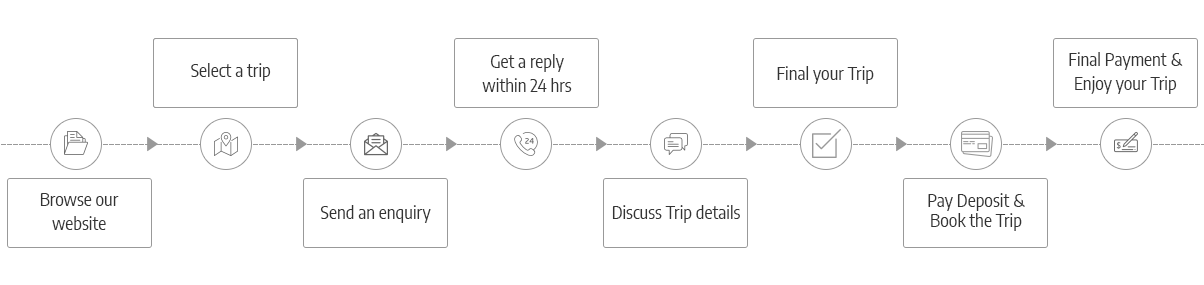
How to Book Your Manaslu Circuit Trek with Excellent Himalaya
Booking is straightforward:
- Contact us via email or WhatsApp with your preferred dates, group size, and any questions.
- Confirm your itinerary and review inclusions, exclusions, and the final cost breakdown.
- Pay a booking deposit to secure your spot (balance due before trek start).
- Arrive in Kathmandu for a pre-trek briefing, gear check, and permit finalization with our team.
We can customize your trek: extend to the Tsum Valley, add extra acclimatization days, finish in Pokhara instead of Kathmandu, or organize a fully private departure for couples, families, and friends.
Book early for spring and autumn 2026/2027 to secure the best tea houses and permit timing, especially for larger groups looking for the best per-person rates.
With Excellent Himalaya Trek and Expedition, you get local pricing, experienced guides like Laxman Bhandari, a safety-first approach, and a transparent Manaslu trek cost with no hidden fees. The trek duration, comfort, and support are the same as what international operators offer at double the price.
Ready to plan your Manaslu Circuit? Send us a message today for a personalized cost quote based on your dates, group size, and preferred itinerary. We will get back to you within 24 hours with everything you need to start your journey to the Mountain of the Spirit.
Itinerary
Our tour officer will be receiving you at Tribhuvan International airport, Kathmandu. He/She will be displaying a card with your name written on it outside the airport terminal. He will meet, greet and welcome you with auspicious garland and escort you to your respective hotel by our private tourist vehicle. At the hotel, he will assist you to check in and do a pre-trip meeting with you. You will be briefed about your overall program, introduced to your guide, and clear your questions/queries if any. During the meeting please clear the due balance and hand over a readable copy of your travel insurance policy. Overnight at the hotel.
Our trekking guide will meet you at the hotel before 6 am and he takes you to the bus station for the journey to Arughat. You will be driving on a paved road from Kathmandu to Dhading Besi, the district headquarter of Dhading (1050m) but the drive from Dhanding Besi to Arughat will be on a rough road. After reaching Arughat, a major town in that area you will drive further towards Machhi Khola. Overnight at a mountain lodge.
The trekking trail in this section is remote and scenic, winding through traditional villages and diverse natural features, offering trekkers an immersive experience of the region’s untouched beauty. The trail makes some minor ups and downs often dropping onto a gravel bar alongside the river. It eventually crosses the Tharo Khola (stream) then reaches Khorlabesi village. It climbs over a small ridge then makes another steep climb and descent. After more ups and down there is a small trailside hot spring then the route reaches Tatopani village. From Tatopani, the trail climbs over another ridge and crosses the Budhi Gandaki River on a suspension bridge and then arrives another village Doban. After that, it crosses a long suspension bridge and further climbs ridge and descends to Yaru Khola (stream). After that, it ascends to Tharo Bharyang. Thus after few climbs up and down it reaches to beautiful village Jagat. Overnight at a mountain lodge.
Today the trail climbs over a rocky ridge to Salleri, a small village. From here you get good views of Mt. Sringi. Then it descends to Setibas where several mani walls indicate that the trek is now entering the Tibetan influence region. The valley widens a bit as the trail continues up to the stone houses of Ghat Khola (stream). The trail continues upstream to a long suspension bridge. Crossing that bridge it climbs up to Philim, a large Gurung village. Then trail traverses millet fields and reaches Ekle Bhatti. Subsequently, the route enters a steep uninhabited gorge of the Budhi Gandaki River. After crossing the river it climbs a few ridges and descends the river. Here you can see the Shar Khola and Tsum valley joining the Budhi Gandaki on the opposite bank. The trail makes its way up the western side. It passes through bamboo forests and reaches Deng, the village of Buddhist people. Overnight at a mountain lodge.
A few minutes walking from Deng the trail recrosses the Budhi Gandaki River and climbs to Rana village. It again climbs a bit and heads west up the Budhi Gandaki Valley. It passes a waterfall and follows the stream. After passing some houses of Bhi it crosses the Budhi Gandaki River. Then it climbs steeply and traverses above the Budhi Gandaki. The trail makes more ups and downs in forests passing the mani wall and then turning to Ghap. The mani wall in Ghap has elegant carvings that depict the Buddha in various meditative poses. After Ghap it moves a head through a forest of big firs where you see colorful birds including the impeyan pheasant, the national bird of Nepal. In the middle of the forest walking on a wooden bridge makes you more exciting about the mist rising up from the valley. Then the trail makes a long climb through bamboo and rhododendron forests finally entering Namrung. Overnight at a mountain lodge.
After Namrung you trek to upper Nupri (Tibetan Buddhist influence region). The trail climbs passing the mani wall and the many fields and houses then up through a forest of firs, rhododendrons, and oaks. Then it reaches Lihi village which exhibits unusual architecture. Leaving this village it enters another village Sho. From here the spectacular view of Mt Manaslu and Naike Peak starts at the head of the valley. Passing Kani (Buddhist stupa), a prayer wheel the trail reaches Lho big village with a gompa and huge mani. Overnight at a mountain lodge.
After Lho the trail drops down to the stream and it follows the stream up for a long distance through damp forests and arrives plateau at Shyaula with a wide vista of Mt. Himalachuli, Ngadi Chuliand Manaslu. After that, the trail crosses the ridge and comes to Samagaon, the village with extensive pastures and fields. Overnight at a mountain lodge.
Today you stay at Sama Gaon to acclimatize and adjust to the thin air as you would have reached a higher elevation. You will not stay idle but will explore Samagaun. Sure enough, you will be noticing the lifestyles of the locals and experiencing their culture. Moreover, there are other options such as a hike to Birendra Lake or visiting Pungyen Monastery or Manaslu Base Camp.
After breakfast, you descend to the Budhi Gandaki and follow it to a bridge over a sidestream. Today it’s an easy trail on a shelf above the river past juniper and birch forests and stone huts of Kermo Kharka. Then the trail drop off the shelf crosses the Budhi Gandaki, and climbs steeply onto a promontory between two forks of the river. Then you see a large Kani (Buddhist Stupa). The trail follows the Kani. After passing that it reaches Samdo village. Overnight at a mountain lodge.
After breakfast, you follow a gentle trail passing many fields to a large mani wall and stone archway. Then it descends to the river. After crossing the bridge it climbs through the tundra and juniper. You see a huge Larkya Glacier that drops from Manaslu North. Then the trail climb in and out of the gorge and arrives at Dharmashala, also known as Larkya Phedi. Overnight at a mountain lodge.
Today the trek starts climbing up the ridge in front of Dharmashala. It descends a bit to a lake and keeps climbing the ridge until the top of the moraine at 4690m. Then it crosses the moraine to the south of steep, grassy slopes. You see a few cairns and prayer flags. After that, it descends to four frozen lakes. Eventually, it makes the steep climb to the Larkya La (5160m/16929ft). It takes three to five hours from Dharmashala to the Larkya La pass. It is best to make an early start in order to cross the pass safely. It can be extremely cold and windy during the climb. From Larkya La pass you see the tremendous view of Himlung Himal, Cheo Himal, Kang Garu Peak, and Annapurna II. The descent begins along the top of the moraine to the west and drops steeply to Dingboche Kharka. Then the trail becomes easier descending along the grassy moraine to a small meadow and a spring at 4080m. Then the trail turns a corner, the valley becomes larger, and the trail heads down to a large meadow with a mani wall and rest house. This place is called Bimthang. Overnight at a mountain lodge.
From Bimthang the trail drops and crosses a glacial stream. It climbs over the side of the moraine and descends into a forest of pine and rhododendron to Hompuk. From here the trail follows Dudh Khola (stream) through forests. The trail crosses a landslide and then goes across fields before making a steep climb over a ridge decorated with prayer flags. The trail comes off the ridge and down to the river bank near a few houses. This is Gho village. The trek continues through fields, rhododendron, and oak forests then it enters Tilche village. Overnight at a mountain lodge.
After breakfast, you climb over a small ridge and enjoy the stone-paved trail as it passes through a beautiful village. You then cross the bridge over Dudh Khola and climb up through a chorten-shaped arch, pass a mani wall, and reach the Thonje village. At the village, we go through a police checkpoint and continue to Dharapani. From Dharapani, you entered the Annapurna Conservation Area. Drive from Dharapani to Besisahar.
After breakfast drive from Besi to Kathmandu by bus. The drive is often along the banks of the Marsyangdi and Trishuli rivers. You also drive by some beautiful villages with farming terraces on both sides of the road. Evening you will be offered a farewell dinner with Nepali cuisines and cultural dances at a typical Nepali Restaurant. Overnight at the hotel.
The trip concludes today. Our tour officer will drop you at Kathmandu International Airport for your flight departure from Nepal.
Trip Reviews
 All in our entire Manaslu trek was very much exciting, memorable and fun too. We completed this trip with a great team of Excellent Himalaya Trek. Manaslu trekking was our second adventure trip in Nepal. In 2014 we successfully completed Annapurna circuit trek. We discovered Manaslu trek is less crowded than Annapurna Circuit. We enjoyed on the varied landscape with spectacular Himalayas vistas. We were very lucky to have the guidance of Tashi, experienced trek guide and porter Badri in this trip. They were both pieces of knowledge of this route. Tashi briefed us about every village and mountains which we saw during walking. Before the start of trekking some trekkers who recently did it told us in Kathmandu, there were problems of rooms and food in Manaslu. But we never faced such problems. Our guide arranged lodge and good meal everywhere, possibly best in those areas. We started our trek from Arughat and ended in Syange. To sum up we highly appreciate the services from Excellent Himalaya Trek. Thank you, Suman, for this great tour... We will back you again for the next trekking.
Pontus & Elin
Sweden
Ask our experts (Inquiry)
Why Travel with us?
- Run by local experts, guide & Sherpa.
- Focus on your needs.
- Good value for money.
- Real cared services.
- Government recognized company.
- Best reasonable rate.