


Annapurna Base Camp Trek Cost 2026: Affordable ABC Trek Package
Trip Overview
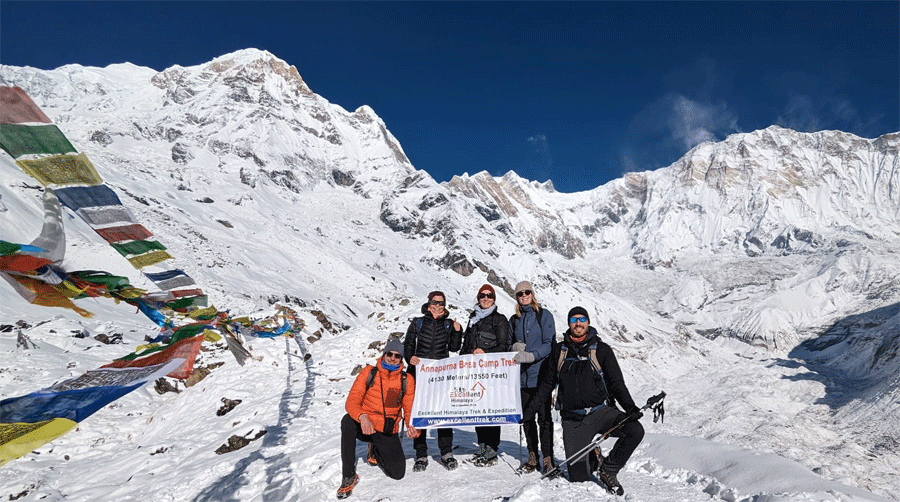
Annapurna base camp trek is a very popular hiking journey in Nepal. Annapurna Base Camp in short form is called ABC. So, trekking to Annapurna Base Camp is also said ABC trek. Annapurna Base Camp Trek leads you to reach a base camp of Mt Annapurna. Annapurna Base Camp seems like a Sanctuary circled by lovely snowy Himalayan peaks. Thus, this trek is also famous for the name Annapurna Sanctuary trek. The tallest peak you can view from the base camp is Mt Annapurna I. This is the 10th highest mountain in the world which rises to an elevation of 8,091 meters/ 26545 feet.
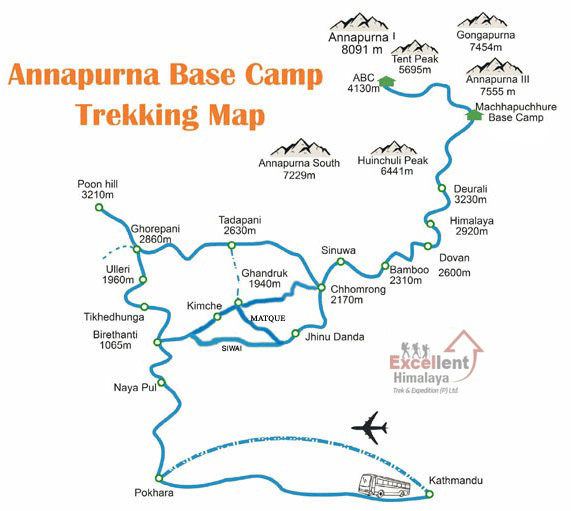 The other striking peaks close to Annapurna Base Camp are Mt Fishtail (Machapuchare), Mt Annapurna South, Mt Annapurna Fang, Mt Annapurna III, Mt Hiunchuli, Mt Gangapurna, Mt Khangsar Kang, and Tent Peak. Most of the mountains in Annapurna Base Camp are over 7000 meters. The only entrance of the Annapurna base camp is a narrow valley between Mt Hiunchuli and Mt Machapuchare, where run-off from glaciers drains into the Modi Khola River. Because of the high mountains on all sides, the Annapurna Base Camp receives only 7 hours of sunlight a day.
There are a couple of places where you can start hiking to reach the Annapurna Base Camp. Every trekking trail of ABC passes through beautiful mountain villages, terraced farmlands, lush forests of oak and bamboo trees, sparkling streams, and glacial moraines. In spring everybody becomes more excited while trekking on this trail. Because it’s a time of blossoming rhododendron flowers and it makes the hills colorful.
Annapurna Base Camp trekking trail has some long steep climbs and descends on stone steps however hiking is not difficult. Everybody above 12 years can join for Annapurna Base Camp Trek. Nepal is a Himalayan Country. Here are several mountains and several base camp hiking trails. Among all base camp trekking routes in Nepal, Annapurna Base Camp is the easier and more quickly reachable base camp trekking. It does not need any climbing and hiking experience.
On the route of Annapurna Base Camp, you pass many mountain villages. Those villages are especially the habitat of two ethnic groups of Nepal. They are Gurung and Magar. Actually, Gurung and Magars are the backbones of Gurkha soldiers. Their bravery is famous all over the world. You will find them as the foremost friendly individuals you’ll ever meet. The locals believe Annapurna Base Camp is home to several Gods and goddesses.
In summary, the highlights of the Annapurna Base Camp Trek are as below:
• Visit the world-renowned mountain village called Ghandruk and experience Gurung culture and lifestyle
• Hiking through rhododendron forests, rivers, mountain terraces, & villages
• Visit Annapurna Base Camp and Machhapuchhere Base Camp
• Enjoy splendid views of Mt Annapurna I, Annapurna South, Himchuli, and Gangapurna from Annapurna Base Camp
• Visit Natural Hot springs and dip in Jhinu Dada.
• Trekking in Annapurna Conservation Area
• Explore naturally beautiful Pokhara, famous as the Lake City
How much does the cost of the Annapurna Base Camp Trek?
The total cost for the Annapurna Base Camp Trek can range from $400 to $900, depending on your trekking style, group size, and the services included. Group treks are a cost-effective option, as larger groups benefit from lower per-person costs due to shared expenses for guides, porters, accommodation, and transportation.
There are different trekking package options available for the Annapurna Base Camp Trek. Budget packages typically cost between $400 and $900, standard packages usually range from $600 to $800, and luxury packages can exceed $1,000, offering private rooms and additional services.
Local tour operators in Nepal generally charge between $650 and $1800 for the Annapurna Base Camp trek, while international trekking operators usually charge between $900 and $2500. Booking with local tour operators not only provides a more authentic experience and better knowledge of the terrain and culture, but also supports the local economy and promotes responsible tourism.
Annapurna Base Camp Trek Cost: Deals from Excellent Himalaya
Excellent Himalaya Trek and Expedition, the authentic local operator for the ABC Trek, offers the Annapurna Base Camp Trek cost as below rates in the table. The following prices of ABC Trek are cheap, economy and affordable for the quality. They also deliver substantial value. They include hotel, 3 star standard, in Kathmandu and Pokhara, Tea House during the trek, annapurna conservation permit (ACAP), breakfast, lunch, dinner during the trek, experienced guide and transport.
| Annapurna Base Camp Trek Cost 2026 & 2027 | ||
| Group Size | 9 Days ABC Trek | 12 Days ABC Trek |
| If you are 9 to 10 Pax | USD 470 Per Person | USD 530 Per Person |
| If you are 7 to 8 Pax | USD 500 Per Person | USD 560 Per Person |
| If you are 5 to 6 Pax | USD 530 Per Person | USD 590 Per Person |
| If you are 3 to 4 Pax | USD 560 Per Person | USD 620 Per Person |
| If you are 2 Pax | USD 590 Per Person | USD 650 Per Person |
Itinerary of ABC Trek- 9 Days
| Day 1: Arrival at Kathmandu International Airport. We welcome you at the airport and transfer you to the hotel by our car. Orientation of the trip. Preparation for the trek. Overnight at Hotel in Kathmandu. |
| Day 2: Drive from Kathmandu to Pokhara by Tourist Coach, 200 km west of Kathmandu. Driving 7/8 hours. Overnight at Hotel in Pokhara. |
| Day 3: Drive from Pokhara to Matque (3 to 3:30 hrs). Trek from Matque to Lower Sinuwa (2300 m). Walking around 5 hours. Overnight at Tea House. |
| Day 4: Trek from Lower Sinuwa to Himalaya (Altitude 2900 m). Walking around 5 hrs. Overnight at Tea House. |
| Day 5: Trek from Himalaya to Annapurna Base Camp (Altitude 4130 m). Walking around 6/6:30 hrs. Overnight at Tea House. |
| Day 6: Trekking back from Annapurna Base Camp to Bamboo (2310m/7507ft). Walking around 7 hours. Overnight at Tea House. |
| Day 7: Trekking from Bamboo to Matque. Walking around 6/6:30 hrs. Drive from Matque to Pokhara by jeep. Driving 2:30/3 hours. Overnight in Hotel Pokhara. |
| Day 8: Drive back from Pokhara to Kathmandu by Tourist Coach. Driving 7 hours. Overnight at Hotel in Kathmandu. |
| Day 9: We drop you at Kathmandu International airport by our car for your flight to your country. Final Departure from Nepal. |
Itinerary of ABC Trek- 12 Days
| Day 1: Arrival at Kathmandu International Airport. We welcome you at the airport and transfer you to the hotel by our car. Orientation of the trip. Preparation for the trek. Overnight at Hotel in Kathmandu. |
| Day 2: Drive from Kathmandu to Pokhara (Alt 800m/2,624ft.) by Tourist Coach, 200 km west of Kathmandu. Driving 7 hours. Evening walk around Phewa Lake. Overnight at Hotel in Pokhara. |
| Day 3: Drive from Pokhara to Nayapul. Driving 1 hour 30 min. Trek from Nayapul to Ghandruk (Alt. 1940 m/6,364 ft). Walking 5/6 hours. Overnight at Tea House. |
| Day 4: Trek from Ghandruk to Chhomrong (Alt. 2,170 m/7,118 ft). Walking 5/6 hours. Overnight at Tea House. |
| Day 5: Trek from Chhomrong to Dovan (Alt. 2600 m/ 8530 ft). Walking 6 hours. Overnight at Tea House. |
| Day 6: Trek from Dovan to Deurali (3230 m/10497 ft). Walking 4/5 hours. Overnight at Tea House. |
| Day 7: Trek from Deurali to Annapurna Base Camp (4130 m/13422 ft) via Machapuchchhre Base Camp (3700m/12025ft). Walking 5/6 hours. Overnight at Tea House. |
| Day 8: Trek back from Annapurna Base Camp to Bamboo (2310 m/7507 ft). Walking 7 hours. Overnight at Tea House. |
| Day 9: Trek from Bamboo to Jhinu Danda (Alt. 1760 m/5773 ft). Walking 5/6 hours. Overnight at Tea House. |
| Day 10: Trek from Jhinu Danda to Nayapul (1070 m/3510 ft). Drive from Nayapul to Pokhara (800m/2,624ft). Driving 1 hour 30 min. Walking 5/6 hours. Overnight at Hotel in Pokhara |
| Day 11: Drive back from Pokhara to Kathmandu by Tourist Coach. Driving 7 hours. Overnight at Hotel in Kathmandu |
| Day 12: We drop you at Kathmandu International Airport by our car for your flight to your country. Final Departure from Nepal. |
The Services includes in the above ABC Trek Package cost:
• On your arrival day airport pickup service by car.
• Two-night accommodation in Kathmandu at a tourist standard hotel with breakfast (3 star standard). (1 night before the trek & 1 night after the trek.
• Two-night accommodation in Pokhara at a tourist standard hotel with breakfast (3 star standard). (1 night before the trek & 1 night after the trek.
• Accommodation in Tea House during the trekking.
• 3 meals (Breakfast, Lunch, Dinner) in a day during the trekking.
• One experienced English speaking guide for trekking.
• Drive from Kathmandu to Pokhara by Tourist Bus
• Drive from Pokhara to Kathmandu by Tourist Bus.
• Drive from Pokhara to trek start point by Car/jeep.
• Drive from Trek end point to Pokhara by Car/jeep.
• Expenses for food, accommodation, insurance, transport, and the wages of trekking staff.
• Trekking Permit fee (TIMS).
• Annapurna Conservation Area Permit (ACAP) Fee.
• Altitude medicines (Acetazolamide also called Diamox), Oximeter to check your oxygen level on the trek, first aid medicines, water tabs (Aqua tabs).
• Seasonable fruits in trek.
• Crampons/ Micro spikes, if need.
• Map of Annapurna Base Camp Trekking route.
• Trip Achievement Certificate.
• All government taxes, local tax, and tourist service charges.
• On your departure day airport drop service by car/ van.
The Services do not include in the above ABC Trek Packages cost:
• Airfare for your international flight.
• Nepal Visa Fee (You can easily get Nepal Visa at the arrival time at the airport in Kathmandu).
• Your travel insurance which includes Heli evacuation.
• Alcoholic beverages, any Hot and cold drinks, bottled water, boiled water, dessert.
• All kinds of personal expenses like phone calls, internet use, laundry, battery charge, hot shower during trekking, etc.
• Lunch and dinner in Kathmandu and Pokhara
• Porter
• Tips for Trekking Staff.
• Any expenses arising due to unforeseen situations like personal sickness, natural calamities, political strikes, etc.
Notes:
I. The above Annapurna Base Camp Trek cost is on a Per Person basis for a minimum group size of two persons.
I. If you are single and want to Solo Trek. We also organize Annapurna Base Camp Trek for solo trekkers. For the solo trekker, we have a separate Annapurna Base Camp Trek price. Please contact us for the Solo ABC Trek price.
Note: Annapurna Base Camp Trek can also be customized 10 days and 14 days. Please contact us if you want to customize ABC trek in different days.
Frequently Asked Questions About ABC Trek Costs
How much does the Annapurna Conservation Area Permit cost?
The ACAP costs NPR 3,000 ($30 USD) for foreign trekkers and NPR 1,000 for SAARC nationals. This permit is mandatory and must be obtained before starting your trek.
Do I need a guide for the Annapurna Base Camp trek?
Yes. Since 2023, Nepal requires all foreign trekkers to hire a licensed trekking guide for the ABC trek. Solo trekking without a guide is no longer permitted.
Is the Everest Base Camp trek more expensive than ABC?
Yes, typically. The Everest Base Camp trek costs 20-40% more due to higher permit fees, domestic flight requirements to Lukla, and generally higher tea house prices in the Khumbu region.
Can I trek independently to save money?
You cannot trek independently without a guide (mandatory requirement), but you can arrange permits and transportation yourself rather than booking a full trekking package. This approach saves 10-20% but requires more planning.
What’s included in a typical trekking package from local operators?
Standard packages include permits, licensed guide, porter service, tea house accommodation, meals, airport transfers, and transportation to/from trailheads. Insurance and personal gear are typically excluded.
How much cash should I carry on the ABC trek?
It is advised to carry $200- 300 in Nepali rupees for a 10-day trek, covering personal expenses, extras, tips, and emergency buffer. No ATMs exist along the route.
Do tour operators offer discounts for group treks?
Yes. Most trekking companies including Excellent Himalaya Trek and Expedition offer 10-20% discounts for groups of 4 or more, with larger groups receiving better rates.
What’s the accommodation cost difference between basic and upgraded tea houses?
Basic tea houses cost $5-8 per night while better lodges with private rooms and attached bathrooms cost $12-20. At higher altitudes, even basic options command premium prices.
Should I rent gear or buy trekking equipment?
Rent if you don’t plan regular trekking. Sleeping bags, down jackets, and trekking poles rent for $1-3 per day each. Buying makes sense for frequently-used items like quality trekking boots and trekking shoes.
How does peak season pricing compare to off-season?
Peak season (March-May, September-November) costs 15-25% more across accommodation, guides, and transportation. Off-season offers savings but brings weather risks and limited tea house availability.
What hidden costs surprise trekkers most often?
Hot showers ($1-4), Wi-Fi ($2-7/day), device charging ($1-4), and altitude price increases on food and accommodation. Budget an extra $5-10 daily for these extras.
Is travel insurance mandatory for the ABC trek?
While not technically mandatory, it’s essential. Policies covering high-altitude trekking and helicopter evacuation cost $50-150 and protect against evacuation costs of $3,000-5,000+.
How do I get the best value from local tour operators?
Book directly with local agencies like Excellent Himalaya Trek and Expedition rather than international operators.
What transportation options exist from Kathmandu to the trailhead?
Options include domestic flights to Pokhara ($104-110), tourist bus ($8-25), or private vehicle ($100+). From Pokhara to Nayapul, take a local bus ($4-6) or private jeep ($30-45).
Can helicopter return options reduce total trek cost?
No, helicopter rides increase costs significantly ($300-500 per person in sharing) but reduce trekking days. This option suits those with limited time rather than budget-conscious trekkers.
How do porter costs work for group treks?
One porter typically carries gear for two trekkers, making the porter cost effectively half per person in paired arrangements. Groups of four might need two porters, sharing costs four ways.
What costs support local communities on the trek?
Tea house stays, meals, porter employment, and guide fees directly support local economy in the Annapurna region. Choosing local operators over international companies keeps more money in local communities.
Are ATM facilities available on the trail?
No, ATMs are only available in Pokhara and Kathmandu.
How many days are needed for the ABC trek?
Most itineraries range from 7 to 12 days, depending on route and pace.
Is food included in trekking packages?
Most guided packages include meals (breakfast, lunch and dinner) during the trek.
Are credit cards accepted on the trek?
No, cash is required throughout the trail.
How much should we tip guide and porter in ABC Trek?
A common guideline is USD 5 to 10 per day, depending on their service quality and your satisfaction level.
Is it cheaper to book the trek with local agency based in Nepal?
Yes, booking with local tour operators often reduces costs compared to international agencies, offers better rates, and provides a more authentic experience. Booking with local companies also supports the local economy.
Do prices change during emergencies or weather delays?
The extended stays due to weather and natural calamities can increase food and accommodation costs slightly.
Complete Budget Guide of Annapurna Base Camp Trek Cost for 2026
If you are planning an Annapurna Base Camp trek requires clear understanding of all associated costs before you commit to this iconic Himalayan adventure. This comprehensive guide addresses the most common ABC trek cost questions, covering permit fees, accommodation expenses, food costs, transportation, guide and porter services, and gear requirements for trekkers heading to the Annapurna region in 2026.
This resource is designed for trekkers actively planning their ABC trek who need accurate budget information and want to avoid unexpected expenses. Whether you’re considering a budget trek or exploring luxury options, understanding the complete cost structure helps you make informed decisions and maximize your experience at Annapurna Base Camp. The abc trek ranges cover a broad spectrum of experiences and costs, from budget-friendly to luxury, with varying prices depending on accommodation, service level, and overall trip expenses.
Direct answer: The total cost for an Annapurna Base Camp trek ranges from $499 to $2,500 USD depending on trek duration, service level, season, and whether you book through trekking agencies like Excellent Himalaya Trek and Expedition or arrange components independently. The annapurna base camp cost can also vary based on how you reach the base camp, such as trekking or choosing a helicopter tour.
Local operators offer budget-friendly ABC packages that range from $499 to $1299, emphasizing local expertise and authentic cultural interactions.
Reading this guide, you will understand:
• Mandatory permit costs and documentation requirements for foreign trekkers
• Daily expenses for accommodation, meals, and services along the trekking route
• Seasonal pricing differences between peak season and off-season treks
• Proven money-saving strategies without compromising safety or experience
• Hidden costs most trekkers overlook during budget planning
Understanding Annapurna Base Camp Trek Cost Structure
The Annapurna Base Camp trek cost structure comprises fixed mandatory expenses and variable service-dependent costs. Excellent Himalaya Trek and Expedition structures pricing transparently, separating what’s included in trekking package fees from what trekkers pay directly on the trail. The annapurna trek cost can vary widely depending on trekking style, group size, and the range of services included, so it’s important to consider your preferences when planning your trip.
Several factors significantly influence your total cost: trek duration (typically 7-12 days), travel season, group size, accommodation preferences, and service level chosen. Understanding how these variables interact helps you build a realistic budget for your Annapurna sanctuary trek.
Trekking to Annapurna Base Camp with an international operator can run you between $900 and $2500, depending on the itinerary and services provided.
Essential Cost Categories
Fixed costs form the baseline of any ABC trek budget. These include the Annapurna Conservation Area Permit (ACAP), Trekkers Information Management System (TIMS) card, transportation from Kathmandu to the trailhead and back, and basic tea house accommodation with meals. Trekking permits are essential for legal compliance and safety, and must be obtained before starting the trek, usually at designated offices or checkpoints.
These mandatory expenses cannot be avoided regardless of your trekking style. Permits required for the Annapurna Base Camp trek include the Annapurna Conservation Area Permit and the Trekkers’ Information Management System card, costing approximately $50 in total. Since 2023, Nepal requires all foreign trekkers to hire a licensed trekking guide for the Annapurna region, adding this as a fixed cost element that applies to everyone planning this base camp trek.
Variable Cost Factors
Service-dependent costs vary substantially based on your preferences. Guide experience and qualifications affect daily rates, and guides with strong local knowledge can greatly enhance your safety, cultural understanding, and appreciation of the region. Porter services depend on how much weight you’re willing to carry yourself, and accommodation upgrades from basic tea houses to better lodges add to your camp trek cost.
Personal expenses include trekking gear purchases or rentals, travel insurance with altitude coverage, tips for guides and porters, and on-trail extras like hot showers, Wi-Fi, and device charging. These costs fluctuate based on individual needs and preparation level, connecting directly to the detailed breakdown that follows.
Detailed ABC Trek Cost Breakdown by Category
If you understand the exact costs for each category, it helps you to enable precise budget planning. The following breakdown reflects current 2026 pricing across the Annapurna region, with specific figures you can use for your trek cost calculations.
Permit and Documentation Costs
The Annapurna Conservation Area Permit costs NPR 3,000 (approximately $30 USD) for foreign nationals. SAARC country nationals pay NPR 1,000. This permit is mandatory and funds conservation efforts in the Annapurna conservation area.
The TIMS card costs NPR 2,000 ($20 USD) for individual trekkers, with group trekkers potentially paying reduced rates around NPR 1,000. You’ll need a valid passport (minimum 6 months validity), passport-sized photos, and your trek itinerary. Permits are available from the Nepal Tourism Board office in Kathmandu or Pokhara, or through registered trekking agencies like Excellent Himalaya Trek and Expedition, which handles documentation as part of their service.
A Nepal tourist visa adds $30-125 USD depending on duration (15, 30, or 90 days), payable at Tribhuvan International Airport or Nepali embassies abroad.
Accommodation and Food Expenses
Tea houses along the ABC trekking route charge NPR 500-1,500 per night ($5-15 USD), with prices increasing at higher altitudes. Basic tea houses at lower elevations offer the most affordable rates, while accommodations near Machhapuchhre Base Camp and Annapurna Base Camp command premium prices due to supply logistics.
Meal costs range from $5-12 per meal. Expect to pay NPR 400-700 ($3-6) for breakfast and NPR 500-900 ($5-8) for lunch or dinner. Prices rise with altitude as all supplies must be carried in. A 10-day trek typically costs $200-400 for food alone, depending on appetite and meal choices.
Guide and Porter Service Fees
Licensed trekking guide costs range from $25-40 USD per day, with experienced guides and peak season rates at the higher end. Nepal’s mandatory guide requirement means this expense applies to all foreign trekkers on the ABC trek. All foreign trekkers must have a licensed guide for any trek in Nepal that requires a Trekkers’ Information Management System (TIMS) card, including the Annapurna Base Camp trek.
Porter cost averages $20-30 per day for carrying 20-25 kg of gear. One porter typically serves two trekkers, allowing cost sharing. A guide-cum-porter combining both roles costs $22-26 per day, offering a budget-friendly option for lighter trekkers.
Solo trekkers should consider that costs may be higher since there is no opportunity to share guide or porter expenses, and logistics can be more challenging. Trekking solo presents unique aspects, such as increased responsibility for safety and navigation, and solo travelers may face additional challenges compared to group trekkers. When trekking solo, hiring a guide or porter is highly recommended for safety, comfort, and ease—especially for first-time trekkers or those carrying heavy loads.
Tipping guidelines suggest 10-15% of total guide and porter cost. For a 10-day trek with guide ($300) and porter ($200), appropriate tips range from $50-75 combined.
Transportation and Gear Costs
Transportation cost from Kathmandu to Pokhara varies dramatically by method. Domestic flights cost $104-110 one-way. A tourist bus runs $12-25, while a private car or private jeep costs significantly more. Using public transportation, such as local buses, is a cost-effective way to travel from Kathmandu to Pokhara. From Pokhara to the trailhead at Nayapul, a local bus costs $4-6, while a private vehicle runs $30-45.
For those seeking a high-end, scenic, and time-saving option, a helicopter ride is available for reaching or returning from Annapurna Base Camp. While the cost is significantly higher often several hundred dollars per person. It offers unmatched convenience and a unique aerial view of the Himalayas.
Gear and equipment cost depends on existing inventory. Essential trekking gear includes:
- Trekking boots: $50-150 (purchase) or bring your own
- Down jacket: $50-200 (purchase) or $1-2/day rental
- Sleeping bags: $30-100 (purchase) or $1-2/day rental
- Trekking poles: $10-20 (purchase) or $1/day rental
- Backpack: $50-100 (purchase)
Renting from shops in Kathmandu or Pokhara reduces equipment cost significantly if you don’t plan regular trekking. Purchasing trekking equipment in Nepal costs less than buying internationally.
Bringing your own water purification tablets can save money on bottled water during the trek.
ABC Trek Packages and Tours: What to Expect
When planning your Annapurna Base Camp trek, you’ll find a wide range of trek packages offered by trekking companies and local operators. Budget trek packages are ideal for cost-conscious travelers, typically including accommodation in basic tea houses, daily meals, and the services of a licensed guide. These packages usually range from $500 to $700 per person, making them a popular choice for those looking to experience the Himalayas without breaking the bank.
For those seeking extra comfort, luxury trek packages are available, featuring high-end accommodation, private vehicle transportation, and personalized guide services. These premium options can cost between $1,500 and $2,000 per person, offering a more exclusive and comfortable base camp trek experience.
Local operators frequently provide discounts and special promotions, especially during the off-season, making it possible to enjoy the same trek at a lower price. For those short on time or wishing to avoid the long descent, helicopter return options are available—though these will increase your total camp trek cost.
Whether you need to rent or purchase trekking gear and equipment, both Kathmandu and Pokhara offer a wide selection of trekking boots, sleeping bags, and other essentials to ensure your journey to Annapurna Base Camp is safe and comfortable. By choosing the right package and preparing accordingly, you can tailor your trek to match your budget and adventure style.
ABC Trek Cost Calculation Methods and Budget Planning
Effective budget planning requires calculating costs across all categories while accounting for your specific preferences and circumstances. The following methods help you determine realistic totals for your Annapurna Base Camp hike.
Sample Budget Calculations
7-Day Budget Trek ($700-900):
- Permits: $50
- Transportation: $60 (bus options)
- Accommodation: $50 (basic tea houses)
- Food: $150
- Guide (required): $175
- Porter (shared): $70
- Insurance: $75
- Misc/extras: $70
10-Day Standard Trek ($900-1,200):
- Permits: $50
- Transportation: $100 (mix of bus and private)
- Accommodation: $100
- Food: $280
- Guide: $300
- Porter: $100
- Insurance: $100
- Gear rental: $50
- Misc/tips: $120
10-Day Luxury Option ($1,500-2,500):
- Includes upgraded lodges, private rooms, better meals, private vehicle transport, experienced guide, full porter service, and potentially helicopter return options.
Seasonal Cost Variations
Peak season offers optimal weather and trail conditions but commands premium pricing across all categories. Off-season trekking during monsoon or winter reduces costs but introduces weather risks, potential tea house closures, and more challenging conditions. Shoulder seasons (early March, late November) balance cost savings with reasonable conditions.
| Cost Factor | Peak Season (Mar-May, Sep-Nov) | Off-Season |
| Guide rates | $30-40/day | $25-30/day |
| Accommodation | $8-15/night | $5-10/night |
| Domestic flights | Full price | 10-20% lower |
| Tea house availability | High demand, book ahead | Lower demand |
| Overall premium | 14.75 | Baseline |
Money-Saving Strategies
If you book with local agencies like Excellent Himalaya Trek and Expedition rather than international tour operators often saves 15-30% on the same trek package.
To save money effectively:
• Rent gear instead of purchasing if you won’t trek regularly
• Choose local bus over private jeep for non-essential transfers
• Share porter services with another trekker
• Book during shoulder season for lower prices
• Eat dal bhat (local staple) rather than imported Western foods
• Travel in groups of 4-6 for optimal cost sharing
• Arrange permits through your agency to avoid processing delays
Common Cost-Related Challenges and Solutions
Budget surprises frequently occur during ABC treks. Understanding common issues and preparing solutions prevents financial stress on the trail.
Hidden and Unexpected Costs
Tea houses charge separately for amenities many trekkers assume are included. Wi-Fi costs $2-7 per day with limited bandwidth. Device charging runs $1-4 per device. Hot showers cost $1-4 depending on altitude and fuel availability. Budget an additional $5-10 per day for these extras, or bring portable charging solutions and accept cold water.
Altitude-based price inflation catches many trekkers off guard. Meals at Annapurna Base Camp can cost double what you paid at lower elevations. Plan for this progression in your food cost estimates.
Currency and Payment Issues
ATMs exist in Kathmandu and Pokhara but not along the trekking route. Tea houses accept cash only—no cards, no digital payments. Carry sufficient Nepali rupees for your entire trek plus 20% buffer for delays or emergencies. Convert currency before leaving Pokhara.
Excellent Himalaya Trek and Expedition accepts advance payments via bank transfer or cards, reducing cash you need to carry for pre-paid services.
Emergency and Delay Costs
Weather delays, landslides, or trail closures can force extra nights on the mountain, adding $30-50 per day in accommodation cost and food. Build 2-3 buffer days into your timeline and budget.
Medical emergencies requiring helicopter evacuation cost $3,000-5,000 or more. Travel insurance with high-altitude coverage (minimum 4,500m) and helicopter rescue is essential—not optional. Premium quality policies covering altitude sickness and evacuation cost $50-150 for trek duration but protect against catastrophic expenses.
Excellent Himalaya Trek and Expedition: Local Company of Nepal for ABC Trek
Excellent Himalaya Trek and Expedition Pvt Ltd is the leading trekking and tour company authorized by Nepal Government Tourism Ministry based in Kathmandu Nepal. We are managed by Nepalese tourism experts, local guides, and Sherpa. Our team is engaged in the Nepalese tourism industry since 2002. We are also associated with different tourism organizations like TAAN (Trekking Agencies Association of Nepal), NMA (Nepal Mountaineering Association), etc.
Our further features are as below by which people around the world trust us as the authentic organizer of Annapurna Base Camp Trek (ABC Trekking):
Team of Local Experts and Guides: As this company is managed and run by well-trained, experienced & competent local experts, and guides, we know well about the mountain trail, ecology, culture, etc. of the trekking routes. We know the best way of trekking and also we get you the same way.
Trustworthy: Trust is something that comes from commitment. Hence, being a legally registered company, we commit to providing the best, most satisfactory trekking, tour, and expedition. We are operating all trekking, and climbing tours in Nepal based on reality, integrity, and honesty.
Focus on your needs: We highly value all our clients. We always move according to your interest and requirements. Because your satisfaction is our goal. Thus, all our trekking, tour, and mountaineering packages are customizable.
Fair Price: As we are a direct operator, not an agent, our price is always competitive that does not have any middle and hidden fees. We provide the value of what you are buying of our services at least equal to the amount you are paying.
Safety: Your safety is our first priority. Trekking to the Himalayas is both exciting and adventurous. So we provide you all the safety materials needed, along with motivational counseling.
Friendly, and Professional Staff: We have highly friendly, helpful, and professional staff. Our staff looks after you right from the moment of your arrival to the time of your departure. They are able to cope with most emergency situations including those requiring evacuation and hospitalization.
Real Cared Services: Our one travel consultant or our local trekking guide keeps in touch with our clients every time. We make sure their protection is guaranteed so that they will have peace of mind while trekking with us.
Please contact us by email at [email protected] or WhatsApp at +977 9851203181 for any further information about Annapurna Base Camp Trek, if need a customized itinerary, or any questions. Once we receive your message, we get back to you within 24 hours.
IF YOU ARE ALSO INTERESTED IN ANNAPURNA CIRCUIT TREK, PLEASE CLICK HERE.
Travel Tips
The best season and most favored time of Annapurna Base Camp Trekking (Annapurna Sanctuary Trekking) is from September to December and from March to May. During this period day time is sunny and warm with outstanding views. At this time the temperature in the day is between 10 C to 30 C. The nights are often cold with a temperature between 5 C to -20 C. Trekking to Annapurna Base Camp in Jan, Feb is also possible but a temperature during winter could be harsh for most people. Trekking in July, Aug will be affected by rain/monsoon but the Summer trek could be an advantage for a keen botanist.
This is a basic checklist of the essential items that you are advised to pack for your Annapurna Base Camp Trek:
• A sturdy pair of trekking boots with good ankle support
• Rucksack (5o to 65 liters) with waterproof cover
• Trekking pants and waterproof trousers
• T-shirts or shirts
• Down jacket*
• Wind/ waterproof light jacket
• Fleece jumper or jacket
• Inner Thermal (top and trouser)
• 4 to 6 pairs of Socks and underwear
• Sunglasses, sun hat, woolen cap, or balaclava
• Inner and outer gloves
• Headlamp, power bank, and extra batteries
• Sun protection cream, lip balm, wet wipes, and hand sanitizer
• Towel, flip-flop or rubber sandal, toiletries
• Water bottle and water purification tablets
• 4 season Sleeping bag (good to -20 degrees C or 28 degrees F); *
• Hiking poles, if you need
• Your daily medicine if any, small personal first aid kit, aspirin, plasters (band-aids), anti-diarrhea pills, anti-headache pills, cough or cold medicine, anti-altitude sickness pills, etc.
• A small daypack/backpack for carrying your valuables
*Down jacket and sleeping bag you can rent/hire from Trekking gear shops in Kathmandu.
All foreign nationals except Indian Nationals are required to arrange a visa in order to enter Nepal. A Nepalese Visa can be obtained either prior to your arrival at a Nepalese embassy abroad or on arrival time in Kathmandu at the airport. But nationals from Afghanistan, Iraq, Cameroon, Ghana, Somalia, Swaziland, Palestine, Zimbabwe, Nigeria, Ethiopia, and Liberia cannot secure the Nepalese Visa upon arrival. The Visa can be also taken at entry points at Nepalese borders. For Nepalese Visa it requires your passport with at least six months validity, recent digital photo (size: 1.5″ x 1.5″) and the following fees either in USD dollars cash or the equivalent local currency:
| Visa Facility | Duration | Fee |
| Multiple entry | 15 days | US$ 25 or equivalent Nepalese currency |
| Multiple entry | 30 days | US$ 40 or equivalent Nepalese currency |
| Multiple entry | 90 days | US$ 100 or equivalent Nepalese currency |
We would offer you the meeting and greeting service in Kathmandu International Airport on your arrival time. For this, you need to pass us your International flight details at least 2 days before your arrival date in Kathmandu. After you get down from the aircraft you just pass on the Customs and come out of the Terminal building where you will see our tour officer standing with your name card. He will greet and welcome you with auspicious garland and escort you to the hotel.
Trekking to Annapurna Base Camp does not require tremendous logistics in terms of accommodation as you will find plenty of clean and friendly lodges along the trail. Lodges typically offer a room with a wooden bed with a simple mattress or foam pad, a cotton pillow, and a blanket or quilt. A few have electric lights and all have a spacious dining room-lounge. We will accommodate you and your group in local lodge available each day. We send a porter ahead of us to book the required rooms for you (here rooms cannot be booked in advance).
In the case of Kathmandu and Pokhara, we offer you tourist standard hotel under 3-star categories unless it is mentioned otherwise or clients have a special choice.
In the trail of Annapurna Sanctuary Trekking, it’s commonly available for Authentic Nepali meal: Dal Bhat (rice with lentils soup and seasonable vegetables), noodles, pasta, chapatis, eggs, French fries, porridge, and muesli. The restaurant of lodges also serves Tibetan foods like momo, thukpa, chowmein, along with pizza, spring rolls, pancake and another continental as well as Indian foods.
Tea and hot lemon are traditionally the main drinks on the trail though coffee is found everywhere. Bottled soft drinks, bottled water, and even beer are common along the route but the price of each bottle rises each day when you move upward.
The trekking team who will go with you is the most significant thing that makes your Annapurna Base Camp trekking successful, enjoyable and memorable. We would provide you skilled, experienced, courteous, knowledgeable and helpful trekking guide and porters. The trekking guide leads you on the trail and brief you all the about this route and porters carry your luggage. Our all trekking guides are carefully selected in terms of their appropriate experience, leadership skills and their knowledge about local culture, ecosystem, geography, flora and fauna, and history. With aim of sustaining local communities, we only employ local people as trekking guide and porter. Our all trekking guides are certified by Nepal Government, Ministry of Tourism. We manage trekking team such a way that one trekking guide in each group and porters like one porter for two trekkers.
During trek, your main luggage will be carried by porters or pack animals (usually yaks or cross-breeds). You simply carry a day pack with water bottle, camera, sunscreen, spare jacket, etc. – a small load that allows full enjoyment of the trek. A trek bag is ideal for your main luggage, plus a small lockable bag for travel clothes or anything that you do not need during trek which you can leave at hotel’s locker room in Kathmandu for free of charge.
Every morning, first of all, packing your bags and then have a hearty breakfast at the lodge restaurant. Then set off on the day’s walk. After walking for 3-4 hours you all stop for lunch in local restaurant. Then continue walking to your destination. After lunch, it’s the only a couple of hours walking. You usually arrive at your destination in the time of afternoon tea. Check in at the lodge. The rest of the day is at leisure. At the free time you may explore surrounding village, do a bit of washing or simply relax by reading books and writing a diary. On some days you will arrive at your destination by lunch time and entire afternoon will be free. Most people also spend free time by playing cards and other games reliving the day’s adventures. Then in the evening have a dinner and you will be briefed by your trekking guide about your next day’s walking and then go to your bed for well-earned sleep.
Annapurna Sanctuary Trekking is moderate trek suitable for any passionate walkers who able to walk at least 5-7hours a day with a light day pack. Walking in higher altitudes is more physically demanding than walking in lower altitudes; however, if you are in excellent health with average physical fitness and have a positive attitude, self-confidence, and strong determination, you can do this trek successfully. Exercising and jogging regularly for some weeks prior to the trip is a good idea to enhance your strength and stability. Past hiking experience would be an asset but no compulsorily required for this trip. It is vital for participants with pre-existing medical conditions such as heart, lung, and blood diseases to consult their doctor before taking the trip.
At high elevations, the combination of reduced oxygen and lower atmospheric pressure can produce a variety of unpredictable effects on the body, known collectively as Acute mountain sickness (AMS) is also commonly known as Altitude Sickness. Everyone who treks over 3500 m experiences some mild symptoms of AMS like slowness, dizziness, headache, nausea, loss of appetite, shortness of breath, racing pulse, disturbed sleep and swelling of the hands and feet but serious cases are very rare. The golden rule of prevention from Altitude Sickness doesn’t walk too fast at altitude, drink plenty of liquids, eating well, getting plenty of sleep and avoiding alcohol. If in case you feel any mentioned symptoms the simple cure is to move down (descend) and you shouldn’t ascend further until you start feeling better. To treat AMS there is also available medication Acetazolamide (better known under the brand name Diamox). The dosage is 250 mg every twelve hours. Diamox improves respiration at altitude and can, therefore, accelerate acclimatization. Some doctors recommend a preventive dose (125 mg twice a day) for people trekking at high elevations. At the time of trekking our trekking team always guides you to prevent from Altitude Sickness and they always have Diamox along with first aid kit.
We believe casualty and a serious sickness will not happen on the trip. If it happens we will do everything to transfer you to the nearest hospital. Since all the expenses incurred in evacuation liable to you please make sure that it is covered by your insurance before assigning for it or be prepared to pay on your own after getting back to Kathmandu.
Annapurna Base Camp Trek is high altitude trip. We strongly advise you to take travel insurance before joining a tour which should cover medical expenses, hospitalization, helicopter evacuation from high-altitude places in case of an accident or medical emergency. The highest altitude you reach is 4130 meters. Thus your insurance should have coverage up to the elevation of 4130 meters. It would be advantageous for you also to choose an insurance policy that also covers domestic and international flight cancellations and lost or stolen baggage. We would request you to bring your insurance documents when you come to Nepal.
The itinerary for each trip should be taken as a guideline only. Depending on the situation, you can modify it to some extent after consulting with your guide. However, the date of trip ending should always coincide with the original itinerary.
Kindly keep in mind that sometimes unforeseen events may contribute to the need for a change in itinerary. In such cases, we or your guide will suggest the best alternative similar to your original.
Naturally Annapurna Region is so beautiful but equally, it is fragile as well. Increasing population density and numbers of trekkers threaten the very beauty of this area. We at Silver Himalaya Adventures are extremely conscious about protecting its beautiful natural environment and preserving the fascinating local culture. We are doing our level best to minimize our impact as much as possible. Our all trekking guides and porters are well trained and motivated to following guidelines of responsible tourism and eco-friendly tourism. In trekking, they also advise you do’s and don’ts to minimize your impact on the local environment.
In addition to your Trekking trip you can join in various side Trips in Nepal like a cultural tour of UNESCO World Heritage Sites, Jungle Safari in National Park, White Water Rafting in Himalayan Rivers, Golfing, Adventure activities like Bungee Jumping, Altra Light Flight, Paragliding, Jeep flyer etc. You also can extend your trip to neighboring Himalayan Countries: Bhutan, Tibet, Sikkim (India) which seems more appealing to you. On your request, we will give you the detail of the side trips.
Trip Reviews
 We have just completed an amazing Annapurna trekking with Poon Hill. We had a fantastic experience and highly recommend this trip to anyone. Our trip was organized by Excellent Himalaya Trek. It is a professional tour company with experienced trekking guides and porters.
We felt Poon Hill is not a difficult trek. The mountain views were absolutely incredible, the landscape varied a lot in every day of the trek and there were a couple of nice villages along the way. Although we were there in October (peak season), the trail was only busy in few places.
The lodges on the trail were comfortable. They offered us very good food. We had good guide support from Dawa. Our porters too were so much helpful and friendly. Overall, we had no complaints about the hotel, food, staffed, and other matters. Everything was perfect.
Thank you, Suman, for your excellent arrangement.
We have just completed an amazing Annapurna trekking with Poon Hill. We had a fantastic experience and highly recommend this trip to anyone. Our trip was organized by Excellent Himalaya Trek. It is a professional tour company with experienced trekking guides and porters.
We felt Poon Hill is not a difficult trek. The mountain views were absolutely incredible, the landscape varied a lot in every day of the trek and there were a couple of nice villages along the way. Although we were there in October (peak season), the trail was only busy in few places.
The lodges on the trail were comfortable. They offered us very good food. We had good guide support from Dawa. Our porters too were so much helpful and friendly. Overall, we had no complaints about the hotel, food, staffed, and other matters. Everything was perfect.
Thank you, Suman, for your excellent arrangement.
Sandeep Mehta
Annapurna Base Camp including Poon Hill is a lovely trek for beautiful Himalaya views and sunrise in a short time. We booked this trip with Excellent Himalaya Trek and Expedition by online. It is absolutely the best decision that we have made. From the start to the end of the trip, we always get excellent services. On our arrival in Kathmandu Airport, Suman, the Managing Director of this company, welcomed us and helped to transfer our hotel. Suman is very helpful and friendly. He gave us detail tour briefing and also introduced with our guide Hari before our trek. In Pokhara, we met our porters (Ghanashyam and Badri). When going trekking with Hari and our porters, we feel likes going on hiking with good friends. They are very helpful, funny, and friendly. Whenever we're having trouble to walk on steep hills, they are always ready to help us. They made this holiday to be one of the perfect ones that we ever had. We indeed enjoyed our Poon Hill Trek. We totally recommend Excellent Himalaya Trek to every people who are planning any trek in Nepal.
Thank you, Suman, for arranging such a wonderful trip for us. This is a memorable tour with very much happy experience!
Wendy & Renaud
Ask our experts (Inquiry)
Why travel with us?
- Run by local experts, guide & Sherpa.
- Focus on your needs.
- Good value for money.
- Real cared services.
- Government recognized company.
- Best reasonable rate.