


Best Company for Langtang Trek: Local Operator with Reviews (2026/ 2027 Guide)
Updated [July 18th, 2026]. Written and reviewed by Suman Shrestha, licensed guide (Nepal Government License No. 2212)
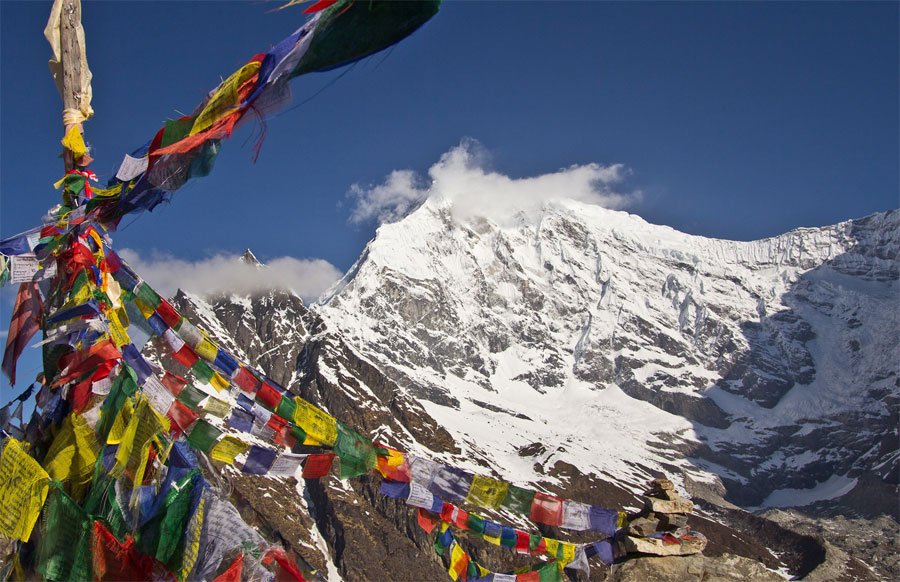
The alarm goes off at 4:30 a.m., but you are already awake. You step out of the teahouse at Kyanjin Gompa into air so cold and clean it feels like the mountains are breathing for you. Then you see it: Langtang Lirung, all 7,227 metres of it, catching the first blush of Himalayan dawn. The ice-draped north face shifts from deep violet to molten copper as the sun climbs, and for a long moment, you forget you are standing at 3,870 metres above sea level.
But before that moment comes a hundred smaller choices, and the most important one happens before you ever pack a bag. Choosing the right trekking company for the Langtang Valley Trek is not a matter of comparing prices on a spreadsheet. It is a matter of trust, verifiable credentials, and local knowledge that cannot be manufactured.
This guide sets out exactly how to evaluate a Langtang trekking company using eight objective, checkable criteria, then applies those criteria transparently to Excellent Himalaya Trek & Expedition, a government-registered operator founded and staffed by guides from the Langtang and Rasuwa District region. You will find a full 2026 cost breakdown, current permit rules, a day-by-day itinerary, safety protocols, a seasonal comparison, and answers to the questions trekkers most commonly ask before booking.

Table of Contents
- What Makes a Trekking Company "The Best" for Langtang? An 8-Point Buyer's Guide
- About Excellent Himalaya Trek & Expedition — Scored Against These Criteria
- Langtang Trek Routes Offered by Excellent Himalaya Trek & Expedition
- Sample Langtang Valley Trek Itinerary (10 Days)
- Permits and Logistics — 2026 Rules
- Safety Protocols and Altitude Management
- What to Pack for the Langtang Trek
- Trek Cost and What's Included (2026)
- Real Client Reviews of Excellent Himalaya Trek & Expedition
- Guide and Porter Welfare — The Ethical Trekking Standard
- Best Season for the Langtang Trek — Seasonal Comparison
- What If Scenarios
- Red Flags: How to Spot an Unreliable Langtang Trek Operator
- How to Book Your Langtang Trek
- Frequently Asked Questions
- Conclusion
What Makes a Trekking Company "The Best" for Langtang? An 8-Point Buyer's Guide
Every trekking agency in Kathmandu will claim to be the best. What matters is not the claim but whether it can be checked. Use these eight criteria on any operator you are considering, including this one.
| Criterion | What to check | Why it matters |
| Local origin and residency | Is the company founded and staffed by people from the trekking region itself, or is it a Kathmandu agency reselling the route? | Guides who grew up in Rasuwa District know seasonal trail conditions, teahouse quality, and emergency contacts that no training manual covers. |
| Government registration and licensing | Ask for the company’s Tourism License number and each guide’s individual trekking guide licence. | Nepal’s Department of Tourism requires both; unlicensed operators cannot legally obtain your TIMS card as of the 2023 regulation. |
| Professional association membership | Verify active membership with TAAN (Trekking Agencies’ Association of Nepal) and, for high-altitude routes, NMA (Nepal Mountaineering Association). | These bodies set minimum wage, safety, and ethical standards and provide a channel for dispute resolution. |
| Transparent, itemised pricing | Request a full inclusions and exclusions breakdown in writing before paying a deposit. | Rock bottom headline prices are frequently subsidised by underpaying porters or skipping insurance. |
| Porter welfare practices | Ask about maximum load limits, cold weather clothing provision, and insurance coverage for porters. | The International Porter Protection Group (IPPG) recommends a 20kg per porter limit; how a company treats its staff predicts how it will treat you in an emergency. |
| Emergency and evacuation protocol | Ask specifically what happens if a client develops symptoms of acute mountain sickness at Kyanjin Gompa. | A vague answer is a warning sign; a strong operator can describe the exact descent, communication, and evacuation chain. |
| Verifiable review history | Cross-check reviews on TripAdvisor and Google against the guide names the company claims to employ. | Consistency between platforms and named staff is harder to fabricate than a testimonial on a company’s own website. |
| Cultural access and community reinvestment | Ask whether the company has any operational or family ties to the Tamang communities along the route. | Genuine access to monasteries, homestays, and festivals cannot be arranged on short notice by an outside agency. |
About Excellent Himalaya Trek & Expedition — Scored Against These Criteria
 There is a kind of authority that cannot be purchased. It comes only from having stood at the top of Tserko Ri at 4,984 metres after a snowstorm, knowing every risk and every reward of that climb because you have made it more times than you can count. That is the authority behind Excellent Himalaya Trek & Expedition.
The company was founded by local trekking guides with roots in the Rasuwa District and the Langtang Valley: Tamang community members who grew up with these mountains as their backyard. Following the 2015 earthquake, when much of the international trekking community temporarily withdrew from Langtang and the livelihoods of local guides, teahouse operators, and porters collapsed overnight, the founders made a decision to stay, rebuild, and bring trekkers back in a way that benefits the local economy directly.
Excellent Himalaya Trek & Expedition is a government registered company (Reg. No. 175840/074/075, Tourism License No. 2432) operating under Nepal’s Tourism Act and Department of Tourism regulations, with active membership in TAAN, NMA, and NTB, and affiliation with the Himalayan Rescue Association (HRA). Founder Suman Shrestha holds a Master’s degree in Tourism Management, a government trekking and tour guide licence (No. 2212), and has led guided groups across Nepal’s major routes since 2004/2005. Senior guides on the Langtang and Rasuwa team, including Laxman Bhandari, Subindra Adhikari, Yogendra Baniya, and Sashi Adhikari, hold government-issued trekking guide licences and wilderness first aid certification.
How Excellent Himalaya compares to a typical resale agency
| Factor | Excellent Himalaya Trek & Expedition | Typical resale agency |
| Regional origin | Founded by Rasuwa/Langtang locals, the Tamang heritage | Kathmandu based, no direct regional ties |
| Guide licensing | 100% government licensed, named on request | Varies; sometimes unlicensed freelance guides subcontracted |
| Pricing model | Published inclusions/exclusions, fixed deposit terms | Headline price often excludes permits, tips, or single supplement |
| Porter load limit | 20kg per porter (IPPG standard), insured | Inconsistently enforced; insurance not always provided |
| Association membership | TAAN, NMA, NTB, HRA | Membership not always verifiable |
| Emergency protocol | Named evacuation partners, satellite comms on premium tier | Often undocumented until an incident occurs |
Langtang Trek Routes Offered by Excellent Himalaya Trek & Expedition
Langtang Valley Trek (7 to 10 Days)
Difficulty: Moderate Max altitude: 4,984 m (Tserko Ri side trip)
The classic introduction to the region and the most popular itinerary for first-time visitors. The route follows the Langtang River valley from Syabrubesi north through Langtang National Park via Lama Hotel, Langtang Village, and Kyanjin Gompa. Highlights include the Langtang corridor’s sheer valley walls, the optional Tserko Ri ascent, and close proximity to Langtang Lirung. The best seasons are spring (March to May) and autumn (September to November).
Langtang Gosaikunda Trek (10 to 12 Days)
Difficulty: Challenging Max altitude: 4,610 m (Laurebina Pass)
Combines the Langtang Valley with the sacred Gosaikunda Lake at 4,380 metres, a major Hindu pilgrimage site during Janai Purnima. The route climbs over Laurebina Pass before descending into Helambu. Prior high altitude experience is recommended, given the significant elevation gain.
Langtang Helambu Circuit Trek (14 to 16 Days)
Difficulty: Challenging Max altitude: 4,610 m
One of Nepal’s most diverse multi-week treks, combining Tamang villages in the north with Sherpa and Hyolmo communities of Helambu to the south. Physically demanding but exceptionally varied in culture and landscape.
Tamang Heritage Trail (7 to 9 Days)
Difficulty: Easy to Moderate Max altitude: 3,165 m
A culturally focused, lower altitude route through traditional Tamang villages, gompas, and terraced farmland in southern Rasuwa. Ideal for travellers who want deep cultural immersion without extreme altitude exposure.
Ganja La Pass Trek (15 to 17 Days) — Experienced Trekkers Only
Difficulty: Strenuous/technical Max altitude: 5,122 m (Ganja La)
A serious high altitude glacier crossing connecting Langtang to Helambu, requiring crampons, rope work, and an experienced high altitude leader. Only guides with repeated, documented Ganja La crossings should lead this route.
Sample Langtang Valley Trek Itinerary (10 Days)
Ten days that balance pace, acclimatisation, and genuine cultural experience.
| Day | Route | Time | Distance | Details |
| Day 1 | Kathmandu to Syabrubesi (1,460 m) | 7-8 hrs by road | ~122 km | The road climbs from the Kathmandu Valley through terraced hillsides, crossing the Trishuli River into Rasuwa District. Pre-trek safety briefing over dinner. |
| Day 2 | Syabrubesi to Lama Hotel (2,380 m) | 5-6 hrs | ~11 km | Enter Langtang National Park; permits verified at the check post. Steep climb through subtropical forest of bamboo, oak, and rhododendron. |
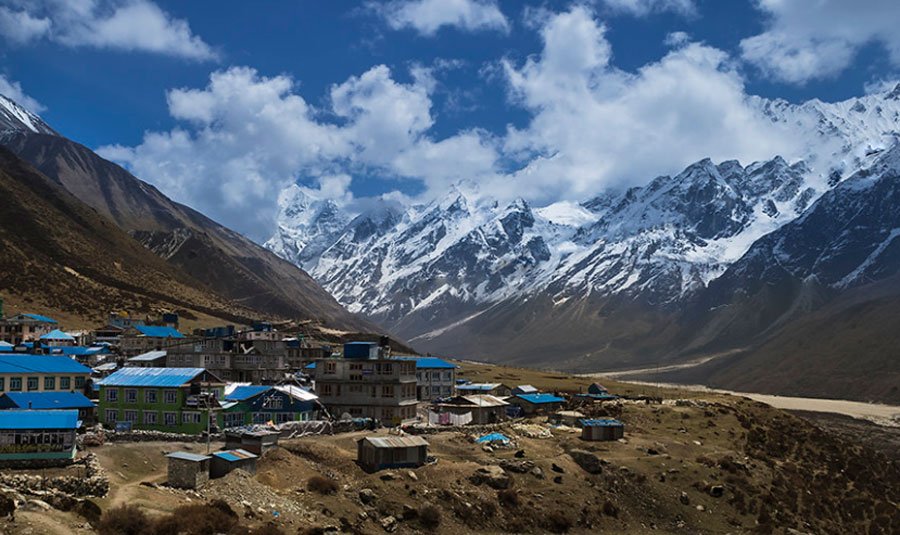
| Day 3 | Lama Hotel to Langtang Village (3,430 m) | 5-6 hrs | ~14 km | The valley opens and the forest thins; first clear views of Langtang Lirung. The rebuilt village and its earthquake memorial mark the first serious acclimatisation threshold. |
| Day 4 | Langtang Village to Kyanjin Gompa (3,870 m) | 3-4 hrs | ~7 km | Shorter but significant altitude gain through yak pastures. Kyanjin Gompa offers a functioning monastery and a working cheese factory. |
| Day 5 | Acclimatisation day: Tserko Ri ascent (4,984 m) | ~7-8 hrs round trip | ~10 km round trip | A steep, sustained climb rewarded with views of Langtang Lirung, Dorje Lakpa, and Shishapangma. Return to Kyanjin Gompa for rest. |
| Day 6 | Kyanjin Gompa to Langtang Village (3,430 m) | 3-4 hrs | ~7 km | Gentle descent; afternoon free to explore the rebuilt village. |
| Day 7 | Langtang Village to Lama Hotel (2,380 m) | 4-5 hrs | ~14 km | Long descent back through the forest as the elevation drop eases altitude effects. |
| Day 8 | Lama Hotel to Syabrubesi (1,460 m) | 4-5 hrs | ~11 km | Final trail day; celebratory dinner in Syabrubesi. |
| Day 9 | Syabrubesi to Kathmandu | 7-8 hrs by road | ~122 km | Return to Kathmandu with a post trek debrief and certificate. |
| Day 10 | Buffer/departure day | — | — | A contingency day is built into every itinerary, since mountain weather and road conditions do not always cooperate. |
Total cumulative ascent on this itinerary is approximately 2,400 metres from Syabrubesi to Kyanjin Gompa, plus a further 1,100 metres on the Tserko Ri side trip. Two nights are spent at or above 3,400 metres before the highest point, consistent with a gradual acclimatisation profile recommended by the Himalayan Rescue Association.
Permits and Logistics — 2026 Rules
The Langtang Trek requires two documents, both of which Excellent Himalaya Trek & Expedition obtains on your behalf before you set foot on the trail.
The Langtang National Park Entry Permit is issued by the Department of National Parks and Wildlife Conservation. As of 2026, published sources put the fee in a range of roughly NPR 3,000 to NPR 3,400 (approximately USD 22 to 27) for foreign nationals; SAARC nationals pay a reduced rate. The TIMS Card (Trekkers’ Information Management System) costs approximately NPR 1,000 to 2,000 (roughly USD 10 to 20) depending on individual versus group status. Because permit fees are periodically revised, always confirm the current figure at the time of booking rather than relying on any single published number, including this one.
Since the April 2023 regulation change, TIMS cards for the Langtang region must be obtained through a registered trekking agency; independent trekkers can no longer self-issue one at the Nepal Tourism Board counter. Unlike the Annapurna region, where TIMS was discontinued in 2023 in favour of ACAP alone, Langtang and Manaslu continue to require both a park permit and a TIMS card. Both documents are checked at multiple points along the route, including Dhunche and Ghodatabela.
A licensed guide is legally mandatory for the Langtang Trek under Nepal’s guide regulation, actively enforced since April 2023. Beyond the legal requirement, a resident guide is the single largest factor separating a routine trek from an exceptional one on this particular trail.
Safety Protocols and Altitude Management
 High altitude trekking carries real medical risk, and a trustworthy operator addresses it specifically rather than in general reassurances.
Acute Mountain Sickness (AMS) is possible above roughly 2,500 metres and becomes a genuine consideration above 3,000 metres, which on this itinerary means from Langtang Village onward. Early symptoms include headache, nausea, and disturbed sleep. Excellent Himalaya’s guides are trained to run daily symptom checks, and the itinerary is built with a dedicated acclimatisation day at Kyanjin Gompa before the Tserko Ri ascent rather than treating rest as optional.
Every guide carries a first aid kit and is trained to recognise the progression toward High Altitude Pulmonary Oedema (HAPE) and High Altitude Cerebral Oedema (HACE), both of which require immediate descent. Where mobile network coverage is unreliable above Lama Hotel, guides carry alternative means of communication, and premium tier bookings include a dedicated satellite communication device.
Evacuation, where medically necessary, is coordinated through helicopter rescue partners in Kathmandu; trekkers are strongly advised to carry travel insurance that explicitly covers high altitude helicopter evacuation up to at least 6,000 metres, since many standard travel policies exclude trekking above 3,000 metres by default.
A related and often overlooked safety point: ask any operator you are considering exactly what happens, step by step, if you develop AMS symptoms at Kyanjin Gompa. An operator who cannot answer specifically is not one to trust at altitude.
What to Pack for the Langtang Trek
A full, downloadable packing checklist is available on request from Excellent Himalaya Trek & Expedition. At minimum, plan around these categories:
- Layering: Moisture wicking base layers, insulated mid layer, waterproof/windproof outer shell
- Footwear: Broken-in waterproof trekking boots, camp shoes, wool trekking socks
- Sleep and cold: Four season sleeping bag (rated to at least -15°C for Kyanjin Gompa nights), warm hat, insulated gloves
- Health: Personal first aid kit, water purification tablets or filter, sunscreen (high UV at altitude), diamox if prescribed by a physician
- Documents: Passport, passport photos for permits, travel insurance details, printed emergency contacts
Down jackets, sleeping bags, and trekking poles can be rented in Kathmandu’s Thamel district for trekkers who prefer not to buy specialised gear for a single trip.
Trek Cost and What's Included (2026)
Transparency in pricing is a hallmark of a trustworthy operator. Approximate per-person cost ranges for the 10-day Langtang Valley Trek (group of 2-4):
Budget Package — Approx. USD 650-800 per person (group of 2-4)
Government licensed guide, one porter per two trekkers, Langtang National Park entry permit, TIMS card, standard teahouse accommodation (twin sharing), all trek meals, private Kathmandu-Syabrubesi-Kathmandu transport.
Standard Package — Approx. USD 900-1,100 per person
Everything in Budget, plus upgraded teahouse rooms where available, one pre-trek hotel night in Kathmandu, airport transfers, post-trek briefing and certificate, branded duffel bag.
Premium Package — Approx. USD 1,200-1,500 per person
Everything in Standard, plus a private one-to-one guide, priority teahouse booking, satellite communication device on the trail, personalised post-trek photo album.
Not included in any package: international flights, Nepal visa fees, personal travel and medical insurance (strongly recommended, including high altitude helicopter evacuation cover), alcoholic beverages, hot showers and device charging at teahouses, personal trekking gear, and tips for guides and porters (customary and appreciated).
Prices above are indicative for 2026 and vary with group size, season, and route length; request a written, itemised quote before booking. Because Excellent Himalaya operates without international resale layers, a larger share of your trek cost reaches local guides, porters, and teahouse owners directly, for a comparable or lower headline price than internationally marketed packages covering the same route.
Real Client Reviews of Excellent Himalaya Trek & Expedition
 ★★★★★ TripAdvisor
“Suman and his team looked after us brilliantly on our family holiday to Nepal. We did the beautiful Langtang Trek with Achyut as our guide, successfully summiting Tsergo Ri. Achyut was great fun and arranged lovely accommodation along the way. We would thoroughly recommend Excellent Himalaya Trek and Expedition!
— Verified TripAdvisor review, Excellent Himalaya Trek and Expedition (family Langtang trek, guide: Achyut)
Guide and Porter Welfare — The Ethical Trekking Standard
When you hire a trekking company, you are participating in an economic ecosystem. The wages, working conditions, and protections afforded to guides and porters are as much a part of your choice as the itinerary itself.
Excellent Himalaya Trek & Expedition’s guides hold government-issued licences and receive wages consistent with TAAN’s published guidelines, in addition to food, accommodation, and transport throughout the trek. Porters carry no more than 20 kilograms per person, the standard set by the International Porter Protection Group (IPPG), and are equipped with appropriate cold-weather clothing. Every porter is covered by accident and medical insurance and sleeps in the same teahouses as clients rather than in unheated storage rooms.
Best Season for the Langtang Trek — Seasonal Comparison
| Season | Pros | Cons |
| Spring (March-May) | Rhododendron forests in bloom; warm, bright days; good visibility | May grows busier as peak season approaches |
| Autumn (September-November) | Clearest air of the year after monsoon; stable weather; October is the single most popular month | Higher teahouse demand; book accommodation in advance |
| Winter (December-February) | Quiet trails; near-solitary Kyanjin Gompa experience | Snow above Langtang Village; Tserko Ri requires crampons; cold nights |
| Monsoon (June-August) | Lush, dramatically green valley | Heavy rainfall, leeches on lower trail sections, obscured mountain views; generally not recommended |
What If Scenarios
What if I develop AMS symptoms at Kyanjin Gompa?
Your guide will assess symptoms daily and at the first sign of moderate AMS (persistent headache, nausea, loss of appetite) will halt further ascent, and may recommend descent to a lower village. Guides carry supplemental oxygen access contacts and can coordinate helicopter evacuation for severe cases (HAPE/HACE symptoms) through Kathmandu-based rescue partners. This is why travel insurance with high altitude helicopter evacuation cover is essential, not optional.
Is Langtang safe for a solo female traveller?
Yes. Langtang is one of Nepal’s most established guided trekking regions, and a licensed guide accompanies every trekker by law. Solo women should still take the general precautions any solo traveller would: confirm the guide’s licence number in advance, share your itinerary with someone at home, and discuss room and teahouse arrangements before departure.
Can children or older trekkers do the Langtang Trek?
The Langtang Valley Trek (as opposed to Ganja La or the full Helambu circuit) is graded moderate and is a realistic option for fit children roughly 10 and older and for older trekkers with reasonable cardiovascular fitness, provided the itinerary allows extra acclimatisation days and a slower daily pace. Discuss specific fitness and any medical conditions with your operator before booking so the itinerary can be adjusted accordingly.
Red Flags: How to Spot an Unreliable Langtang Trek Operator
 A quoted price with no written breakdown of inclusions and exclusions.
- Reluctance to provide the company’s Tourism License number or individual guide licence numbers.
- No mention of porter load limits, insurance, or cold-weather equipment when asked directly.
- Vague or evasive answers about emergency and evacuation procedures.
- Reviews that cannot be cross-referenced on TripAdvisor or Google, or that never name an actual guide.
How to Book Your Langtang Trek
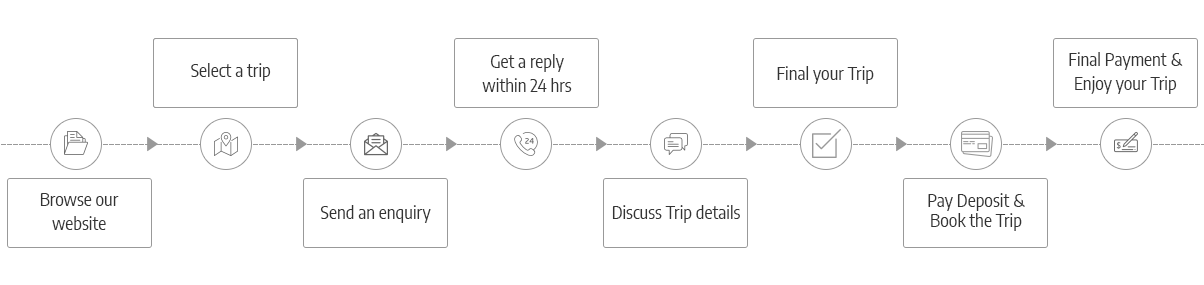
Step 1: Initial inquiry
Contact via website, email, or WhatsApp with your preferred route, dates, group size, and fitness level. Expect a response within 24 hours with an initial itinerary and cost breakdown.
Step 2: Itinerary customisation
The proposed itinerary is a starting point. Pace, route sections, and daily plans are adjusted to your group’s needs, whether solo, couple, family, or corporate.
Step 3: Booking confirmation and deposit
A deposit of roughly 20-30% of total trek cost confirms your booking; balance is due before departure. All transactions are documented in writing.
Step 4: Pre-trek briefing in Kathmandu
Your guide meets you in Kathmandu for a briefing covering permits, route, altitude safety, and packing.
Step 5: Departure
Early morning departure for Syabrubesi. From this point, your guide is with you for the full itinerary.
Frequently Asked Questions
Is the Langtang Trek suitable for beginners?
Yes, with appropriate preparation. The Langtang Valley Trek is widely considered one of Nepal’s most accessible high-altitude treks. It requires no technical climbing skill, but does require the fitness to walk 5-7 hours a day on uneven terrain and reach 3,870 metres at Kyanjin Gompa. A well-paced itinerary with built-in acclimatisation is the single biggest factor in a safe first high-altitude trek.
How difficult is the Langtang Valley Trek?
It is graded moderate, with roughly 2,400 metres of cumulative elevation gain from Syabrubesi to Kyanjin Gompa. The most demanding single day is the optional ascent of Tserko Ri (4,984 m), a steep 1,100-metre climb. Beyond Tserko Ri, altitude is the primary challenge rather than technical terrain.
Do I need a guide for the Langtang Trek?
Yes. A licensed guide has been legally mandatory for the Langtang Trek since Nepal’s guide regulation took effect in April 2023, and this rule is actively enforced. Beyond the legal requirement, a resident guide provides route knowledge, medical judgement at altitude, and cultural access that is not otherwise available.
What permits do I need for the Langtang Trek?
Two permits: the Langtang National Park Entry Permit (roughly NPR 3,000-3,400, about USD 22-27) and the TIMS Card (roughly NPR 1,000-2,000, about USD 10-20). Since 2023, TIMS cards for Langtang must be obtained through a registered trekking agency. Both are checked at multiple points on the trail.
What is the best time to trek in Langtang?
Spring (March-May) and autumn (September-November) are the two optimal windows. Spring brings rhododendron blooms and mild weather; autumn brings the clearest skies of the year, with October the single most popular month.
How much does a Langtang Trek cost with a local company?
Indicative 2026 pricing with a local, government-registered operator ranges from roughly USD 650 to USD 1,500 per person, depending on package tier, group size, and trek length, covering guide, porter, permits, accommodation, meals, and transport. Always request a full written breakdown before booking.
Is Langtang safe after the 2015 earthquake?
Yes. Langtang Village has been rebuilt with new lodges and a memorial, trails and teahouses have been restored and maintained, and the valley sees thousands of international trekkers annually without route-related incident.
Can I trek Langtang without a porter?
Yes, a guide-only arrangement is possible if you are comfortable carrying your own full pack for 5-7 hours daily at altitude. Most trekkers, especially on multi-day itineraries with a side trip to Tserko Ri, find a porter meaningfully improves comfort and safety margins.
How does Langtang compare to Everest Base Camp or Annapurna Base Camp?
Langtang is shorter (typically 7-10 days versus 12-14 for EBC), reachable by road rather than a mountain flight, and generally quieter on the trail, while still reaching comparable altitudes at Kyanjin Gompa and Tserko Ri. It is a strong choice for trekkers with limited time who still want a genuine high-altitude Himalayan experience.
What is the maximum altitude on the Langtang Trek?
3,870 metres at Kyanjin Gompa on the standard Langtang Valley Trek, or 4,984 metres if you take the optional Tserko Ri side trip. The Gosaikunda extension reaches Laurebina Pass at 4,610 metres, and the Ganja La Pass route reaches 5,122 metres.
What makes Excellent Himalaya Trek & Expedition a strong choice for Langtang?
It is a government-registered company founded and staffed by guides from the Langtang and Rasuwa District region, with TAAN, NMA, and NTB membership, licensed guides, transparent pricing, and verifiable porter welfare practices, evaluated against the same eight criteria this guide recommends applying to any operator.
What is the best company for the Langtang Trek in 2026 and 2027?
There is no single official ranking, so the best choice is the operator that scores highest on the eight verifiable criteria in this guide: local origin, licensing, association membership, transparent pricing, porter welfare, emergency protocol, verifiable reviews, and genuine cultural access. Excellent Himalaya Trek & Expedition, a Rasuwa-founded, TAAN and NMA registered operator, meets all eight criteria for the 2026 and 2027 seasons; use the same checklist to evaluate any company you are comparing it against.
Is the Langtang Trek safer with a local Nepali agency or an international company?
Safety depends on the specific operator’s licensing, guide training, and emergency protocol rather than on whether it is Nepal-based or international. A well-run local agency has practical advantages on this particular route: guides who know Langtang’s trail conditions, teahouses, and evacuation contacts firsthand, often at a lower cost since fewer resale layers sit between you and the ground team. International operators frequently subcontract the same local guides; in any case, verifying the individual guide’s licence and the on-the-ground safety protocol matters more than the operator’s headquarters location.
Conclusion
 Return, for a moment, to that dawn on Tserko Ri: the trekker at the summit, looking across the vast white silence at Langtang Lirung, prayer flags snapping in the thin wind, Tibet to the north and the Helambu hills rolling south toward Kathmandu.
That moment does not happen by accident. It happens because of decisions made months earlier: checking a licence number, asking about porter loads, requesting a written cost breakdown, and choosing a team that knows this exact trail in every season.
Excellent Himalaya Trek & Expedition offers that advantage: guides who belong to these mountains, whose expertise is inherited and earned rather than studied from a manual. Contact the team today to plan your Langtang journey, or use the criteria in this guide to evaluate any operator you are considering; either way, the mountain rewards the well-prepared.
About the Author

Suman Shrestha
I am Suman Shrestha. I have dedicated my life to mastering the rhythms of the Nepal Himalayas and its culture. I am also a fully government-licensed trekking and tour guide. I've personally led hundreds of adventure groups across our country's most diverse and demanding landscapes and guided countless tour groups across every special interest imaginable. I know the ground reality of every ridge, every sacred monument, and every remote teahouse along the way, because I've earned that knowledge step by step, not from a brochure. My deep technical knowledge of Nepal’s diverse geography is matched only by my uncompromising commitment to safety. Beyond the physical path, I take a pride in being a bridge for all people by sharing the knowledge of the Himalayas, rich traditions and spiritual heritage of Nepal ensuring every journey is an authentic Experience. Let’s explore the heart of the Himalayas together. You can connect with me via WhatsApp at +9779851203181.